
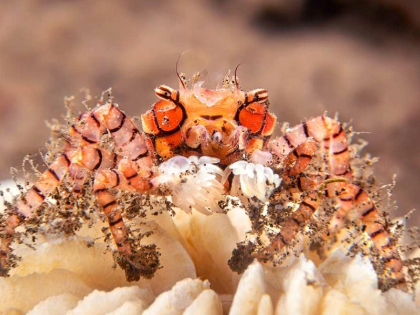
14. Decorator Crabs and Their Living Disguises: Masters of Camouflage
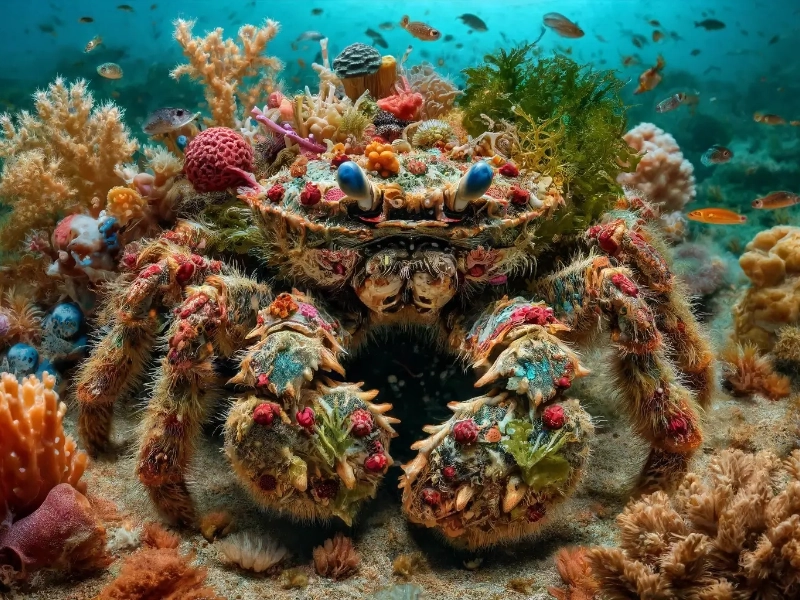
Decorator crabs demonstrate one of the most unique symbiotic interactions in coral reef ecosystems, showcasing nature’s resourcefulness in survival methods. These crabs have evolved a unique style of camouflage that involves actively attaching living organisms to their shells and bodies. Using specialized hooked setae (hair-like structures) on their exoskeletons, decorator crabs meticulously pick and attach pieces of algae, sponges, hydroids, and other marine animals to themselves. This activity goes beyond basic camouflage; it forms a living, evolving disguise that evolves and adapts along with the crab’s environment. The link between decorator crabs and their associated creatures is intricate and varied. For the crab, the greatest benefit is concealment, which helps them evade predators. The connected organisms break up the crab’s form, allowing it merge smoothly into its surroundings. Some decorator crabs even select species with chemical defenses, such as toxic algae or stinging hydroids, offering an extra layer of protection against predators. Still, the advantages of this interaction also extend to the linked creatures. These sessile, sedentary organisms acquire mobility by hitching a ride on the crab, therefore reaching fresh feeding sites and perhaps boosting their reproductive success by spreading to other locations. For species that might otherwise find it difficult to occupy new environments, this arrangement may especially help them. Furthermore adding to the reef ecosystem’s general biodiversity is the behaviour of the decorator crab. Moving about, they can carry organisms to new habitats, therefore helping to distribute and preserve genetic variety among different species. Furthermore, the intricate mini-ecosystems produced on the backs of the crabs can provide shelter for even smaller marine creatures, therefore generating a cascade of symbiotic interactions. This amazing illustration of symbiosis emphasises the complexity and interconnection of these energetic underwater communities by showing the several ways in which several species in coral reef ecosystems could interact and rely on one another.