
13. Zoanthids and Their Microscopic Helpers: Masters of Adaptation
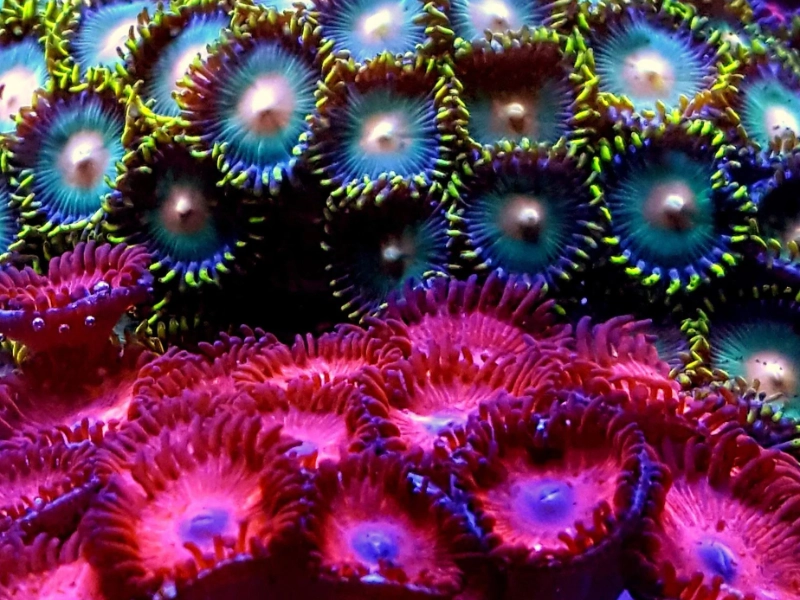
Often confused with corals, zoanthids are colonial anemone-like creatures found on coral reefs in brilliant mats. From shallow reef flats to deep-sea habitats, these creatures have evolved amazing symbiotic interactions that enable their survival in a range of marine environments. Their success stems from their interactions with several microorganisms, especially photosynthetic dinoflagellates like those seen in coral. Living in zoanthid tissues, these microscopic algae photosynthesise to supply vital nutrients. This link lets zoanthids thrive in nutrient-starved environments where other species might suffer. But zoanthids are really amazing because they can host many kinds of symbiotic microorganisms based on their surroundings. Shallow, well-lit environments mostly involve photosynthetic algae. Some zoanthid species, however, can move to host chemosynthetic bacteria that get their energy from chemical reactions instead of light in deeper or darker waters. This adaptability enables zoanthids to settle over a broad spectrum of environments, from dim cave entrances to sun-drenched reef tops. The symbiotic link between zoanthids and their microbial partners also adds to the overall health of the reef ecosystem. Like corals, zoanthids play a role in nutrient cycling and provide habitat for small reef creatures. Their capacity to survive in varied settings makes them crucial colonists of new or disturbed reef regions, potentially contributing in reef rehabilitation processes. Furthermore, the numerous chemical compounds produced by zoanthids and their symbionts are of significant interest to researchers, with potential applications in medicine and biotechnology. The adaptability and resilience displayed by zoanthids and their microbial helpers offer vital insights into how marine species can adapt to changing environmental conditions, an increasingly relevant field of study in the face of climate change and ocean acidification.