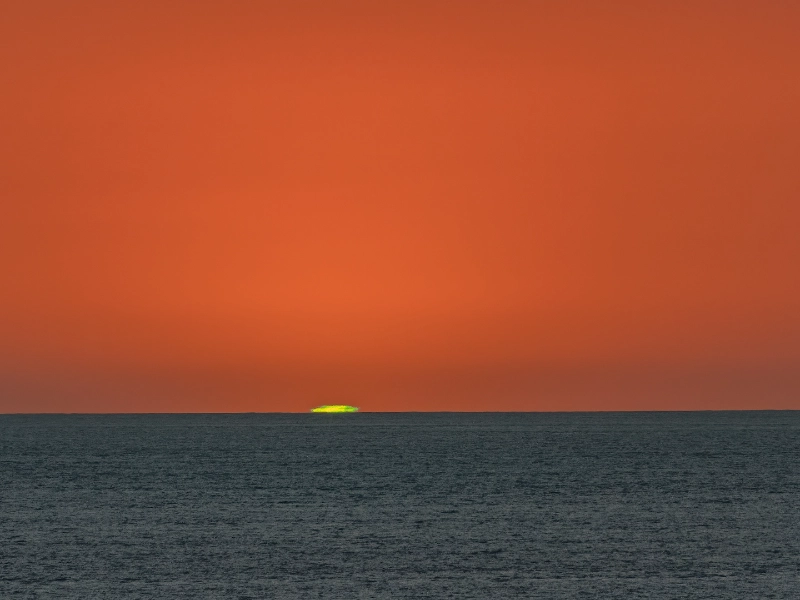
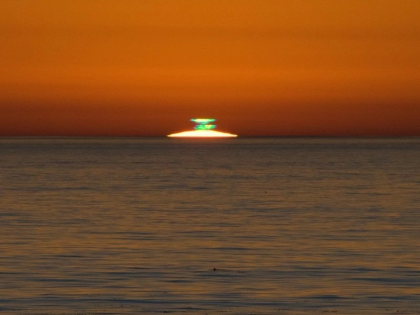
Understanding the green flash requires a basic grasp of optics and atmospheric science. The phenomenon occurs due to the refraction of light, which is the bending of light waves as they pass through different mediums. In the case of the green flash, sunlight passes through the Earth’s atmosphere, which is denser than the vacuum of space.As sunlight enters the atmosphere, it encounters various particles, gases, and changes in temperature. These factors cause the light to bend at different angles, leading to the separation of colors. The shorter wavelengths of light, such as blue and green, are refracted more than the longer wavelengths, like red and orange. This bending effect is what allows the green light to become visible just as the sun dips below the horizon.The phenomenon is most easily observed when the sun is at a low angle, such as during sunrise or sunset. During these times, the light must pass through a greater thickness of the atmosphere, increasing the chances of encountering the right conditions for a green flash to occur. Factors such as atmospheric clarity, humidity, and temperature inversions can all influence the visibility of the green flash.Interestingly, the green flash is not limited to just one color. In some cases, observers have reported seeing blue flashes or even violet hues. However, the green flash is the most commonly recognized and documented version of this phenomenon. Its fleeting nature makes it a special event, often leaving those who witness it with a sense of wonder and appreciation for the beauty of the natural world.In essence, the green flash is a fascinating interplay of light and atmospheric conditions, showcasing the wonders of physics and nature. Understanding the science behind it enhances the experience for those lucky enough to catch a glimpse of this fleeting moment.