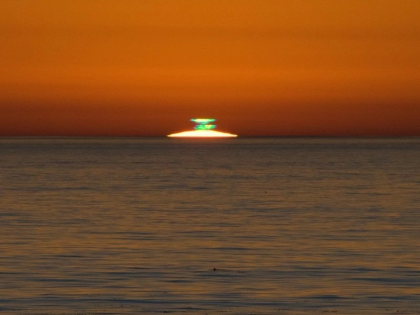
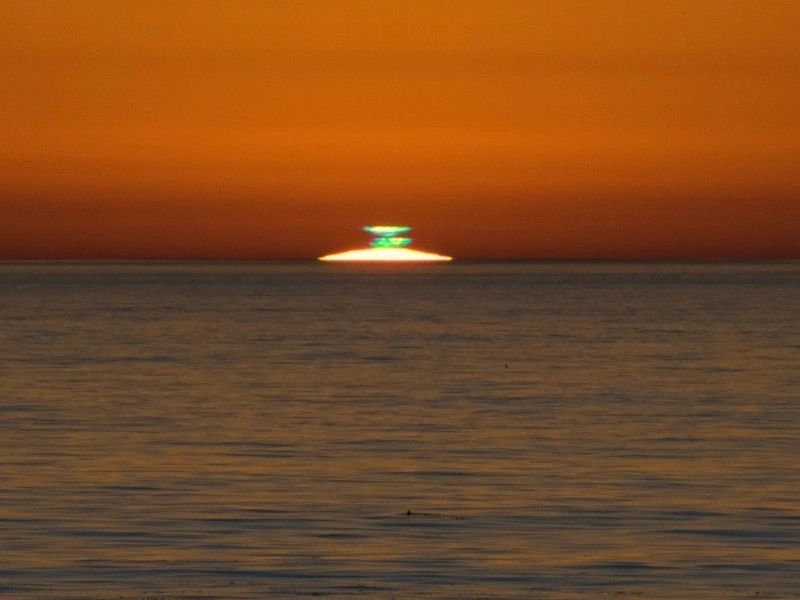
Just as the sun sets or rises beyond the horizon, a fascinating visual phenomena known as the green flash happens. Often lasting just a few seconds, this fleeting and transient phenomenon enthrals onlookers with its vivid green colour. The science underlying the green flash, its cultural relevance, and advice on how to see this rare display are discussed in this page.
1. What Is the Green Flash?
The green flash is a rare atmospheric phenomenon that occurs when the sun is just below the horizon. As the sun sets or rises, the light it emits can create a brief flash of green visible for a few seconds. This phenomenon is most commonly observed over the ocean, where the horizon is unobstructed. The green flash is caused by the refraction of light in the Earth’s atmosphere, which bends the sunlight and separates it into different colors.When the sun is near the horizon, its light passes through a thicker layer of the atmosphere compared to when it is higher in the sky. This increased thickness causes the light to bend more significantly, allowing the shorter wavelengths of light—particularly green—to become visible. The phenomenon is often described as a “flash” because it appears suddenly and disappears almost as quickly.The green flash is not only a beautiful sight but also a reminder of the complex interactions between light and the atmosphere. Although it can occur anywhere in the world, it is most frequently seen in coastal areas during clear weather conditions. The rarity of the green flash adds to its allure, making it a sought-after experience for nature lovers and photographers alike.In summary, the green flash is a stunning optical phenomenon that occurs at sunrise or sunset, characterized by a brief appearance of green light on the horizon. Its unique occurrence and the science behind it make it a fascinating subject for anyone interested in natural wonders.