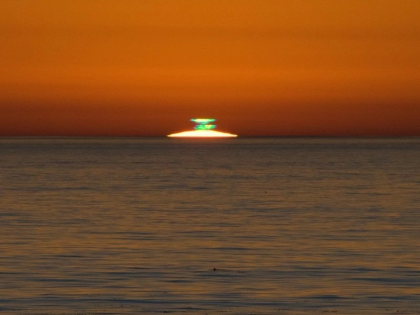
Despite its beauty and cultural significance, the green flash is often surrounded by myths and misconceptions. One common myth is that the green flash can be seen every time the sun sets or rises. In reality, this phenomenon is quite rare and depends on specific atmospheric conditions. Many observers may wait for the green flash only to be disappointed when it doesn’t appear.Another misconception is that the green flash is a magical or supernatural event. While it is indeed a stunning optical phenomenon, it is rooted in the science of light refraction and atmospheric conditions. Understanding the scientific basis of the green flash can enhance appreciation for its beauty without attributing it to mystical forces.Some people believe that the green flash is only visible from certain locations, such as tropical islands or specific coastal areas. While these locations may offer optimal conditions for viewing the phenomenon, the green flash can technically be seen anywhere with a clear horizon and the right atmospheric conditions. This means that even those living in less tropical regions can have the chance to witness this rare event.Additionally, there are myths surrounding the colors of the flash. While green is the most commonly observed color, some believe that seeing a blue or purple flash is a sign of something special. In reality, the colors observed during the phenomenon depend on various atmospheric factors, and the green flash remains the most recognized and documented version.In summary, the green flash is often surrounded by myths and misconceptions that can detract from its scientific understanding. By dispelling these myths, individuals can appreciate the beauty of the green flash while recognizing the natural processes that create this fleeting phenomenon.


 zi ang