
9. Hydrothermal Vents and the Origin of Life on Earth
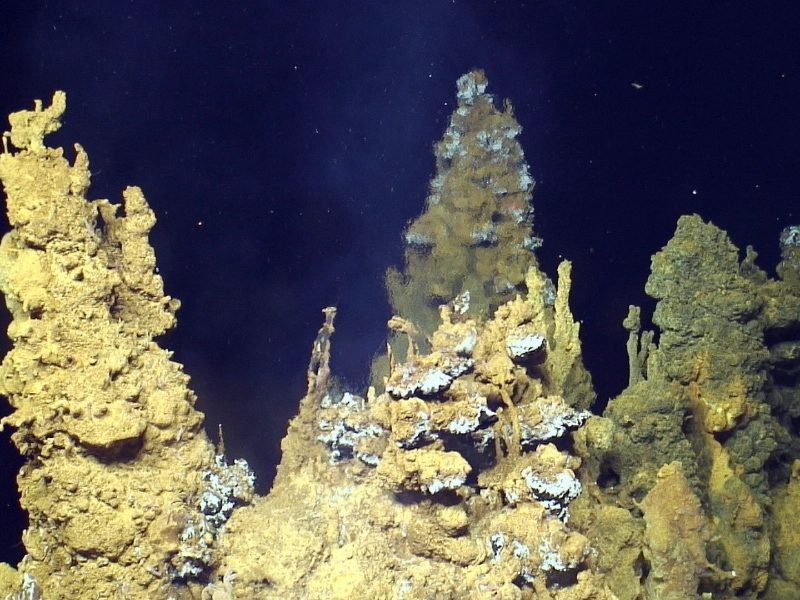
The discovery of hydrothermal vents has generated fascinating hypotheses regarding the beginning of life on Earth. These settings offer conditions some scientists think could have been favourable for the beginning of the earliest living entities. Combining the energy-rich chemical environment with the existence of mineral surfaces that would have served as catalysts for organic processes creates a reasonable situation for the synthesis of complicated organic compounds. Some scientists suggest that the quantity of iron-sulfur minerals seen near hydrothermal vents may have been absolutely vital in the evolution of early metabolic systems. Early life forms may have been sheltered from the hostile conditions on Earth’s surface billions of years ago by the protective character of these deep-sea settings, including strong UV radiation and meteorite impacts. Moreover, the identification of chemosynthetic ecosystems at hydrothermal vents has broadened our knowledge of the possible environments where life could flourish, on Earth as well as maybe on other planets or moons. The hydrothermal vent theory for the beginning of life holds that the first self-replicating systems could have evolved in the porous, mineral-rich surroundings around these vents, where chemical and temperature gradients supplied the energy required for early metabolic reactions. Although this idea is still under constant investigation and discussion, it has greatly shaped our knowledge of the requirements for life to arise and flourish in hostile situations. Research in astrobiology has also been guided by the investigation of hydrothermal vents as possible cradles of life, therefore directing the hunt for possibly livable habitats on other celestial bodies in our solar system and beyond.
10. Exploring the Unknown: Future Research and Potential Applications
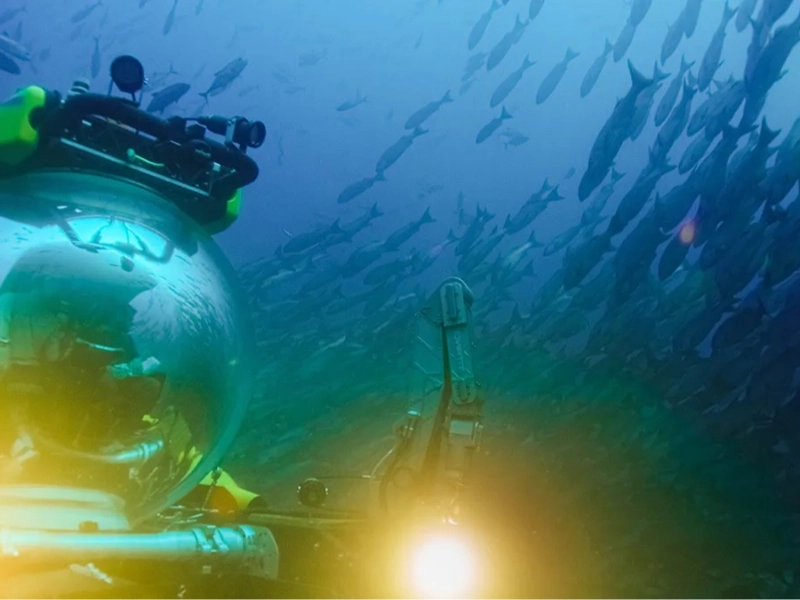
The possibility for future study and uses increases along with our knowledge of hydrothermal vent ecosystems. Bioprospecting—the hunt for new molecules and organisms with possible industrial or medicinal uses—is one area of great interest. Unique enzymes and other biomolecules potentially valuable in many biotechnological applications have evolved in response to the harsh environment near hydrothermal vents. For some DNA amplification methods, for instance, heat-stable enzymes from vent organisms are already applied. Another field of study is on the possibility of hydrothermal systems sustaining life on other worlds. Astrobiologists have been thrilled about the prospect of extraterrestrial life in our solar system with the recent discovery of hydrothermal activity on Saturn’s moon Enceladus. From an Earth science standpoint, hydrothermal vent research offers important new angles on the dynamics of plate tectonics, the production of mineral deposits, and elemental cycling across the crust and seas. We should find even more surprises buried in the depths of our seas as technology develops and more thorough and protracted studies of these deep-sea habitats become possible. New autonomous underwater vehicles capability of exploring and sampling hydrothermal vents at deeper depths and for longer periods of time could be developed in future studies. Furthermore of increasing relevance is knowledge of the possible effects of climate change on these ecosystems and their function in worldwide biogeochemical cycles. Our exploration and study of hydrothermal vents will probably lead to discoveries that not only advance our scientific knowledge but also have practical uses in sectors from medicine to environmental preservation, so transforming our understanding of life, Earth processes, and the possibility for life outside our planet.
 zi ang