
5. Life in the Extreme: Adaptations of Hydrothermal Vent Organisms
Living in one of the most hostile environments on Earth, the species that call hydrothermal vent ecosystems home have developed amazing adaptations to survive These species have to deal with extreme pressures, total darkness, poisonous compounds, and temperatures that vary from almost freezing to well over 100°C across a few centimetres. Growing up to two meters long and lacking a mouth or digestive system, the gigantic tube worm (Riffia pachyptila) is among the most famous vent species. Rather, it depends on a symbiotic arrangement with chemosynthetic bacteria housed in a specialised organ known as the trophosome. These bacteria share with their host energy derived by transforming the molecules in the vent fluid. Heat-resistant proteins in vent prawns, specialised haemoglobin in vent crabs that can bind both oxygen and hydrogen sulphide, and particular sensory organs in vent fish that enable them to perceive the weak light released by the hot vents are further adaptations. Another amazing example is the Pompeii worm (Alvinella pompejana), which thanks to a protective mucus coating populated by heat-tolerant bacteria can survive temperatures up to 80°C. Many vent creatures have also evolved ways to cope with the high concentrations of poisonous metals in their surroundings, such the capacity to efficiently excrete or store these metals in specialised tissues. These remarkable adaptations not only let these species survive but also enable them to flourish under conditions that would be fatal for most other life forms on Earth. Beyond marine life, the research of these adaptations provides understanding of the boundaries of life and possible uses in biotechnology and medicine.
6. The Food Web of Hydrothermal Vent Ecosystems
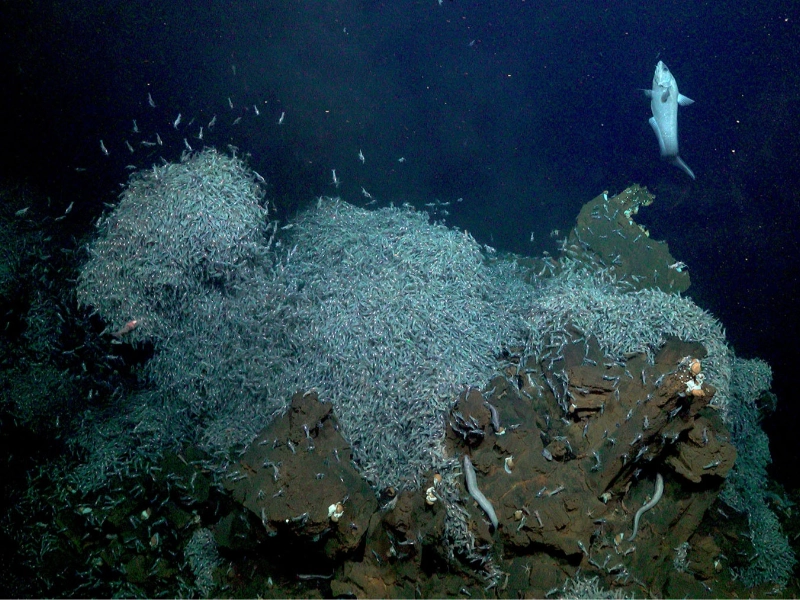
Unlike most other ecosystems on Earth, the food web in hydrothermal vent systems is not essentially dependent on sunshine and photosynthesis. Rather, chemosynthetic bacteria that get energy from the oxidation of molecules in the vent fluid—especially hydrogen sulfide—form the foundation of the food chain. These bacteria can live in symbiotic associations with many different vent animals or as free-living microbes. Organisms include tubeworms, mussels, and clams that house symbiotic bacteria are primary consumers in this environment. Secondary consumers like gastropods, crabs, and prawns that either graze on the main consumers or on bacterial mats follow them. Predators like fish, octopuses, and even some kinds of sharks seen visiting vent sites occupy the top of the food chain. Around hydrothermal vents, the density of life can be astounding; biomass levels match those of the most successful ecosystems on Earth. Supported purely by chemical energy from the Earth’s interior, this vast food web shows the amazing adaptability of life and the several ways in which ecosystems can run. With some estimates implying that up to 50% of the energy from chemosynthesis being absorbed into animal biomass, the efficiency of energy transfer in these environments is shockingly great. This is quite different from ecosystems dependent on photosynthesis, where usually only roughly 10% of energy moves across trophic levels. Research of hydrothermal vent food webs has challenged our knowledge of what is feasible in terms of life’s adaptability and resilience by offering fresh perspectives on ecosystem dynamics and energy flow in harsh conditions.
 zi ang