

4. The Architecture of Pompeii
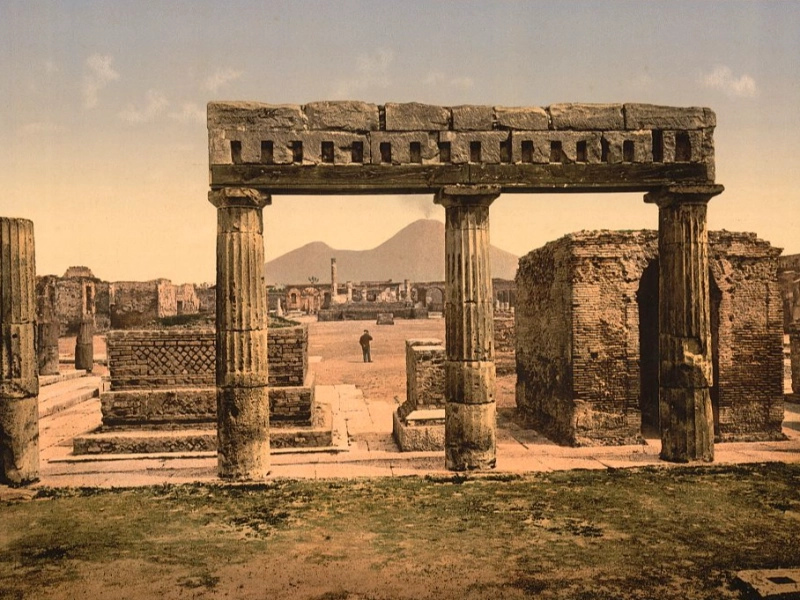
Pompeii’s architecture is evidence of Roman civilization’s inventiveness and artistic sensibility. Reflecting the social, political, and cultural dynamics of its period, the city features a range of architectural styles. From private dwellings to great public buildings, Pompeii’s buildings offer insightful analysis of the daily life of its people.
Pompeii’s architecture stands out mostly for its usage of the Roman architectural style, which is distinguished by its arches, columns, and minute ornamentation. As the hub of public life, the Forum is flanked by significant municipal buildings and temples honouring many gods and goddesses. To underline the religious importance of the location, the Temple of Apollo, for instance, boasts remarkable Corinthian columns and a well-preserved altar.
Residential architecture in Pompeii changed greatly depending on social level. Rich people lived in ornate domus, big single-family houses built around an atrium—a central courtyard used for household purposes. Beautiful paintings and mosaics covering themes from mythology, nature, and daily life helped to embellish these homes. The craftmen of the time’s artistic ability is reflected in the complex designs and vivid colours.
On the other hand, lower-class people lived in simpler, smaller dwellings often with just a few rooms. Though they lacked the ornate decorations seen in more affluent residences, these little houses nonetheless displayed sensible architectural features including kitchens and little courtyards. The variety in home design highlights Pompeii’s class stratification as well as the many ways of life its residents led.
Public structures like theatres and the amphitheatre highlight in Roman society the value of entertainment and community meetings. One of the first of its sort, the amphitheatre could accommodate up to 20,000 people and held gladiatorial contests and other events. Its construction captures the Roman focus on public entertainment and social interaction.
Finally, Pompeii’s architecture is an amazing monument to the Roman engineers’ inventiveness and technical mastery. From great temples to modest residences, the range of buildings highlights the complexity of city social life. Studying Pompeii’s architecture helps us to better grasp the daily life, values, and beliefs of its people, therefore strengthening our knowledge of this ancient society.