
4. Understanding Bee Behavior and Colony Dynamics
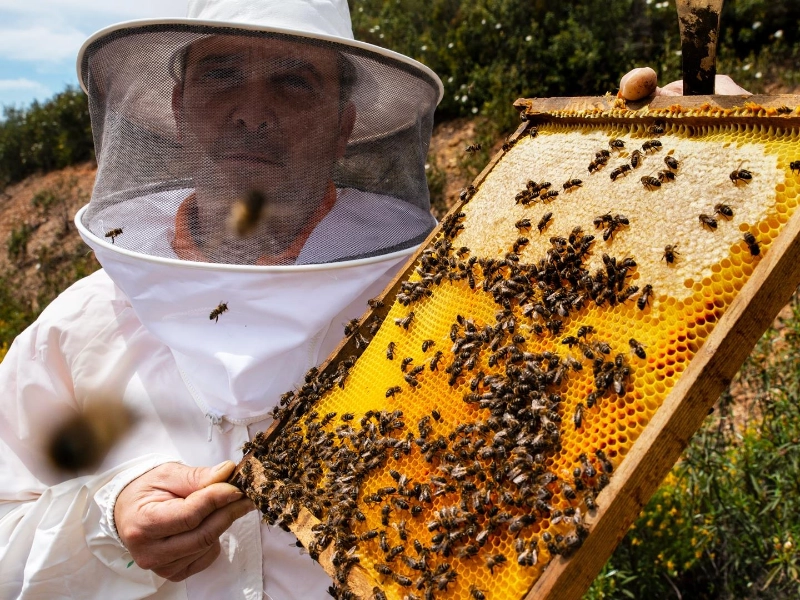
One must have a strong awareness of bee behavior and the complex dynamics inside a colony if one hopes to be a good beekeeper. This information will not only enable you to control your hives more successfully but also inspire more respect of these amazing insects. Let’s enter the intricate realm of bee society and investigate how knowledge of this will help you to run your beekeeping operations.
Every honey bee colony starts with the queen. She is crucial for the survival and expansion of the colony since she is the only female in the hive able to produce fertilised eggs. Peak season sees a strong queen laying up to 2,000 eggs every day. The queen also generates pheromones that control the actions of the other hive members, therefore preserving colony cohesiveness. A major ability for beekeepers to acquire is the ability to identify the indicators of a healthy, productive queen, including a consistent brood pattern and a calm, industrious hive.
The bulk of the colony are female worker bees. Starting as nursing bees tending to larvae, these hardworking insects advance through many jobs as they age: comb construction, hive protection, and finally foraging in the closing weeks of their life. Knowing this age-based split of work will help you evaluate the condition of your colony and understand hive activities. An exceptionally high number of immature bees foraging, for example, would point to a concern with the elder bee population.
One main goal of male bees, sometimes known as drones, is to mate with queens from neighboring colonies. Though they don’t help the hive’s daily operations, they are absolutely vital for genetic variation among bee populations. Usually seen in more numbers in the spring and summer, drones are expelled from the hive in autumn to help to save resources.
One amazing feature of bee behavior is hive communication. To transmit messages, bees use pheromones, vibrations, and motions. The most well-known example is the “waggle dance,” by which forager bees tell their hive mates the whereabouts of food supplies. Knowing these communication techniques can help you, as a beekeeper, have insightful analysis of the demands and activities in your colony.
In response to hazards or environmental changes, bees show a spectrum of actions. Knowing these will help you safely and more successfully control your hives. Bees, for instance, may head-butter or sting in response to perceived threats. Acknowledging the indicators of agitation, such loud buzzing or bees flying at your veil, will help you to back off or employ more smoke to quiet the colony.
Usually occurring in spring or early summer when the hive gets packed, swarming is a normal reproductive activity of honey bee colonies. If desired, knowing the indicators of approaching swarming—such as queen cells and a decrease in queen’s egg-laying—allows you to take preventative action or get ready to catch the swarm should it develop.
Bee behavior is strongly affected by seasonal variations. As food grows plentiful in spring, colonies quickly spread. Peak foraging activity and honey output come in summer. Fall is a time for getting ready for winter; bees gather as much food as they can. With little activity outside the hive, winter brings a phase of cluster development to keep warmth. Knowing these seasonal trends helps you project the requirements of your colony and schedule your management operations.
Understanding bee behavior helps you to decide when to check your hives, how to handle different circumstances, and how best to assist your colonies all year round. This information not only sharpens your beekeeping techniques but also strengthens your relationship with these amazing animals, so increasing the whole beekeeping experience.