
2. Red Sprites
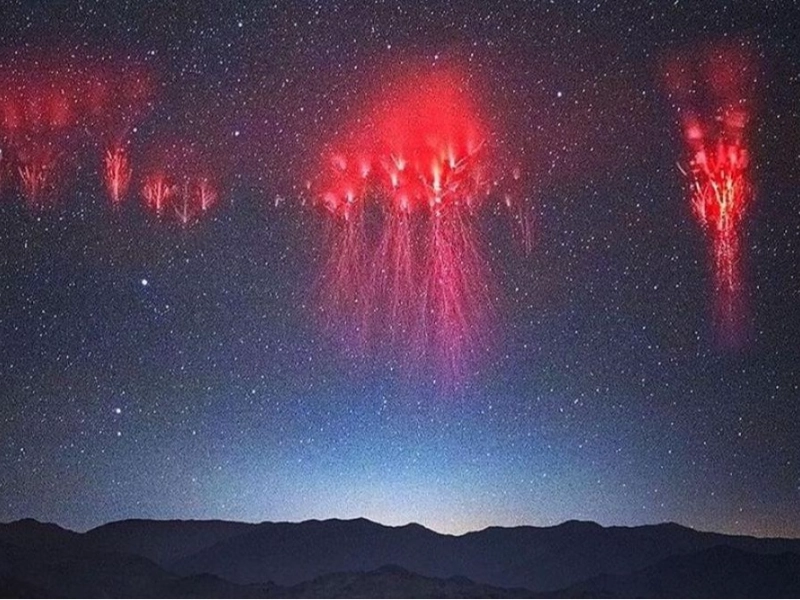
Large-scale electrical discharges called red sprites produce brief but amazing displays of red light in the upper atmosphere, far above thunderstorm clouds. First recorded in the late 20th century, these events were mostly the result of low-light camera technology enabling researchers to record their short existence. Usually the discharges of positive lightning between an underlying thundercloud and the earth set off red sprites. Often looking like jellyfish or carrots, they seem as clusters of crimson tendrils with a 60-mile range into the atmosphere. Red sprites, despite their fleeting presence—just a few milliseconds—offer researchers examining the electrical balance of the Earth’s atmosphere important information. Although the phenomena is thought to be connected to the intricate interactions between thunderstorms and the ionosphere, the precise mechanisms involved are yet a subject of active investigation. Though many facets of their behaviour and influence remain unknown, observations from ground-based cameras and instrumentation aboard high-altitude planes have shed light on the conditions under which red sprite formation results. Red Sprite research is still a fascinating topic in atmospheric science since it provides a window into the dynamic mechanisms forming the temperature and weather of our planet.