
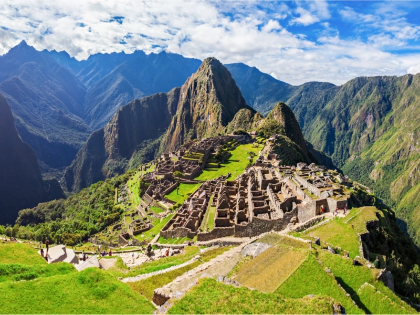
3. The Purpose and Function of Machu Picchu
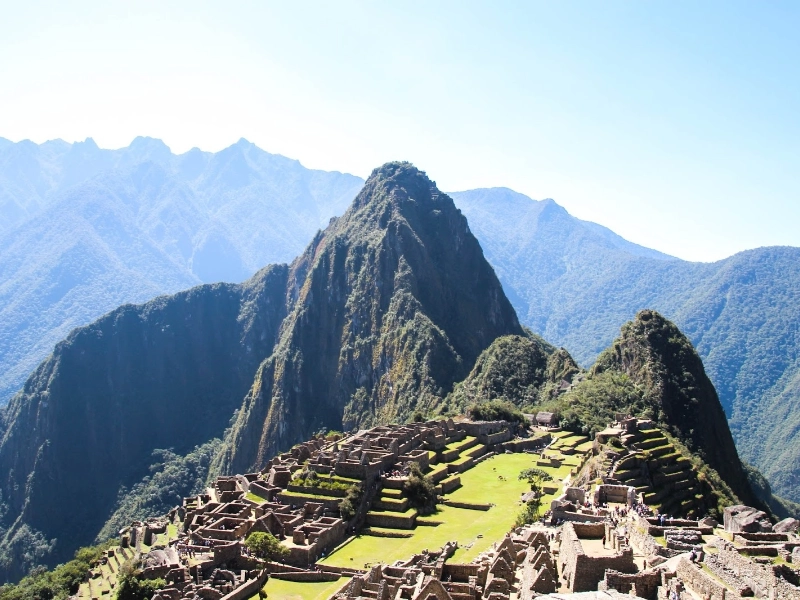
Still up for contention among experts and archaeologists is Machu Picchu’s actual use. Although a lot of ideas have been put out over the years, the most often accepted one is that Machu Picchu was a royal estate for Inca monarchs and nobility. The site’s location, architectural elegance, and the discovery of high-status relics unearthed during digs help to corroborate this thesis.
Machu Picchu’s limited capacity is among the main bits of data bolstering the royal estate theory. The site, which could barely accommodate a population of roughly 750, indicated it was more of a refuge for the Incan nobility than a major city centre. Fine ceramics, jewellery, and other luxury goods add even more evidence for this point of view. This viewpoint also fits the site’s design, which clearly separates royal from non-royal areas.
But Machu Picchu’s goal most certainly went beyond a straightforward royal retreat. The site’s religious buildings and astronomical orientations point to significant ceremonial and spiritual purposes as well. For example, it is thought that the Intihuatana stone was utilised for religious ceremonies connected to the Incan agricultural calendar and for astronomical observations. The site’s religious importance is highlighted by the several temples and holy areas scattered around it.
Machu Picchu might have also served as a hub for agricultural experiments and scientific enquiry, several experts have said. The several microclimates produced by the terraces of the site could have let the Incas research and grow a great range of crops, hence fostering new agricultural methods. The variety of plant species in the area and the sophisticated agricultural terraces defining the site help to justify this notion.
Given Machu Picchu’s location on the Inca Trail system, another proposal holds that it might have been a pilgrimage site. With the site functioning as a last stop for religious visitors, the path to Machu Picchu might have had spiritual meaning. The Inca Trail and other historic paths leading to the site provide weight to this idea.
Some academics have also suggested that Machu Picchu might have been a military base or a frontier fortification shielding the Incan heartland from Amazon basin incursions. Although the site’s defensive qualities are not as strong as those of other known Incan strongholds, its strategic location and watchtower presence imply that it might have been somewhat involved in the defence system of the empire.
Recent studies further imply that Machu Picchu might have been constructed in use of geological fault lines. The site sits at the junction of two fault lines, which the Incas would have considered as a source of spiritual energy. From the high Andes to the Amazon lowlands, this spot also gave access to many ecosystems and resources.
The whole breadth of Machu Picchu’s purposes might never be completely known even with continuous study. Many concerns remain unresolved in the absence of written records from the Incan era and the site’s abandonment prior to the Spanish conquest. Machu Picchu’s eternal mystery still inspires awe and fuels constant historical and archaeological investigation. Our knowledge of this mysterious site changes with the development of new technology and approaches, therefore exposing fresh insights on the intricacy and complexity of Incan civilisation.