
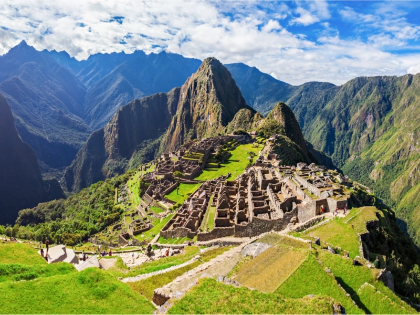
3. The Purpose and Function of Machu Picchu
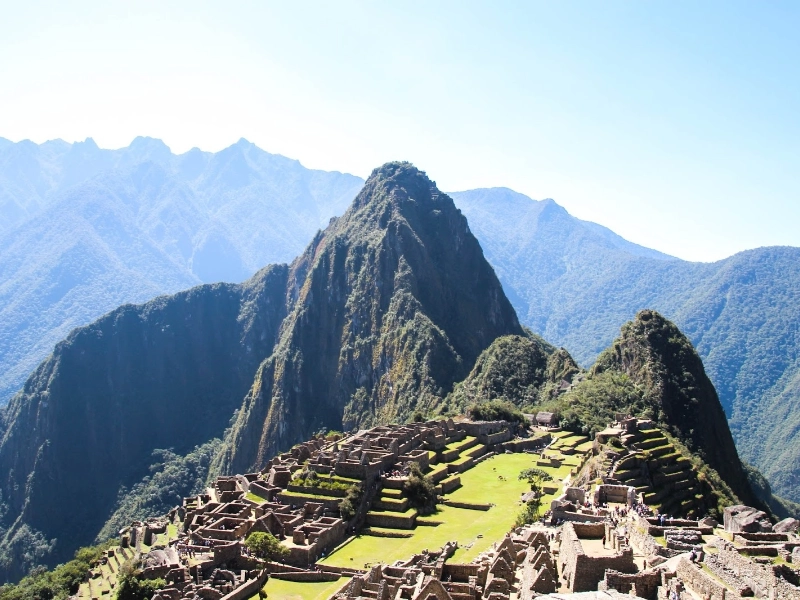
Still up for contention among experts and archaeologists is Machu Picchu’s actual use. Although a lot of ideas have been put out over the years, the most often accepted one is that Machu Picchu was a royal estate for Inca monarchs and nobility. The site’s location, architectural elegance, and the discovery of high-status relics unearthed during digs help to corroborate this thesis.
Machu Picchu’s limited capacity is among the main bits of data bolstering the royal estate theory. The site, which could barely accommodate a population of roughly 750, indicated it was more of a refuge for the Incan nobility than a major city centre. Fine ceramics, jewellery, and other luxury goods add even more evidence for this point of view. This viewpoint also fits the site’s design, which clearly separates royal from non-royal areas.
But Machu Picchu’s goal most certainly went beyond a straightforward royal retreat. The site’s religious buildings and astronomical orientations point to significant ceremonial and spiritual purposes as well. For example, it is thought that the Intihuatana stone was utilised for religious ceremonies connected to the Incan agricultural calendar and for astronomical observations. The site’s religious importance is highlighted by the several temples and holy areas scattered around it.
Machu Picchu might have also served as a hub for agricultural experiments and scientific enquiry, several experts have said. The several microclimates produced by the terraces of the site could have let the Incas research and grow a great range of crops, hence fostering new agricultural methods. The variety of plant species in the area and the sophisticated agricultural terraces defining the site help to justify this notion.
Given Machu Picchu’s location on the Inca Trail system, another proposal holds that it might have been a pilgrimage site. With the site functioning as a last stop for religious visitors, the path to Machu Picchu might have had spiritual meaning. The Inca Trail and other historic paths leading to the site provide weight to this idea.
Some academics have also suggested that Machu Picchu might have been a military base or a frontier fortification shielding the Incan heartland from Amazon basin incursions. Although the site’s defensive qualities are not as strong as those of other known Incan strongholds, its strategic location and watchtower presence imply that it might have been somewhat involved in the defence system of the empire.
Recent studies further imply that Machu Picchu might have been constructed in use of geological fault lines. The site sits at the junction of two fault lines, which the Incas would have considered as a source of spiritual energy. From the high Andes to the Amazon lowlands, this spot also gave access to many ecosystems and resources.
The whole breadth of Machu Picchu’s purposes might never be completely known even with continuous study. Many concerns remain unresolved in the absence of written records from the Incan era and the site’s abandonment prior to the Spanish conquest. Machu Picchu’s eternal mystery still inspires awe and fuels constant historical and archaeological investigation. Our knowledge of this mysterious site changes with the development of new technology and approaches, therefore exposing fresh insights on the intricacy and complexity of Incan civilisation.
4. The Inhabitants of Machu Picchu
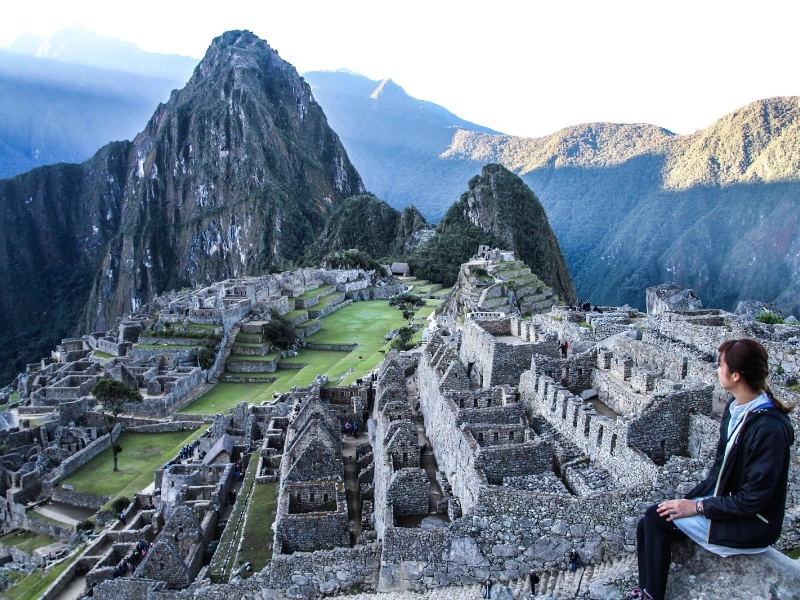
Although Machu Picchu’s striking architecture and possible uses dominate most attention paid to the site, knowledge of the individuals who lived and worked there is just as crucial. Archaeological data and historical records shed light on the varied society that formerly lived at Machu Picchu, therefore illuminating everyday life, social systems, and cultural practices of its people.
Machu Picchu’s inhabitants most certainly comprised Incan royalty, religious leaders, talented artists, and servants. The skeletal remains discovered at the site point to the fact that the residents came from all parts of the Incan Empire, implying that Machu Picchu was a cosmopolitan centre drawing together individuals from many backgrounds. This variety represents the Incan habit of resettling people around their empire, a tactic called mitma, which helped to spread Incan civilisation and consolidate their rule over conquered areas.
Research of the skeletal remains has also unearthed fascinating information on the way of life of Machu Picchu’s residents. Many displayed indicators of having worked hard physically, probably connected to site maintenance and building. Still, given evidence of a diversified diet and availability to medical treatment, the population seems to have generally been in good condition. Dental studies of the remains show rather low rates of tooth decay, implying a diet low in sugar and high in nutrient-dense foods.
With a distinct hierarchy in Machu Picchu’s design, the social order there reflected that of larger Incan society. The Royal Sector would have housed the elite of society with its well-made buildings and prominent position. By contrast, the Urban Sector’s more humble homes probably housed servants, artists, and other personnel necessary for the complex to run. This spatial layout captures the highly stratified character of Incan culture, in which social standing was obviously conveyed through living quarters and worldly goods.
Machu Picchu’s daily existence would have been much enhanced by religious experts. Conducting ceremonies, making astronomical observations, and preserving the holy areas within the city would have fallen to priests and other spiritual leaders. The meticulous building of religious buildings such as the Temple of the Sun and the Temple of the Three Windows reflects their great significance. Maintaining the spiritual and ideological underpinnings of Incan rule would have been much aided by these religious leaders.
Machu Picchu’s variety of handcrafted items points to the possibility of competent artists among its residents. For the privileged citizens as well as possibly for export to other areas of the empire, metalworkers, weavers, and potters would have created both luxury goods and practical things The great quality of artefacts discovered at the site—including skilfully woven textiles and exquisitely wrought metal objects—attests to the talent of these craftspeople and the value put on artistic production in Incan civilisation.
At Machu Picchu, life also revolved much around agriculture. The large terracing system would have needed a committed crew to upkeep and cultivation of crops. These labourers were essential in guaranteeing the site’s self-sufficiency and might have also participated in agricultural experiments and new farming method development. Apart from its practical use, Machu Picchu’s terraces show Incan knowledge of microclimates and soil management, therefore enabling the growth of a range of crops at various altitudes.
Machu Picchu’s residents would have lived daily lives arranged around a complicated schedule of religious observances, agricultural cycles, and state-mandated labour responsibilities. The Incan labour tax, or mit’a, most certainly helped to arrange the manpower needed to preserve and enlarge the site. This system needed able-bodied people to help state projects—perhaps in building, agriculture, or manufacturing of crafts.
Like in more general Incan civilisation, gender roles at Machu Picchu were probably well-defined but not absolutely rigid. In home administration, textile manufacture, and agriculture, women were quite involved. Given the presence of female mummies in high-status funerals at other Incan sites, some women may have also been politically or religiously significant.
Via roads, messengers, and administrative institutions, Machu Picchu’s residents would have been linked to the larger Incan Empire. The placement of the site along the Inca Trail implies that it was included into the communication and transportation system of the empire, therefore enabling the flow of people, products, and knowledge.
Knowing the way of life of the people living at Machu Picchu gives the site’s amazing architecture and surroundings a human component. It reminds us that people with hopes, worries, and daily routines not so unlike our own were behind the stone walls and terraces. New findings about the inhabitants of Machu Picchu keep enhancing our knowledge of this amazing civilisation and its legacy as long as research is under progress.