
2. Astronomical Alignments at Stonehenge
Stonehenge’s obvious connection with cosmic occurrences is among its most fascinating features. The arrangement of the monument points to a thorough awareness of astronomical events, considerably above what one would see in a Neolithic society. Of these alignments, the most well-known is with the summer solstice dawn and the winter solstice sunset.
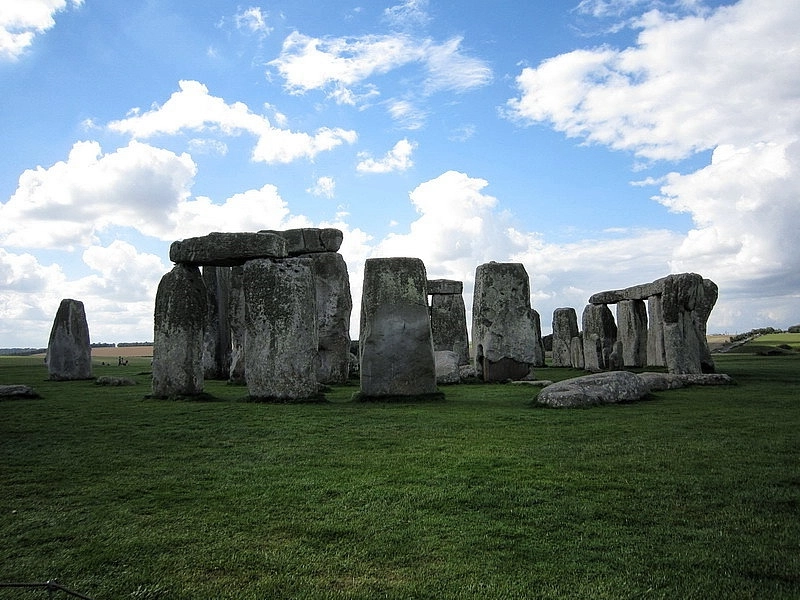
Stonehenge’s primary axis points north-east, exactly in line with the direction of sunrise on the summer solstice. This day the sun rises exactly over the Heel Stone, a big unformed stone outside the main circle. The Altar Stone at the centre of the monument would have received the beam of the rising sun as it passed through the centre trilithon—two vertical stones supporting a horizontal lintel.
On the winter solstice, on the south-west, the sun sets exactly framed by the biggest trilithon when seen from the centre of the stone circle. With great accuracy, this alignment would have let ancient viewers note the yearly turning points.
Still, Stonehenge has astronomical importance going beyond the solstices. For instance, eclipse predictions could have come from the 56 Aubrey Holes. Accurate eclipse forecasts would have been made feasible by tracking the 18.6-year cycle of the moon’s orbital nodes by rearranging marks around these holes in a particular sequence.
Moreover, four station stones arranged in a rectangle outside the main circle match the most northerly and southerly rising and setting of the moon. Only once every 18.6 years does this alignment take place when the moon reaches its main standstill.
These exact alignments imply that Stonehenge’s builders had a profound awareness of celestial physics, therefore challenging our ideas of archaic knowledge and ability.