
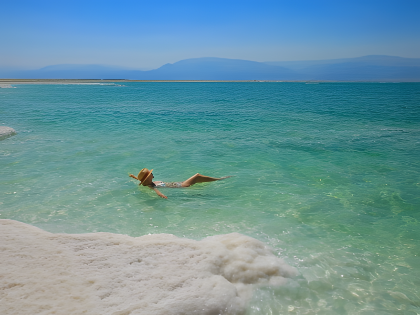
7. How big the Dead Sea is.
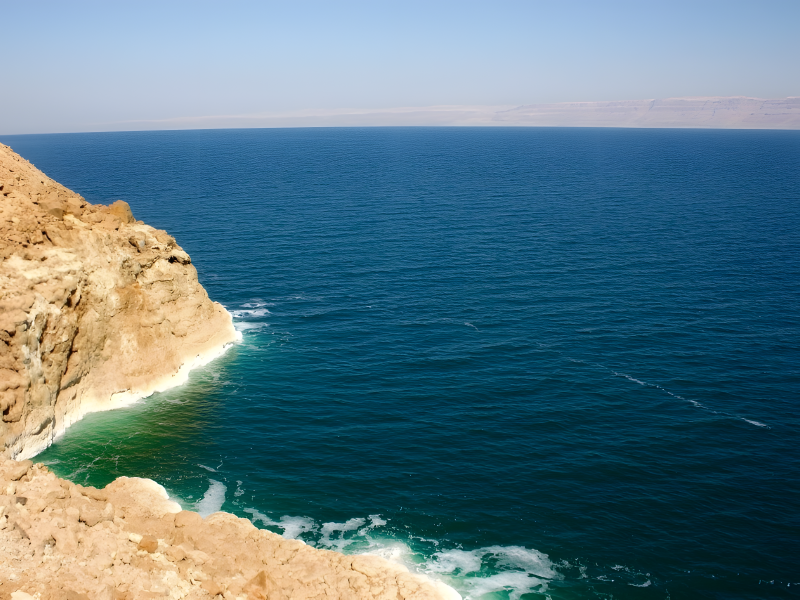
The Dead Sea, a remarkable natural wonder, stretches an impressive 67 kilometers (41.6 miles) in length and spans 18 kilometers (11.2 miles) at its widest point. This expansive body of water, despite its name, is actually a lake that occupies a significant portion of the Jordan Rift Valley. The lake’s dimensions contribute to its unique ecosystem and climate, creating a microenvironment unlike any other on Earth. The Jordan River serves as the Dead Sea’s primary tributary, playing a crucial role in its hydrological balance. This historic river, mentioned in numerous religious texts, flows southward from its sources in the mountains of Lebanon and Syria, through the Sea of Galilee, and finally empties into the Dead Sea. The river’s journey through diverse landscapes and its eventual termination in the Dead Sea creates a fascinating geological and ecological narrative. However, in recent decades, the flow of the Jordan River has been significantly reduced due to water diversion for agricultural and domestic use in the surrounding countries. This reduction in freshwater inflow, combined with high evaporation rates in the arid climate, has led to a steady decline in the Dead Sea’s water level, raising concerns about its long-term sustainability. The changing dynamics between the Jordan River and the Dead Sea highlight the delicate balance of natural systems and the impact of human activities on these unique environments. Conservation efforts and international cooperation are now being explored to address these challenges and preserve this extraordinary natural landmark for future generations.
 zi ang