
4. Salinity.
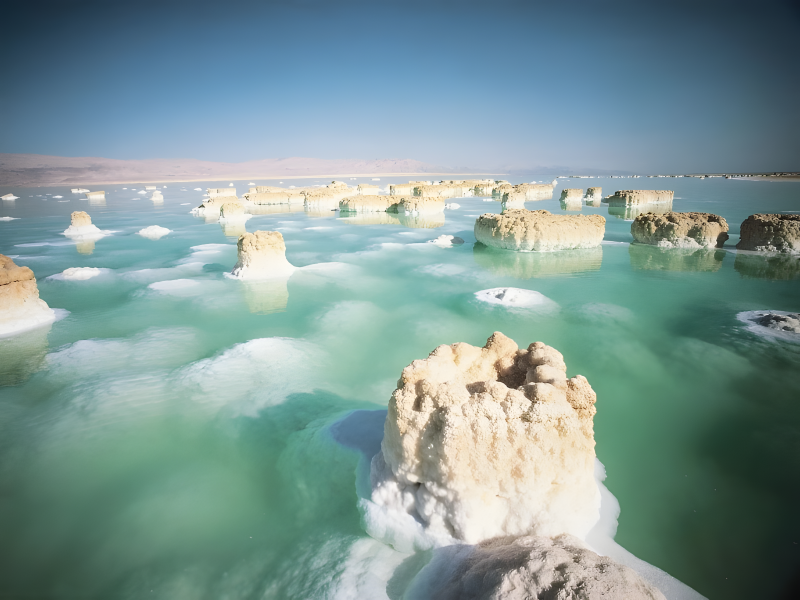
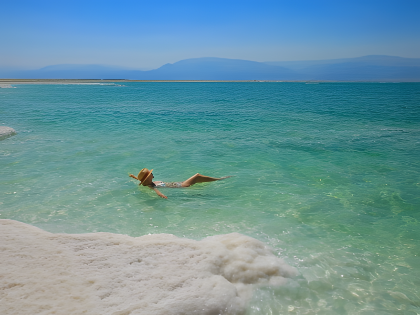
The Dead Sea, renowned for its extreme salinity, boasts a remarkable salt content of 33.7%. This extraordinary concentration of minerals has long captivated scientists and tourists alike, making it one of the most unique bodies of water on our planet. For many years, it was widely believed to be the saltiest water body in the world, a title that added to its mystique and allure. However, recent scientific discoveries have revealed that this distinction actually belongs to other, even more saline environments. Lake Assal, located in Djibouti, Africa, surpasses the Dead Sea with a salinity of about 34.8%. Even more astonishing are the hypersaline lakes found in the McMurdo Dry Valleys of Antarctica, where some frozen lakes have been recorded to have salinity levels reaching up to 40%. These discoveries highlight the incredible diversity of Earth’s aquatic environments and serve as a reminder of how much we still have to learn about our planet’s extreme habitats. Despite losing its title as the world’s saltiest body of water, the Dead Sea remains an unparalleled natural wonder, offering a unique combination of mineral-rich waters, therapeutic mud, and a landscape of stark beauty. Its high salinity continues to be a subject of scientific interest, particularly in fields such as extremophile biology and geochemistry, where researchers study how life adapts to such harsh conditions and how these environments evolve over geological timescales.