
6. Plant life.
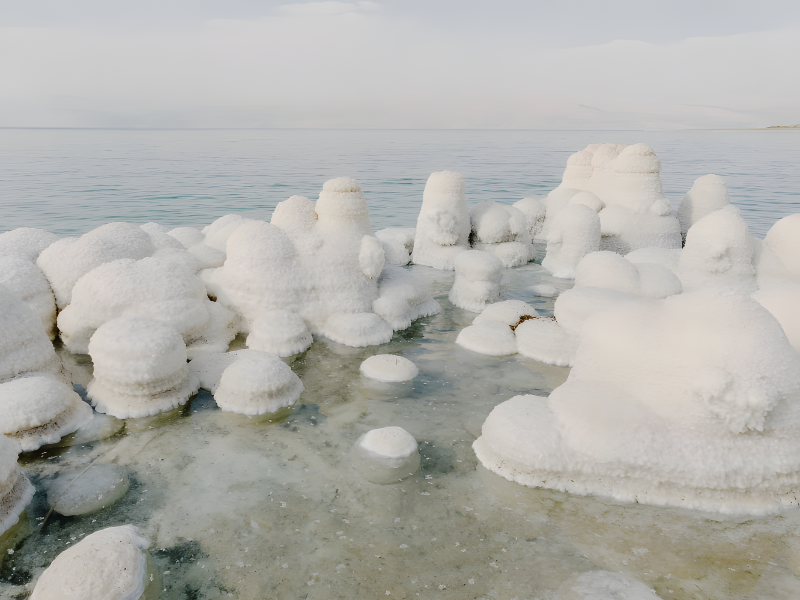
The name “Dead Sea” might suggest a completely lifeless body of water, but this is a misconception that belies the complex reality of this unique ecosystem. While it’s true that the extreme salinity of the Dead Sea makes it inhospitable to most forms of life found in other aquatic environments, it is not entirely devoid of life. The sea’s salt concentration is indeed over nine times higher than that of average ocean water, creating an environment that would be toxic to most organisms. However, nature, in its remarkable adaptability, has found ways to thrive even in these extreme conditions. Microbes and small bacteria, collectively known as extremophiles, have been discovered living in the Dead Sea. These microscopic organisms have evolved specialized mechanisms to cope with the high salt concentrations and intense solar radiation that characterize this harsh environment. Some of these microorganisms are halophiles, meaning they not only tolerate but actually require high salt concentrations to survive. The discovery of life in the Dead Sea has significant implications for our understanding of the limits of life on Earth and potentially on other planets. It challenges our preconceptions about what constitutes a habitable environment and opens up new avenues for research in astrobiology and extremophile biology. Scientists studying these unique organisms hope to gain insights into how life might adapt to extreme conditions on other planets or moons in our solar system. Furthermore, some of these microorganisms have shown potential for biotechnological applications, such as the production of enzymes that can function in high-salt environments. While the Dead Sea may not support the diverse ecosystems found in other bodies of water, its microbial inhabitants remind us of the tenacity and adaptability of life, even in the most challenging conditions on our planet.
 zi ang