
4. Salinity.
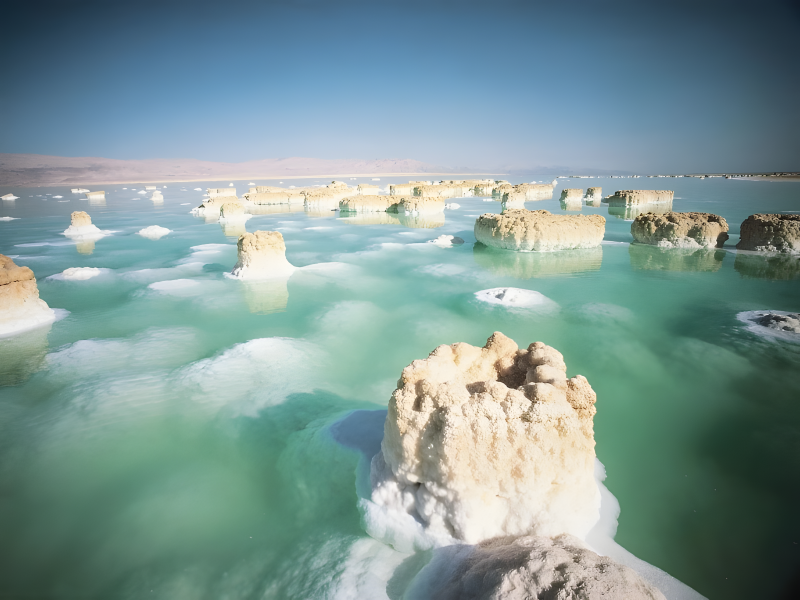
The Dead Sea, renowned for its extreme salinity, boasts a remarkable salt content of 33.7%. This extraordinary concentration of minerals has long captivated scientists and tourists alike, making it one of the most unique bodies of water on our planet. For many years, it was widely believed to be the saltiest water body in the world, a title that added to its mystique and allure. However, recent scientific discoveries have revealed that this distinction actually belongs to other, even more saline environments. Lake Assal, located in Djibouti, Africa, surpasses the Dead Sea with a salinity of about 34.8%. Even more astonishing are the hypersaline lakes found in the McMurdo Dry Valleys of Antarctica, where some frozen lakes have been recorded to have salinity levels reaching up to 40%. These discoveries highlight the incredible diversity of Earth’s aquatic environments and serve as a reminder of how much we still have to learn about our planet’s extreme habitats. Despite losing its title as the world’s saltiest body of water, the Dead Sea remains an unparalleled natural wonder, offering a unique combination of mineral-rich waters, therapeutic mud, and a landscape of stark beauty. Its high salinity continues to be a subject of scientific interest, particularly in fields such as extremophile biology and geochemistry, where researchers study how life adapts to such harsh conditions and how these environments evolve over geological timescales.
5. Taking a sea swim.
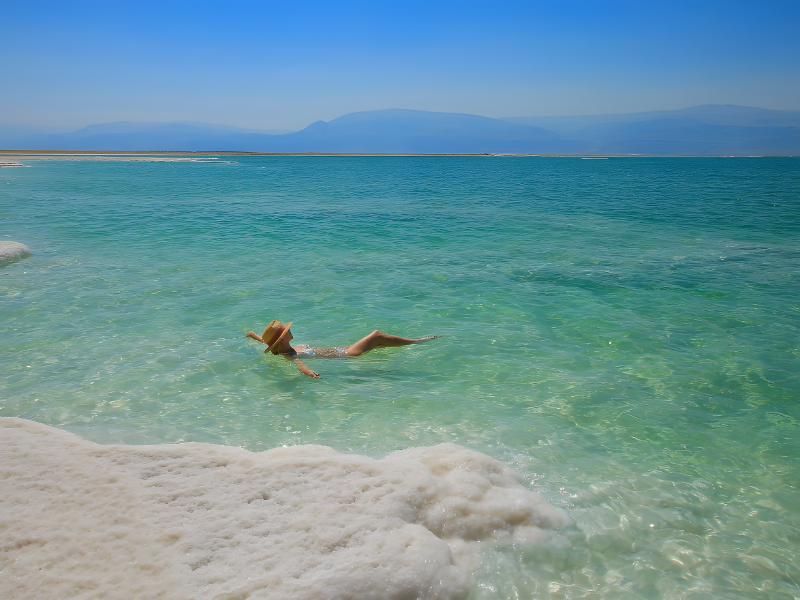
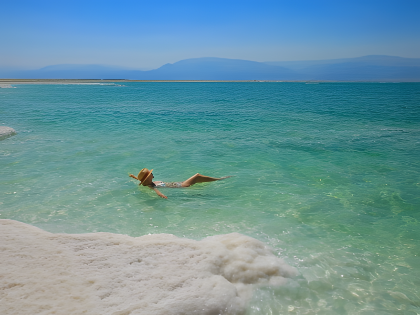
The Dead Sea’s exceptionally high salt content creates a truly unique swimming experience that defies the normal laws of buoyancy. Due to the extreme density of the water, which is approximately 1.24 kg/L compared to fresh water’s 1 kg/L, people can effortlessly float on the surface without any risk of sinking. This phenomenon has made the Dead Sea a popular tourist destination, attracting visitors from around the world who come to experience the surreal sensation of floating without effort. The buoyancy is so strong that it’s actually challenging to swim in a conventional manner or to fully submerge oneself in the water. Visitors are often seen reading newspapers or books while floating, a testament to the stability provided by the dense, mineral-rich water. In addition to its floating properties, the Dead Sea maintains a consistently warm temperature throughout the year. The water temperature rarely drops below twenty degrees Celsius (68°F), making it a comfortable place to swim even during cooler months. This stable warmth is due to several factors, including the sea’s low elevation (which increases atmospheric pressure and heat retention), its high salt content (which affects the water’s thermal properties), and the region’s arid climate. The combination of effortless floating and warm waters creates a uniquely relaxing and therapeutic environment, which has been recognized for its potential health benefits since ancient times. Many visitors report feeling rejuvenated after bathing in the Dead Sea, attributing this to the high mineral content and the stress-reducing effects of effortless floating.
 zi ang