
61. Rakotz Bridge
Located in: Gablenz, Germany
Established: 1800s
Cost: Unknown
Bridges in Europe that were built from the medieval times to the nineteenth century have garnered the nickname “Devil’s Bridge” for one reason or another. Those centuries were suspicious periods, and the Dark Ages especially led to many things being credited to the devil.
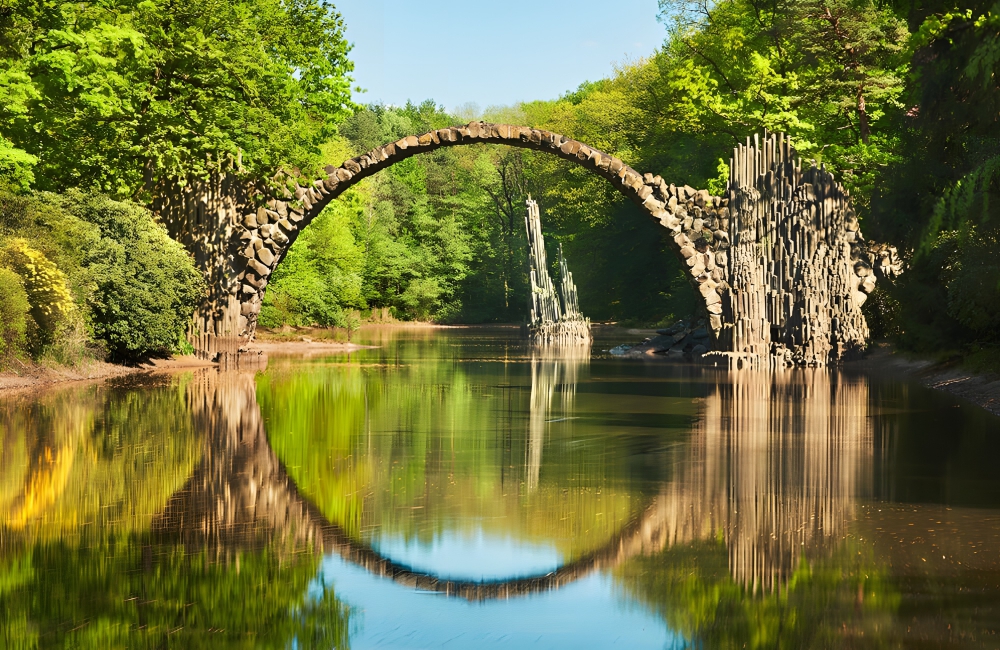
Rakotz Bridge Jaromir ©Chalabala / Shutterstock
Rakotzbrucke, also called Rakotz Bridge or Teufelsbrucke, which means “The Devil’s Bridge,” is one such attraction. It is located in the Azalea & Rhododendron Park Kromlau in Gablenz, Germany. The bridge was built to create a perfect circle when it reflected onto the water beneath it. The basalt columns that give Rakotz its spooky appearance were artificially-formed and shipped from other countries.
62. Storseisundet Bridge
Located in: Averoy & Hustadvika, Norway
Established: 1989
Cost: $29.36 million*
There are eight bridges making up the Atlanterhavsveien (Atlantic Road), and the Storseisundet Bridge is the longest of the eight, spanning 850 feet. Its longest span is 430 feet, and it clears 75 feet. The bridge borders the Hustadvika and Averoy Municipalities in Norway. As it links mainland and Averoy, it goes through an archipelago.
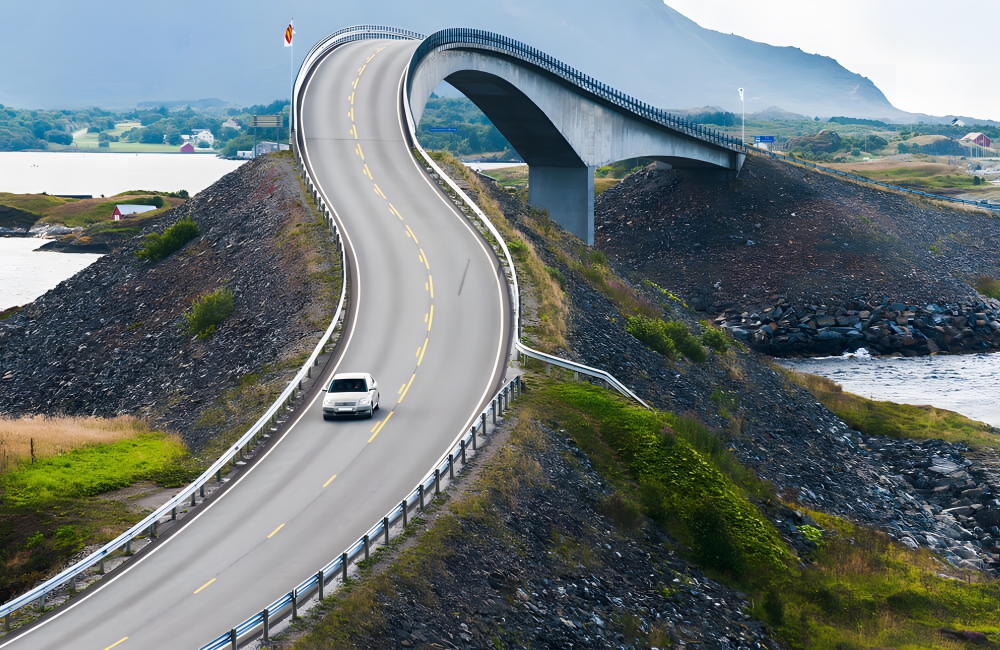
Storseisundet Bridge ©alexilena / Shutterstock
The cantilever bridge took six year to construct, opening in 1989. The construction delay was due to the region’s crazy weather. Construction was interrupted by a dozen hurricanes. 25% of the bridge’s funding was expected to be paid in toll fees by 2004, but the bridge was paid off by tolls ahead of schedule in 1999. After 1999, the tolls were cut.
63. Pont de Singe
Located in: Tatton Park, England
Established: 2012
Cost: $28,592*
Pont de Singe was created by Oliver Grossetete, a French artist who used three giant helium balloons, which floated a rope bridge over a Tatton Park lake in northwestern England. Ponte de Singe, which means “Monkey Bridge,” was created as part of the Tatton Park Biennial Contest. The theme for entrants that year was “flight.”
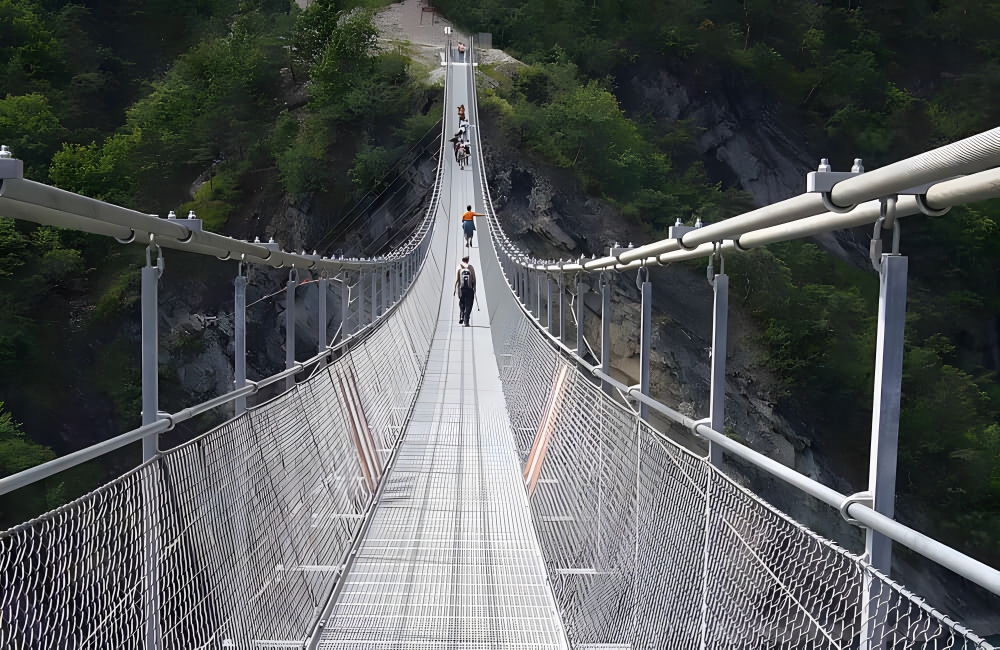
Pont de Singe ©Herby / Wikimedia.org
Located in the peaceful Japanese garden section of the park, the structure’s rope bridge is made of cedar wood. The ends of the bridge trail in the water. Visitors are not permitted to use the bridge (they can’t even reach it), though Grossetete said later that he was sure it could hold the weight of at least one person.
64. Ponte Vecchio
Located in: Florence, Italy
Established: 27B.C.-476A.D.
Cost: $5 million* (Replacement Cost)
Pont Vecchio means “Old Bridge” in Italian, and this bridge is indeed storied, having been built in Roman times. The Ponte Vecchio crosses the Arno River in Florence, Italy. It spans 105 feet and clears 98 feet. The Ponte Vecchio, during the Renaissance Period, has had many shops built along it.
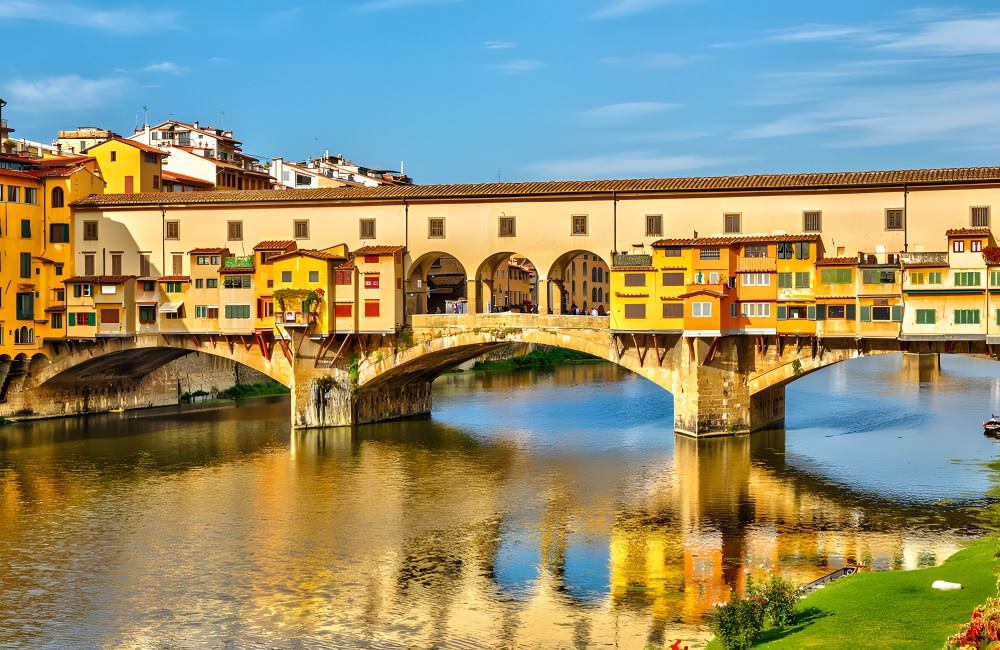
Ponte Vecchio ©S.Borisov / Shutterstock
Originally, Pont Vecchio’s shops were occupied by farmers, tanners, and butchers. As time went on, souvenir sellers, art dealers, and jewelers took over. Though Ponte Vecchio’s initial cost is unclear (the Bridge didn’t even appear on any official record until 996 A.D.), the cost to repair and replace it in modern times was $5 million.
65. Scale Lane Footbridge
Located in: Kingston upon Hull, UK
Established: 2013
Cost: $1-$5 million*
The Scale Lane Footbridge (also called the Scale Lane Swing Bridge) links Tower Street and Scale Lane in the UK, providing a pedestrian crossing between Kingston upon Hall’s museums in Old Town and Deep Submarium. The Scale Lane Footbridge also can accommodate moving river traffic.
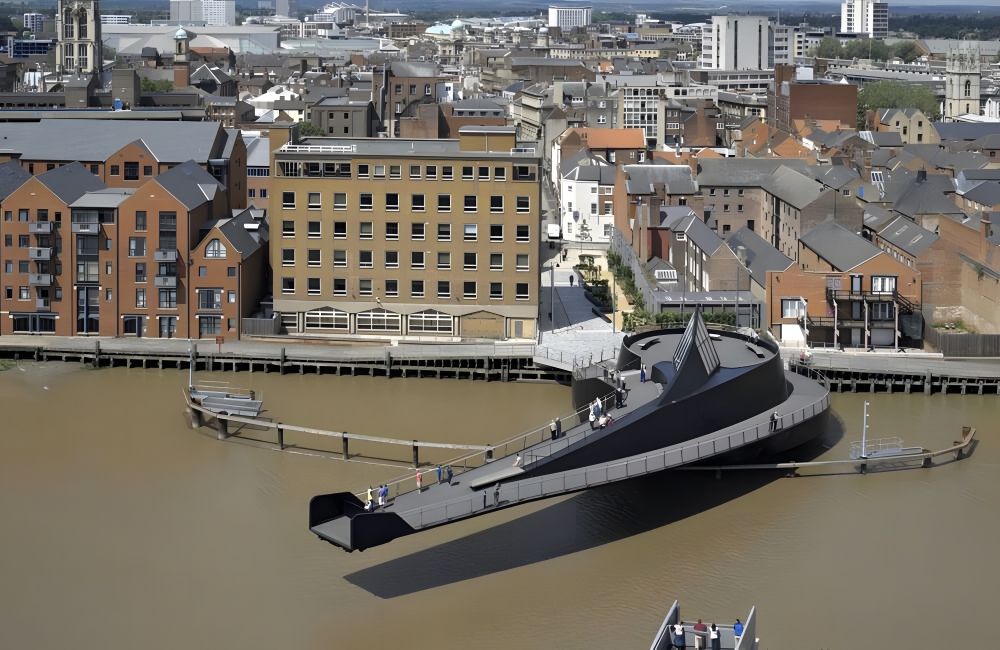
Scale Lane Footbridge @aasarchitecture / Twitter.com
This bridge is unique because it is the only one in the world where people can stay on it while it is swinging open. The bridge spans 187 feet in total and weighs 1,000 tons. The Lord Mayor of Kingston formally opened the Scale Lane Footbridge to the public on June 28, 2013.
66. Brooklyn Bridge
Located in: Brooklyn, NYC, New York
Established: 1883
Cost: $320 million*
The Brooklyn Bridge is a cable-stayed suspension bridge hybrid located in the borough of Brooklyn in New York City. The Bridge spans the East River and connects Brooklyn with Manhattan. It was opened in 1883 after years of construction. Designed by the Roebling family, the bridge’s construction took thirteen years.
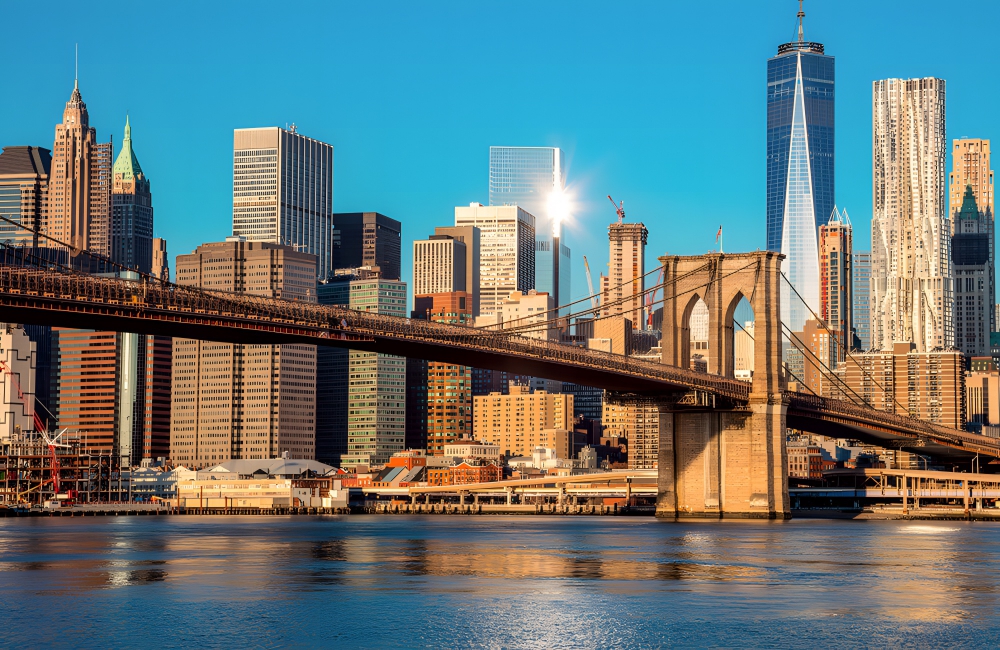
Brooklyn Bridge ©Taiga / Shutterstock
The Tammany-Hall-controlled NY Bridge Company had a litany of controversies and political infighting, which caused the new hybrid design to frequently be cancelled and then re-launched. After thirteen years of bureaucratic entanglement, it finally opened. The Brooklyn Bridge has been listed on many Historical Landmark lists, and it was renovated in the 1950s, 1980s, and 2010, all with millions of dollars of new improvements.
67. Akashi-Kaikyo Bridge
Located in: Awaji Island & Kobe, Japan
Established: 1998
Cost: $3.6 billion*
The Akashi Kaikyo Bridge was built after the Japanese government was pressured by the public to do something about the dangerous Akashi Strait. Before the bridge was constructed, ferries were used to transport people from Honshu to the Awaji Island. The dangerous waterway experiences many severe storms. After two ferries sank and killed 168 people in 1955, plans for the Akashi Kaikyo Bridge were developed.
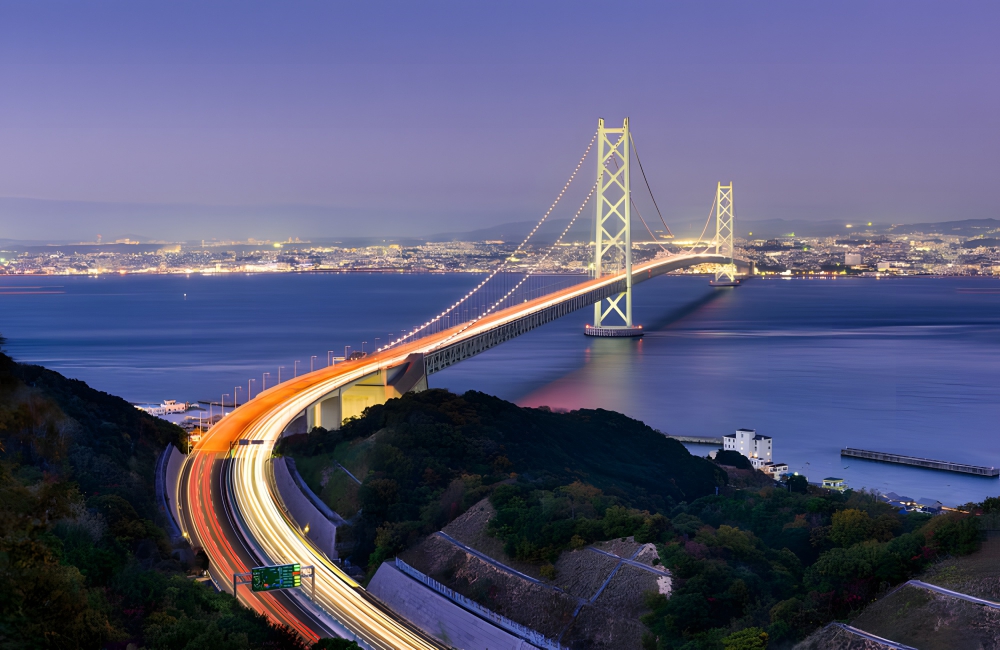
Akashi-Kaikyo Bridge ©Sean Pavone / Shutterstock
The construction commenced in 1988, taking a decade to complete. Over one-hundred contractors were required to complete the job, at a cost of billions. The Akashi Kaikyo Bridge is a six-line suspension bridge, nicknamed “Pearl Bridge.” It comprises part of the E28 Kobe-Awaji-Naruto Expressway.
68. State Route 520 Floating Bridge
Located in: Seattle, Washington
Established: 1963 (Redone in 2016)
Cost: $250 million*
The entire project budget for the State Route 520 Floating Bridge, also known as the Evergreen Point Floating Bridge, or, simply, the 520 Bridge, is $4.56 billion. The bridge itself cost $206 million to construct. The original 520 Bridge was a 7,578-foot-long floating span that has 33 pontoons. It opened to the public in 1963.
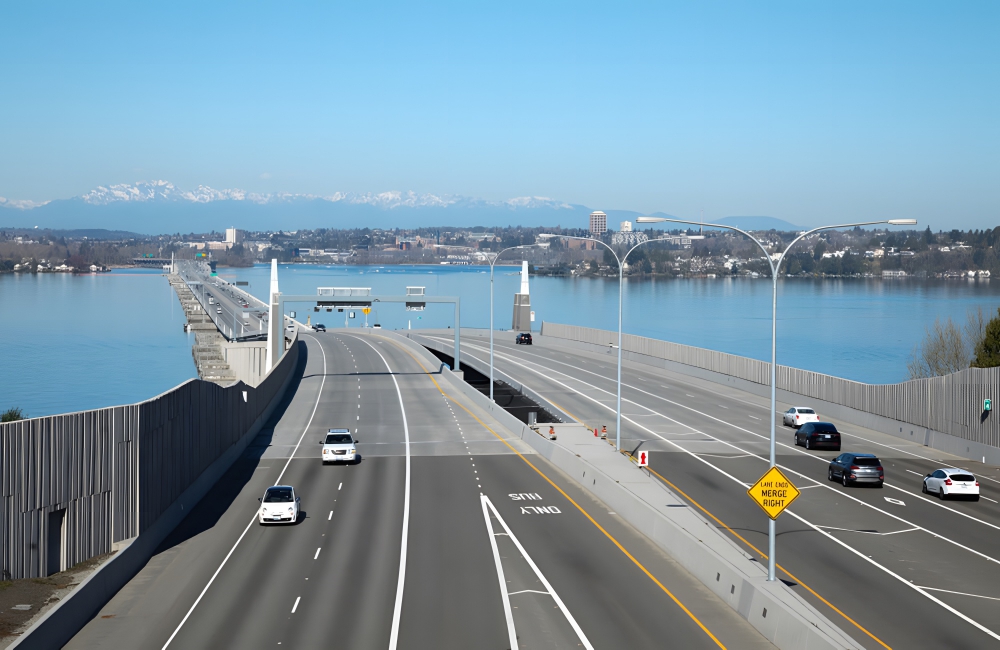
State Route 520 Floating Bridge ©VDB Photos / Shutterstock
The new Floating Bridge opened to the public in 2016, and it cost $250 million to build. The reason that the original 520 Bridge had to be replaced was because it was built before modern earthquake engineer standards, meaning that it had vulnerabilities in portions of its structure. The modern Floating Bridge eliminated those issues.
69. Pont Jacques Chaban-Delmas
Located in: Bordeaux, France
Established: 2013
Cost: $195 million*
Located in Bordeaux, France, the Pont Jacques Chaban-Delmas spans the Garonne, standing 253 feet at its tallest height. It spans 1,886 feet in length, with its longest span reaching 360 feet. The bridge was opened to the public in 2013. It is named after a former Prime Minister of France and former Mayor of Bordeaux.
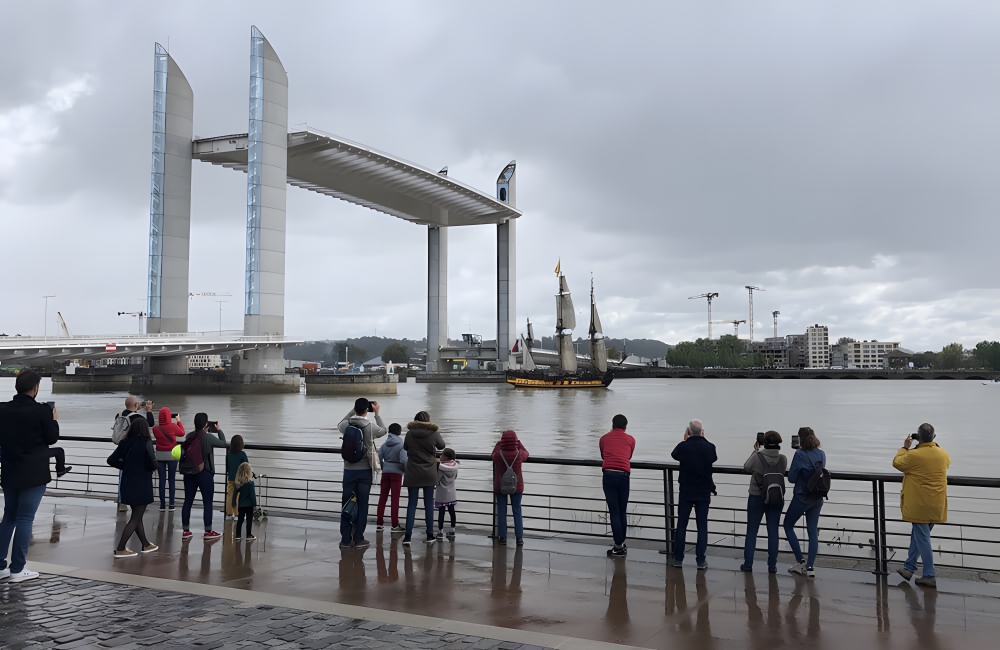
Pont Jacques Chaban-Delmas @DoPiento / Twitter.com
The Pont Jacques Chaban-Delmas operates in a vertical-lift style. This means that the span rises vertically while still remaining parallel to the deck. The vertical lift costs less per square foot to build, giving it an advantage over bascule and swing-spans. The Chaban-Delmas took three years to construct.