
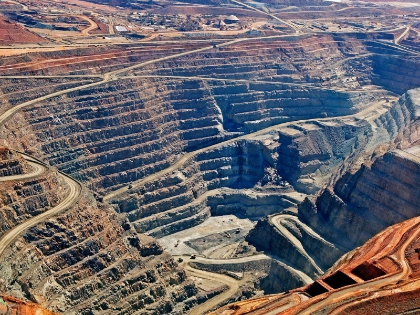
9. Creighton Mine (Canada)
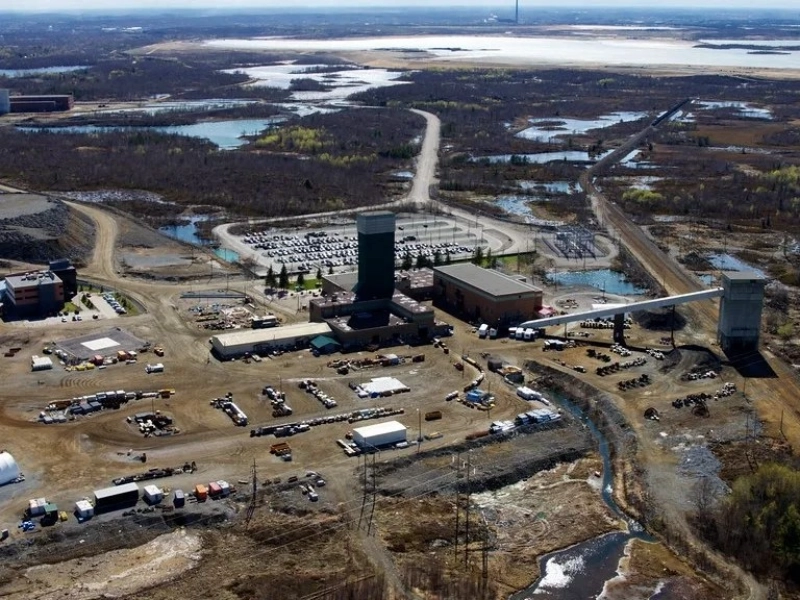
One outstanding example of deep mining outside of South Africa’s gold fields is Creighton Mine, in Sudbury, Ontario, Canada. Creighton, one of the deepest mines in North America with a depth of about 2.5 kilometres (1.5 miles), mostly mines nickel and copper from the rich ore deposits of the Sudbury Basin.
Creighton Mine’s history begins in 1901 when prospectors first came upon the rich mineral resources in the region. Since then, the mine has been increasingly important in Canada’s mining sector, greatly influencing nickel and copper output of the nation. Creighton’s location, the Sudbury Basin, is thought to have been created by a meteorite impact around two billion years ago, producing a distinctive geological setting rich in several metals.
Technical complexity and the application of modern technologies define Creighton’s mining activities. To access the deep-lying ore deposits, the mine uses ramp access mixed with shaft mining. Engineers have had to create creative answers to address rising rock pressure, heat, and logistical challenges as the mine has dug deeper over years.
Managing the geotechnical hazards related to deep mining presents one of Creighton’s toughest obstacles. At such depths, the great rock stress can cause seismic occurrences and rock bursts, so creating major safety hazards. The mine uses cutting-edge seismic monitoring systems and other ground control techniques including dynamic support systems that may absorb energy from seismic shocks in order to reduce these hazards.
Important components of Creighton’s operations include cooling and ventilation. The virgin rock temperature can rise above 40°C (104°F) at depths of 2.5 km, therefore generating somewhat dangerous operating circumstances. Complementing cooling units that help to preserve a reasonable working climate, the mine has a vast ventilation system distributing significant amounts of air across the underground operations.
Among the most sophisticated ore processing facilities worldwide are those at Creighton. To separate the rich minerals from the waste rock, the mined ore is sent to surface concentrators where it is crushed, ground, and fluted. Nearby smelters receive the resultant concentrates for additional treatment. Improving the efficiency of these procedures and lowering their environmental impact has become rather important in recent years.
The effects of the mine on Sudbury’s economy and local population have been significant. Supporting a broad spectrum of companies and services, Creighton, one of the biggest employers in the region, has been instrumental in the growth of the area. Implementing thorough water management systems and land reclamation initiatives to minimise its environmental impact, the mine has also been front and foremost in environmental stewardship.
Creighton presents continuous difficulties common to deep mining activities notwithstanding its achievements. Rising operational expenses and more technical challenges resulting from rising depth of extraction have resulted from Maintaining safe working conditions at such depths calls for ongoing awareness and safety technology investment. Apart from that, the mine has to deal with the cyclical character of metal prices, which can greatly affect its financial feasibility.
Looking ahead, Creighton keeps investigating methods to keep its status as a world-class mining operation and extend its operational lifetime. This covers continuous research on more ecologically friendly extraction techniques and efforts at discovery of fresh ore deposits. The worldwide mining sector finds inspiration in the mine’s innovative and adaptable history, proving how ethically, safely, and effectively deep mining can be carried out in demanding geological settings.
10. Great Noligwa Gold Mine (South Africa)
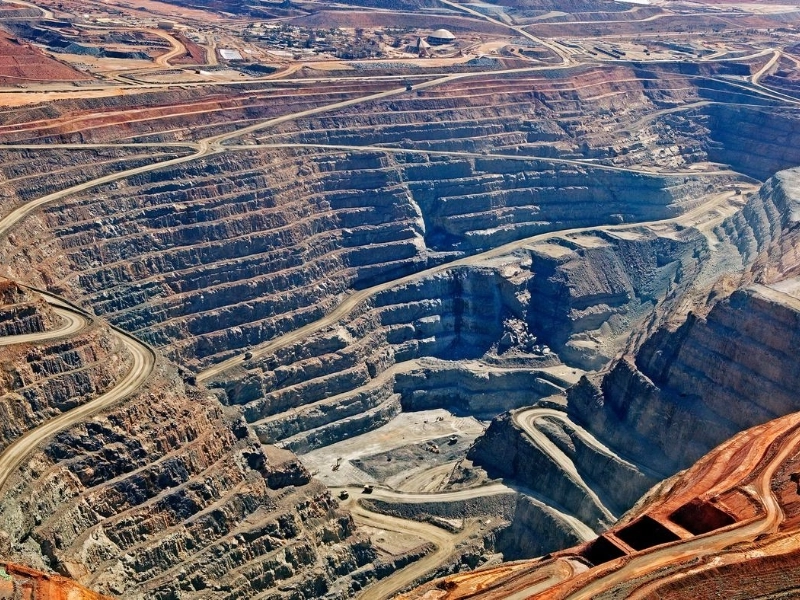
Another important deep mining project that has greatly increased the gold output of South Africa is the Great Noligwa Gold Mine situated on the Vaal River. Great Noligwa, with a depth of roughly 2.4 kilometres (1.5 miles), epitomises the mining sector’s commitment to investigating depths for gold deposits, therefore reinforcing South Africa’s leadership in deep gold mining.
Originally founded in the late 20th century, Great Noligwa has been a mainstay of AngloGold Ashanti’s Vaal River activities. Derived from the serpentine form of the gold-bearing reefs in the vicinity, the mine’s name—which means “the one with many snakes” in the local tongue—reflects These intricate geological formations have made the development of certain mining methods necessary to effectively extract the valuable metal challenging.
Great Noligwa’s mining activities are distinguished by their technical intricacy and advanced technology application. To remove gold-bearing ore from small, high-grade reefs, the mine combines mechanised approaches with traditional mining methods. From the miners, who must negotiate unstable rock conditions at considerable depths, this method demands a high degree of competence and accuracy.
Managing the strong heat and pressure at such depths presents one of Great Noligwa’s toughest difficulties. At the bottom of the mine, the virgin rock temperature may be higher than 50°C (122°F), thereby posing possibly dangerous working circumstances. The mine has a sophisticated cooling system that moves chilled water and air around the underground operations to handle this. This technology not only makes the surroundings more pleasant for employees but also helps to prevent heat-related equipment breakdowns that can cause production to be disturbed.
Given the inherent hazards of deep mining, safety is absolutely critical at Great Noligwa. The mine now uses cutting-edge communication networks, emergency refuge chambers, and seismic monitoring systems among other thorough safety measures and technology. Protecting the crew and guaranteeing the mine’s continuous running in demanding conditions depend on these steps.
Great Noligwa’s ore processing consists in a sequence of difficult processes meant to maximise gold recovery. The ore is moved to the surface following extraction where it is crushed, ground, and subjected to many separation techniques. The mine uses cyanide leaching and gravity concentration to separate gold from the ore. Improving the efficiency of these procedures has become increasingly important in recent years in order to save expenses and lessen environmental effect.
Great Noligwa has influence outside of its daily activities. Providing employment for thousands of people and supporting several auxiliary companies, the mine has been a major job creator in the area. Like many deep-level gold mines in South Africa, Great Noligwa has, however, struggled with growing operational expenses, labour relations, and the necessity of exploring farther to preserve output levels.
Great Noligwa remains a significant component of South Africa’s gold mining scene despite these obstacles. The operators of the mine have made investments in exploration and development initiatives meant to extend its operational lifetime and find new areas containing gold. In line with worldwide patterns towards more sustainable mining methods, there have also been initiatives to increase operational efficiency and lower environmental effect.
Great Noligwa leaves behind more than just gold output. Particularly in the fields of deep-level mining methods, rock engineering, and mineral processing, it has been a site of major technological innovation in the mining sector. Other mines all throughout the world have embraced many of the methods and technology created at Great Noligwa, therefore advancing mining science and engineering internationally.
Ultimately, the Great Noligwa Gold Mine is evidence of the extraordinary successes of the South African mining sector, stretching human capacity and technical innovation in the search of gold. Its activities reflect the continuous difficulties and changing character of deep mining in the twenty-first century as well as show the will to harvest priceless resources from the depths of Earth.
 zi ang