
9. La Garita Caldera, USA
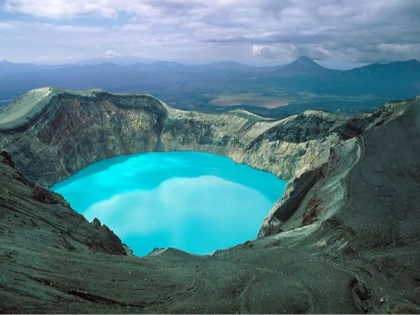
Nestled in the San Juan Mountains of southern Colorado, La Garita Caldera provides evidence of one of the most catastrophic volcanic episodes in recent geological history of Earth. Now a peaceful scene of rolling hills and deep valleys, this ancient supervolcano was the location of an eruption so large that it challenges simple understanding even by geological criteria.
La Garita Caldera underwent a really massive eruption some 27.8 million years ago, during the late Oligocene epoch. With an astounding 8 on the Volcanic Explosivity Index (VEI), this event expelled an estimated 5,000 cubic kilometres of material, a volume well beyond any known volcanic eruption in human history. Stated otherwise, this was almost 5,000 times more than the Mount St. Helens eruption in 1980.
The Fish Canyon Tuff, a vast accumulation of volcanic ash and debris spanning more than 11,000 square kilometres, emerged from this great eruption. This tuff layer got down to two km at its thickest areas. One of the biggest known single volcanic deposits on Earth, the sheer size of the Fish Canyon Tuff makes study of it extremely significant in terms of understanding of super-eruption processes.
La Garita Caldera’s formation was so strong that it most certainly affected ecosystems and world temperature. The enormous amounts of ash and gases dumped into the atmosphere would have caused a worldwide cooling phase, therefore influencing plant and animal life over large areas as well as weather patterns.
Now one of the biggest known calderas on Earth, the La Garita Caldera covers an area of around 35 by 75 km. But the caldera’s initial limits are not usually readily apparent to the uneducated eye from millions of years of erosion and later geological activity. Time has changed the terrain; portions of the calerous rim now create picturesque mountain ridges and summits in the San Juan Mountains.
La Garita Caldera’s geology is multifarious and stratified. Though its volume is great, the Fish Canyon Tuff is only one of several significant eruptions in the region over millions of years. La Garita is a component of the San Juan volcanic field, whose long history of volcanic activity has greatly altered the landscape of the area.
La Garita Caldera and the Fish Canyon Tuff offer geologists an unusual natural laboratory for examining super-eruptions and their long-term consequences. Important new understanding of magma chamber dynamics, eruption mechanisms, and the processes causing such massive accumulations of eruptible magma has come from site research. Mineral analysis within the tuff has also yielded important information on pre-eruption conditions deep under the crust of Earth.
Although La Garita Caldera is now extinct and offers no volcanic hazard, its study is nevertheless vital for knowledge of possible effects of next super-eruptions elsewhere on Earth. La Garita’s lessons guide models and forecasts for other active supervolcanoes, including Yellowstone.
Now a paradise for outdoor enthusiasts, the area around La Garita Caldera boasts stunning settings sculpted by volcanic activity and later erosion. The area’s breathtaking views, varied ecosystems, and rich geological legacy draw hikers, campers, and environmentalists. Many guests still don’t know, though, that they are treading on the remains of one of the most potent volcanic explosions ever recorded on Earth.
Finally, La Garita Caldera reminds us humbly of the great powers influencing our earth. Its research keeps producing insightful analysis of Earth’s geology and the possibility for catastrophic occurrences capable of changing whole areas. Looking at the serene settings of southern Colorado reminds us of the dynamic and occasionally hostile geology of our planet and the need of knowing these processes for our future.
 zi ang