
31. City Methodist Church
Location: Gary, Indiana
Year: 1925
Cost: $800,000*
Dr. William Grant Seaman founded the City Methodist Church in Gary, Indiana. Built in 1925, the Church was done in the Gothic Revival Style, and it cost $800,000 in 1920s-money to build. Dr. Seaman wanted to bring a church into Gary, Indiana, which was (and still kind of is) a disreputable neighborhood.
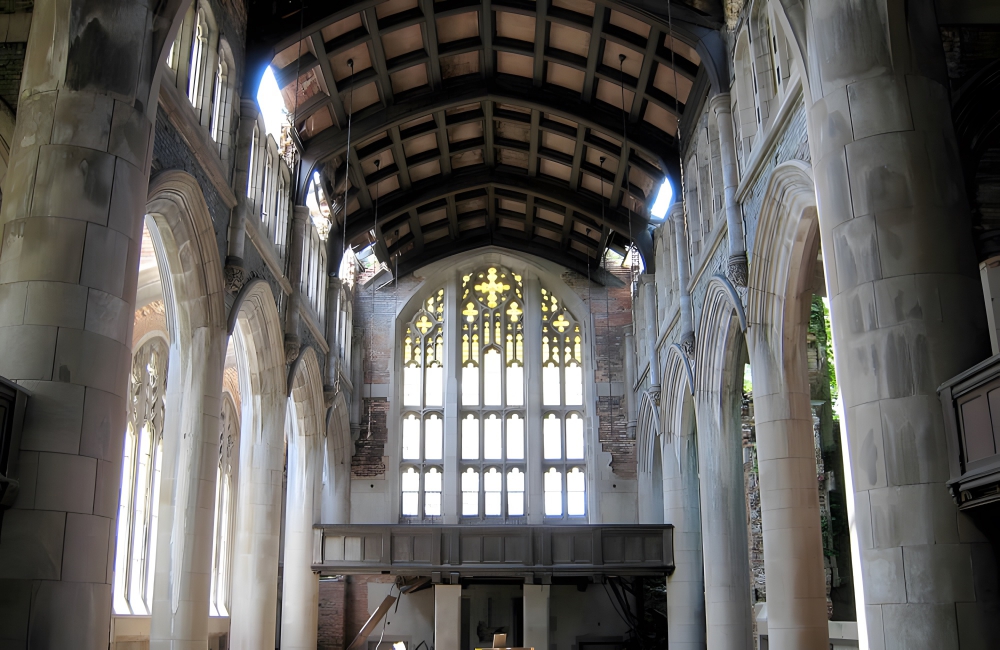
City Methodist Church, Gary, Indiana ©Tara Ashlee Photography / Shutterstock
US Steel, the chief employer in Gary at the time, agreed to donate the site to Dr. Seaman. Dr. Seaman ran the church until the late 1920s when his congregation kicked him out because he was pushing cultural diversity. After Dr. Seaman was forced out, the church continued to decline. It officially closed in 1975.
32. Chaonei No. 81
Location: Beijing, China
Year: 1910
Cost: $1.5 million*
The municipal government of Beijing, China, has declared Chaonei No. 81 a historic building, saving it from possible attempts to tear it down. Chaonei No. 81 is also considered Beijing’s most haunted house, and it was the subject of The House That Never Dies, a popular horror movie in China.
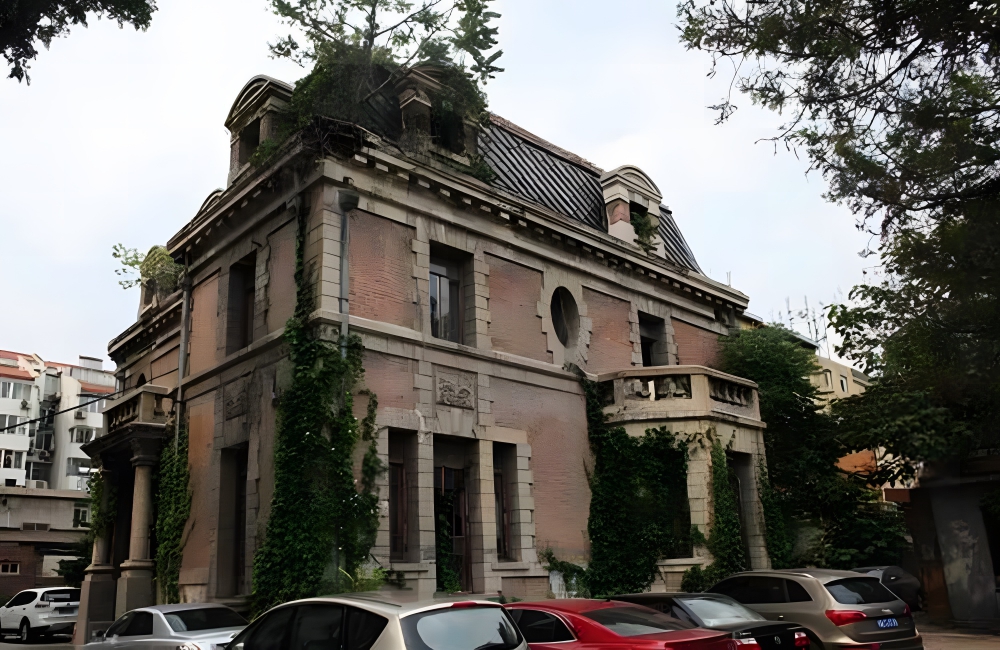
Waverly Hills Sanatorium, Louisville, Kentucky
After that, in 2014 there came a renewed interest in exploring the abandoned property. The brick home has been there since the early 1900s, and the stories have changed over time as to what (or who) exactly haunts the house. The most common story is that a suicidal woman-turned-ghost haunts Chaonei No. 81, causing mysterious disappearances.
33. Waverly Hills Sanatorium
Location: Louisville, Kentucky
Year: 1910
Cost: $8 million*
The Waverly Hills Sanitorium was opened in 1910, and it was designed to house patients suffering from tuberculosis. Jefferson County, Kentucky, the site of the Sanitorium, had been ravaged by the White Plague, an outbreak of tuberculosis that killed a lot of residents. These deaths prompted the Sanitorium’s construction.
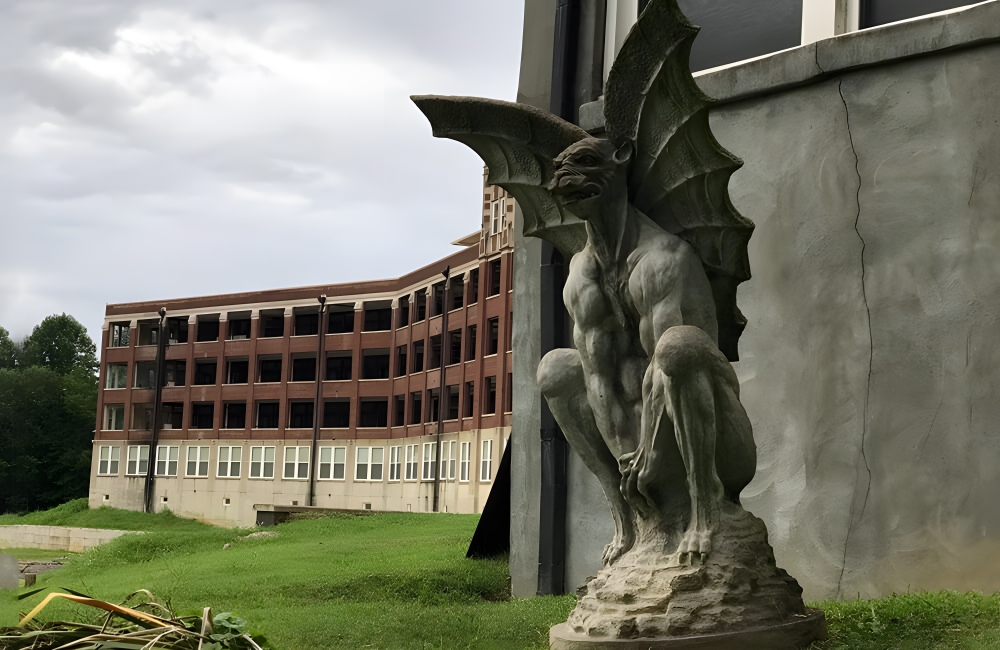
Waverly Hills Sanatorium, Louisville, Kentucky @PrinceOfWade / Twitter.com
In 1961, streptomycin was developed, an antibiotic drug that nipped TB in the bud. In 1962, Waverly Hills was converted to Woodhaven Medical Services, a nursing home. The state closed down Woodhaven in 1982 due to patient neglect and abuse. The hospital then fell into disuse, and, as with any abandoned sanitorium, rumors of hauntings abound.
34. Chateau Miranda
Location: Celles, Belgium
Year: 1866
Cost: $500,000*
The Liederkerke-de Beauforts, a wealthy European family, were forced out of Veves Castle, their home in France, during the French Revolution. The family decided that it wanted to live in style once again, and it hired Edward Milner to construct Chateau Miranda. In 1866, the stone, neo-Gothic castle was completed.
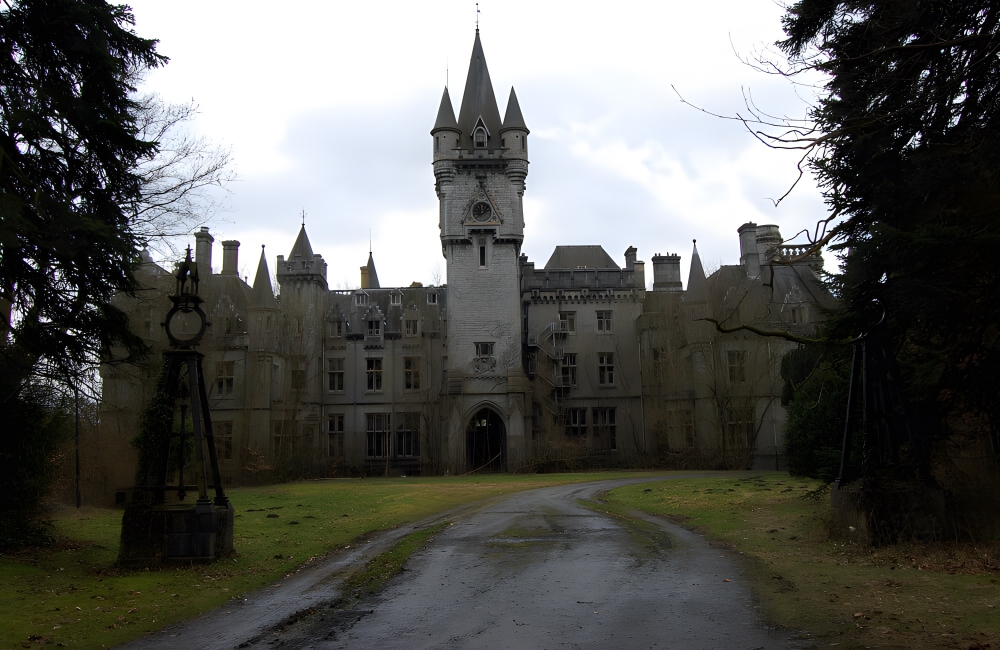
Chateau Miranda, Celles, Belgium ©Pel Laurens / Wikimedia.org
The castle was occupied until WWII when German forces ransacked Belgium. A small part of the Battle of the Bulge was fought on castle grounds. During that time, Nazis occupied Chateau Miranda. After they were defeated, the National Railway Company of Belgium bought the property and turned it into a holiday camp for sick kids until the 1970s.
35. Nara Dreamland
Location: Nara, Japan
Year: 1961
Cost: $5.95 million*
Nara Dreamland was inspired by Kunizo Matsuo’s journey to Disneyland in America. Matsuo, a wealthy businessman, was impressed. He met with Walt Disney to discuss bringing Disney to Japan. The talks went well initially, but then Disney and Matsuo disagreed, so the project was abandoned.
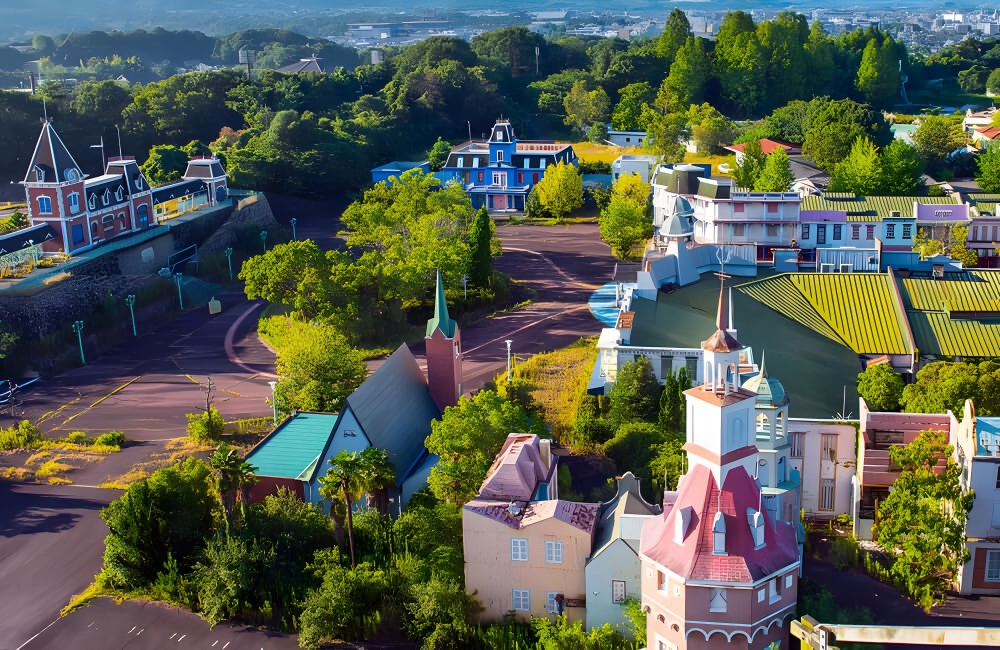
Nara Dreamland, Nara, Japan ©Jordy Meow/commons.wikimedia.org
Instead, Nara Dreamland was formed. It was heavily-inspired California’s Disneyland. It had a Sleeping Beauty Castle, Main Street USA, Train Depot, and Matterhorn Mountain, among other familiar Disney-esque buildings. Nara Dreamland operated for forty-five years until it closed in 2006 due to low attendance. After its closure, it was left to fall into ruin.
36. Villa de Vecchi
Location: Lake Como, Italy
Year: 1857
Cost: $200,000*
Villa de Vecchi is also called the “Red House,” “the Witches’ House,” or the “Ghost House,” giving you an idea of what kind of reputation it has amassed since its closure. Villa de Vecchi is possibly Italy’s most haunted house. It was built in the 1800s by Count Felice de Vecchi, an Italian war hero.
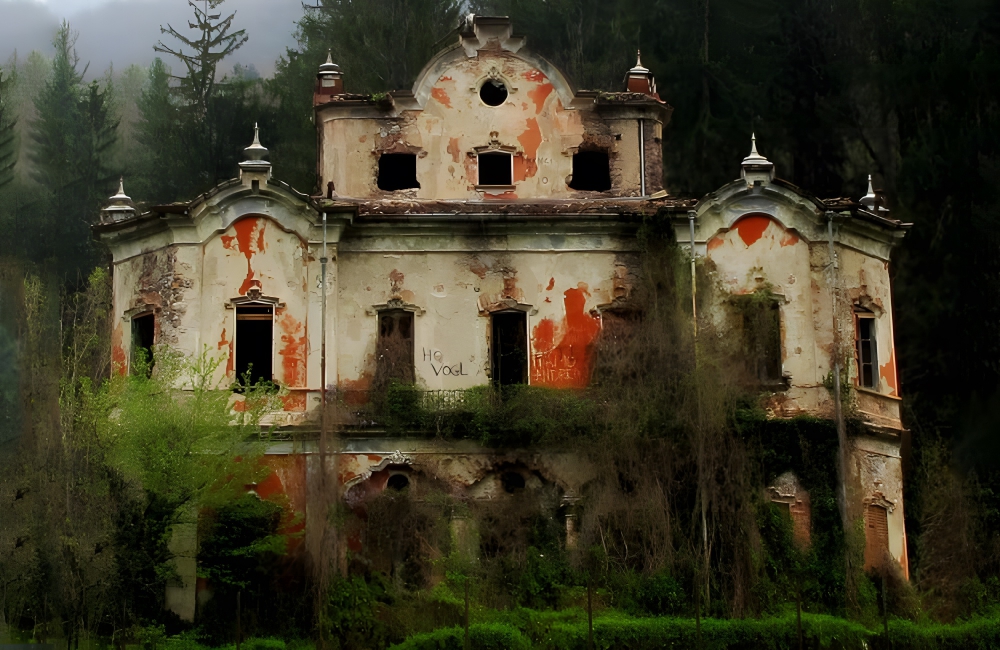
Villa de Vecchi, Lake Como, Italy @Ana Maria Miranda / Pinterest
There is a rumor that Count de Vecchi came home one day and found his wife and daughter dead, but that has been disputed. What isn’t disputed is that famous occultist Aleister Crowley stayed there in the 1920s. Rumors abound as to what went on while the home was under Crowley’s and his followers’ control. Crowley’s stay earned Villa de Vecchi the “Witches’ House” moniker.
37. Canfranc International Railway Station
Location: Canfranc, Spain
Year: 1928
Cost: $453.9 million (refurbishment)*
Canfranc International Railway Station was an opulent railway station constructed as a major hub for traffic traveling from Spain to France. The Station was constructed in Beaux-Arts style, and it has hundreds of windows and doors. The Station has been interrupted by the Spanish Civil War and WWII, but half of it is still up and running.
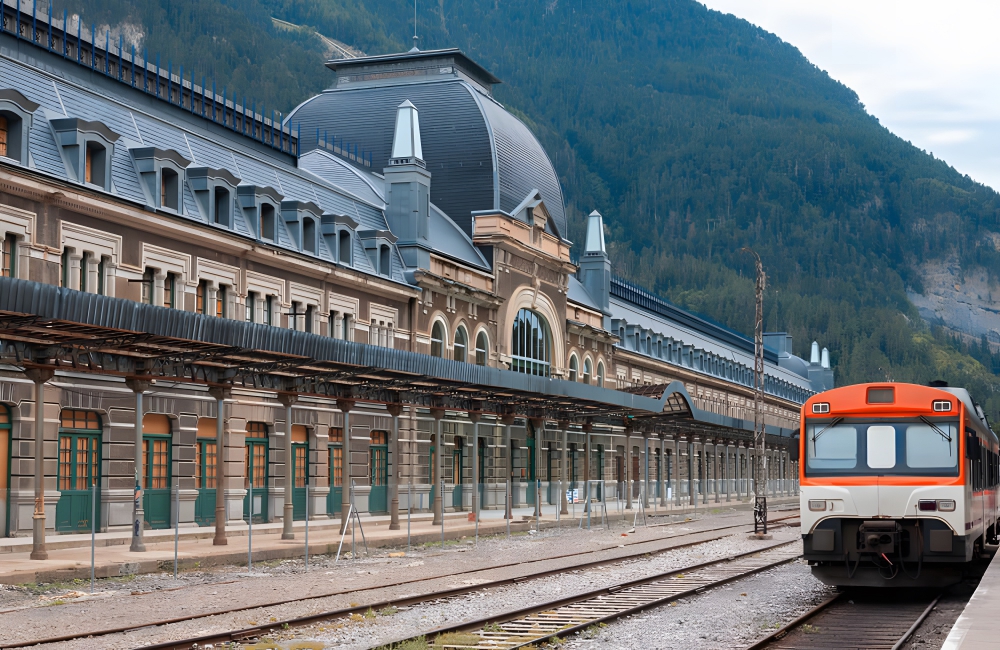
Canfranc International Railway Station, Canfranc, Spain ©peresanz / Shutterstock
Only a few trains run on the Spanish side. The French side of the station has fallen into disuse and neglect. The site is derelict. Though local governments on both sides have stated their willingness to reopen and renovate the station, little action has occurred.
38. Elda Castle
Location: Ossining, New York
Year: 1927
Cost: $3.2 million*
The Elda Castle (originally named the Elda Estate) was built in the late 1920s. David Abercrombie, one of the founders of the clothing store Abercrombie & Fitch, built the castle. Elda sits on 60 acres, and it took sixteen years (from 1911 to 1927) to build. Elda is constructed in the English Cottage style.
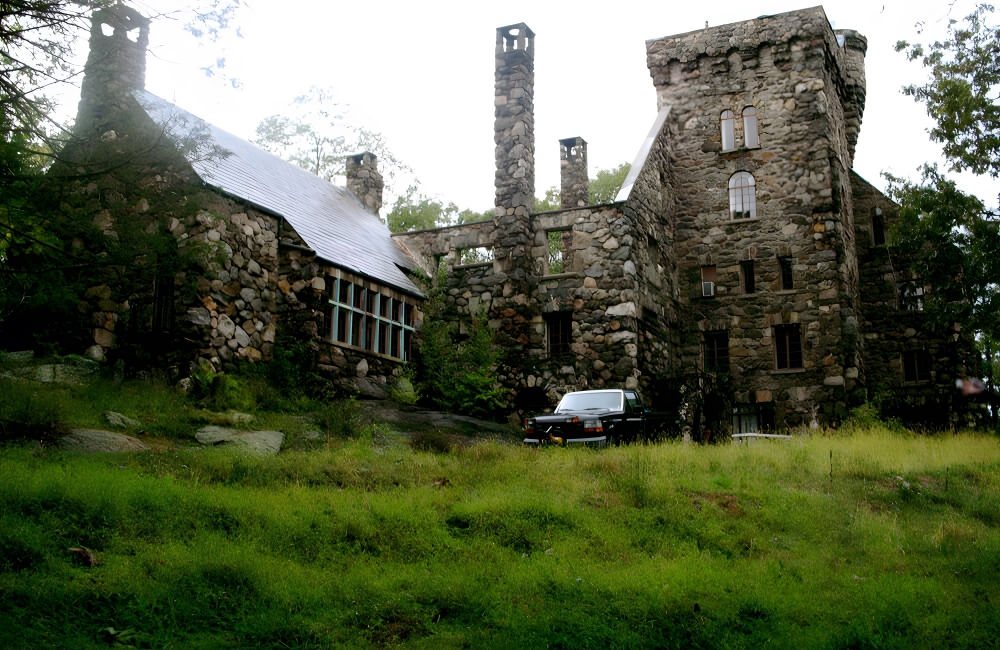
Elda Castle, Ossining, New York @imgur / Pinterest
The massive estate is made almost entirely of cut and live granite. The exterior of the house looks like a Medieval castle, with arches and vaults. David Abercrombie allowed police officers to use his estate for rifle training. The estate fell into disrepair after Abercrombie died in 1931.
39. SS Ayrfield
Location: Sydney Australia
Year: 1911
Cost: $68.03 million*
SS Ayrfield started its life as the SS Corriman, a 1.14-ton steel warship that the UK constructed in 1911. The warship was then changed into a steam collier, and SS Corriman transported supplies to American troops in the Pacific. After WWII ended, the SS Corriman was renamed to SS Ayrfrield. Little did its builders know that it would go from warship to floating forest.
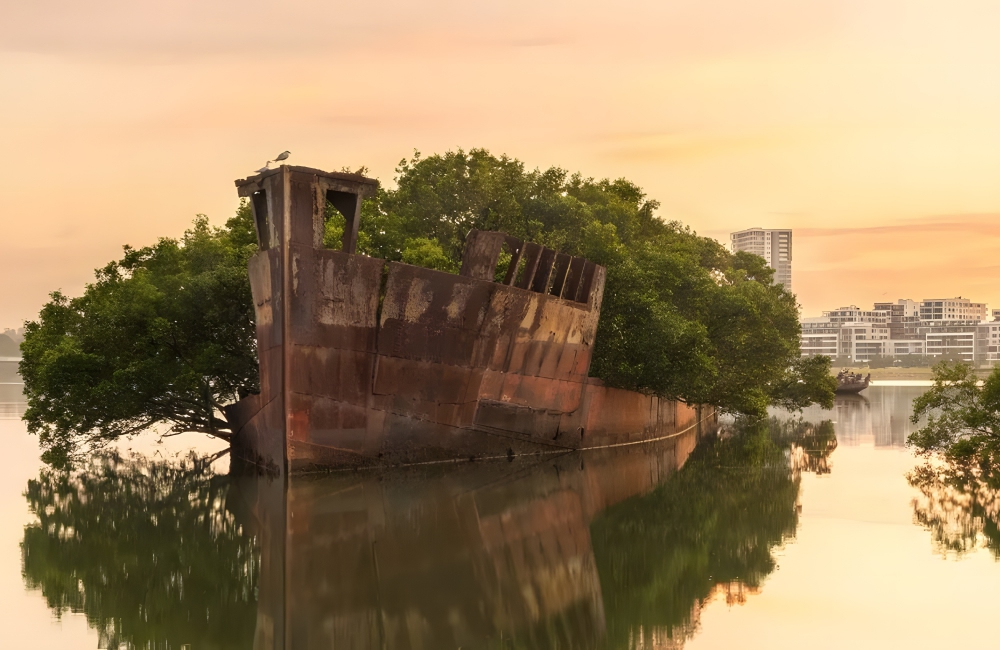
SS Ayrfield, Sydney Australia ©Duncan Struthers / Shutterstock
In 1972, SS Ayrfield was sent to Homebush Bay, which is where Australia sends the ships that it no longer needs. It floated there for decades and, during that time, it was taken over by nature. It now is home to a veritable forest of lush mangrove trees.
40. Wyndclyffe Castle
Location: Rhinebeck, New York
Year: 1853
Cost: $120,000 (purchase price)*
Wyndcliffe Mansion was built in 1853 by George Veitch, who completed it in the Norman Style in New York’s Hudson River District. The brick mansion was first called Rhinecliff, and its principal owner was Elizabeth Schermerhorn Jones. The mansion was so opulent that it inspired the famous phrase, “Keeping up with the Joneses.”
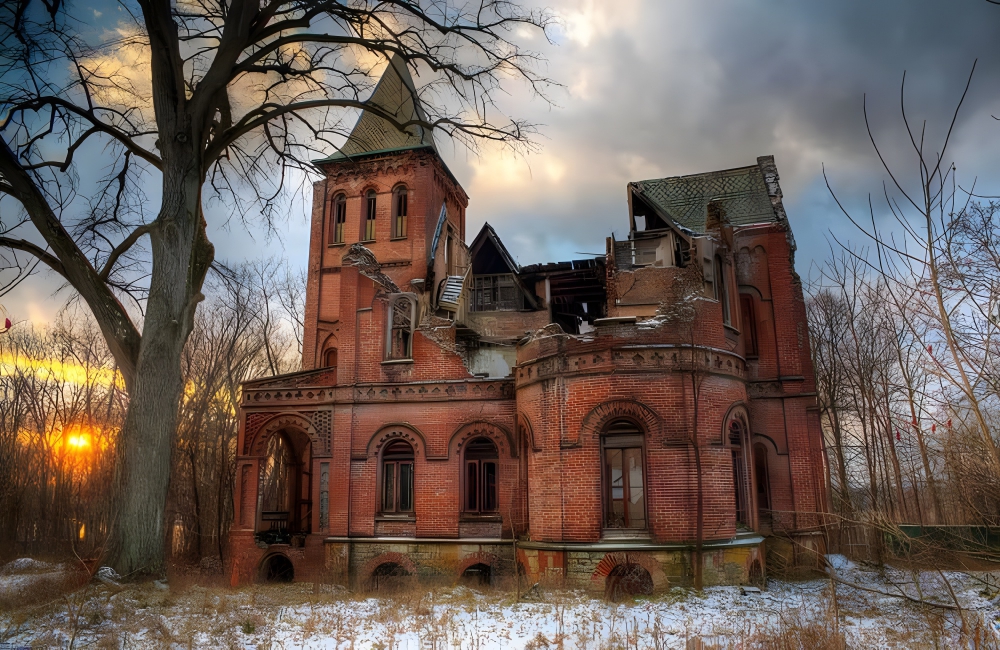
Wyndclyffe Castle, Rhinebeck, New York @ARTANDHOME/Twitter.com
Wyndcliffe changed hands and names throughout the next century. It was officially abandoned in 1950. The property originally sat on eighty acres, but that acreage was later reduced to just 2.5. Parts of the mansion have collapsed from neglect. It was bought in 2016 for $120,000, and it is likely going to be demolished.
41. Spreepark Amusement Park
Location: Berlin, Germany
Year: 1969
Cost: $65 million*
Spreepark Berlin is an abandoned amusement park in Germany. At its peak, it had 1.5 million visitors per year. Spreepark covered nearly eighty acres. It was founded in 1969, and it was the only amusement park in East/West Berlin. In 1991, it got a big expansion. The park did extremely well until 1999.
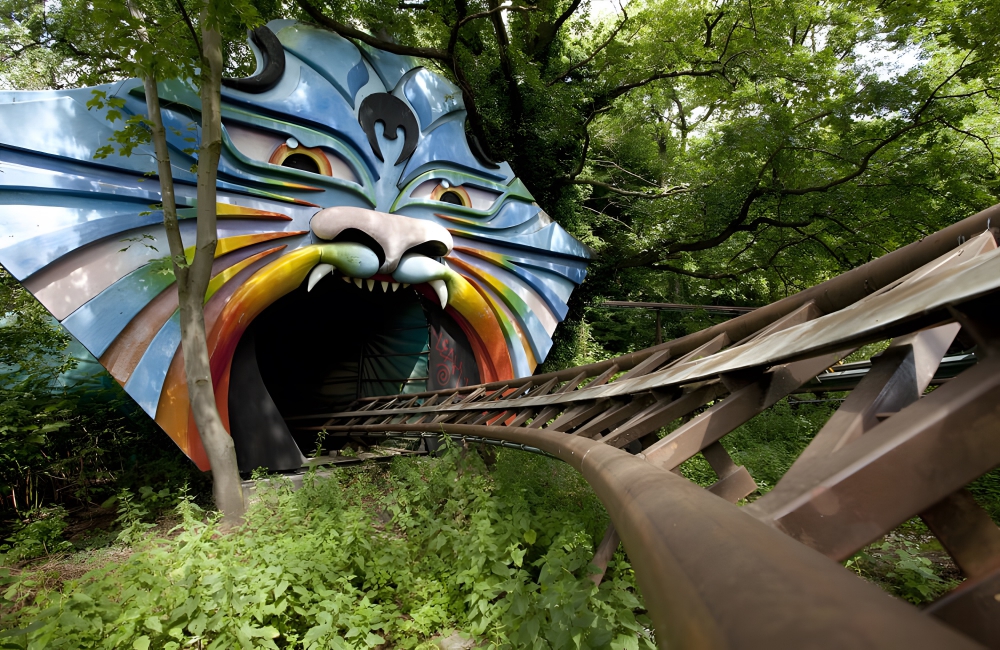
Spreepark Amusement Park @BerlinTourism / Twitter.com
In 1999, debt and low visitation began to cripple Spreepark economically. To handle the debt, Spreepark had to increase admission fees. That caused visitor numbers to drop even more. In 2001, Spreepark declared bankruptcy. Since 2002, it has been abandoned. The original founder, Norbert Witte, fled to Peru. He was arrested for drug smuggling in 2004.
42. Liu Family Mansion
Location: Taiwan
Year: 1929
Cost: $6.5 million*
The baroque-style Liu Family Mansion is also called the Minxiong Ghost House. It is one of Taiwan’s most famously-haunted locations. The Ghost House sits in the countryside, right near Chiayi. The three-story home is now covered by vegetation on the outside, and no one has lived there since the Liu Family abandoned the mansion abruptly.
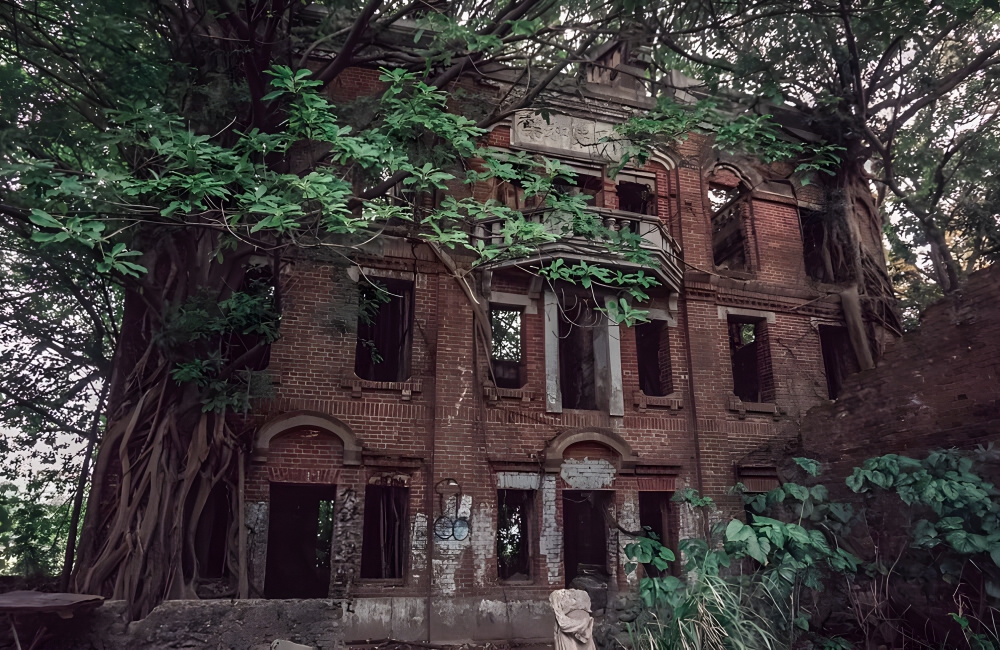
Liu Family Mansion, Taiwan @rjimenez1xi8 / Twiter.com
There are many stories as to what exactly caused the Liu Family to up and leave. One popular one involves a maid and an affair, which caused the Liu matriarch to go insane. Another involves Japanese soldiers seeing ghosts in WWII. The truth is unknown, but the legendary status of the Liu Family Mansion cannot be denied.
43. Holy Family Orphanage
Location: Marquette, Michigan
Year: 1914
Cost: $2,552,492*
The Holy Family Orphanage was built in the early 1900s for a price of $100,000 (which, in today’s money, is over $2.5 million). The Michigan orphanage housed 200 parentless children. At first, only 8- to 14-year-olds were permitted, but Holy Family allowed in older kids and babies later on.
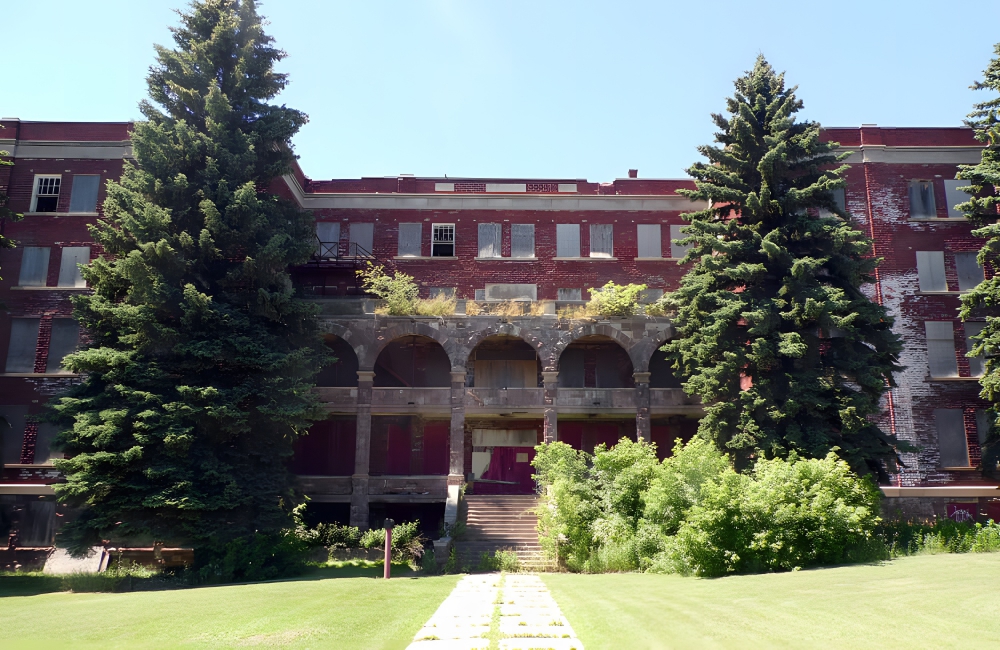
Holy Family Orphanage, Marquette, Michigan @Kyle Carter / Facebook.com
Holy Family was a source of colonization and forced assimilation at the hands of the Roman Catholic Diocese. In 1914, sixty Native American children were kidnapped from their homes and taken to the Orphanage, where they were assimilated and then adopted to white families. Other than the Native children, only white kids were allowed.
44. Rum Orphanage
Location: Turkey
Year: 1898
Cost: Over $12 million*
Rum Orphanage, also called the Prinkipo Palace, was a huge wooden building located on Buyukada, which is one of Turkey’s Princes’ Islands in the Sea of Marmara. Rum Orphanage is the second-largest wooden building in the world and the largest in Europe. It measures 65,617 square feet. It was built in the late 1800s and officially opened as an orphanage in 1903.
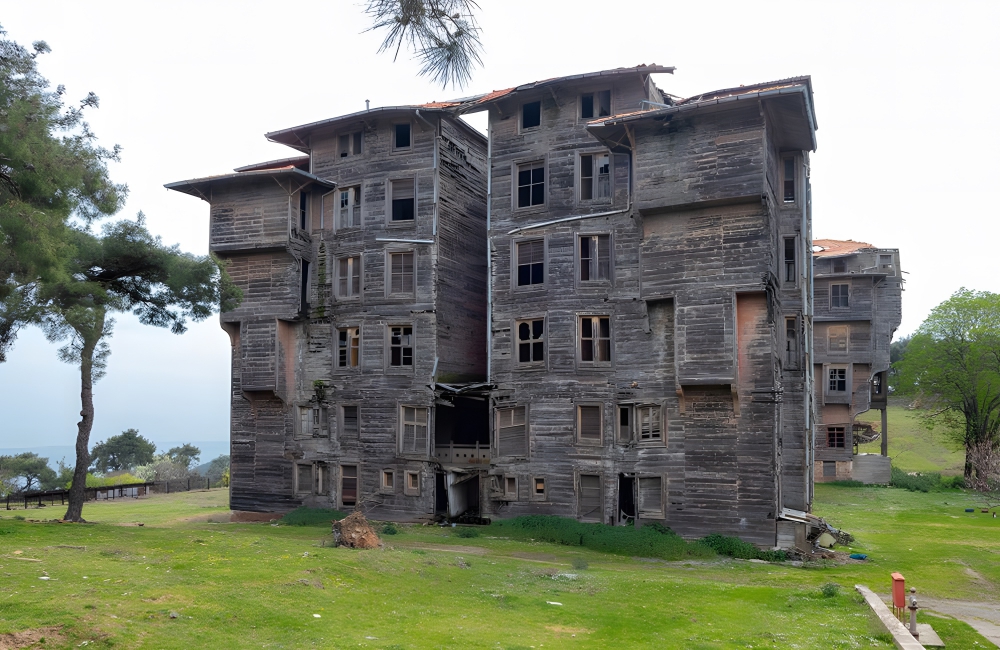
Rum Orphanage, Turkey ©aydngvn / Shutterstock
Rum Orphanage had 206 rooms, a library, kitchen, school, and many workshops. The Orphanage itself was constructed atop Isa Tepesi, a 656-foot-tall mountain. It closed in 1964 amid tensions between Turkey and Greece. It fell into disrepair, and its condition was only worsened after a fire ravaged the site in 1980.
45. Willard Asylum
Location: Willard, New York
Year: 1869
Cost: $900,000*
Willard Asylum (full name: Willard Asylum for the Chronic Insane) was built in 169 by George Rowley, who designed the Asylum in the “Second Empire” Style. It is a former state hospital that was used to house people with psychiatric disabilities. The hospital was located in Willard, New York, right by Seneca Lake.
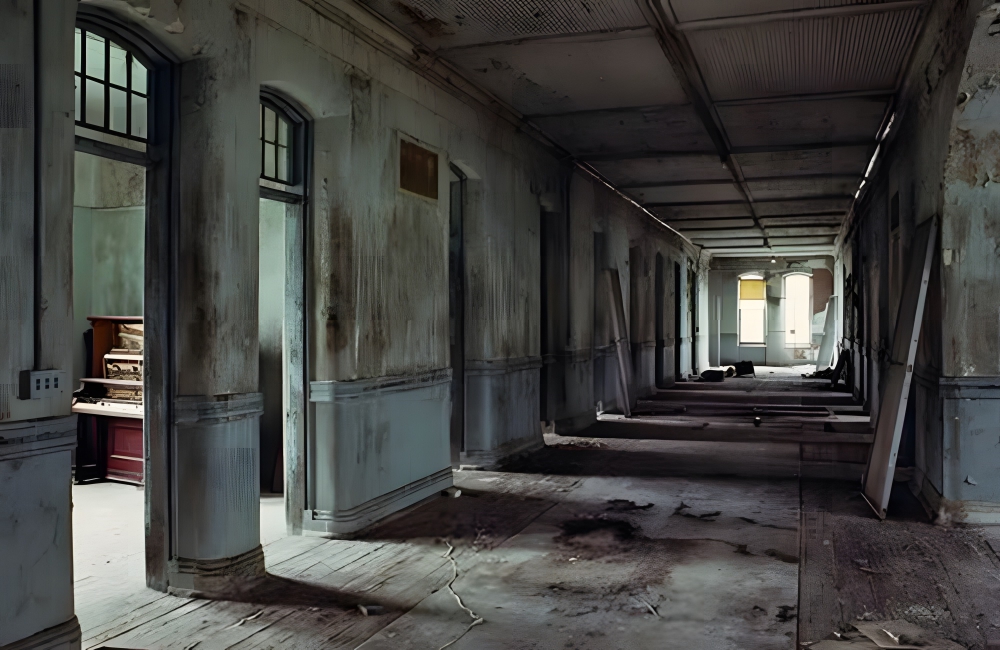
Willard Asylum, Willard, New York @Beth Charlette / Pinterest
Willard had a revamp in 1995. Willard Drug Treatment Center opened on the Asylum’s campus, but the Asylum itself has remained untouched. The National Register of Historic Places gave it a spot on its list in 1975, preventing it from destruction. There are many rumors of hauntings in Willard State, and it is a big UrbEx site.