
11. Habitable Planets
Year Found: 2017
Who Found It: Xavier Bonfils
Location: 11 Light-Years From Earth
It’s becoming more evident as the years go by that it’s only a matter of time before humankind is going to be forced to abandon spaceship Earth and find a far-off life-sustaining world to call home. As a result of this inevitability, astronomers have been hard at work searching the night’s sky for anything that resembles Earth.
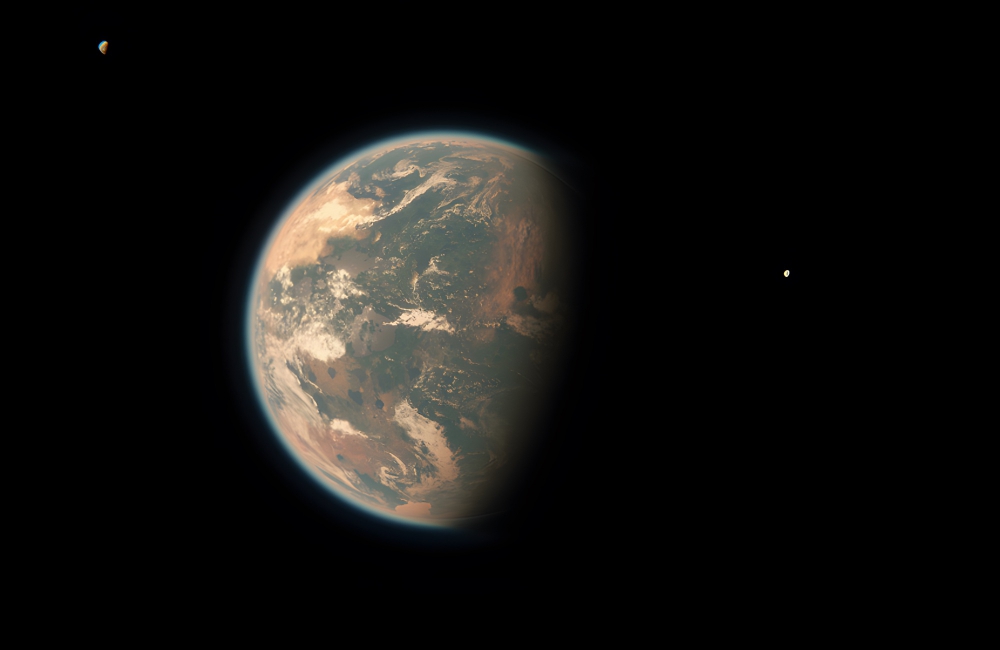
Habitable Planets ©Darryl Fonseka/Shutterstock
By using more than ten years worth of radical velocity data, in 2017, Xavier Bonfils found a possible “new Earth” (Ross 128 b) 11 light-years away. The only thing that’s known for sure about Ross 128 b is that its mass is around 1.35 times Earth’s, and it’s privy to 38% more light from its red dwarf than the Earth from the sun.
12. Titan’s Liquid-Filled Canyons
Year Found: 2016
Who Found It: Jani Radenbaugh & Colleagues
Location: Titan
At a quick glance, the surface of Saturn’s moon, Titan, appears to be a frozen version of the Grand Canyon, but that couldn’t be further from its reality. Unlike the watery rivers that created Earth’s incredible wonder, Titan’s river, Vid Flumina, is made up of what appears to be liquid methane that has carved a path almost 250 miles long into the face of the ice moon.
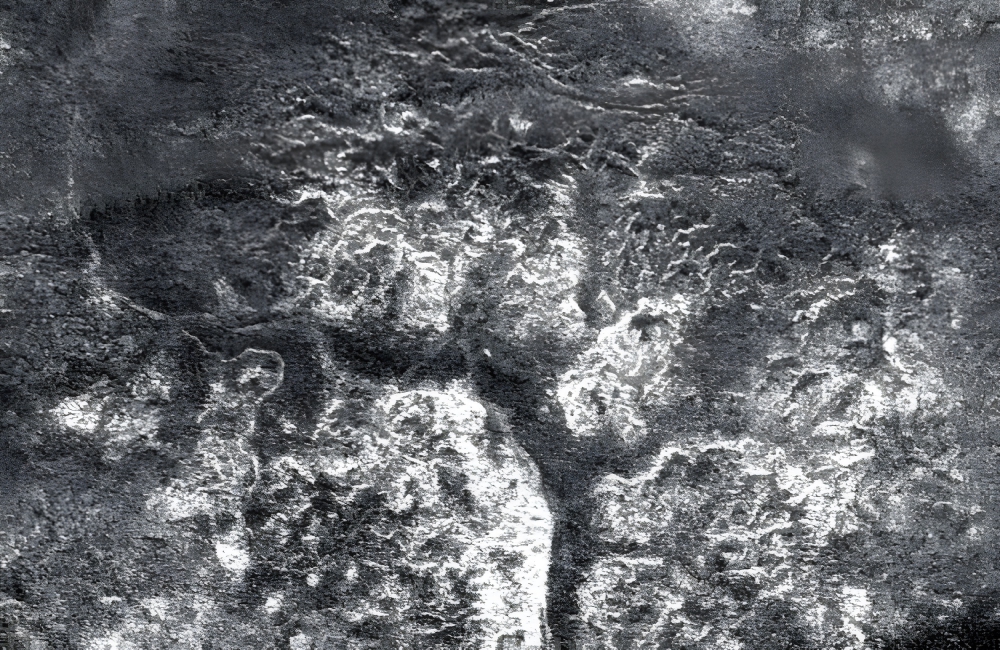
Liquid-filled canyons on Titan @nasa/PInterest
The methane-filled river that’s been discovered on Titan is a far cry from the quality of anything that the Cheniere Energy would provide for its customers. Still, being the first liquid from the first canyons ever found on Saturn’s moon, it’s a pretty big deal for science.
13. Ultramassive Black Holes
Year Found: 2018
Who Found It: Université de Montréal
Location: 3.5 Billion Light-Years Away
Long considered to be one of the most terrifyingly unknown forces in the universe, nothing can escape from a black hole, not even light. In 2018, a team of astrophysicists working out of the Université de Montréal discovered something ten times larger and exponentially more dangerous, an “Ultramassive” black hole.
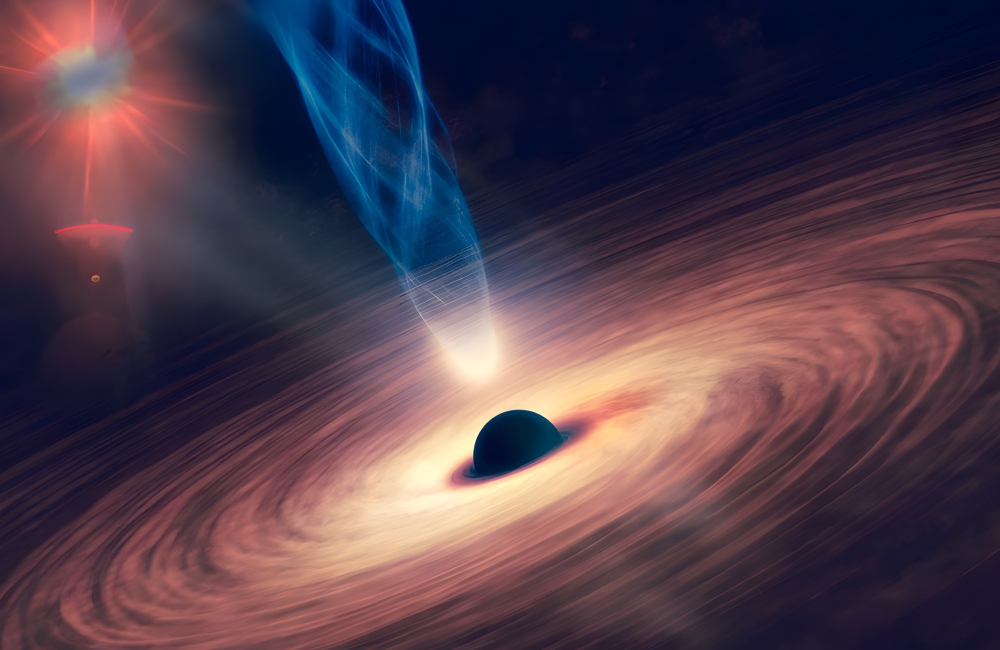
Ultramassive black holes ©Elena11/Shutterstock
Using NASA’s Chandra X-ray telescope, the team was able to spot “Ultramassive” black holes around 10 billion times as massive as the Earth’s sun. Until recently, scientists believed that black holes grew along with their galaxies, but these “Ultramassive” ones appear to be growing at quicker rates than their stars.
14. Collision of Neutron Stars
Year Found: 2017
Who Found It: LIGO
Location: 130 Million Light-Years Away
Neutron stars orbit around one another in a spiral fashion until they eventually collide. This collision of stars is an event that only occurs once every 10,000 years and will usually have one of two outcomes. It will either result in the formation of a heavier neutron star or the collapse of the stars and the creation of the ever-daunting abyss known as a black hole.
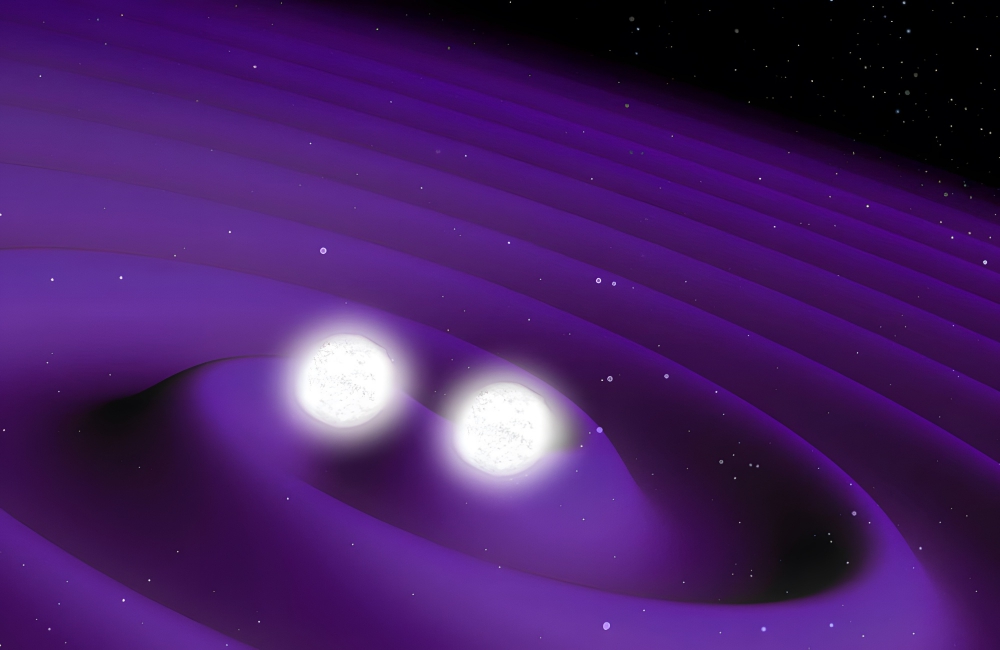
Collision of neutron stars @newton_alencar/Pinterest
In the case of the stars collapsing into themselves and creating a black hole, a ripple through the space-time continuum can be felt by everything within range of its magnetic field. In August of 2017, the Advanced Laser interferometer Gravitational-Wave Observatory (LIGO) picked up on the first known occurrence of this happening.
15. Tsunamis on Mars
Year Found: 2016
Who Found It: Researchers From The Planetary Institute In Tuscan, Arizona
Location: Mars
For many years, scientists have been on the fence as to whether or not oceans have ever existed on (or under) the surface of the Red Planet. That all changed with a discovery that Dr. Alexis Palmero Rodriguez and his colleagues from Tuscan’s Planetary Science Institute made in 2016.
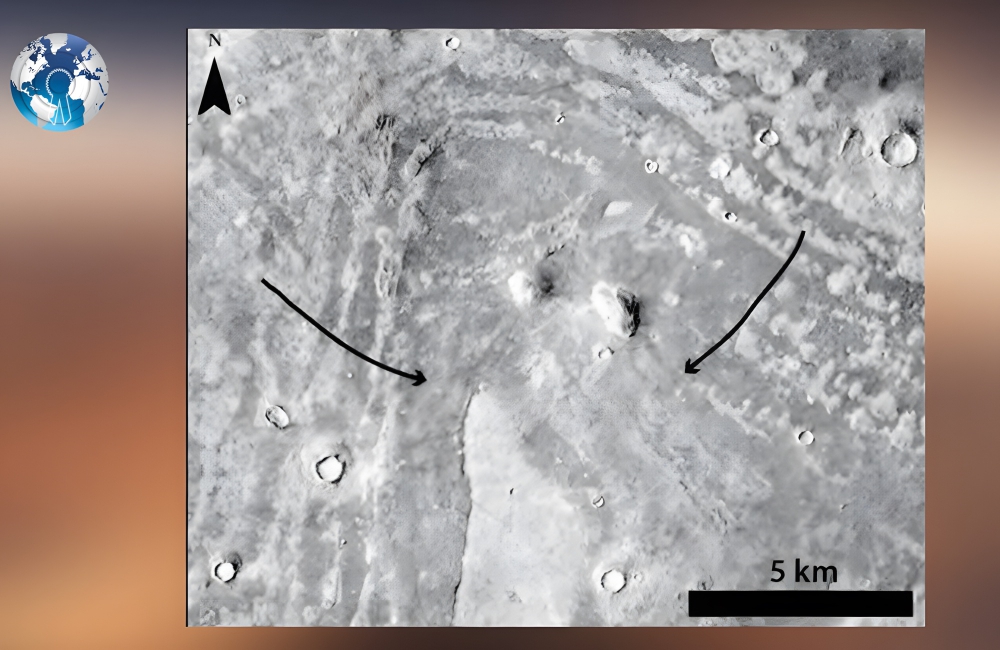
Tsunamis on Mars @WC Daily/Youtube
Satellite data showed the possibility of widespread sediment redistribution across Mars’ northern lowlands. With such data, the only logical hypothesis that could be reached is that not one but two tsunamis ravished the landscape of Earth’s neighbor a little more than 3 billion years ago. And the only way that a tsunami could occur is with the existence of oceans.
16. Alcohol-Spewing Comet
Year Found: 2015
Who Found It: Nicolas Biver
Location: Comet Lovejoy
In 2015, for the first time ever, scientists found evidence of a comet leaving a trail composed of gas that was made up of twenty-one different organic molecules, including ethyl alcohol and glycolaldehyde. In other words, the comet was the world’s biggest bar.
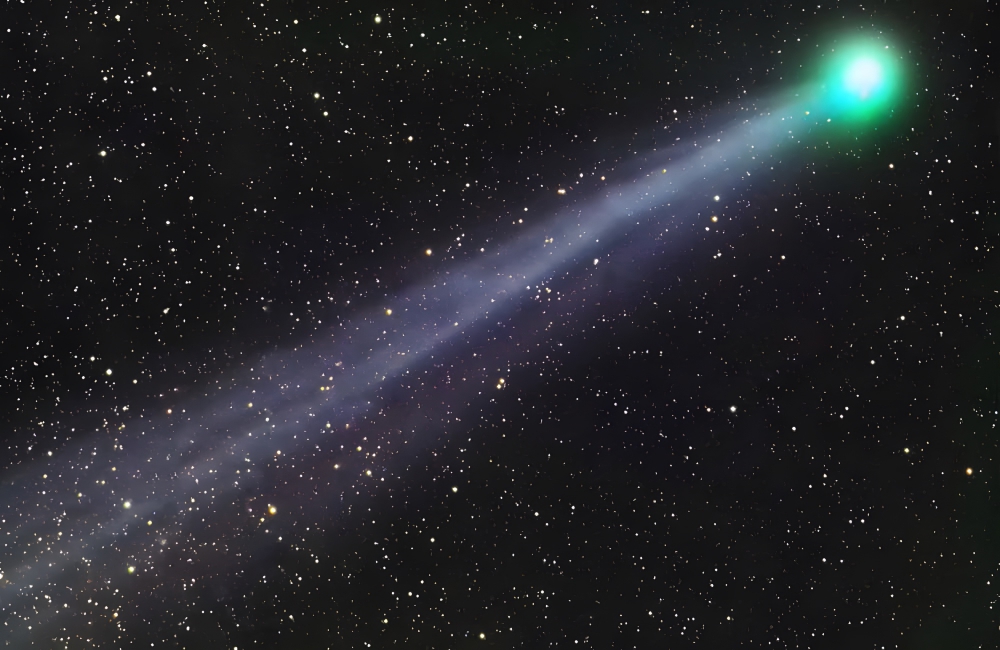
Alcohol-spewing comet @tweaktown/Pinterest
That’s right. Comet Lovejoy creates alcohol that is very much like the alcoholic drinks that Constellation Brands sells to its clients. Every second that Comet Lovejoy spends cruising through space it leaves the equivalent of 500 bottles of wine in its wake. That’s more booze per second than most bars will sell in an entire night — and it’s all-natural.
17. Life on Jupiter’s Moon
Year Found: 2017
Who Found It: Unconfirmed
Location: Europa
Composed of a healthy combination of hydrogen and oxygen, Jupiter’s moon Europa is the only alternative rock in our Solar System (to date) that has shown evidence of being able to support life. In 2017, something happened that shed some light on the moon’s mysterious ways…
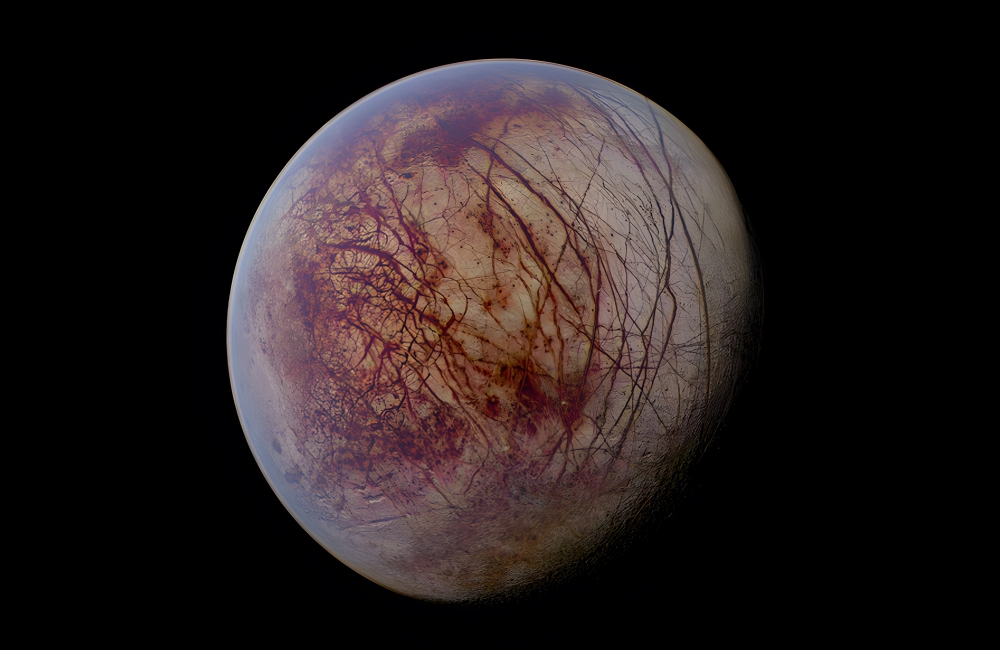
life on Jupiter’s moon ©OceanicWanderer/Shutterstock
Researchers noticed movement in the moon’s tectonic plates. This movement, theoretically, would have caused cracks in Europa’s 10-mile deep-frozen ocean. Future missions are already in the works to determine if the theory is true. If it is, then there’s hope that warmer, life-sustaining water could be found beneath the thick layer of ice.
18. Star-Sucking Black Holes
Year Found: 2015
Who Found It: Giorgos Leloudas and Colleagues
Location: Various
In 2015, an event was captured by the All Sky Automated Survey for Supernova that was unlike anything seen before or since. The Assn-15lh tidal disruption event displayed a flash of light brighter than 20 Milky Ways and was originally thought to be a supernova.
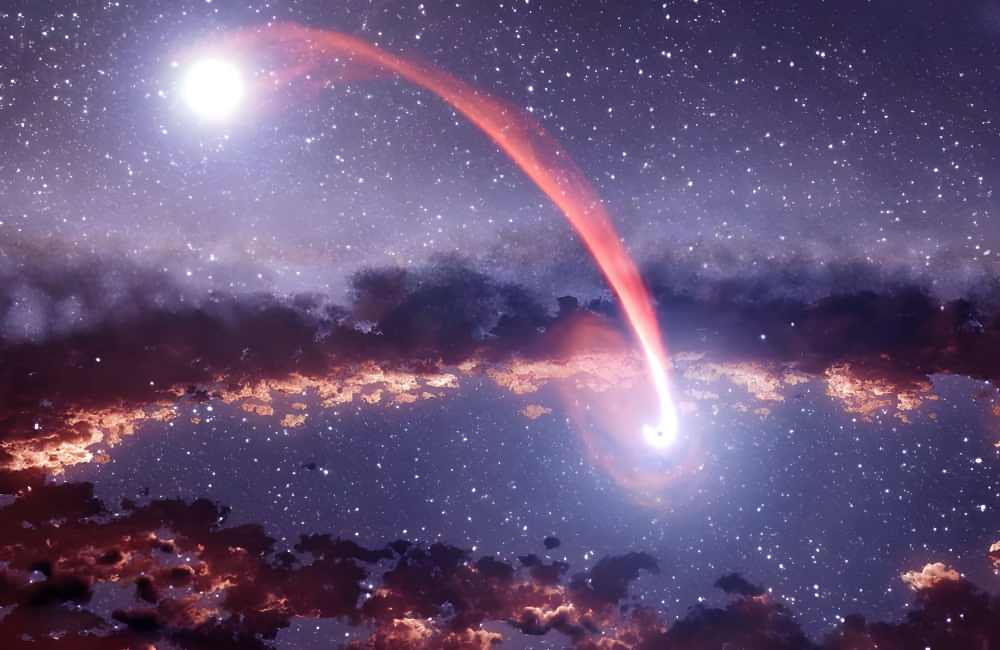
Star-sucking black holes ©Artsiom P/Shutterstock
A year after the event, astronomer Giorgos Leloudoas and his team from Israel’s Weizmann Institute published their findings. What everyone believed to be a supernova was, in actuality, a spinning black hole that had sucked a dying star into its unescapable abyss, just as a whirlpool would swallow a ship at sea.
19. Planet-Building Clumps
Year Found: 2018
Who Found It: NASA Researchers
Location: Various
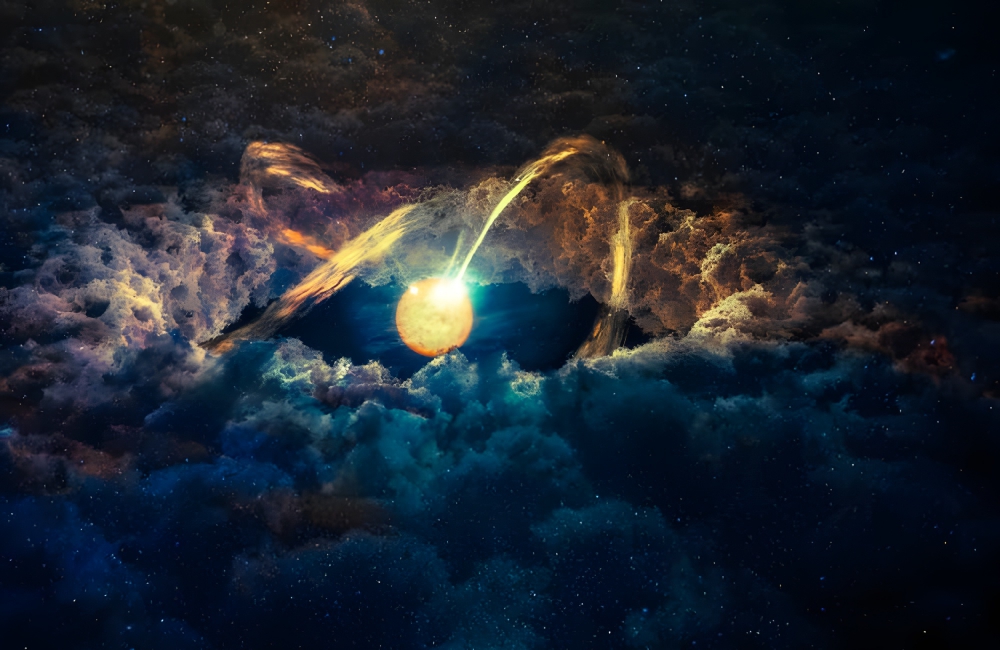
The mystery behind the formation of a planet will likely remain unsolved in its entirety. As space exploration has advanced and more data has become available, however, the Pebble Accretion Theory has gained some solid traction. In 2018, a team of researchers from NASA discovered the best evidence yet of the theory’s accuracy.
Planet-building clumps ©Elena11/Shutterstock
Extensive studies by the team showed golf ball-sized space dust that came together to form larger clumps of dust. In theory, a few billion years ago, these planetesimals would then have collided and merged to form larger and larger rocks — eventually forming the giant gas, rock, and ice, planets that we know them as today.
20. Sun Twins
Year Found: 2017
Who Found It: The University of California and Smithsonian Astrophysical Observatory
Location: Unknown
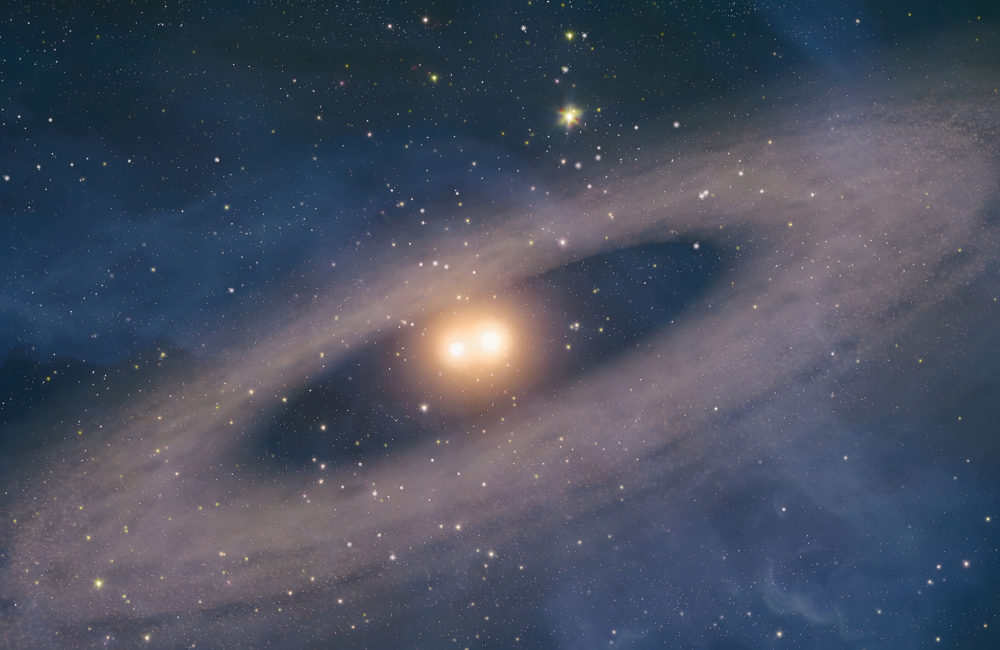
Due to a convincing study that was published by researchers from the University of California and the Smithsonian Astrophysical Observatory in 2017, there’s a common belief in the world of astronomy that most of the Sun-like stars in the universe have a “twin” somewhere in the infinite realms of space.
Sun twins ©Zakharchuk/Shutterstock
Although it is yet to be found (and probably never will be), Nemesis is the name that’s been allocated to the twin of the Milky Way’s Sun. Due to the ever-expanding nature of the universe, however, if it did in fact exist, the Sun’s twin would have drifted away from its counterpart long before the dinosaurs roamed the Earth.
21. Cosmic Microwave Background
Year Found: 1965
Who Found It: Researchers at Bell Telephone Laboratories
Location: Everywhere
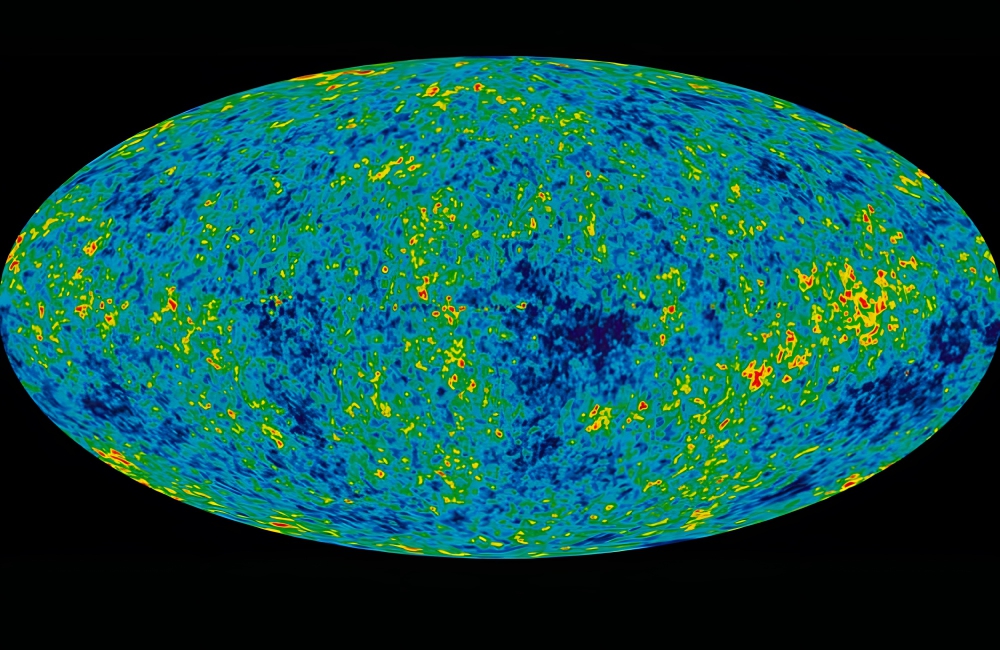
From the moment after the “big bang” happened, the universe has been in a constant state of expansion. In those 13.8 billion years of growth, everything that has existed has left a trail that can be seen using an extremely powerful radio telescope. Those remnants of a time long ago are referred to as the cosmic microwave background and are used for dating various events.
Cosmic microwave background ©NASA/Goddard/WMAP Science Team/Wikimedia Commons
Using the European Space Agency’s Planck satellite in 2013, scientists used the findings of Nobel Prize in Physics winners Arno Penzias and Robert Wilson to learn more than ever before about the world’s origin story when they found electromagnetic radiation remnants that went as far back as 400,000 years from the moment that started it all.
22. Small Stars
Year Found: 2017
Who Found It: Scientists at the University of Cambridge
Location: EBLM J0555-57 Triple Star System
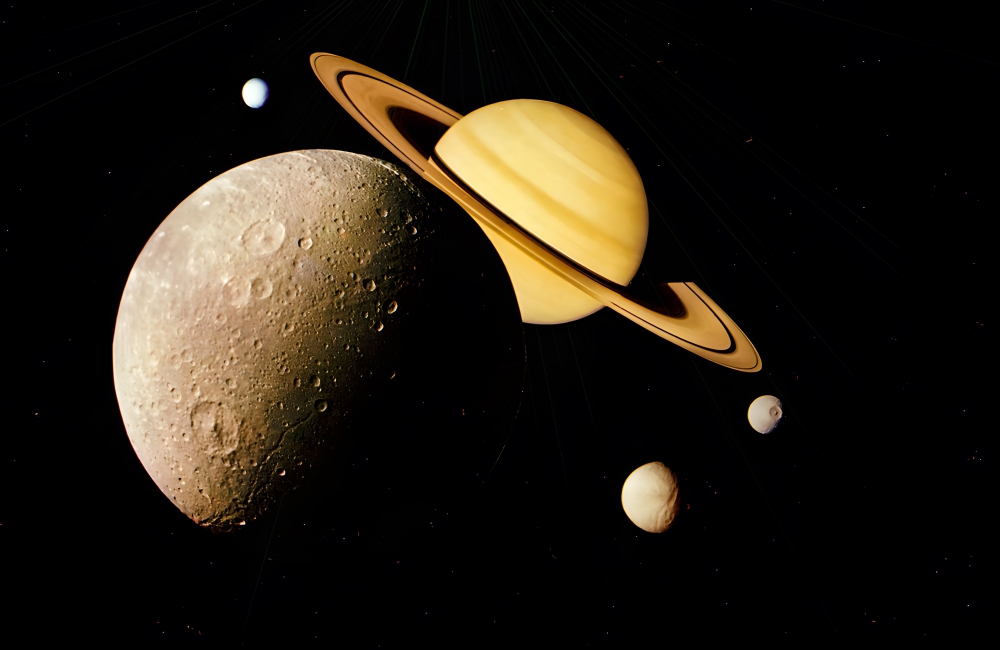
There are more stars in the sky than there are grains of sand on Earth. Some of the stars are responsible for the orbital structure of entire planetary systems, while others are barely large enough to function as a star should. One of these borderline functional stars is a red dwarf star located in the EBLM J0555-57 triple star system that goes by the name of EBLM J0555-57Ab.
Small stars ©Zenobillis/Shutterstock
In 2017, EBLM J0555-57Ab was discovered by a team of scientists from the University of Cambridge and, believe it or not, at 250 times the size of Saturn, it’s the smallest star ever to be discovered.
23. Ice Deposits on Mars
Year Found: 2016
Who Found It: Cassie Stuurman
Location: Mars
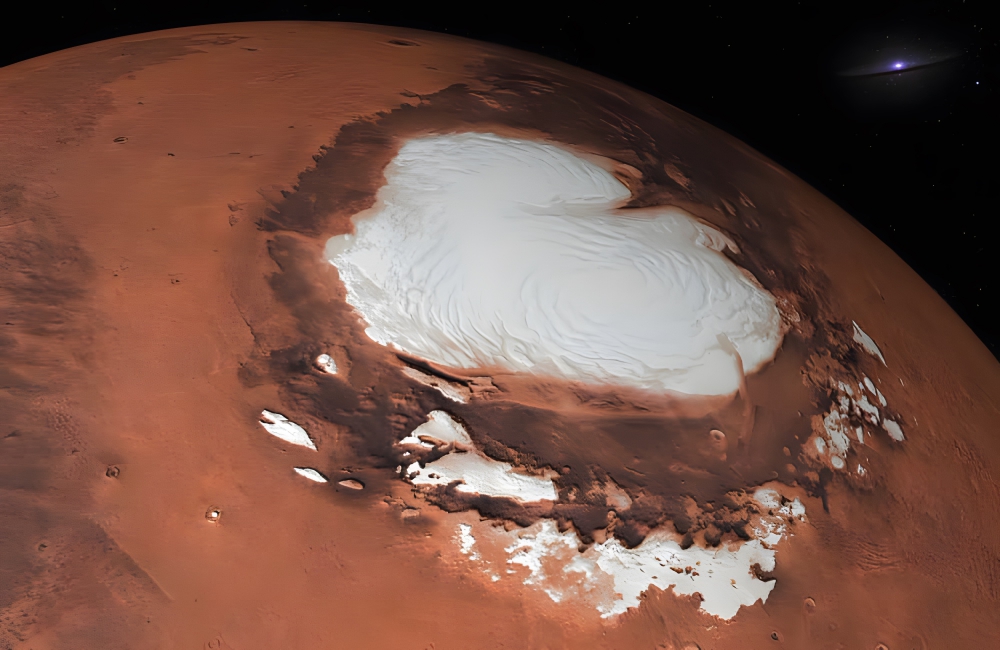
Without a renewable source of drinkable water, humankind’s goal of colonizing another world will not be possible. That’s why Cassie Stuurman’s 2016 discovery of a layer of ice the size of New Mexico was so important. Sure, the ice might be stuck under more than 30 feet of soil, and be terribly difficult to access, but it will make a great starting point for future “Red Planet” expeditions.
Haumea’s Rings ©Diego Barucco/Shutterstock
When melted down, whatever ice that is found on Mars probably won’t be of the same quality H2O that Primo Water Corporation customers are used to, but when it comes down to it, any water on Mars is better than no water — as long as it’s safe to drink, of course.