

10. Sphalerite (Zinc Sulfide)
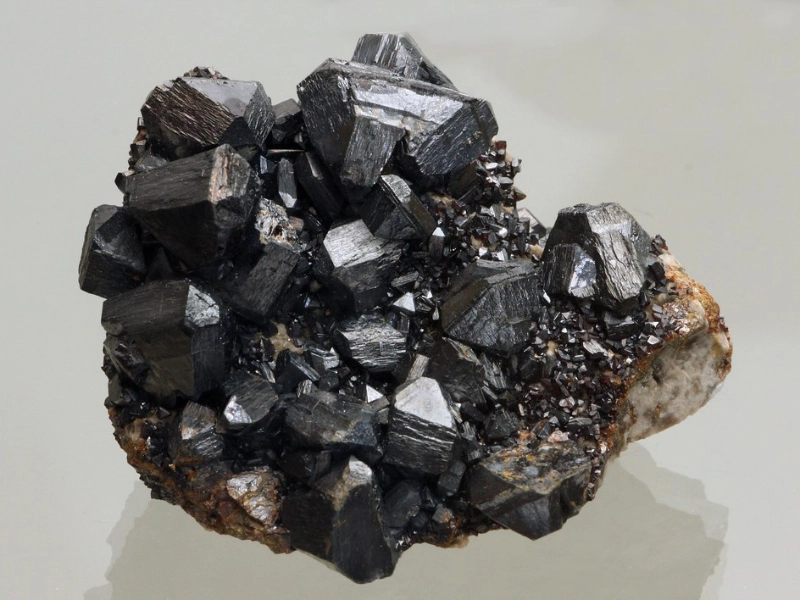
Mostly through its use in the manufacturing of zinc metal and zinc compounds, sphalerite, the main ore of zinc with the chemical formula (Zn,Fe) S, is quite important in the electronics industry. Although zinc may not be as often used in electronic equipment as copper or silicon, its uses in these devices are varied and vital, especially in specialised electronic components and protective coatings.
Galvanising uses zinc obtained from sphalerite most widely in the electronics sector. Galvanising is the method of corrosion prevention by means of a protective zinc coating applied to iron or steel components. Electronic device casings, chassis for bigger electronic equipment, and the infrastructure supporting electronic systems all are produced using this method extensively. Especially under demanding climatic conditions, the galvanised coating greatly increases the lifetime of electrical equipment and infrastructure by shielding the underlying metal from oxidation and corrosion.
Galvanised steel is frequently seen in the building of server racks, telecommunications equipment enclosures, and outdoor electronic display housings in the context of electronic gadgets. Maintaining the integrity of these buildings and shielding the delicate electronic components they contain from environmental harm depends critically on the corrosion resistance given by the zinc coating. Applications where electronics are subjected to different weather conditions, excessive humidity, or corrosive atmospheres especially depend on this.
Apart from its function in protective coatings, zinc finds uses in several electronic components. Varistors are made from zinc oxide (ZnO), which can be generated from zinc obtained from sphalerite. Varistors are voltage-dependent resistors used for surge protection in electronic circuits. Maintaining the dependability and lifetime of electronic devices depends on their helping protection of delicate electronic components against voltage spikes and transients.
Some kinds of batteries, including zinc-carbon batteries and zinc-air batteries, also employ zinc. While not as common in consumer electronics as lithium-ion batteries, these zinc-based batteries find applications in specific areas. Zinc-air batteries, for instance, are used in hearing aids and some portable electronics due to their high energy density and long shelf life.
The main component of sphalerite in semiconductor fabrication, zinc sulphide (ZnS), finds uses in optoelectronics. In some types of displays and as an optical coating in some specialised electronic devices, zinc sulphide is employed as a phosphor substance. Its broad bandgap and transparency to visible light help it to be valuable in the manufacturing of optical windows for infrared devices.
Zinc extraction from sphalerite calls for numerous steps. To extract the sphalerite from other minerals, the ore is crushed and then froth fluted following mining. The concentrated sphalerite is then roasted to convert the zinc sulfide to zinc oxide. This zinc oxide is then typically reduced to metallic zinc through either pyrometallurgical processes (such as the Imperial Smelting Process) or hydrometallurgical processes (such as electrowinning). The choice of process depends on the composition of the ore and economic factors.
The increasing focus on sustainability and environmental protection in the electronics industry has implications for zinc production and use. Zinc is highly recyclable, and a significant portion of zinc used in electronics and other industries comes from recycled sources. This recycling helps to reduce the environmental impact of zinc production and ensures a more stable supply of the metal.
As electronics continue to evolve, with trends towards miniaturization, increased durability, and new form factors, the role of zinc in the industry may expand. Research into zinc-based nanomaterials, for instance, is exploring potential applications in flexible electronics and energy storage devices. Additionally, the development of more environmentally friendly coatings and corrosion protection methods may lead to new applications for zinc in electronics manufacturing.
The use of zinc in electronics also intersects with other emerging technologies. For example, in the growing field of Internet of Things (IoT) devices, many of which are designed for outdoor or industrial use, the corrosion resistance provided by zinc coatings is crucial for ensuring long-term reliability. Similarly, in the development of ruggedized electronics for military, aerospace, or extreme environment applications, zinc’s protective properties play a vital role.
In conclusion, while sphalerite and zinc may not be as prominently featured in discussions of electronic materials as some other elements, their role is nonetheless crucial. From providing essential corrosion protection to enabling the functionality of specific electronic components, zinc derived from sphalerite continues to be an important material in the electronics industry. As the industry continues to advance and new challenges in electronic design and manufacturing emerge, the versatility and unique properties of zinc ensure that sphalerite will remain a valuable mineral resource in the ongoing evolution of electronic technology.
 zi ang