
2 Yokohama, 3,709,686
Yokohama, Japan’s second-largest city, stands as a vibrant testament to the country’s rapid modernization and international influences. Located just south of Tokyo in Kanagawa Prefecture, Yokohama has evolved from a small fishing village into a major metropolitan area with a population approaching 4 million residents. This bustling port city offers a unique blend of history, culture, and modernity that sets it apart from its larger neighbor to the north.
The city’s history as Japan’s gateway to the world is evident in its diverse attractions and cosmopolitan atmosphere. Yokohama was one of the first Japanese ports to open to foreign trade in the 19th century, following more than two centuries of national seclusion. This historical significance has shaped the city’s character, making it a melting pot of Japanese and international influences.
One of Yokohama’s most renowned attractions is the Sankei-en Garden, a sprawling 175,000 square meter landscape that epitomizes traditional Japanese garden design. Created by silk trader Sankei Hara in the early 20th century, this meticulously crafted garden is a serene oasis amidst the urban bustle. Visitors can wander through carefully manicured grounds, admiring historic buildings relocated from Kyoto and Kamakura, including several Important Cultural Properties. The garden changes its appearance with each season, offering cherry blossoms in spring, lush greenery in summer, vibrant foliage in autumn, and snow-covered landscapes in winter.
Perhaps equally famous is Yokohama’s Chinatown, the largest in Japan and one of the biggest in the world. This vibrant district, with its colorful gates, lantern-lined streets, and myriad of shops and restaurants, is a testament to the city’s long history of cultural exchange. Established in the 1860s following the opening of Yokohama Port, Chinatown has grown into a major tourist attraction. Visitors flock here to sample authentic Chinese cuisine, explore traditional Chinese architecture, and experience festivals like the Chinese New Year celebrations.
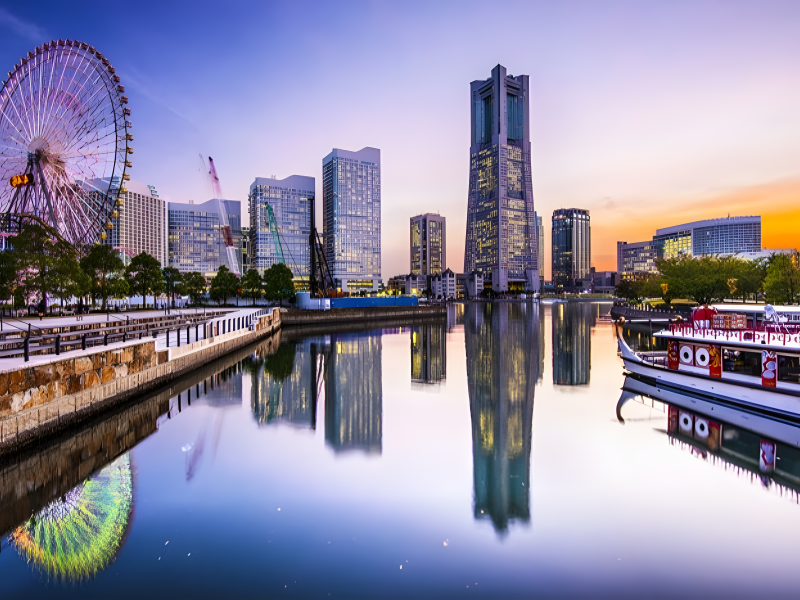
Yokohama’s modern face is best exemplified by the Minato Mirai 21 district, a futuristic harborfront area that serves as the city’s central business district. Dominated by the iconic Landmark Tower, once Japan’s tallest building, Minato Mirai showcases cutting-edge architecture, shopping centers, hotels, and amusement facilities. The district’s skyline, particularly when illuminated at night, has become a symbol of Yokohama’s prosperity and forward-thinking ethos.
The city’s maritime heritage is celebrated at the Yokohama Port Museum and the NYK Maritime Museum, both offering insights into Japan’s naval history and the port’s crucial role in the country’s modernization. For a more hands-on experience, visitors can board the Hikawa Maru, a retired ocean liner now serving as a museum ship, providing a glimpse into the golden age of sea travel.
Yokohama’s commitment to the arts is evident in venues like the Yokohama Museum of Art, which houses an impressive collection of modern and contemporary works, and the Cup Noodles Museum, a quirky tribute to the invention of instant noodles. These institutions reflect the city’s blend of high culture and pop culture, catering to a wide range of interests.
Sports enthusiasts find a home in Yokohama as well. The city is home to the Yokohama Stadium, where the Yokohama DeNA BayStars baseball team plays, and the Nissan Stadium, which has hosted numerous international soccer matches, including games during the 2002 FIFA World Cup.
Despite its size and modernity, Yokohama maintains pockets of traditional Japan. The Motomachi shopping street, with its Western-style architecture, harkens back to the city’s early days as a foreign settlement. Meanwhile, temples like Shomyo-ji offer spiritual respite and connect visitors to Japan’s Buddhist heritage.
Yokohama’s culinary scene is as diverse as its population. While Chinese cuisine is a major draw, the city also boasts excellent Japanese restaurants, international eateries, and fusion establishments. The Yokohama Cosmo World amusement park, featuring a giant Ferris wheel, adds a touch of whimsy to the cityscape and is particularly popular among families and couples.
As a major port, Yokohama continues to play a crucial role in Japan’s economy and international trade. The city’s harbor is a hub of activity, handling a significant portion of the country’s maritime traffic and serving as a departure point for cruise ships exploring Asian waters.
In essence, Yokohama is a city that beautifully balances its historical significance with modern ambitions. Its proximity to Tokyo makes it an integral part of the greater Tokyo metropolitan area, yet Yokohama maintains a distinct identity. From the tranquil beauty of Sankei-en to the bustling energy of Chinatown, from the futuristic skyline of Minato Mirai to the historic charm of its older districts, Yokohama offers a multifaceted urban experience. As it continues to grow and evolve, Yokohama remains a testament to Japan’s ability to honor its past while embracing the future, making it a captivating destination for both domestic and international visitors.
 zi ang