
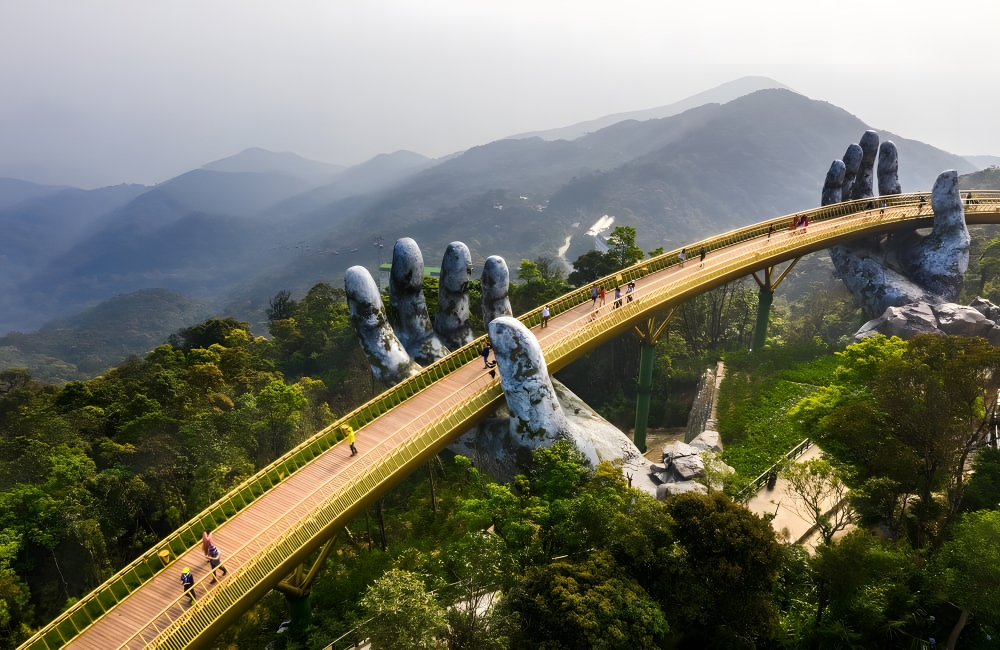
Golden Bridge, Danang, Vietnam ©Hien Phung Thu/Shutterstock
While skyscrapers and urban planning sometimes gets the most media attention, there’s no denying that bridge construction remains one of the most intricate – and expensive – architectural undertakings in the world. From planning, to rendering, and actual construction, these projects are a billion-dollar industry that continues to grow each year.
In the United States alone, there are 614,387 bridges (worldwide, of course, there are millions more). The oldest bridge ever built that is still in use is located in Turkey. This single-arch, slab-stone bridge crosses the river Meles in Smyrna (formerly known as Izmir), Turkey. This bridge was built in 850 B.C. and, through proper maintenance, it is still able to be used to this day.
Equipment manufacturers like Caterpillar and engineering companies like N5 Global team up for hundred-million-dollar projects like the ones you’ll see on this list. Here are the most expensive bridges ever built around the world.
1. Russky Bridge, Russia
Located in: Vladivostok, Primorsky Krai, Russia
Established: 2012
Cost: $1.1 billion*
The Russky Bridge is one of the newer bridges on this list, having been built in 2012. The Russky Bridge is located in Vladivostok, Primorsky Krai, Russia. It spans 3,662 feet, connecting the Russky Island with the Muravyov-Amursky Peninsula sections of Vladivostok.
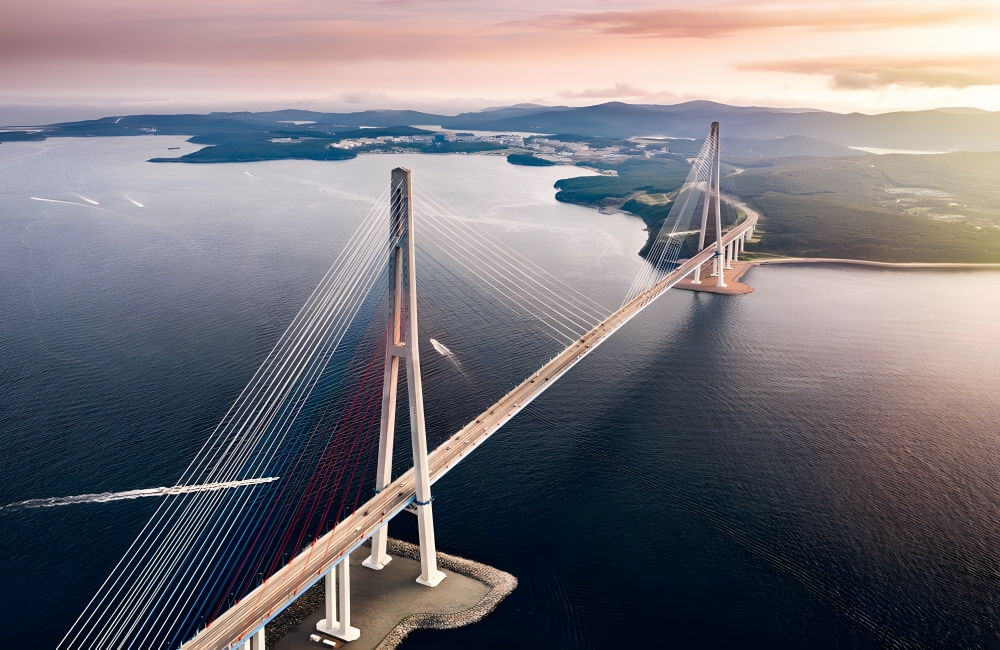
Russky Bridge, Russia ©Vitaliy Kaplin / Shutterstock
The Bridge, which one YouTube engineering video called “The Bridge to Nowhere,” holds the distinction of having the longest cable-stayed suspended section in the world. The Russky Bridge has 168 cable stays, the longest of which is 1,902 feet. The Bridge is able to withstand the bitter cold of Vladivostok, whose temperatures range wildly from -40 all the way up to 140 degrees Fahrenheit.
The design of the Russky Bridge was based on two main factors. The first was creating the shortest coast-to-coast distance over the channel (which has a navigable depth of 160 feet). The second was the ability of the Bridge to withstand extreme temperatures, waves of up to 20 feet in height, and ice formations that can reach 28 inches thick.
2. Confederation Bridge, Canada
Located in: Prince Edward Island, Canada
Established: 1997
Cost: $990 million*
Nicknamed “The Fixed Link,” The Confederation Bridge links Prince Edward Island to the New Brunswick mainland. The Confederation Bridge took four years to build, beginning in 1993 and ending in 1997. It cost $990 million (CA$1.3 billion) to complete. The bridge officially opened to the public on May 31, 1997.
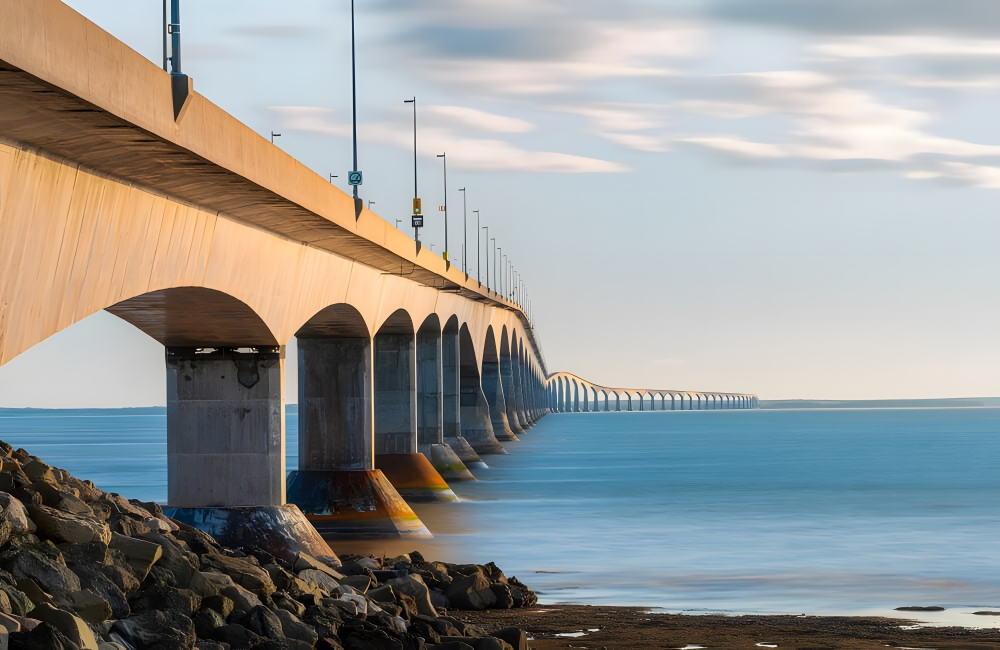
Confederation Bridge, Canada ©Gareth Janzen / Shutterstock
This Bridge was such a big deal that it required its own Constitution Amendment Proclamation in 1993. According to this Proclamation, the government was now allowed to charge a toll to cross the bridge. The bridge took more than 5,000 workers to finish, from specialty engineers and managers to day laborers.
Perhaps because of the new bridge, the number of tourists who visited Prince Edward Island increased from 740,000 to 1.2 million. The Bridge is now the site of the yearly Terry Fox Run, a marathon that registered, according to Facebook, 5,500 people a year. The Terry Fox Run is always a huge tourism boost to Charlottetown, the capital of Prince Edward.
3. Sidu River Bridge, China
Located in: Yesanguan, Badong County, Hubei, China
Established: 2009
Cost: $100 million*
The Sidu River Bridge, also known as “Siduhe,” stretches a whopping 4,009 feet in length. At its longest span, it is 3,000 feet. The clearance below, as seen from the harrowing photos, is 1,627 feet. The Sidu crosses the Sidu River, which joins with the Yangtze River to form the Three Gorges.
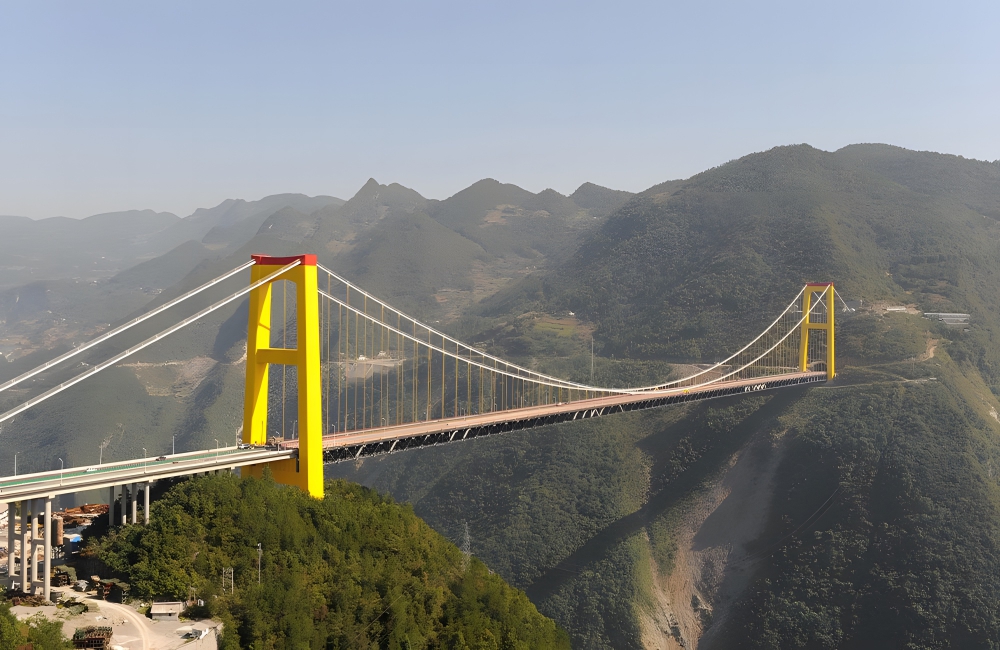
Sidu River Bridge, China @@atlasobscura / Pinterest
Built in 2009, the bridge costs the same as a high-budget Universal or Disney movie – and it not only is one of the most expensive bridges in the world, but also one of the highest, surpassed only by the Duge Bridge (built in 2016), which clears 1,854 feet.
In order to install the first suspension cable, the builders (CCCC Second Highway Consultants) had to use a rocket. The bridge’s conditions prohibited builders from using helicopters or boats, which would normally be the case. The rockets worked out, though, saving both time and money. They finished the installation in just one day.
4. Forth Bridge, United Kingdom
Located in: Edinburgh, Inchgarvie, and Fife, Scotland
Established: 1890
Cost: $120.18 million*
The Forth Bridge, built by Sir Benjamin Baker and Sir John Fowler, two English engineers, has been voted the greatest man-made wonder in Scotland as of 2016. It is considered a symbol of the country, and UNESCO agreed, designating Forth a World Heritage Site. The Forth Bridge is a cantilever railway that spans 8,094 feet.
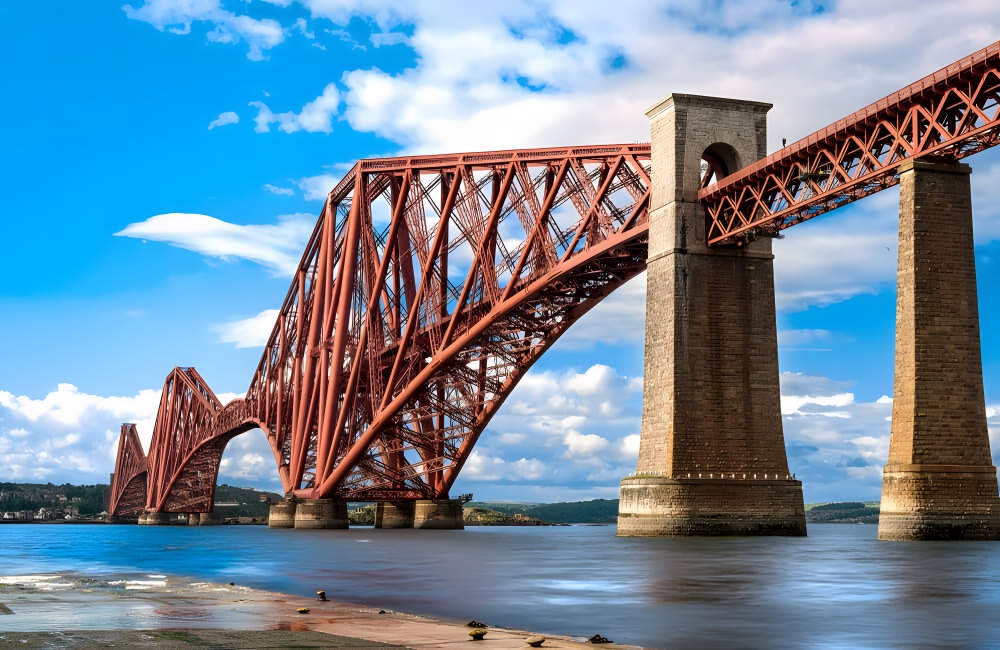
Forth Bridge, United Kingdom ©Valery Egorov / Shutterstock
At the piers, the bridge is 120 feet, but at the center, it shrinks to 32 feet. The clearance is low, with just 150 feet separating the bridge from high water. Balfour Beatty, which is the largest contractor in the UK (similar in size to Fluor, is charged with maintaining the bridge, which was built in the 1800s.
To understand how impactful the Forth Bridge was, you have to look back at history. Before it was opened, the railway journey to Aberdeen from London took thirteen hours, using the Caledonian Railway or the North Western Railway. The Railways would often race one another, leading to sensational news headlines about a “Race to the North.”
5. Dragon Bridge, Vietnam
Located in: Da Nang, Vietnam
Established: 2013
Cost: $88 million*
Crossing the Han River in Da Nang, Vietnam, the Dragon Bridge took four years to build. Construction began on July 19, 2009, the same day that the Thuan Phuoc Bridge was inaugurated, and many high-ranking Vietnamese officials attended the ceremony.
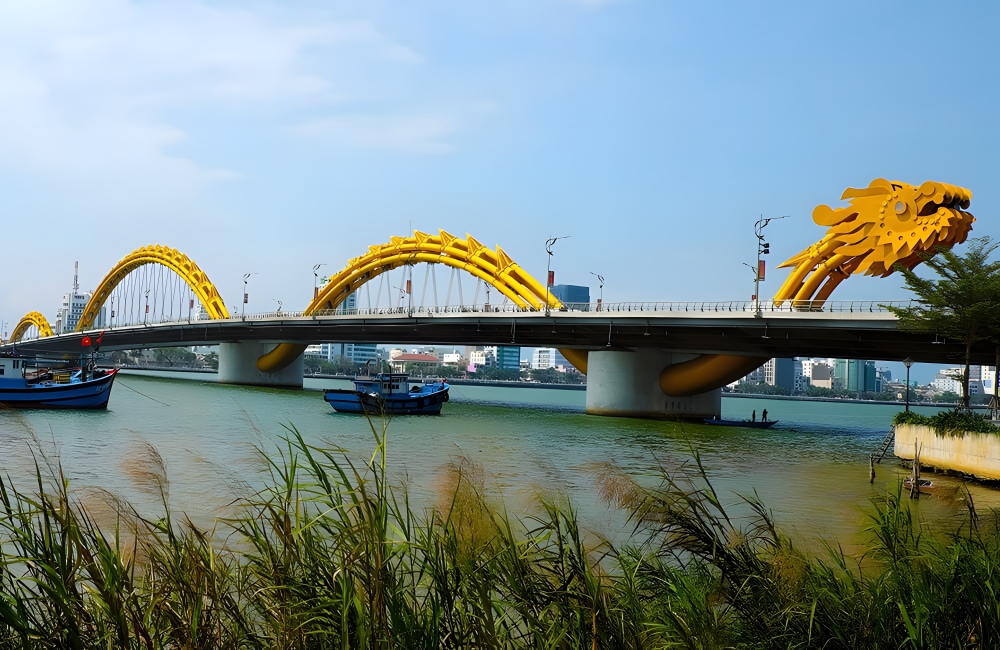
Dragon Bridge, Vietnam ©xuanhuongho / Shutterstock
The Bridge is 2,185 feet long and has six lanes. It cost $88 million to build, and it was actually built by an American company: Ammann & Whitney, a bridge-building subsidiary of Louis Berger and a major competitor of BIP, Fluor, and Bechtel. The Dragon Bridge was built in the shape of a dragon, and it breathes fire and water on weekend nights at 9:00PM.
The Da Nang Dragon Bridge is not to be confused with a similarly-named (though far less spectacular) bridge in Ljubljana, Slovenia. It was built in the early 1900s, and it was one of the earliest reinforced concrete bridges, completed in the succession style. Unlike Da Nang’s Dragon Bridge, the Ljubljana one is 109 feet long.
6. Incheon Bridge, South Korea
Located in: Incheon, South Korea
Established: 2009
Cost: $1.4 billion*
The Incheon Bridge is located in the town after which it is named: Incheon, South Korea. The bridge is reinforced concrete and cable-stayed, holding the distinction of being the longest-spanning cable bridge in South Korea. It is the tenth-largest cable-stayed bridge in the world as of 2019.
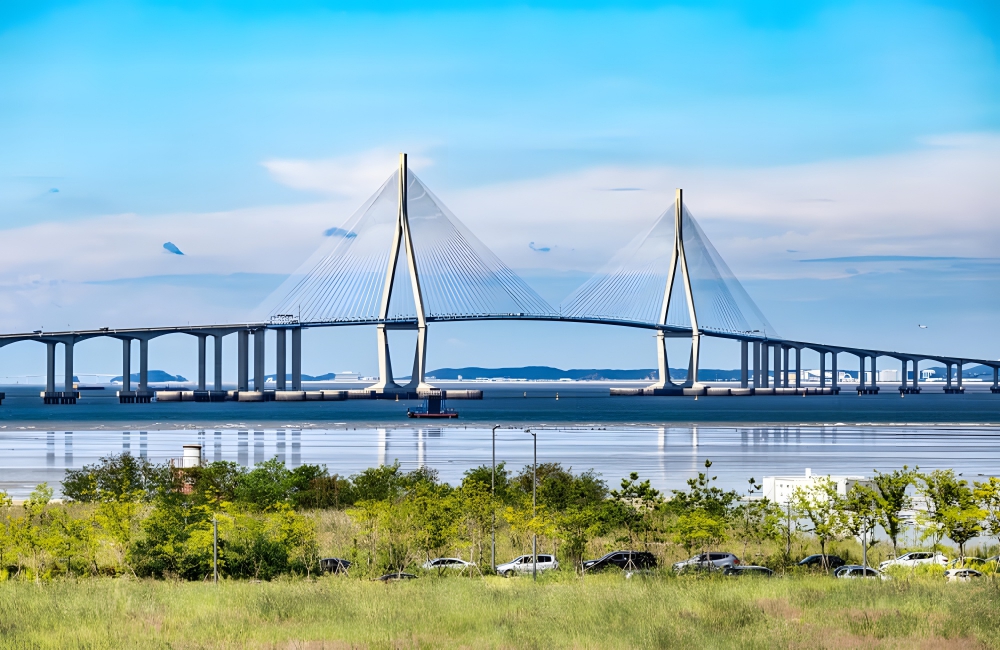
Incheon Bridge, South Korea ©DreamArchitect / Shutterstock
The Incheon Bridge, which was designed and built by Apple competitor Samsung, connects the Songdo International Airport with the Incheon International Airport, which cuts travel time between the two airports by an hour, something that weary travelers can do doubt appreciate. It is located south of the Yeongjong Bridge, another popular thoroughfare.
It was the first bridge to connect the mainland and Yeongjong Island. Part of the bridge is funded by taxpayer money, but the other section of the bridge is funded by the private sector: namely, the Incheon Bridge Corporation. The entire project was managed with aplomb by the MLTM and the Korean Expressway Corporation.
7. Øresund Bridge, Sweden/Denmark
Located in: Malmo, Sweden and Copenhagen, Denmark
Established: 1995
Cost: $3.2 billion*
The Øresund Bridge connects Sweden and Denmark, spanning nearly five miles across the Oresund Strait. The Øresund Bridge starts at the Swedish coast and ends at the Peberholm, an artificial island located in the middle of the strait. The crossing ends with the 2.5-mile Drogden Tunnel, which connects Peberholm with the Danish island of Amager. The Øresund was designed by COWI, who spared no expense. The bridge cost 19.6 billion DKK, which is the equivalent of $3.2 billion.
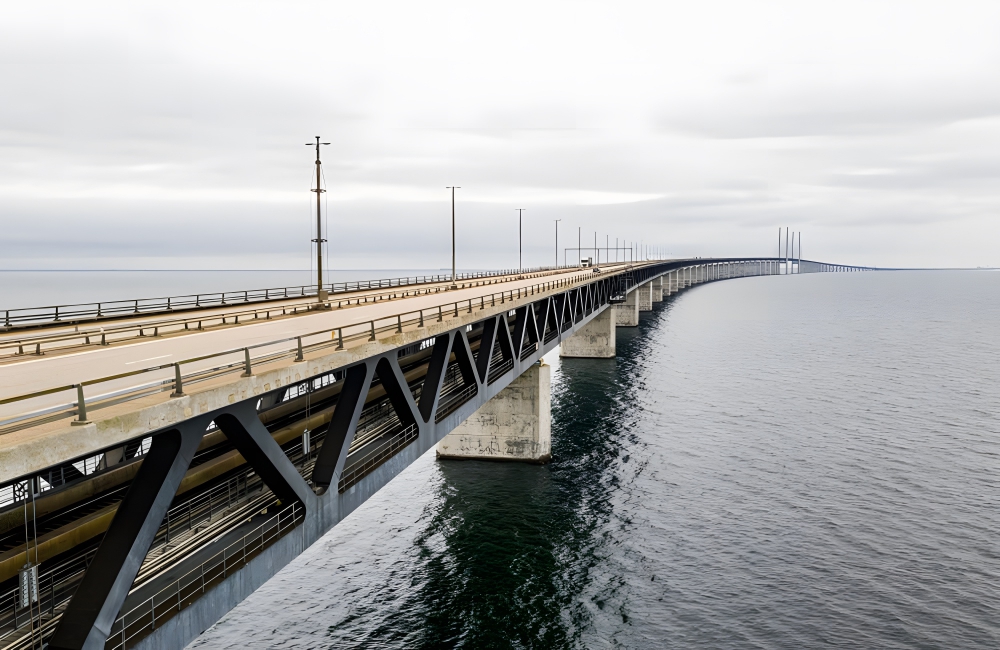
Øresund Bridge, Sweden/Denmark ©Ingus Kruklitis / Shutterstock
The Øresund’s proposals actually began in 1910, but plans were eventually frozen because of WWII. Construction officially greenlit in 1995, and the bridge opened in 2000. A major schedule setback occurred when sixteen unexploded WWII bombs were found on the seabed in the 1990s (though it’s unclear whether they were made by German forces or American companies like Ford or Mattatuck).
According to the Omega Center, there were several motivations to get this bridge done as quickly as possible (though, thanks to unexploded WWII bombs, the best-laid plans often go awry). These motivations included improved transport from Hamburg to Oslo, Oresund’s regional growth, and improving the economic condition of the region’s largest cities, which were, at the time, undergoing financial difficulties.
8. U Bein Bridge, Myanmar
Located in: Amarapura Township, Burma
Established: 1851
Cost: Unknown
Construction on the infamous U Bein Bridge began in 1849 and concluded two years later, opening to the public in 1951. The U Bein Bridge was built by Myanmar engineers who used traditional scaling and measuring to build U Bein—they made scale by carefully counting footsteps. That seems to have worked as, nearly one century later, U Bein is still standing.
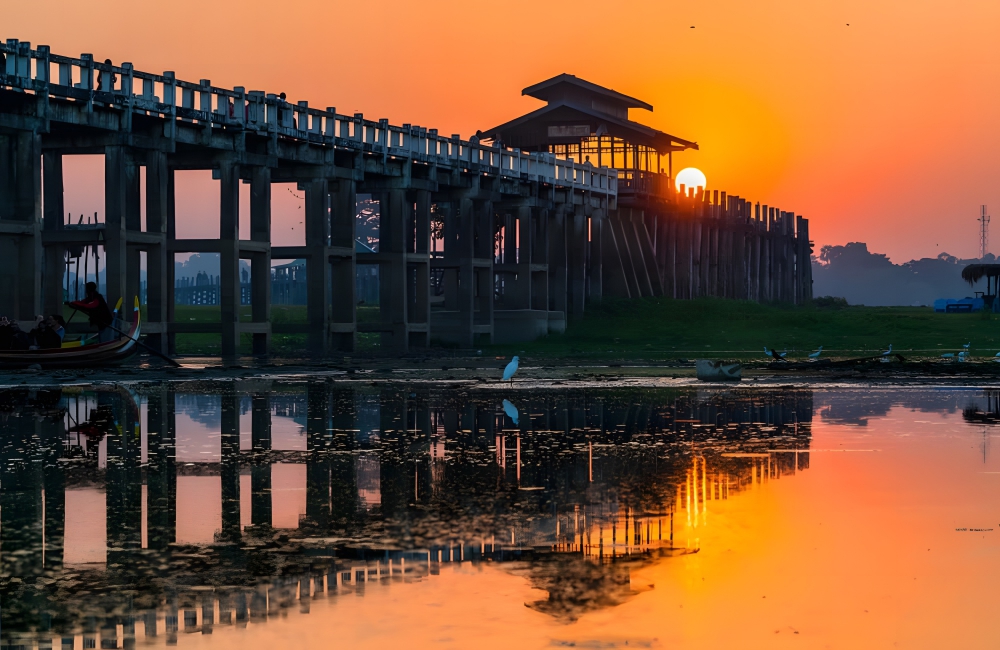
U Bein Bridge, Myanmar ©Nguyen Quang Ngoc Tonkin / Shutterstock
U Bein crosses the Taung Tha Man Lake. The bridge is made of teakwood, a tropical hardwood species. It is the oldest teakwood bridge in existence, spanning 3,967 feet. The teakwood all came from wood reclaimed from the Inwa Royal Palace. It’s likely that U Bein will be getting steel reinforcements from companies like Rio or PEB Steel in the near future.
Though there is no denying that U Bein is quite the feat, it does have its problems, which will likely become expensive for the Myanmar government. The pillars are decaying, with some becoming entirely detached. The supports have been damaged not only by flooding, but also by fish breeding programs that have caused the water to grow stagnant.
9. National Trust Carrick-a-Rede, Northern Ireland
Located in: Carrickarede, County Antrim, Northern Ireland
Established: 1600s (Makeshift), 2008 (Current Bridge)
Cost: $12-$20 to cross*
The Carrick-a-Rede Rope Bridge is, unlike the majority of the other bridges on this list, not for cars or trains to pass. It is seemingly designed solely for the people who are brave enough to cross it. The Carrick-a-Rede Rope Bridge is located in County Antrim in Northern Ireland, and links to the island of Carrickarede (Rock of Casting) to the mainland.
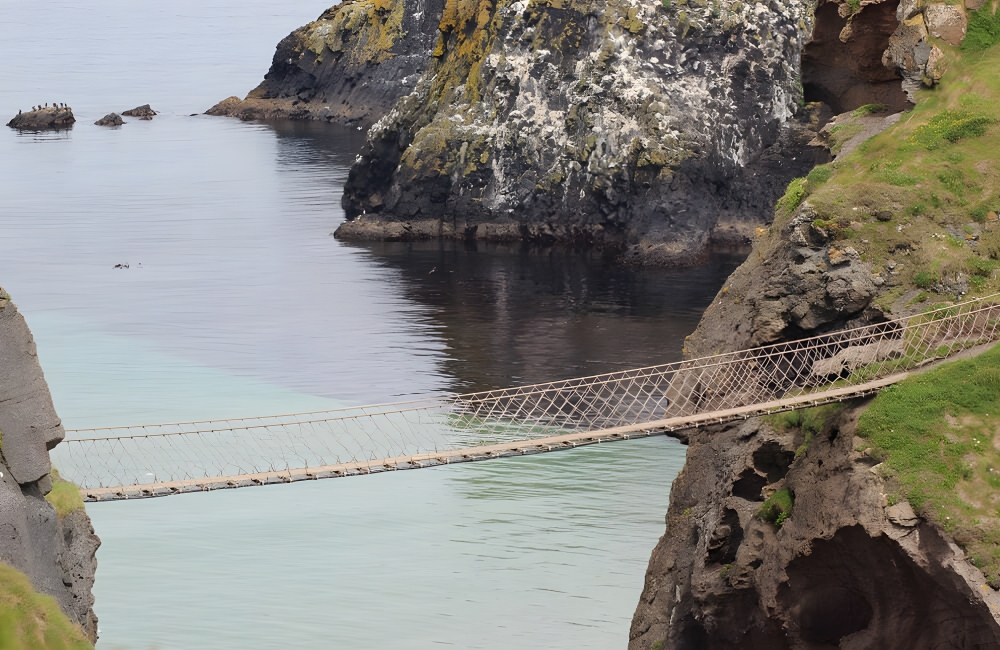
National Trust Carrick-a-Rede, Northern Ireland ©Marije Kouyzer / Shutterstock
Carrick-a-Rede is a popular tourist attraction, owned and maintained by the National Trust. It had seen more than 485,736 visitors cross its rickety planks. Carrick-a-Rede is 66 feet long and has a clearance of 98 feet. Only eight pedestrians can cross at a time (for a fee of course). Fox News called it one of the world’s “scariest” bridges.
In addition to the “fear factor” drawing people in, there is no denying that the Carrick-a-Rede Rope Bridge has some beautiful sites. It has unique flora, fauna, and geology, so much so that Ireland designated it an “Area of Special Scientific Interest.” You can also see Scotland and the Rathlin Island from Carrick-a-Rede.
10. Tsing Ma Bridge, Hong Kong
Located in: New Territories, Hong Kong
Established: 1997
Cost: $7.2 billion*
The Tsing Ma Bridge crosses the Ma Wan Channel in Hong Kong. It was designed by Anglo Japanese Construction and began building in 1992. The bridge is the fourteenth-longest span suspension bridge in the world. When it was completed in the 1990s, it was the second-longest in the world. In terms of rail traffic, it is the longest.
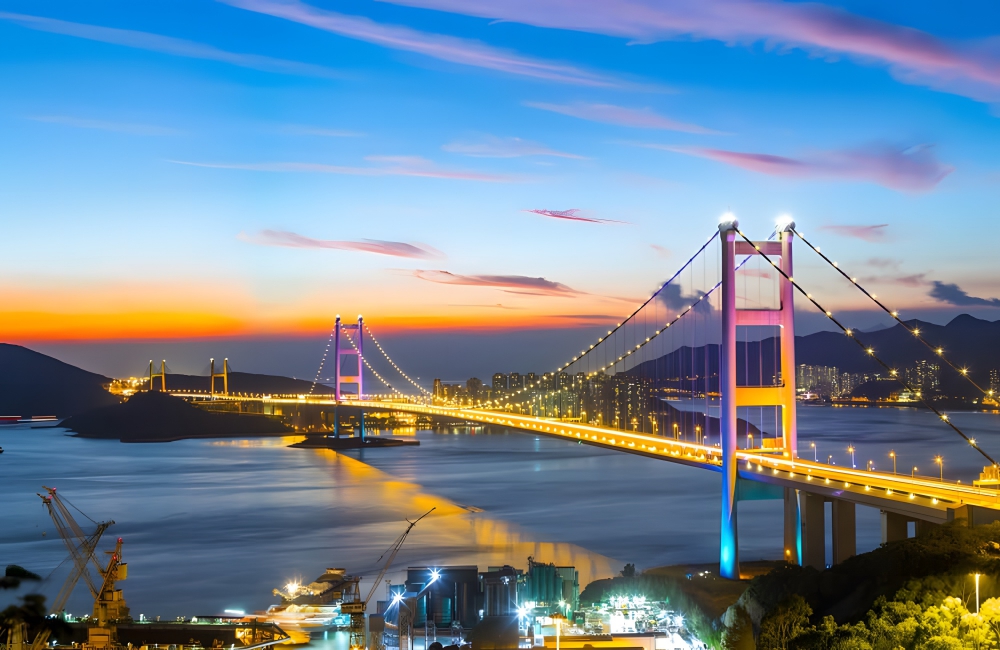
Tsing Ma Bridge, Hong Kong ©Terry Sze / Shutterstock
Tsing Ma is a six-lane bridge. It spans 4,518 feet at its main span, and it clears 174 feet. The double-decker bridge has a second level, which has two lanes for rail travel. The Tsing Ma was designed in a wind tunnel in order to ensure safety and aerodynamic stability. GM does the same tests on its designs before releasing new car models.
The Tsing Ma Bridge, which has become quite a scenic spot in addition to being a landmark with its own visitor center and Viewing Platform, also has an important ship impact protection feature. Rock seawalls, located at the base of every bridge tower, are strong enough to halt a 220,000-ton ship moving at 9.2MPH.
11. Pont Gustave-Flaubert, France
Located in: Rouen, Seine Maritime, Normandy, France
Established: 2007
Cost: $162.44 million*
The Pont Gustave-Flaubert, named after nineteenth-century novelist and Rouen native Gustave Flambert, is located in Normandy. To determine the name, the Rouen City Council held a contest in 2006. The City Council consulted with the citizens of Rouen and they voted through a selection of names. The final two came down to the famed writer and Rene-Robert Cavelier, who was a seventeenth-century fur trader and explorer from Rouen.
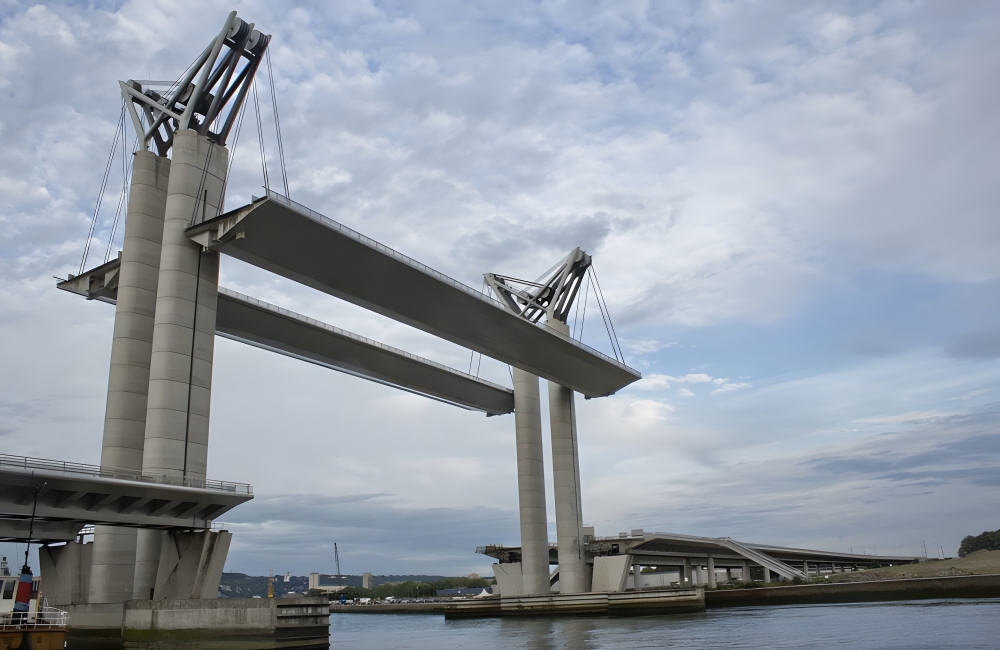
Pont Gustave-Flaubert, France @Greg Tasnadi / Pinterest
It took four years to build, with construction beginning in 2004. It opened on September 25, 2008. Quille, part of Bouygues, built the Pont Gustave-Flaubert in association with Eiffage, the same company that built the Eiffel Tower.
The Gustave-Flaubert spans 2,200 feet and clears 23 feet when closed at 180 feet when opened. The daily traffic is around 50,000 vehicles a day. The lift section opens thirty times a year, including for the Rouen Armada and to let cruise ships from companies like Royal Caribbean, Ponant, and more pass.
12. Liuguanghe Bridge, China
Located in: Liu Guangzhen, China
Established: 2001
Cost: Over $5 million*
The Liuguanghe Bridge spans 974 feet, making it the highest beam bridge in China. It is among the top twenty highest bridges in the world, carrying the China National Highway 321 over the Wu River.
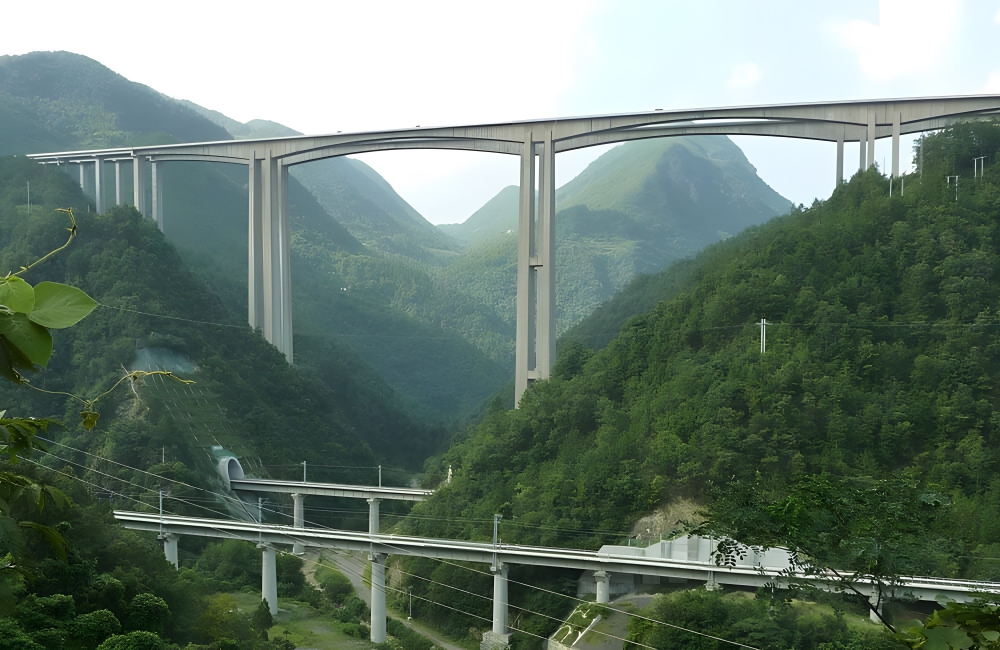
Liuguanghe Bridge, China ©Glabb / Wikimedia.org
The Liuguanghe Bridge connects Guiyang (home to Foxconn factories, which build iPhone parts} and Bijie. The Liuguanghe’s highest pillar is over 295 feet high, and that high pillar sits on the edge of a deep, steep valley. The Bridge itself clears 974 feet. It wasn’t until the opening of the Beipan River Guanxing Highway Bridge that the Liuguanghe lost its “tallest bridge” title.
As part of China National Highway 321 (AKA G321), the Liuguanghe Bridge is part of something far larger than itself. G321 spans 1,380 miles in length, running from Guangzhou, Guangdong all the way to Chengdu in the Sichuan Province. The Liuguanghe Bridge is just a fraction of the entire, well-maintained structure.