
170. Glasgow Botanic Gardens Railway Station, Scotland
Location: Glasgow, Scotland
Year: 1896
Cost: Undisclosed
The Caledonian Railway Company opened the Glasgow Botanic Gardens as part of the Glasgow Central Railway, a line that is now defunct. The rail platforms and railway lay beneath the gardens, and this institution was a combination of a train station and a greenhouse. Because of its unique onion-domed structure, locals in Glasgow nicknamed it “The Kremlin.”
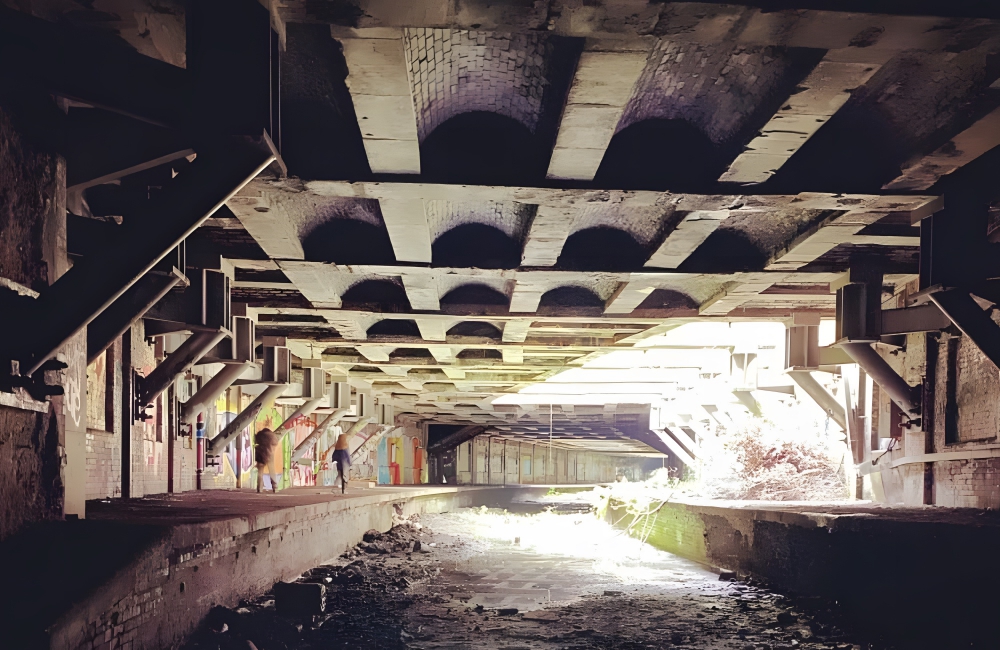
Glasgow Botanic Gardens Railway Station, Scotland @thesofamermaid/Instagram
The station and line never became popular, as, despite the greenery, it was smoke-filled, grimy, and soot-stained, falling well below par when compared to street trams. The station officially closed in 1939 due to a low number of customers, and the line itself shuttered thirty years later, as it was deemed non-viable.
171. Birnbeck Pier, Somerset, England
Location: Weston-super-Mare, North Somerset, England
Year: 1867
Cost: $462,500 to construct*
Nicknamed the “Old Pier,” Birnbeck Pier was located in Weston-super-Mare in North Somerset, England along the Bristol Channel. Opened in 1867, Birnbeck linked the mainland to Birnbeck Island, a small, 1.2-hectare, rocky island. The Pier cost around $462,550 (adjusting for inflation) to construct in 1864.
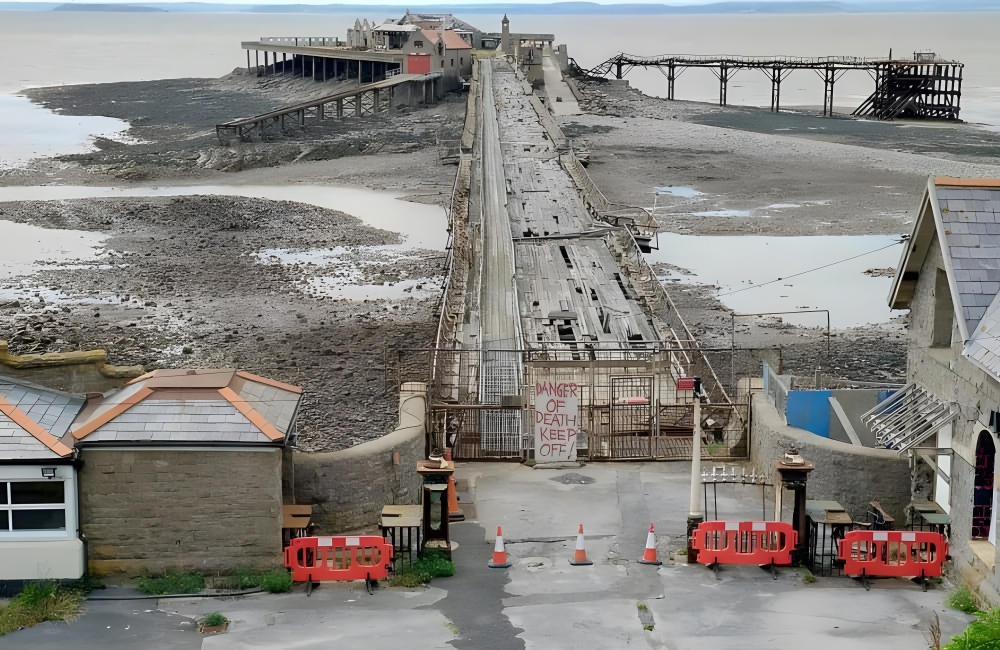
Birnbeck Pier, Somerset, England @johnl_1957/Instagram
It was a huge deal when Birnbeck Pier began construction in the 1860s. The mayor’s toddler son laid the foundation stone, and Weston-super-Mare declared a public holiday. The town hall even held a huge, celebratory dinner. Birnbeck remained open for nearly a century, closing for good in 1994. Though it has changed hands a few times, plans to revamp it have been, so far, fruitless.
172. Elsinore Naval And Military School, Lake Elsinore, California
Location: Lake Elsinore, California
Year: 1920s
Cost: Undisclosed
This abandoned, stately structure is called the Elsinore Naval Military School. It is in a state of rapid decay, though it was once supposed to be a high-end country club. Alas, after it was built, the country club was unable to open due to financial constraints caused by the Great Depression. In the 1930s, it was converted into a military school.
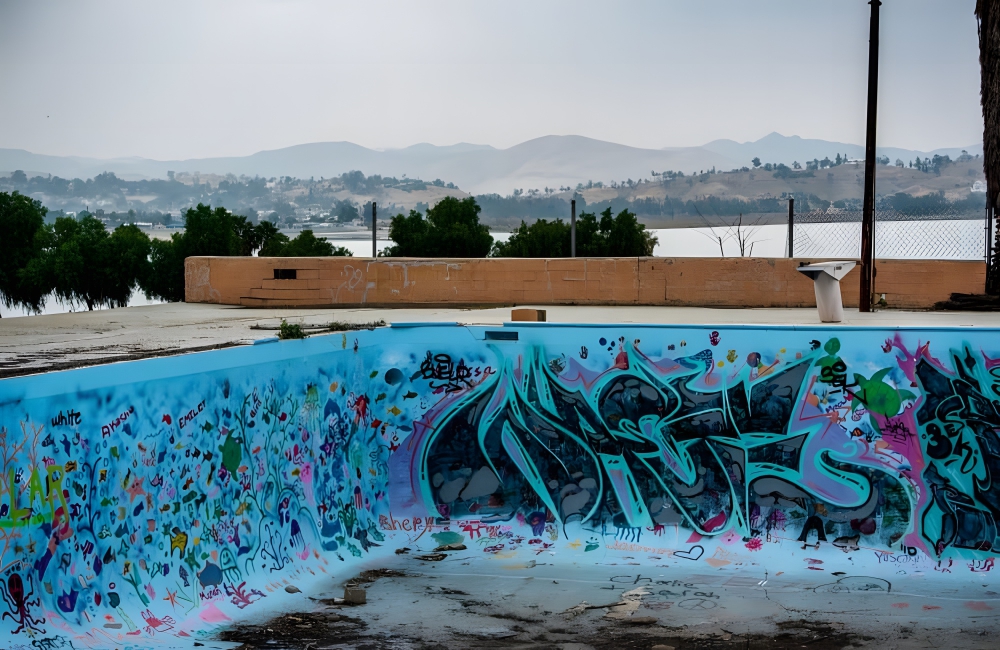
Elsinore Naval And Military School, Lake Elsinore, California @atlasobscura/Pinterest
The school played host to 150 to 200 students until it was closed in 1977, and it saw the sons of famous parents like Barbara Rush, Brian Keiths, and Bela Lugosi attend. The Elsinore School partially burned down in the 1980s, and the rest has been destroyed by foul weather, squatters, and vandalism.
175. Blackinton Woolen Mill, North Adams, Massachusetts
Location: North Adams, Massachusetts
Year: 1822
Cost: $20,357 to construct*
The Blackinton Historic District, located in North Adams, Massachusetts, contains the best-preserved mill village in the county. The District was added to the NRHP in 1985, and it contains surviving brick mill buildings, as well as fine examples of Victorian-era architecture.
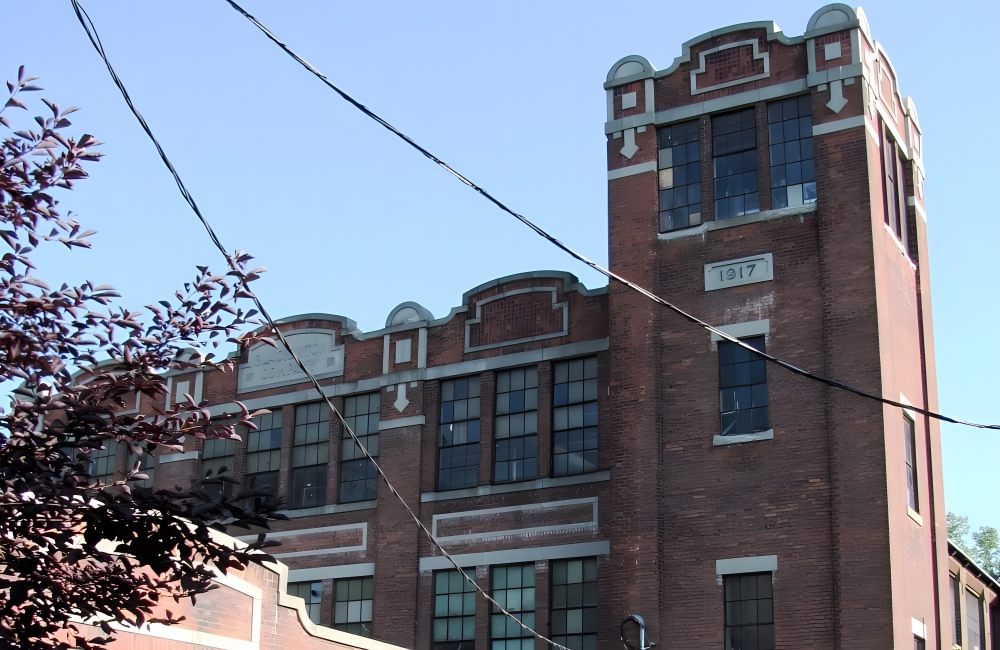
Blackinton Woolen Mill, North Adams, New England ©John Phelan/Wikimedia
The Blackinton Mill was the center of this once-thriving community, which was founded in the 1820s. The wool mill, which cost over $20,000 to create (inflation-adjusted) in 1822, started small, but grew quickly. A community began to form around the mill, with buildings like a jail, library, post office, church, and school popping up. Though the Mill flourished during the Civil War, it ended up closing down due to economic reasons.
176. Welwyn Preserve, Glen Cove, New York
Location: Glen Cove, Long Island, New York
Year: 1906
Cost: Undisclosed
The Welwyn Preserve was once a magnificent Edwardian estate, but that estate has been long-abandoned, and the derelict grounds and greenhouses are now a nature preserve open to the public for exploration. Built in 1906 for an oil industrialist named Harold Pratt, Welwyn was a 206-acre, luxurious estate that was left to the county when Pratt died.
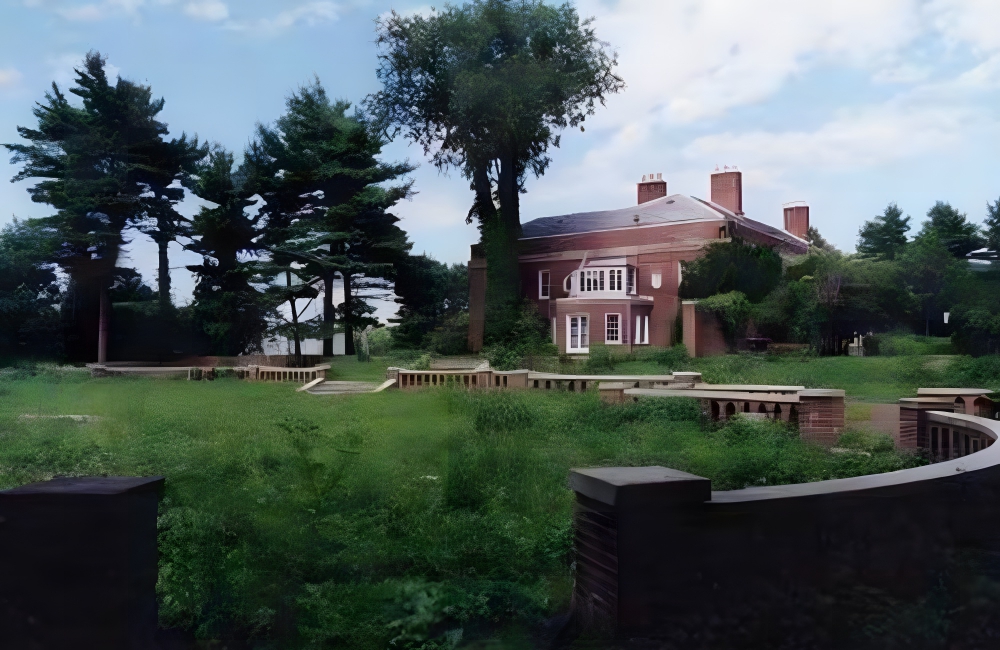
Welwyn Preserve, Glen Cove, New York @atlasobscura/Pinterest
But, the county had no plans for this massive property, and Nassau officials allowed it to slip into ruin. In 1993, Holocaust survivor Boris Chartan turned the main house into the first Holocaust Museum in Long Island, and that remains open to this day, despite the rest of the estate’s dereliction.
178. The Dupont Underground, Washington, D.C.
Location: Beneath Dupont Circle, Washington D.C.
Year: 1862
Cost: $750,000 estimated cost to renovate in 2015*
Dupont Circle is one of Washington D.C.’s most bustling areas. Underneath these bustling streets is an abandoned trolly station and a series of tunnels. Though no longer used for their original purpose, Dupont Circle has found new use as an art space.
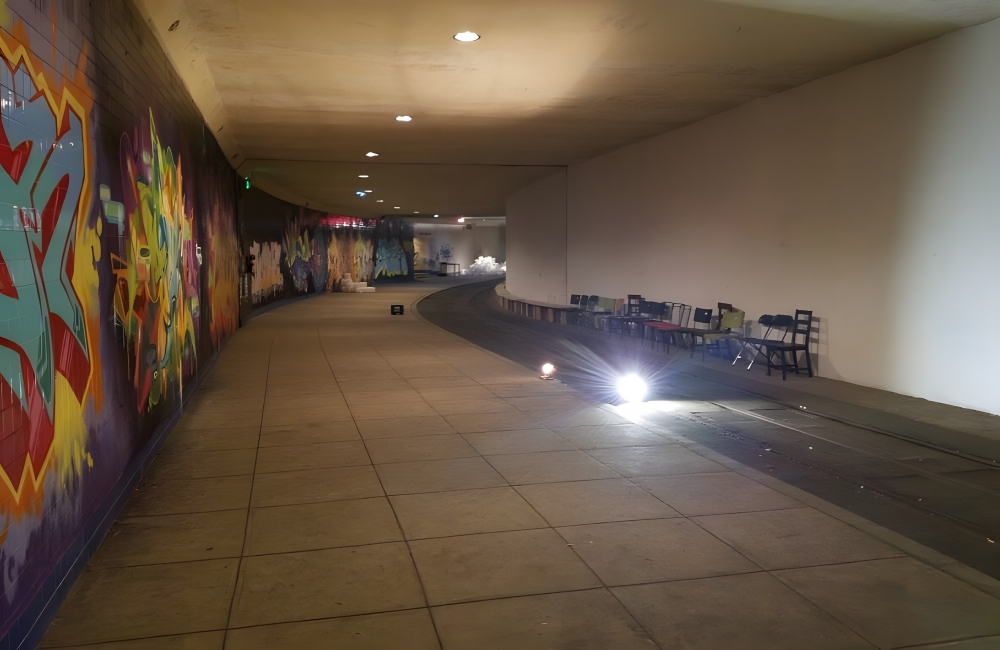
The Dupont Underground, Washington, D.C. @atlasobscura/Pinterest
The Dupont Underground was used for a century to ferry around Washingtonians. Originally, the trolleys were horse-drawn carriages. The Underground was in operation until the 1960s, when the Metro line went into the planning phase. The Dupont Underground has spent time as a nuclear fallout shelter and food court, both of which were ill-fated. Now, it is a homegrown art installation, full of fascinating graffiti.
179. Chicago Freight Tunnels, Chicago, Illinois
Location: Chicago, Illinois
Year: 1904
Cost: $30 million to build*
The Chicago Freight Tunnels operated from 1904 until 1959, but they were forgotten about until a huge flood, years later, struck, and everyone remembered they were there. These now-abandoned tunnels took five years to create, courtesy of the Chicago Tunnel Co. Men had to dig, by hand, huge quantities of blue clay soil.
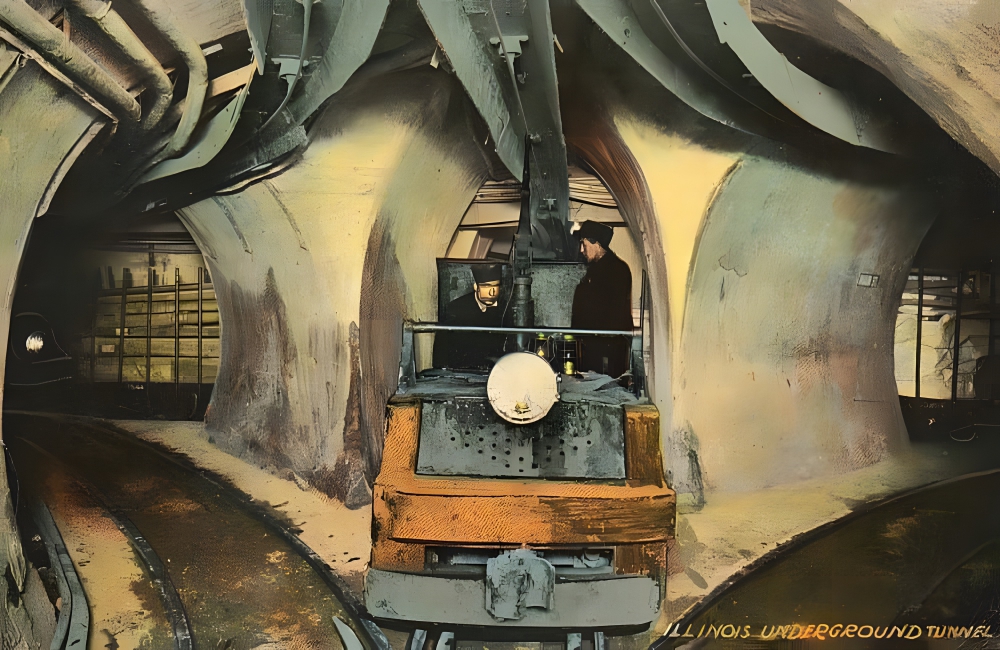
Chicago Freight Tunnels, Chiacgo, Illinois ©Stock Montage/Getty Images
The clay was then used to build up low-lying waterfront areas. The Chicago Tunnel Co. built sixty miles of tunnels before they secured a single client, a rather daring business strategy. It paid off, as clients did come, and Chicago Tunnel Co. continued to dig tunnels and invent creative products (such as natural air conditioning) until the mid-fifties.
180. Pontiac Silverdone, Pontiac, Michigan
Location: Pontiac, Michigan
Year: 1975
Cost: $55.7 million to build*
The Pontiac Silverdome opened in 1975, taking up a massive 199 acres of land. The Silverdome was unique because it had a fiberglass fabric roof that was held up only by air pressure. This was the first use of that technique in a facility of that kind. The Silverdome was used to host many different non-athletic and athletic events until the early 2000s
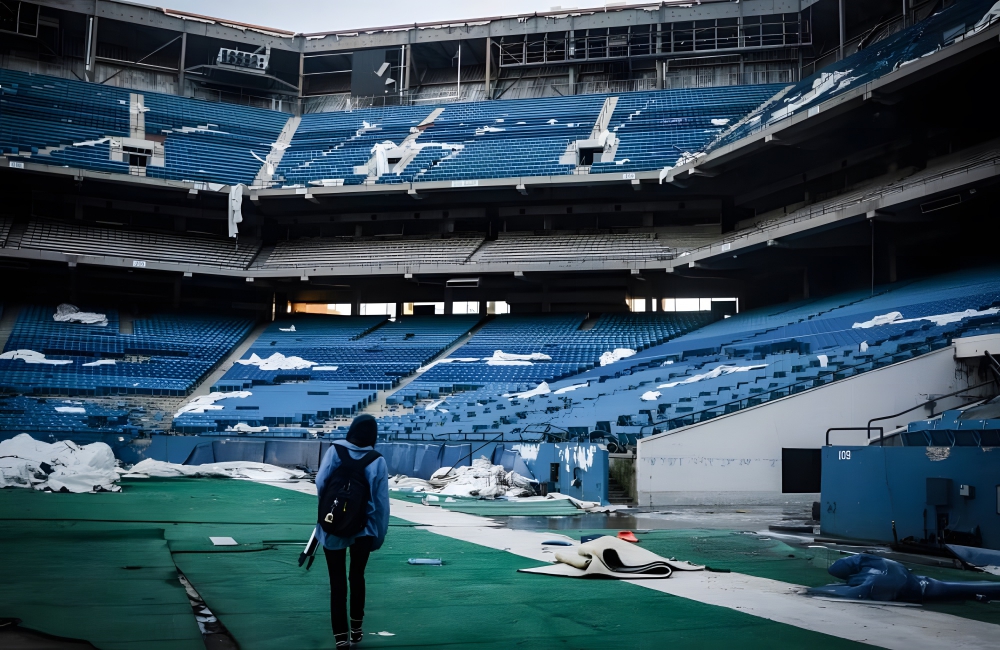
Pontiac Silverdone, Pontiac, Michigan @atlasobscura/Pinterest
In 2002, Ford Field opened, leaving Silverdome without a permanent tenant. The city was unable to find a use for the 85,000-person stadium, and they left it abandoned for eight years, selling it in 2009 for $550,000. The Dome, by contrast, cost $55.7 million to build.
181. St. Agnes Church and School, Detroit, Michigan
Location: Detroit, Michigan
Year: 1924
Cost: Undisclosed
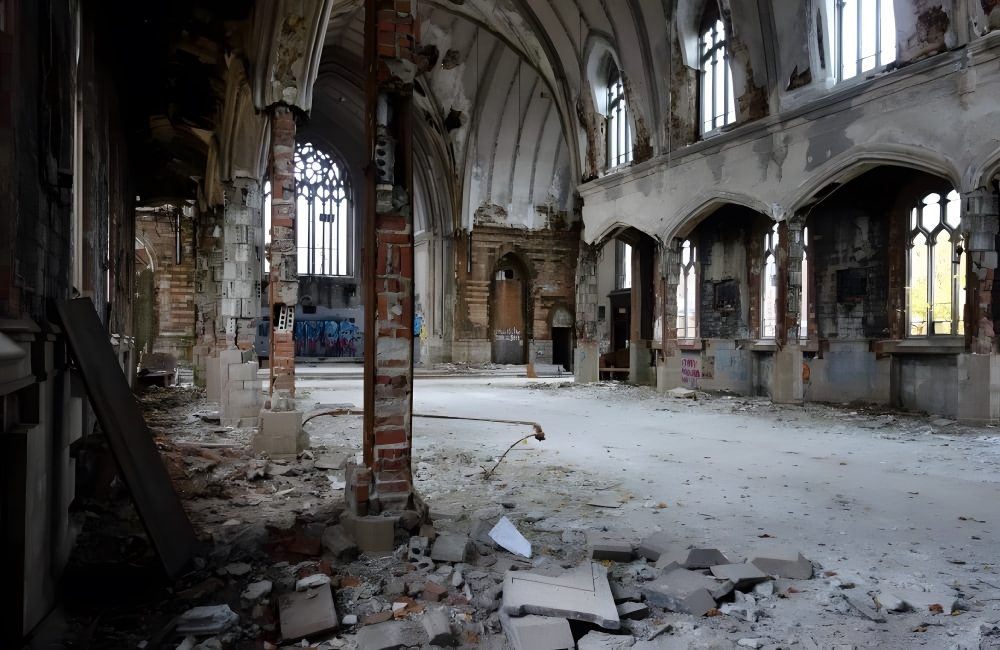
This Catholic Church was once a thriving religious structure in Detroit, Michigan, but, like much of the city, it has fallen into ruin. St. Agnes Church and School not only had a church on its campus, it also had a girl’s high school. St. Agnes was constructed in 1924, when there were only a few houses in the area.
St. Agnes Church and School, Detroit, Michigan @atlasobscura/Pinterest
The gothic-inspired church grew massively, and the community thrived around it. Alas, things took a bad turn for St. Agnes when the surrounding community became crime ridden. By the mid-eighties, many people had abandoned St. Agnes, and there was not enough money to cover the huge building’s operating costs. Thus, this once-beloved church was forced to shut down.
182. Hidden Art Deco Tunnel Underneath the New Yorker Hotel, Manhattan, New York
Location: Manhattan, New York City, New York
Year: 1930s
Cost: $22.5 million to build the New Yorker Hotel*
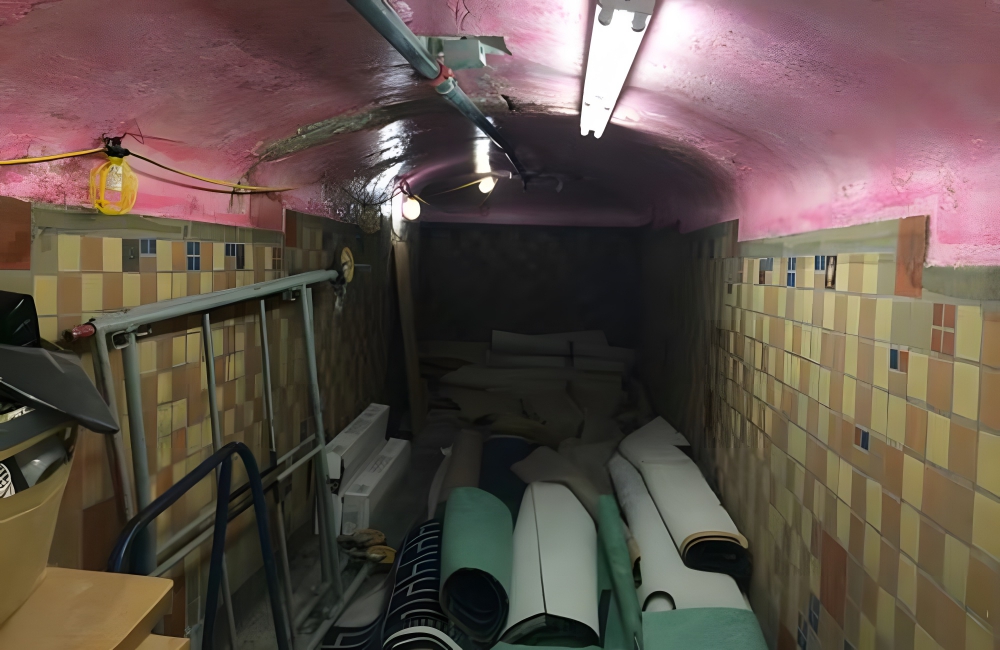
The underground of New York City is a fascinating place, and the Hidden Art Deco Tunnel beneath the Manhattan New Yorker Hotel is one of the most interesting features of the area. The beautiful tunnel ran from the Hotel lobby to Penn Station, and it is still hidden beneath 34th Street in pretty good condition.
Hidden Art Deco Tunnel Underneath the New Yorker Hotel, Manhattan, New York @atlasobscura/Pinterest
The Hotel’s underground tunnel is full of Art Deco tiling, and it looks as though you’ve stepped right into a forgotten era when you walk into it. This tunnel was once a leading amenity of the New Yorker, as it provided a convenient way for people to travel from the hotel to Penn Station.
183. Annie Lytle Elementary School, Jacksonville, Florida
Location: Jacksonville, Florida
Year: 1915
Cost: $250,000 to build*
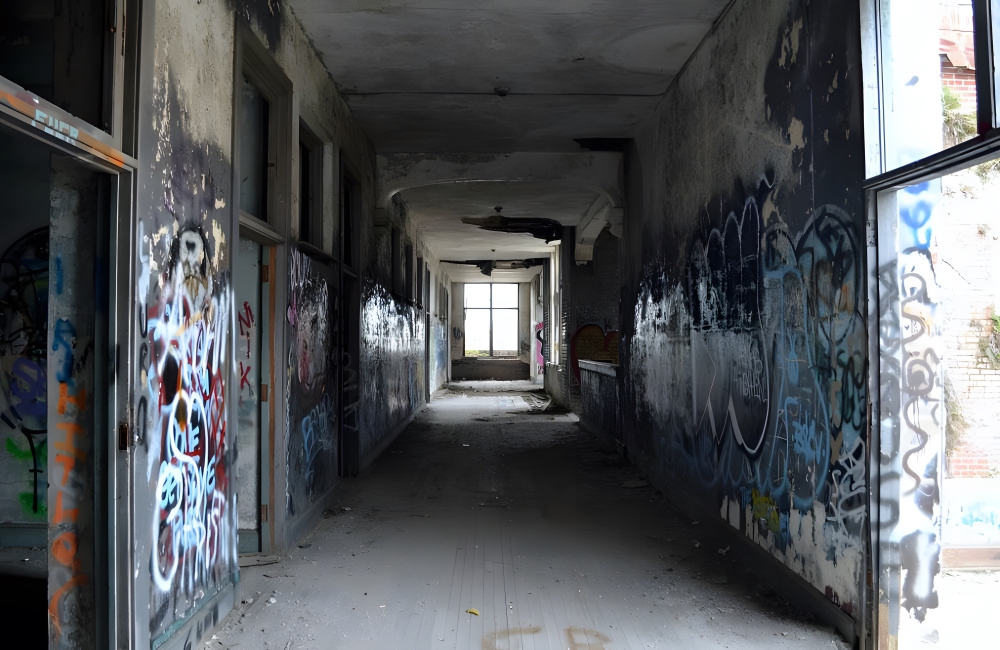
Built in 1915, Annie Lytle Elementary School was originally known as Public School Number 4 until its renaming in 1957. It was renamed to honor a former, beloved principal, but the school only lived under that moniker for a few years before it was closed permanently.
Annie Lytle Elementary School, Jacksonville, Florida © Erin Murphy/Fickr
Jacksonville, Florida’s highway systems are to blame for the closure. Built in the 1950s, I-95 and I-10 crossed just a hundred feet from Annie Lytle—not exactly ideal for a school. The elementary school became isolated and hard to reach, with the sound of highway traffic drowning out second-floor classes. Eventually, Annie Lytle was forced to shut its doors.
184. Harlem Valley Psychiatric Center, Wingdale, New York
Location: Wingdale, New York
Year: 1924
Cost: $20 million to build*
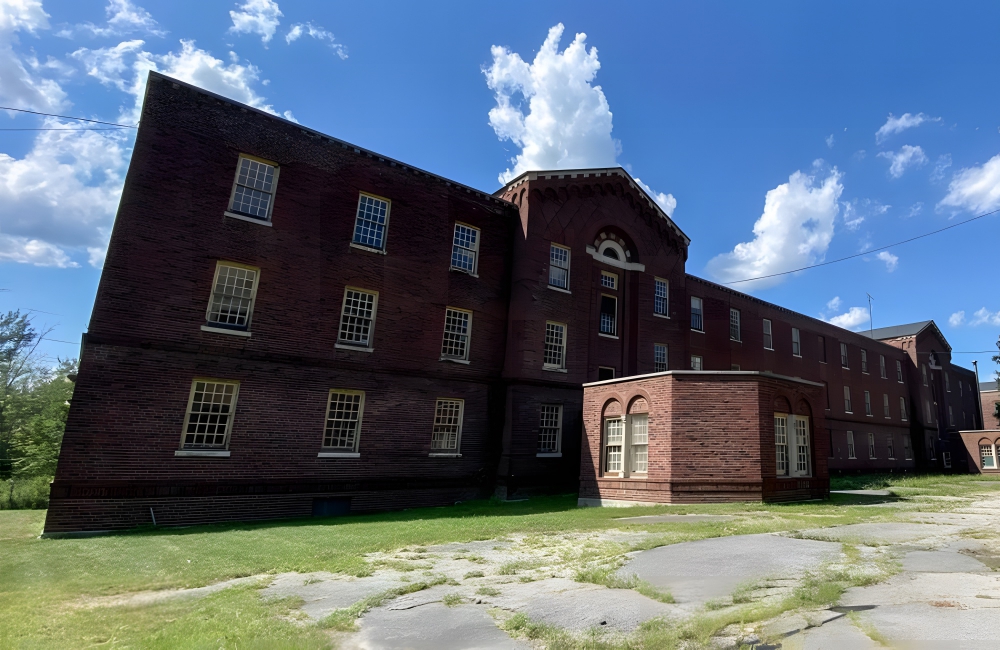
This psychiatric center was once on the cutting edge of the now-archaic procedure known as the lobotomy. Harlem Valley Psychiatric Center severed the frontal lobe pathways of many a patient in the twentieth century. The Center opened in 1924, and it was meant for the treatment and care “of the insane.”
Harlem Valley Psychiatric Center, Wingdale, New York @UntappedNY/Pinterest
The Center was built using the grounds of an old prison, and it had 900 acres and 80 buildings on its campus. The hospital had its own golf course, baseball field, bowling alley, bakery, dairy farm, ice cream parlor, and more. At its peak, the Center housed 5,000 patients and an equal number of employees. After twenty years of decline caused by newer, better facilities being built, Harlem closed, and the property, which is rumored to be haunted, was abandoned.
185. Warner Brothers Corset Factory, Bridgeport, Connecticut
Location: Bridgeport, Connecticut
Year: Late 1800s
Cost: Undisclosed
Located in Bridgeport, Connecticut, the Warner Brothers Corset Factory brought about a new era in corset-making. In the 1800s, doctors began to notice that women’s health was suffering from the tight, torso-constricting corsets. Warner Brothers came out with a flexible, practical corset in the late 1800s that quickly became a best-seller.
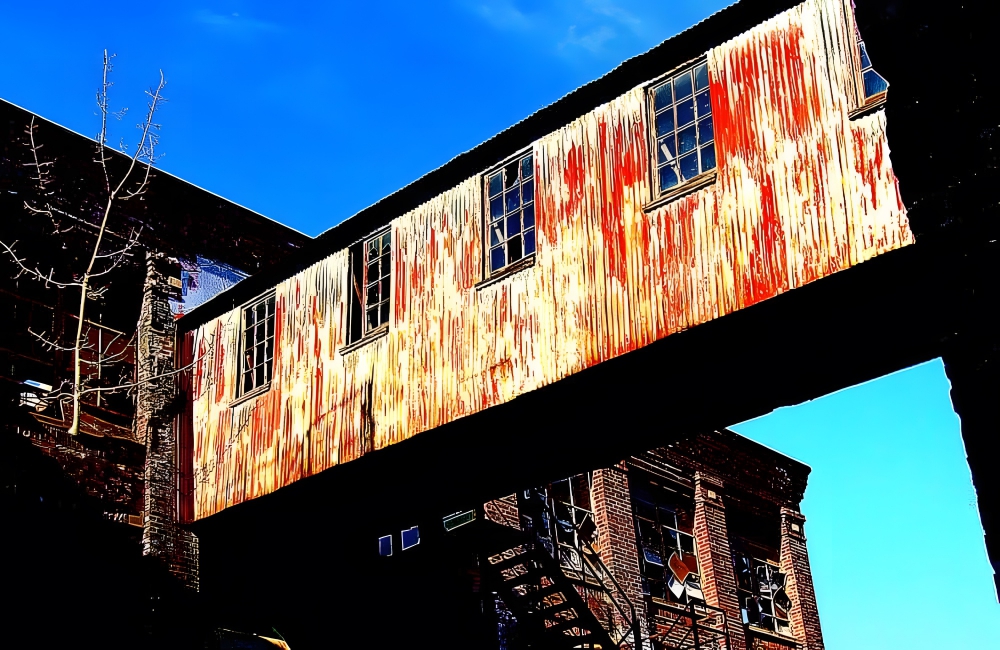
Warner Brothers Corset Factory, Bridgeport, Connecticut © 826 PARANORMAL/Flickr
At its peak, the corset factory produced 6,000 corsets daily. It also arranged for free housing for its workers, and it opened a school for its employees, too. Alas, as corsets fell out of favor, Warner Brothers closed, and the former factory, which was once ahead of its time, is now a thing of the past.
186. Brook Farm, Boston, Massachusetts
Location: Boston, Massachusetts
Year: 1841
Cost: $849,000 average home price in the area*
Brook Farm, located outside Boston, Massachusetts, remains the most famous utopian community to have operated in America. Transcendentalists Sophia and George Ripley opened the farm in 1841, creating a commune where labor and tasks were shared equally, and the final goal was the balance of work and leisure that would benefit the greater good.
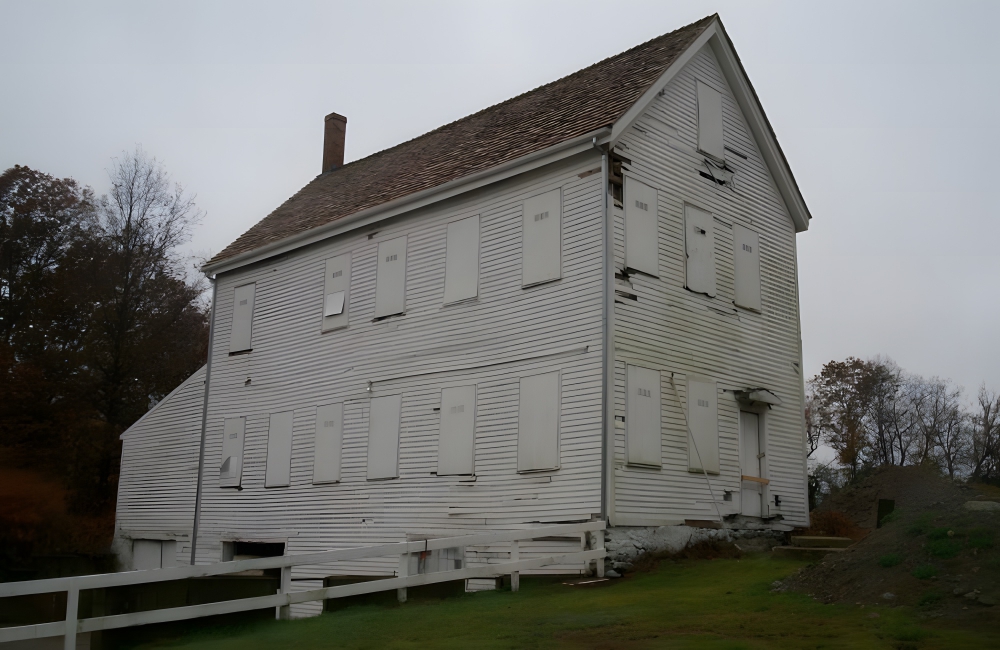
Brook Farm, Boston, Massachusetts ©Midnightdreary/Wikimedia Commons
Alas, it was hard for Brook Farm, famous though it became, to turn a profit due to its philosophy, so it was forced to shut its doors in 1847. The commune, while it lasted, was visited by renowned American thinkers such as Nathaniel Hawthorne, Horace Greeley, Charles Anderson Dana, and Margaret Fuller. Hawthorne’s novel, The Blithedale Romance, was set in a community based on Brook Farm.
187. Widow Jane Mine, Rosendale, New York
Location: Rosendale, New York
Year: 1825
Cost: $5-$10 suggested donation to visit*
The Widow Jane Mine has technically been abandoned for more than fifty years, but it has seen quite a few visitors in its time. Located in Rosendale, New York, this cement mine was at the forefront of the industry. Its history began in 1825, when huge dolomite limestone deposits were discovered there.
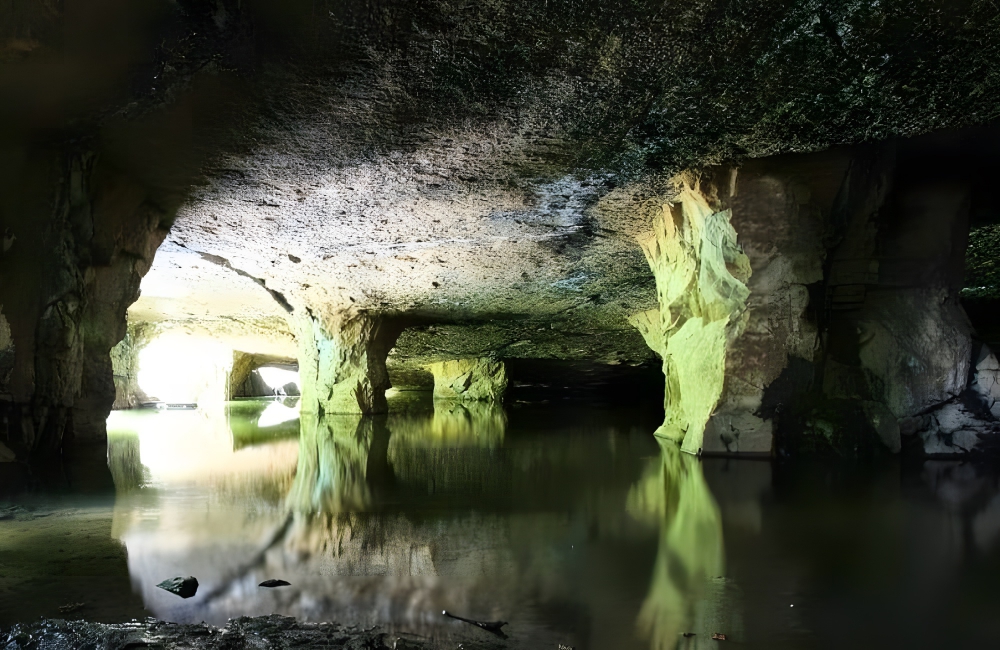
Widow Jane Mine, Rosendale, New York @atlasobscura/Pinterest
Widow Jane remained in operation until 1970, but its tale was far from over. In addition to being a popular biking and hiking destination, the Widow Jane has seen use as a trout nursery, whisky water supplier, recording studio, performance venue, and perhaps most interestingly, a mushroom farm.