
107. Elberton Ghost Town, Garfield, Washington
Location: Garfield, Washington
Year: 1886
Cost: Unknown
In 1886, on a group of pastoral hills between Idaho and Washington, Sylvester Wait and his son, Elbert, founded Elberton. The town began to flourish in the West, adding on a black smile shop, general stores, a church, a grain warehouse, a flour mill, and a post office. By 1900, the population had hit 400.
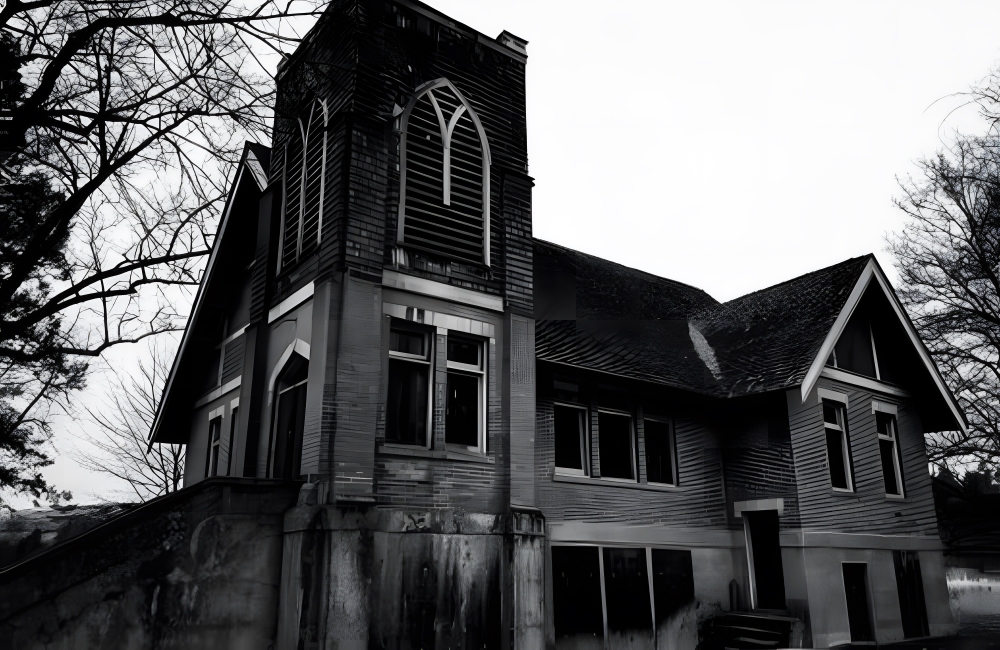
Elberton Ghost Town, Garfield, Washington @atlasobscura/Pinterest
But then, two tragedies struck. First was a fire that decimated the town, while a flood, two years later, sealed the deal on Elberton’s abandonment. The landmarks that have remained over the past century include an overgrown cemetery, abandoned homes, and the United Brethren Church.
108. Budville Trading Post, Cibola County, New Mexico
Location: Cibola County, New Mexico
Year: 1928
Cost: Unknown
The story behind the Budville Trading Post, located alongside a seemingly-quiet stretch of New Mexico’s Old Route 66, is nothing short of fascinating. Budville was founded by Bud Rice and his wife, two people known to have very aggressive personalities. The town grew quickly, and Rice named himself the “law West of the Pecos River.”
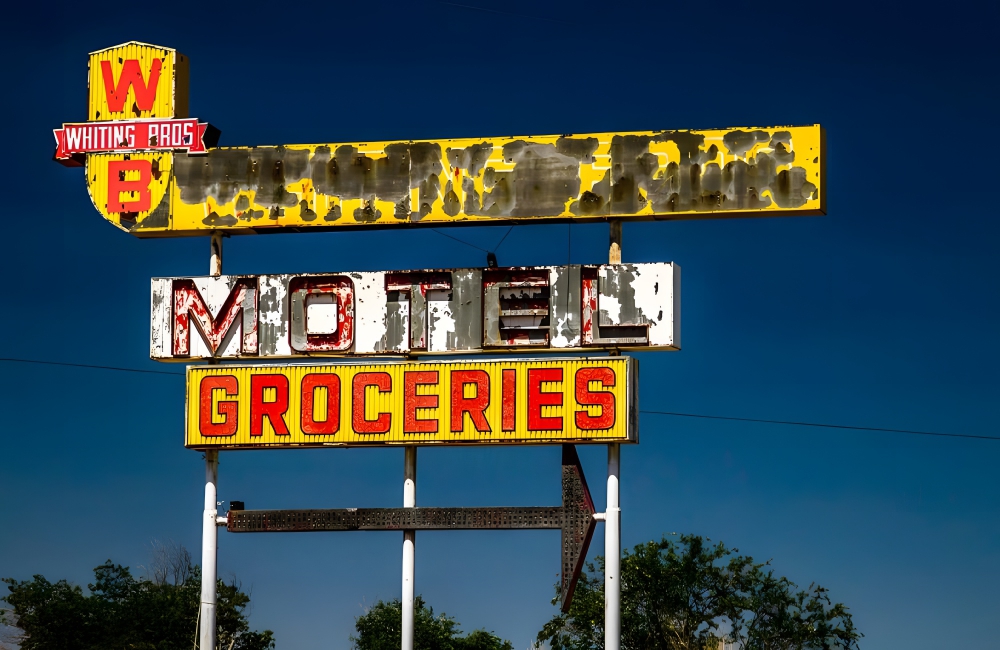
Budville Trading Post, Cibola County, New Mexico @atlasobscura/Pinterest
Rice was notoriously corrupt, often using his self-declared “law enforcement” position to exploit people traveling along Route 66. Eventually, Rice’s crooked dealings caught up to him when, in 1967, he was killed by a stranger named Billy Ray White who shot him and stole $450 from his trading post. Bud’s wife ran Budville until she passed in the late 1970s—after that, the Trading Post was abandoned, left to stand as a harsh reminder of the old adage, “You reap what you sow.”
109. Seaside Sanatorium, Waterford, Connecticut
Location: 36 Shore Road, Waterford, Connecticut
Year: 1934
Cost: $2.23 million* (Land Price, 1930)
The Seaside Sanatorium is a historical medical facility located in Waterford, Connecticut on 36 Shore Road. The facility is significant, as it was the first of its kind designed to heliotropically treat kids suffering from the formerly-fatal lung disease known as tuberculosis.
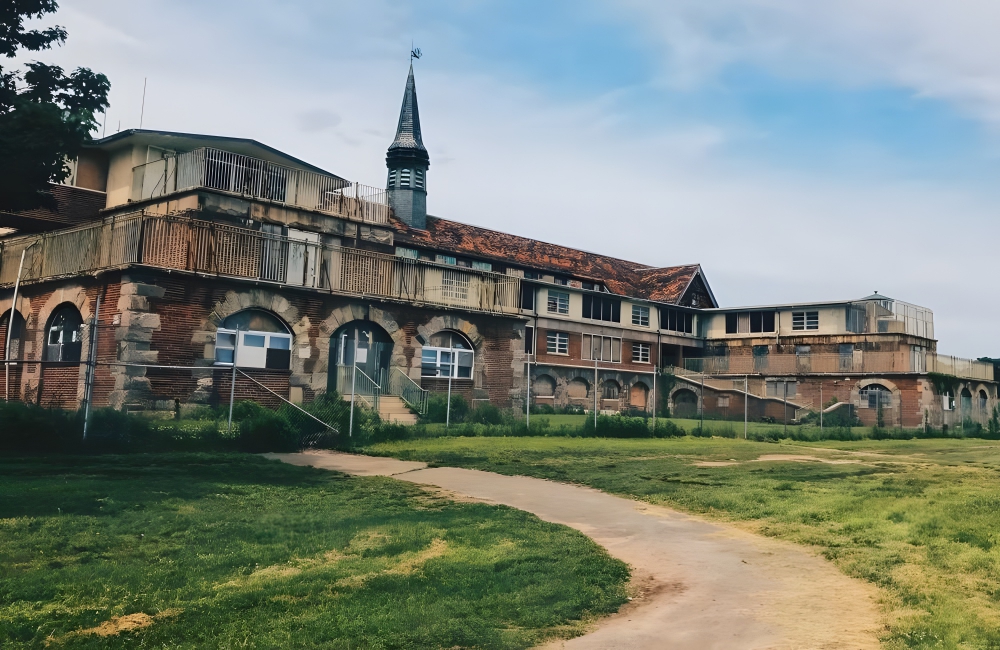
Seaside Sanatorium, Waterford, Connecticut @atlasobscura/Pinterest
Built in 1934 and designed by Cass Gilbert, Seaside is now a Connecticut State Park. The land underneath the brick fortress, all 36 acres, cost $2.23 million (inflation-adjusted) in 1930. The facility ran well, helping children sun outside to relieve their TB symptoms. Luckily, modern medicine advanced and, in the 1940s, sanatoriums were no longer necessary and Seaside’s days as a TB ward ended.
110. Summit Greenhouse, Summit, New Jersey
Location: Summit, New Jersey
Year: 1920s
Cost: $5,000-$50,000 to demolish in 2018*
Alas, you can no longer visit the eerie Summit Greenhouse in Summit, New Jersey, as it was torn down in 2018 due to safety reasons. The gigantic greenhouse was a bit of a mystery, though the general consensus is that it was built in the 1920s, according to the dates on the bricks used to construct it.
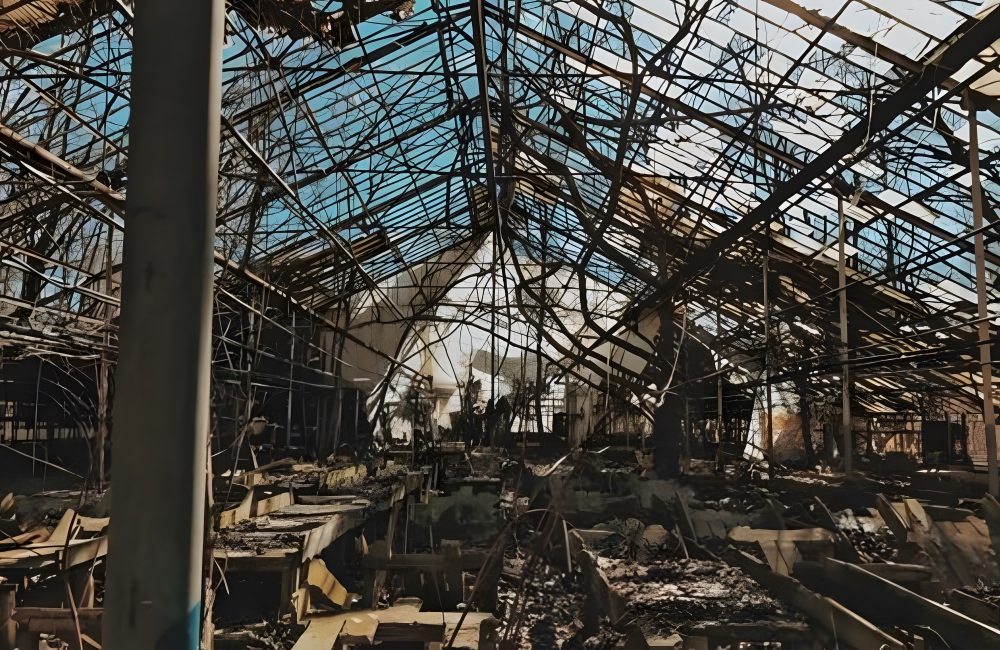
Summit Greenhouse, Summit, New Jersey @atlasobscura/Pinterest
The machinery and artifacts inside the greenhouse indicate that Summit was abandoned sometime in the 1970s. True to its purpose, the original owners, whoever they were, left the greenhouse to get taken over by nature. Until 2018, it was a hotspot for those looking to tour creepy, otherworldly East Coast ruins.
111. Spirit of Sacramento, Sacramento, California
Location: Sacramento, California
Year: 1942
Cost: $1.6 million cleanup cost in 2016*
The Spirit of Sacramento, a three-story riverboat, started its life as an Army Corps snag boat, operating under the name Putah. Then, actor John Wayne bought and renamed it for his movie Blood Alley, a 1955 film starring him and Lauren Bacall. The boat changed hands after that until the 1990s when a nasty fire struck.
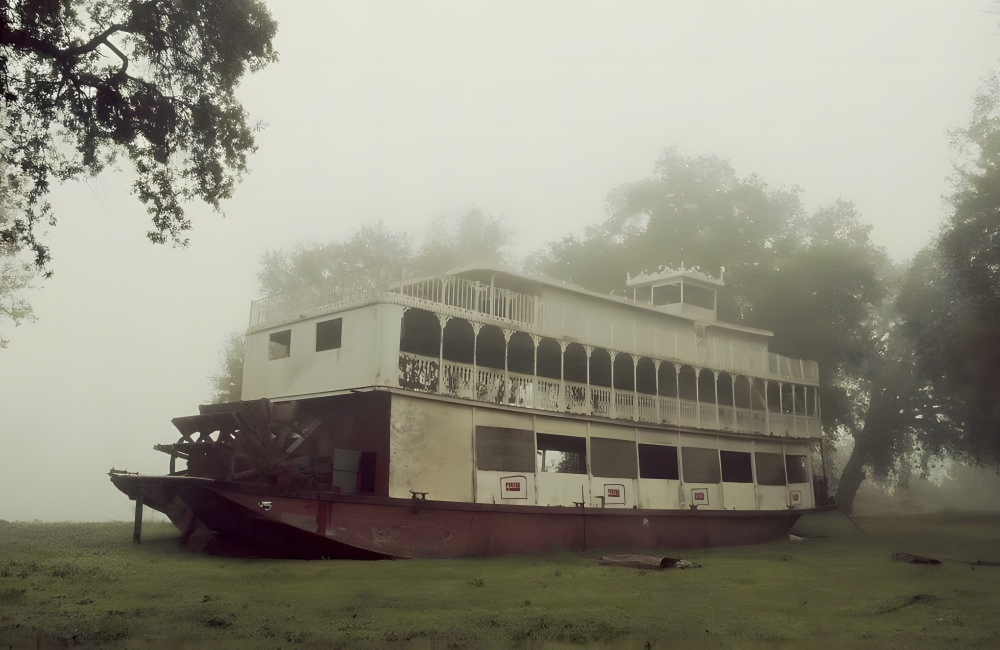
Spirit of Sacramento, Sacramento, California @atlasobscura/Pinterest
At the time, the Spirit had been chartering people up the river on dinner cruises, but the fire reduced it to ruins. It was sold and repaired but never returned to its former glory. When it partially sank due to vandalism, the city had to pay around $1.6 million to clean up the ruins, lest the Spirit become a hazard once again (if it broke free and got into the river, it would smash anything in its path).
112. Palace of the Golden Orbs, Houston, Texas
Location: Overture Drive, Houston, Texas
Year: 1990s
Cost: $6 million to build*
Chong Hua Sheng Mu Holy Place, also known as the Palace of the Golden Orbs, is a Taoist structure located on Overture Drive in Houston, Texas. It sticks out among the Western suburbs, thanks to the gigantic golden sphere emerging from its roof. You can easily spot the Palace as it juts above nearby two-story apartment buildings and strip malls.
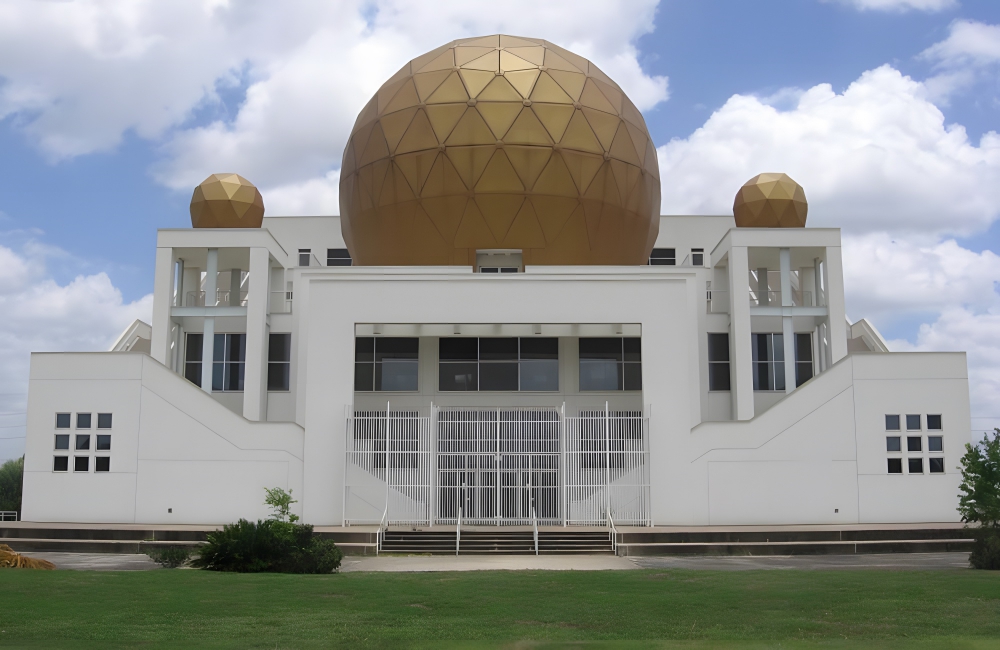
Palace of the Golden Orbs, Houston, Texas ©Robert Kimberly/Flickr
The Taoist Palace was abandoned when its creator ran out of money, abandoning the property in the nineties. Kwai Fu Wong’s plans were ambitious, and her work remains untouched. No one has torn the temple down, and it remains a monument to a dream unrealized.
113. Donner Pass Summit Tunnels, Truckee, California
Location: Truckee, Nevada County, California
Year: 1866
Cost: Unknown
Abandoned tunnels are, essentially, subterranean haunted houses, and you’ll be hard-pressed to find an abandoned tunnel creepier than the one in the Donner Pass in the Sierra Nevada Mountains. Constructed in the mid-1800s, the Donner Pass tunnels were used for transcontinental train voyages. They took fifteen months of hard labor, mostly performed by Chinese workers, to finish.
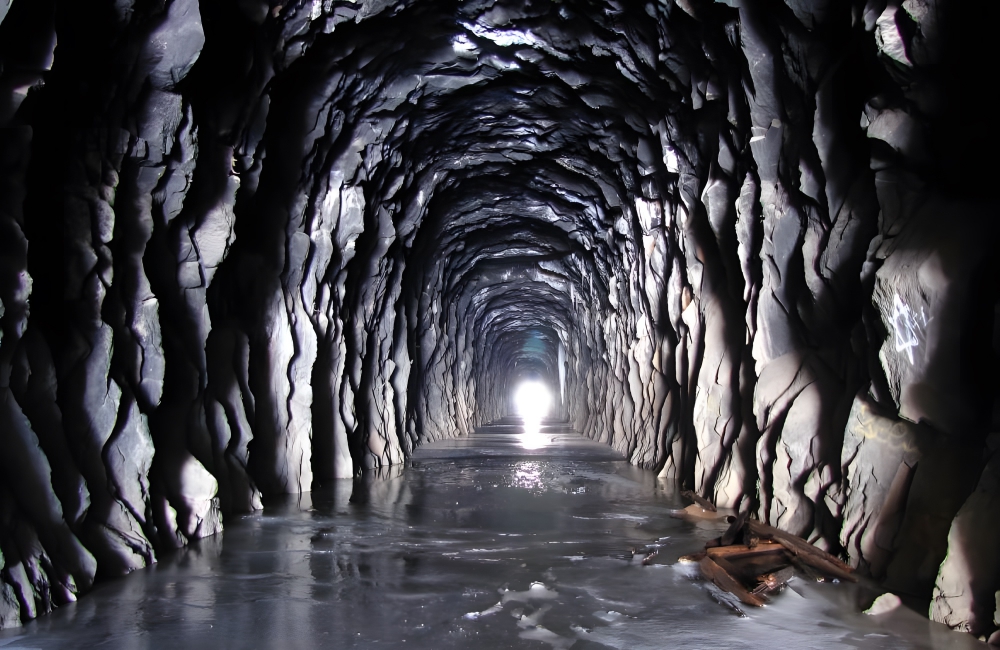
Donner Pass Summit Tunnels, Truckee, California ©ChiefRanger/Flickr
These tunnels were dangerous from the get-go, and their construction led to many worker’s deaths, leading to rumors of hauntings. The Donner Pass Tunnels also have a haunted history thanks to the Donner Party, an infamous group of California explorers who became stranded in the mountains and had to eat one another to survive.
114. Queensboro Trolley Kiosk, Manhattan, New York
Location: Queensboro Bridge, Manhattan, New York
Year: 1907
Cost: Unknown
This forgotten relic lies beneath the Queensboro Bridge in Manhattan, New York City. The Queensboro Trolley Kiosk serves as a reminder of the area’s closed-down trolley system. At this Kiosk, which was built in the early twentieth century, trolleys would stop at the bridge to collect riders who would travel all around New York in these charming vehicles.
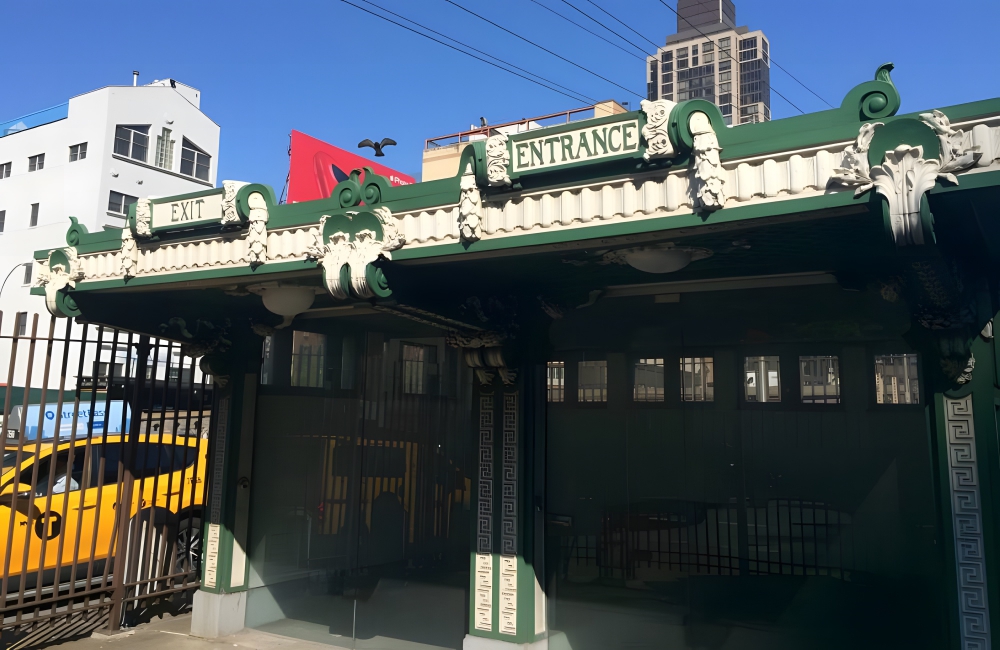
Queensboro Trolley Kiosk, Manhatten, New York @atlasobscura/Pinterest
The Kiosk was adorned with colorful, glazed tiles, copper, and more. But, when trolleys stopped running in the 1950s, the Kiosk, as well as others around the city, were abandoned. The Queensboro Kiosk was the only one left in its original location, and the white-and-green structure remains empty, forlorn, fenced, and, for the most part, unnoticed.
115. Dawson Ghost Town, Raton, New Mexico
Location: Raton, New Mexico
Year: Late 1800s
Cost: $96 million (2020 Asking Price)*
There is just one road in and out of Dawson, New Mexico. This ghost town used to be a lively place, with amenities such as modern homes, a hotel, a theater, a baseball park, a golf course, a newspaper, a bowling alley, and more. But, two disastrous, deadly mining incidents would cause this Raton, New Mexico town to be shuttered for good.
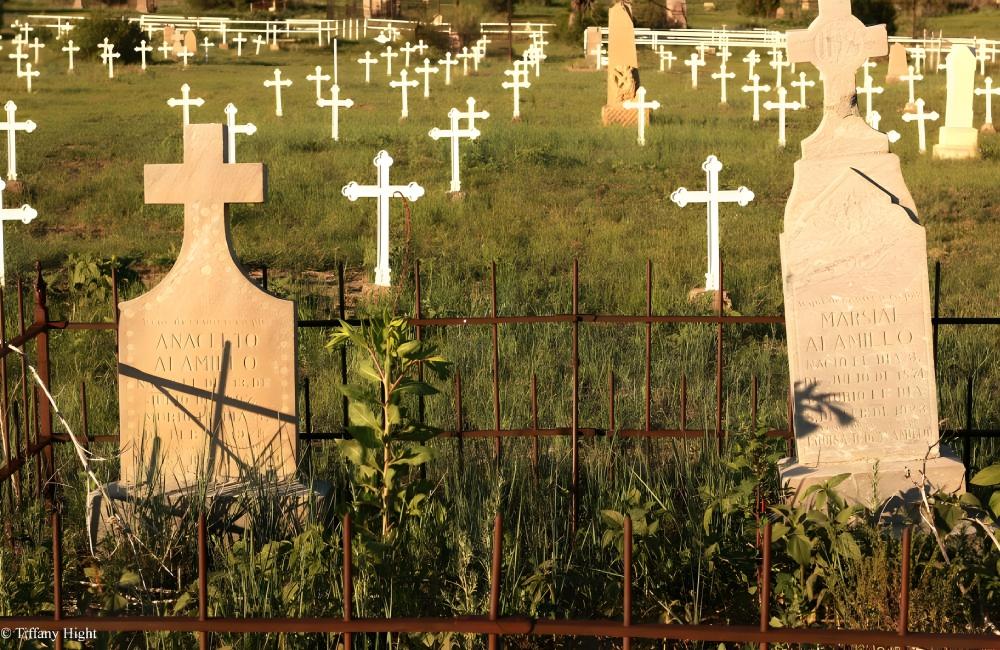
Dawson Ghost Town, Raton, New Mexico @atlasobscura/Pinterest
Two mining explosions occurred in both 1913 and 1923, leading to the deaths of many mining workers. The town shut its doors officially in 1950 after years of derelict and rumors of hauntings. Now, Dawson’s sole road leads to its only remaining relic: a cemetery full of battered headstones and overgrown grass.
116. Canal Village, Rome, New York
Location: Rome, New York
Year: 1970s
Cost: $8.2 million to build*
Located in Rome, New York, Erie Canal Village was supposed to be a historic reboot of the Golden Age. The Village has museums and shops (all dilapidated and abandoned now) depicting the 1800s of the Erie Canal. The tourist attraction was created in the 1970s, but it was not maintained.
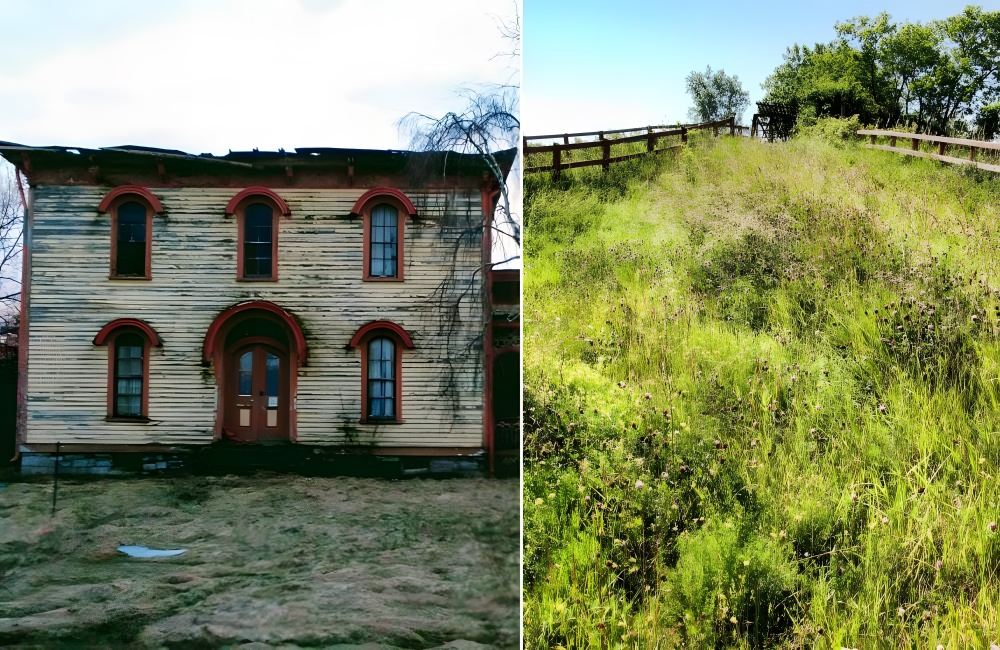
Canal Village, Rome, New York @atlasobscura/Pinterest
It was developed as a way to spruce up the nearby area, but it did the opposite. The buildings were dilapidated and abandoned, and Erie Canal Village became a political tool used by both sides to point fingers at the other for allowing Rome, New York to go to waste. The location is not open to the public, and it is chained off, so as to prevent further damage to this tourist-attraction-turned-wasteland.
118. Ruins of the McMillan Sand Filtration Site
Location: Washington D.C., U.S.A.
Year: 1986 (Bought By Government)
Cost: $720 million cost to buy in 1986*
This public work was built during the Industrial Era, and the McMillan Sand Filtration Site, as its name would suggest, used nothing but sand to filter water for the Washington D.C. area. McMillan was vital to D.C., which had been plagued by muddy, unfiltered, bacteria-laced water from the Potomac that caused a lot of sickness.
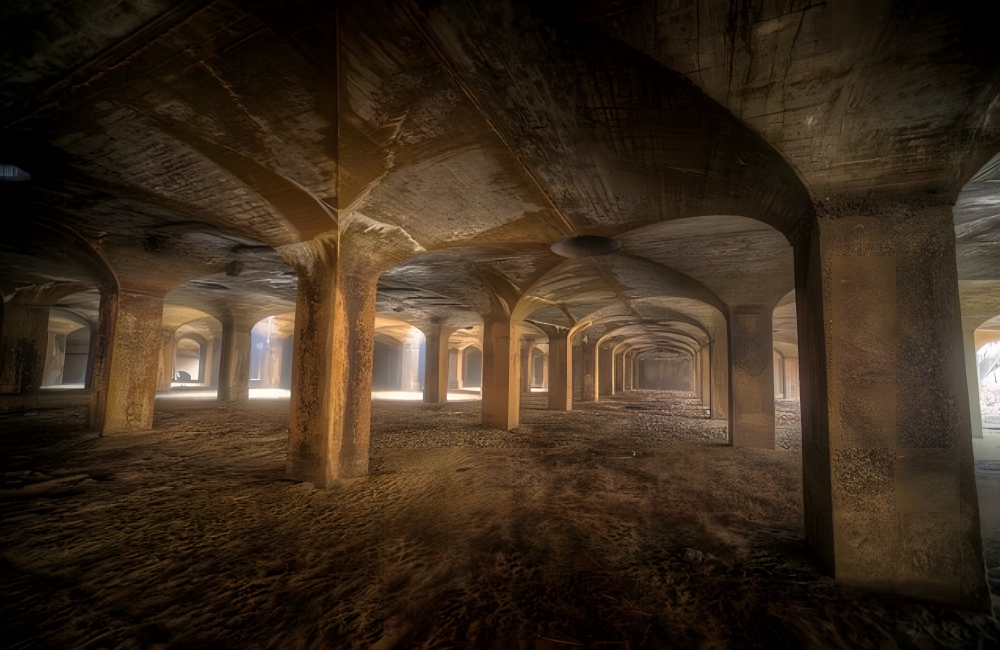
Ruins of the McMillan Sand Filtration Site @atlasobscura/Pinterest
McMillan used Laurel, Maryland sand to filter water, and the filtration site helped improve Washington’s water reputation. As technology advanced and changed, McMillan was abandoned. Though the D.C. government bought the land in the mid-1980s, they neglected to keep McMillan in good condition, despite requirements by local historical protection societies.
119. Comet Diner, Hartford, Connecticut
Location: Hartford, Connecticut
Year: 1940s
Cost: $2 million* (2019 Redevelopment Plan)
This chrome and steel diner is an iconic piece of history in Hartford, Connecticut, though it is, currently, in danger of being demolished. The Comet Diner was built in the 1940s, and it would go on to be a Hartford hotspot, even serving movie stars like Zsa Zsa Gabor.
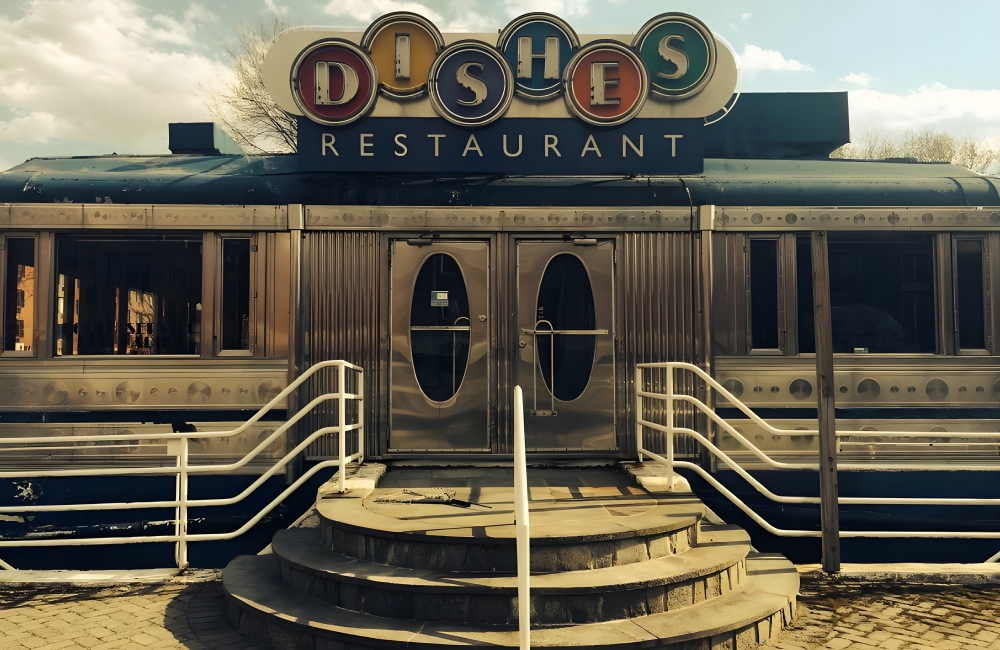
Comet Diner, Hartford, Connecticut @atlasobscura/Pinterest
The Diner was built in the Paramount style, which was similar to diners you’d find in Oakland, New Jersey. The now-iconic vintage diner, sadly, was shuttered in the 2000s after decades in business. Now, the Hartford Preservation Alliance is in a constant battle to save this abandoned landmark from destruction.
121. Secret Apartment in the Fort Washington Library, Manhattan, New York
Location: Manhattan, New York City, New York
Year: 1920s
Cost: Unknown
The Fort Washington branch of the NY Public Library System is large and bright, with sweeping windows, all ceilings, and a light, airy feel. But, hidden within the walls of the Fort Washington Library, is a dark, musty, empty space that used to be a nice apartment. The abandoned apartment is dilapidated, and the NYPLS has never fixed it.
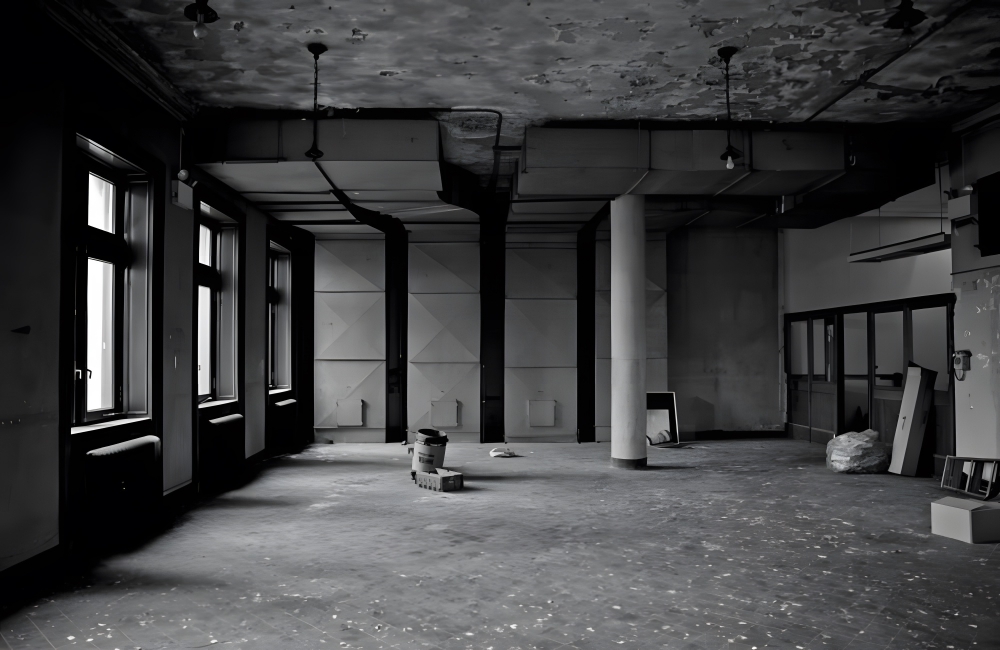
Secret Apartment in the Fort Washington Library, Manhatten, New York @atlasobscura/Pinterest
It is thought that this apartment once belonged to the library custodian in the 1920s. But, in the 1980s, when custodians began falling out of favor, no one lived in libraries anymore. Many of these library apartments vanished or were rebuilt. There are thirteen left, including this creepy, abandoned one.