
42. Al Maktoum Airport
Location: Dubai, UAE
Total Cost: $82 Billion*
Year Finished: 2010
More than two hundred and seventy destinations are reached by the almost eight thousand weekly flights that are operated by almost one hundred and forty airlines that fly out of the Al Maktoum Airport every week. It took only six hundred days for the almost fifteen thousand-foot-long runway to be built and almost another two-thirds of a year for it to undergo safety tests.
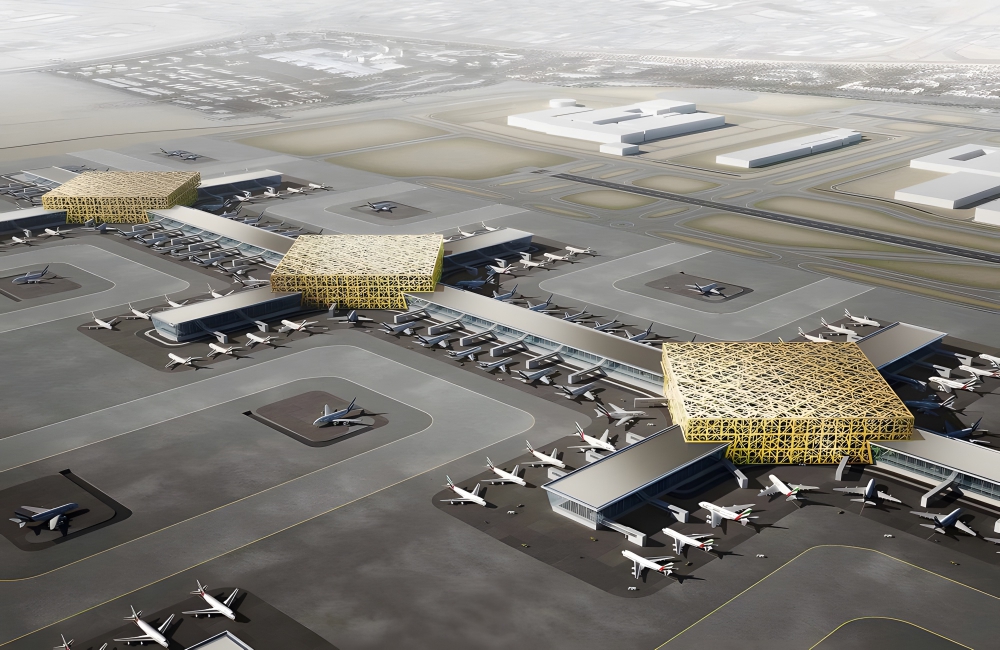
Al Maktoum Airport @chiraggudhka12 / Pinterest
When its expansion is completed it will be ten times larger than Dubai International Airport and will have the capacity for 260 million passengers annually. The Al Maktoum Airport covers a jaw-dropping 110 square miles and when finished will be the largest piece of what is the Dubai World Central puzzle and will long be remembered in Dubai, just as its namesake, the late Sheikh Maktoum bin Rashid Al Maktoum will be.
43. Trans-Alaska Pipeline System
Location: Alaska
Total Cost: $8 Billion*
Year Finished: 1977
As a result of the hefty increase in oil prices following the 1973 oil crisis, the ‘pipe’ dream that was the Trans-Alaska Pipeline System was born. In the first half of 1977, the construction of the eight-hundred-mile-long Trans-Alaska Pipeline System was completed after a little more than three years of construction, and by the end of the same year, the pipeline was in full-scale production. It is reported that by 2014 the pipeline’s eleven pump stations had shipped more than seventeen billion barrels of oil.
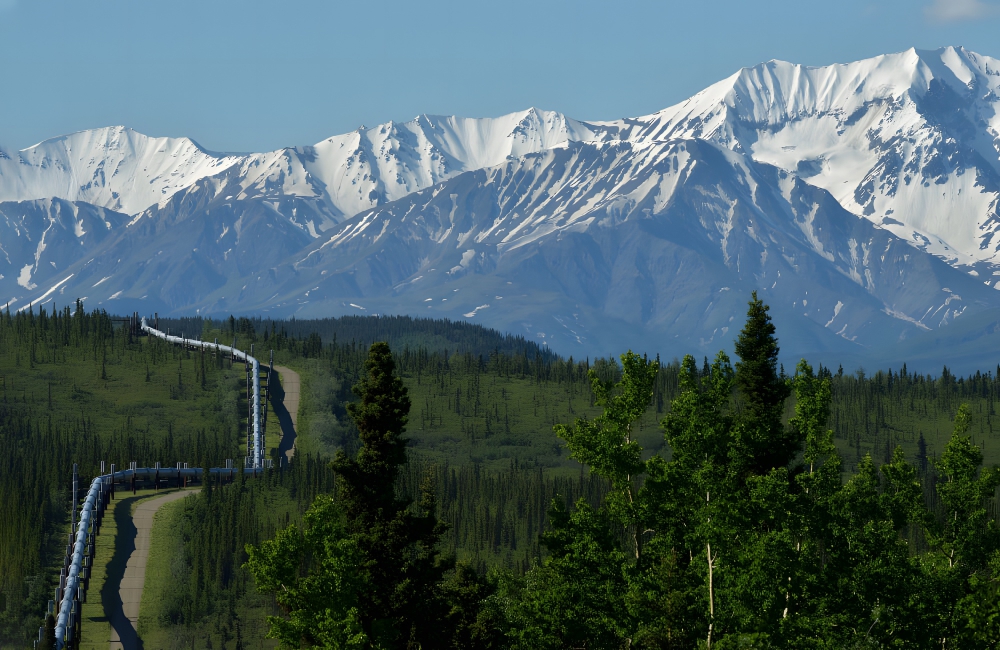
Trans-Alaska Pipeline System ©JT Fisherman / Shutterstock
BP, ConocoPhillips, and ExxonMobil make up the Alyeska pipeline Service Company which is the conglomerate that owns and operates the pipeline. Now operating at only a fraction of its maximum capacity, at one time the Trans-Alaska Pipeline System was showing the ability for the daily production of more than two thousand barrels of oil.
44. Beijing–Shanghai High-Speed Railway
Location: China
Total Cost: $34.7 Billion*
Year Finished: 2011
At 15,534 miles in length, the Beijing-Shanghai high-speed railway is the longest high-speed rail system in the world, dwarfing the one in Spain which is more than seven times shorter. The first line of the project took a little less than three years to complete and an additional ten years for construction of the rest of the system to be built. Twice as much concrete was used to build China’s high-speed railway than was needed for the construction of the Three Gorges dam and more than a hundred times the amount of steel that was used for the completion of Beijing National Stadium.
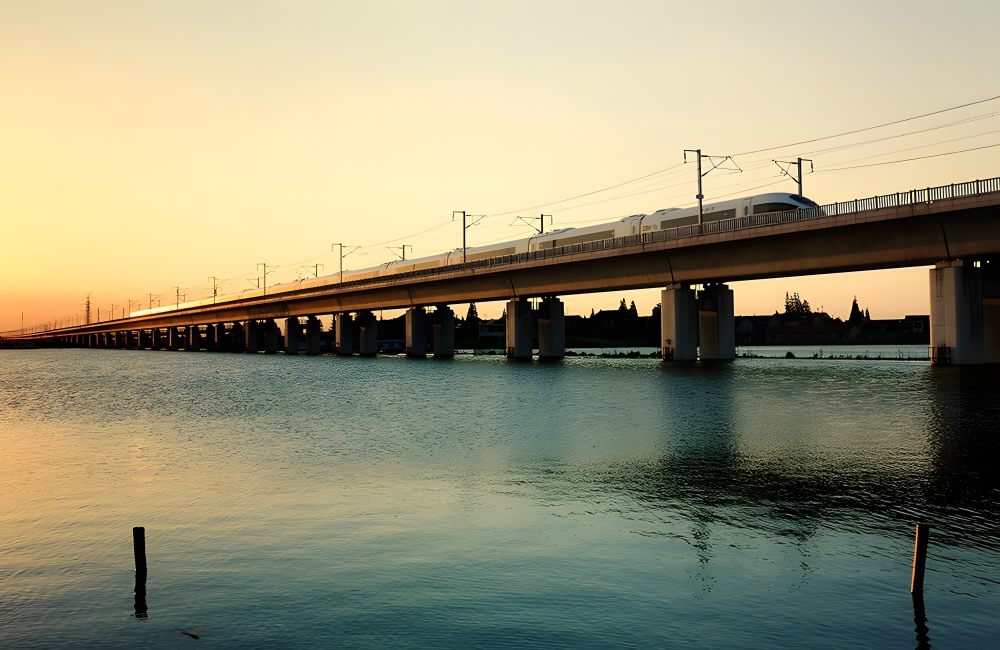
Beijing–Shanghai High-Speed Railway ©zhang sheng / Shutterstock
At the peak of construction, it is said that just shy of a hundred and fifty thousand workers and engineers were used to build the system that can now reach speeds of greater than 200 mph while taking passengers across a series of two hundred and forty bridges and through twenty-two tunnels. The Beijing-Shanghai high-speed railway is not simply a wonder of construction but of high-speed travel technology as well.
45. Chuo Shinkansen
Location: Japan
Total Cost: ~$90 Billion*
Year Finished: 2027
In 2007, the Central Japan Railway Company (JR Central) made clear their plans to finance the construction of the Chuo Shinkansen and take on the challenge of this project by themselves. Expected to be completed in 2025, a sixteen-mile tunnel is currently being constructed under the Japanese Alps that will reach depths of up to four thousand six-hundred-feet below the surface.
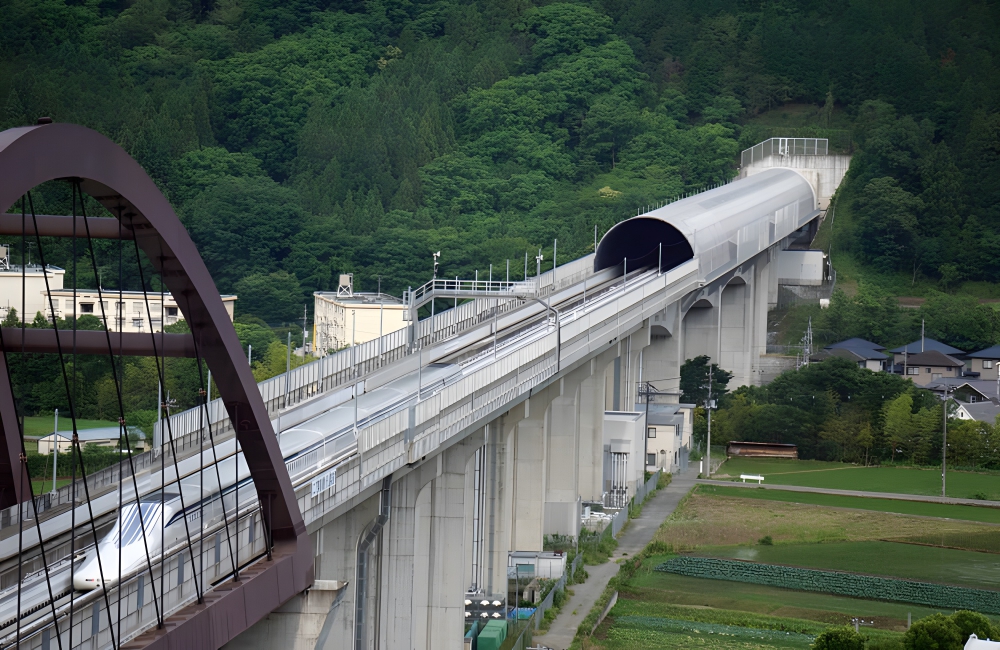
Chuo Shinkansen ©YMZK-Photo / Shutterstock
In hopes of bringing the completion date forward, by three years, the Japanese government plans to loan JR Central the funds needed to complete the high-speed extension of Japan’s rail system by 2037. The coils on the tracks and the superconducting magnets on the trains will create a levitating force that will allow frictionless travel of up to 310 mph. Passengers will eventually be able to have a nice smooth ride due to the absence of wheel friction while making the three hundred-mile journey from Tokyo to Osaka in only sixty-seven minutes.
46. South-North Water Transfer Project
Location: China
Total Cost: $79+ Billion*
Year Finished: 2050
The South-North Water Transfer Project is a government-funded project that aims to have 44.8 billion cubic meters of water displaced to the north of the country from the Yangtze River in the south and was expected to cost more than double the price tag of the Three Gorges Dam. The estimated cost of $62 billion had already been raised to $79 billion by 2014 and is expected to be raised again in the future.
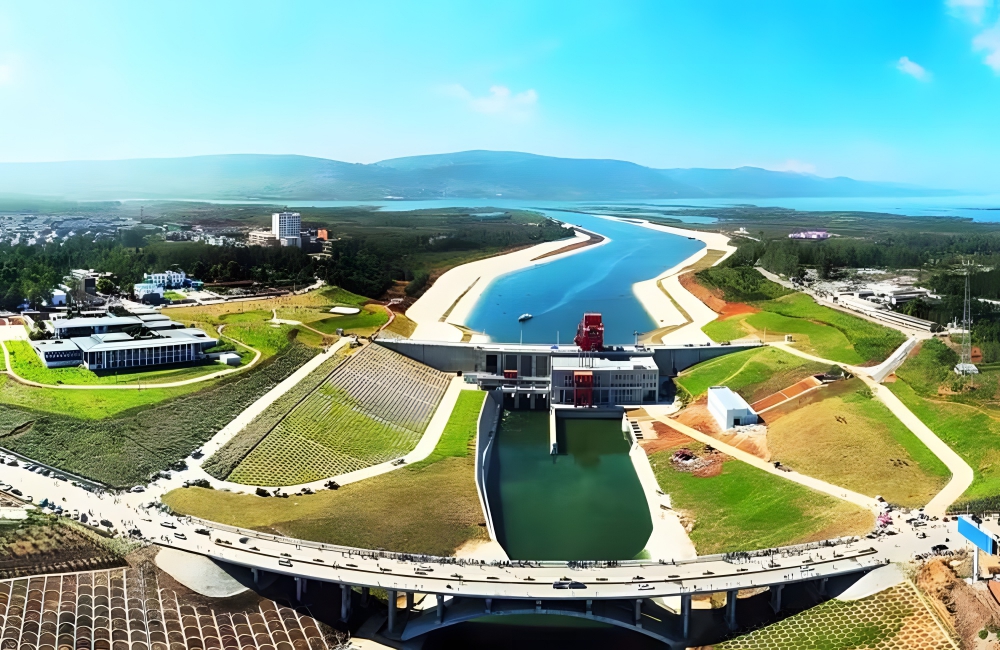
South–North Water Transfer Project @Makalewakan2 / Twitter.com
Among the many challenges that this lengthy venture would face were allegations that arose from some of the three hundred thousand villagers, who were resettled due to the reclamation of land, that they were forced into signing relocation agreements. There have also been concerns that relocating this large amount of water may cause serious ecological damages to the area of the Pacific Ocean into which the Yangtze River flows. Regardless of these controversies, the South-North Water Transfer Project is still expected to be completed as expected by 2050.
47. High Speed 2
Location: United Kingdom
Total Cost: $112-124 Billion*
Year Finished: Mid-2030s
Sponsored by the Department of Transport, HS2 Ltd is responsible for the realization of High Speed 2, UK. Phase 1, on its own, is expected to generate forty thousand new jobs for the economy. With 330 miles of track, the concrete used to build the HS2 network will take up a total area that is approximately the size of Manchester.
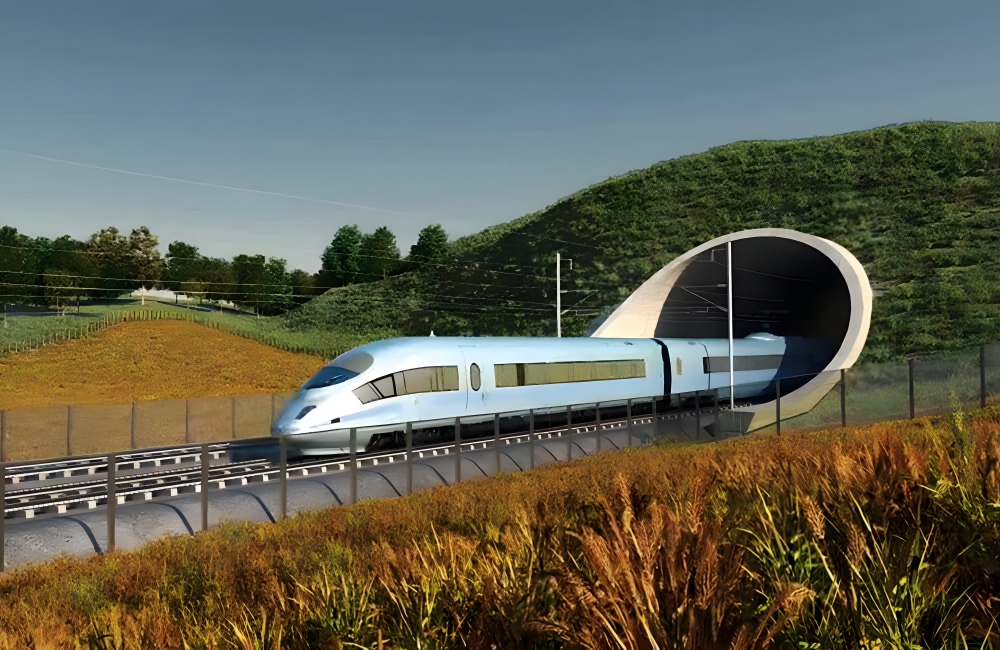
High Speed 2, UK @FirstESource / Twitter.com
For those who were concerned about the environmental ramifications of the rail system, it was announced that an estimated two million new trees will be planted along the route between London and The West Midlands and, due increased number of commuters that will be able to travel via the railway, carbon emissions will be cut by more than 25%.
48. New York Subway System
Location: New York, USA
Total Cost: ~$180 Trillion* (to date)
Year Finished: 1904
February 21st, 1900 was the day that the contract for the first line of New York City’s subway system was agreed upon between the Rapid Construction Company and the City of New York. The first line was completed in 1904 however, there have been almost constant extensions and additions to the network that now carries more than five million daily commuters along the thirty-six different lines that make up this intricate web of tracks.
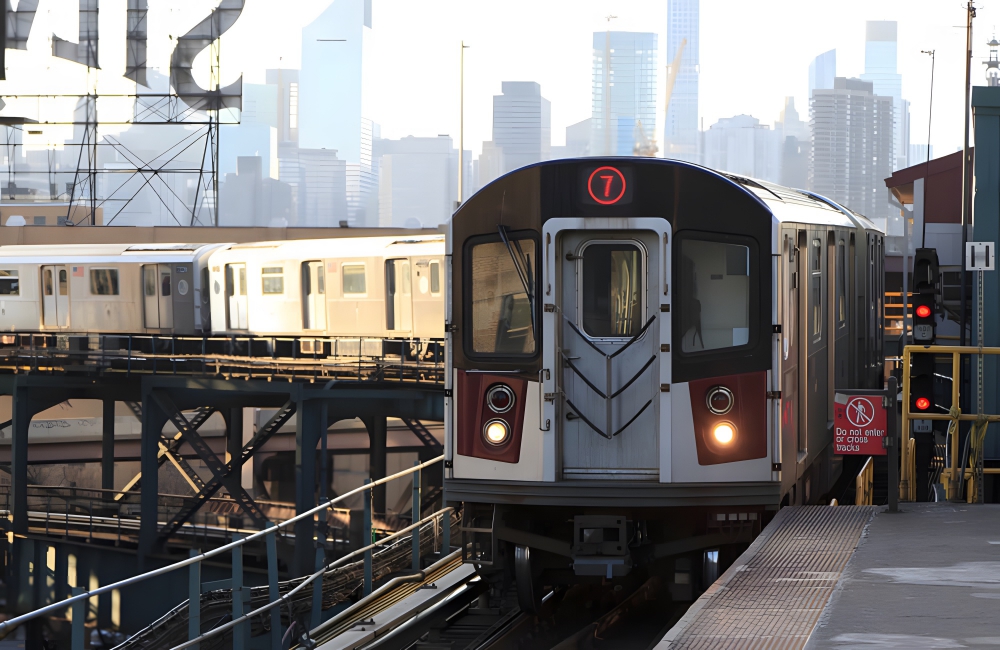
New York Subway System ©Osugi / Shutterstock
Each station costs an estimated $425 million to build (in today’s money) and with four hundred and twenty-four unique stations, that would come to an unprecedented $180 trillion that the New York City Subway system has cost to date.
49. Heathrow Airport
Location: London, UK
Total Cost: $26.02 Billion*
Year Finished: 1946
Originally known as the London Airport, Heathrow was first developed by aero engineer Richard Foley in the early 1930s as a military airport. At the time that it was first completed, it was no more than a single grass runway, today it is more than 7.5 square miles and is the largest airport in the UK. Heathrow is usually visited by more than eighty million international passengers in a regular year (only approximately twenty-two million in 2020).
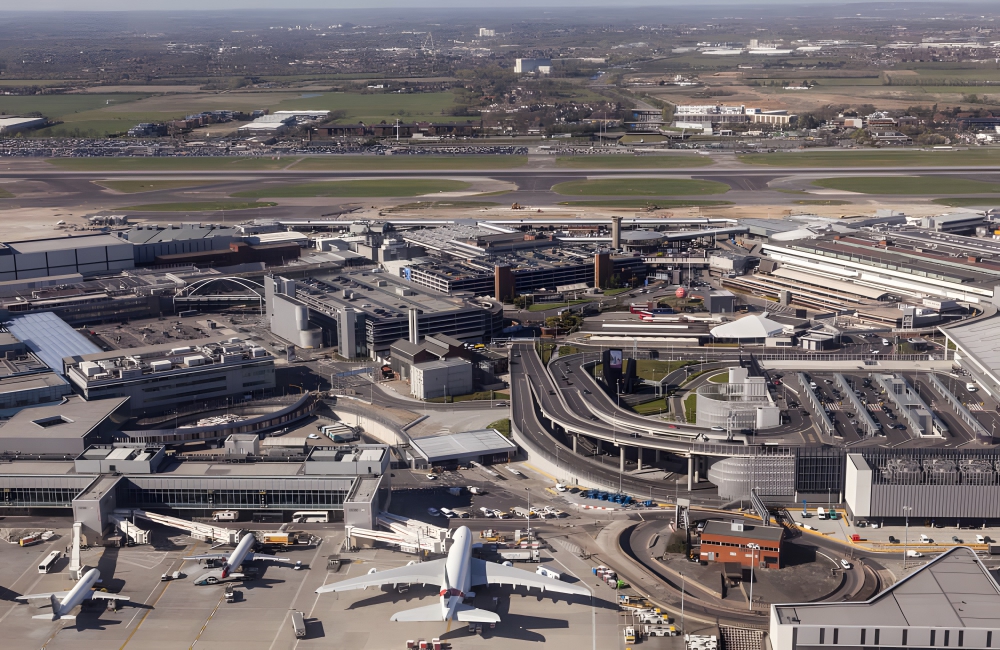
Heathrow Airport ©Philip Lange / Shutterstock
Heathrow is owned by Heathrow Airport Holdings, who have their eyes on a third runway as part of the expansion plans for the airport. Due to the large number of high-profile celebrities who fly in and out of Heathrow, including the British Royal Family, a hidden terminal called The Windsor Suite was built on the south side of the airport complex.
50. Gulf Railway
Location: Persian Gulf
Total Cost: $250 Billion*
Year Finished: 2023
The massive bill for the $250 billion for the Gulf Railway will be divided proportionally amongst the governments of the six members of the GCC (Gulf Cooperation Council) based on the length of the network that will be in each country. Upon finalization of the project, the network will connect all six gulf nations via high-speed rail that will travel at up to 136 mph.
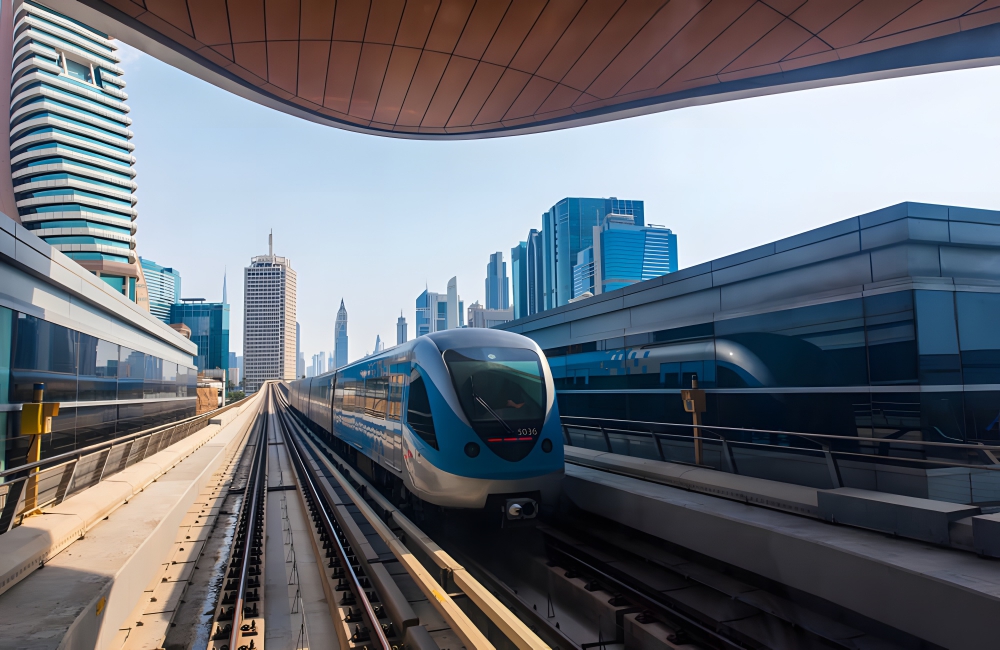
Gulf Railway ©Kateryna Galkina / Shutterstock
The first line is projected to be completed and operational by 2023 however, due to delays in construction of the Bahrain-Saudi line until at least 2023 and Oman putting their part of the build on hold, for now, the completion of the full rail system is not estimated to be done before 2030.
51. California High-Speed Rail
Location: California, USA
Total Cost: ~$100 Billion*
Year Finished: Mid-2030s
Construction may have begun in 2015 on the California High-Speed Rail but the ball got rolling seven years earlier when Assembly Bill 3034 was approved by the state legislature and signed by Governor Schwarzenegger himself in 2008. Funded by the California High-Speed Rail Authority, engineering firm WSP USA won the contract, and plans for the railway were underway.
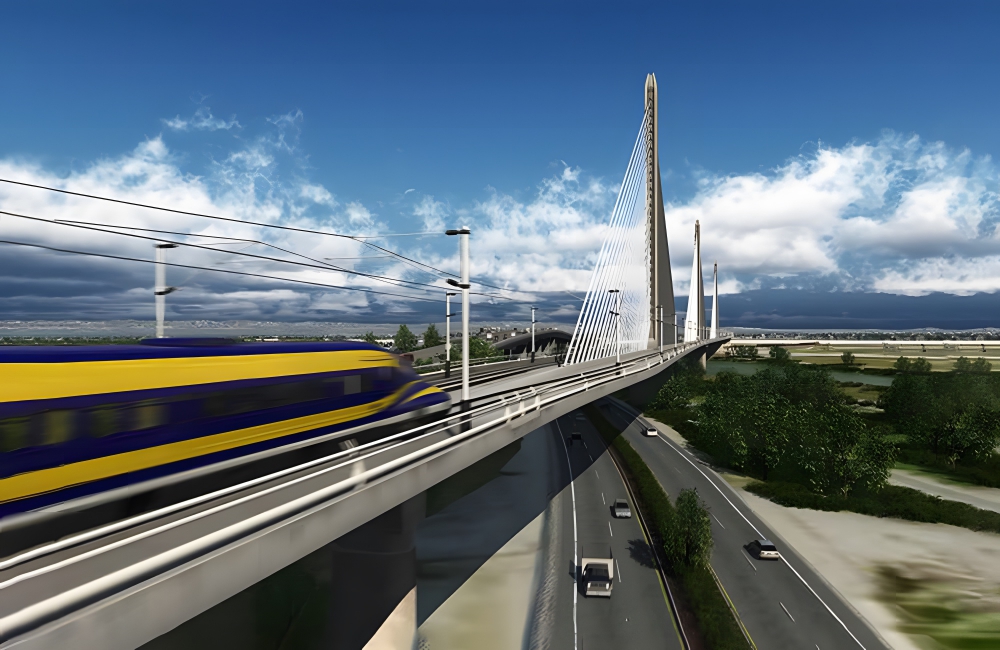
California High-Speed Rail @guillermoalvarezcalderon / Pinterest
The opening of the Initial Operating Segment, which was to bring passengers throughout the bay area has been postponed due to delays in construction. Projected to be completed by the early to mid-2030s, Phase 1 of the High-Speed Rail, will take commuters the three hundred and eighty miles from Union Station in Los Angeles, to San Francisco in just two hours and forty minutes.
52. Great Belt Fixed Link
Location: Denmark
Total Cost: $6.28 Billion*
Year Finished: 1988
The ever-impressive Great Belt Fixed Link connects Denmark’s Funen and Zealand Islands. Although it might look like a bridge to most people, this $6.28 billion project is much more than simply what meets the eye.
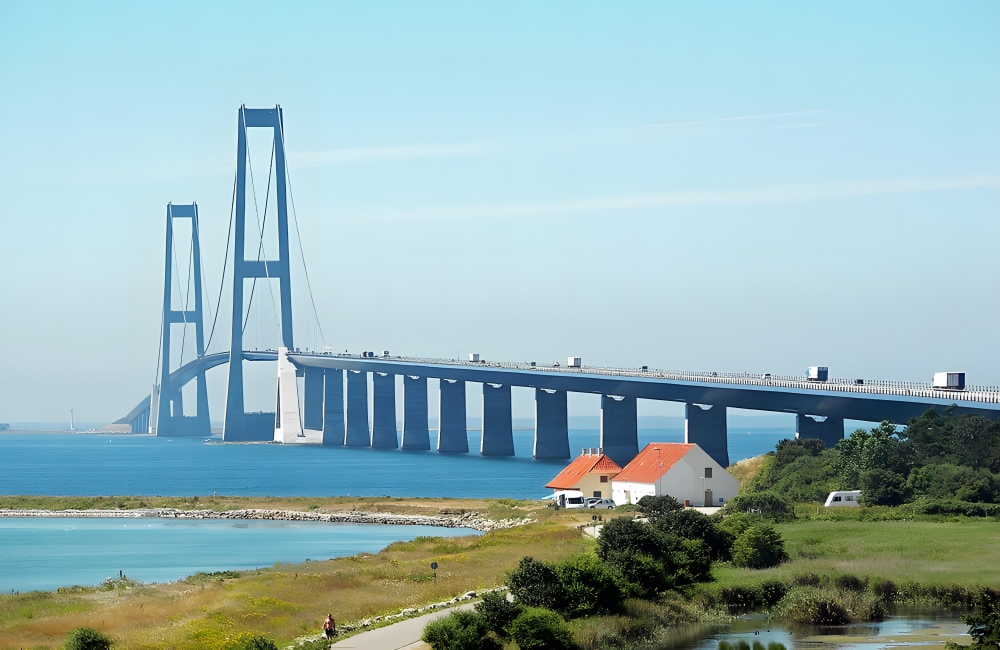
Great Belt Fixed Link ©Henrik Sendelbach/Wikimedia Commons
Okay, so the Great Belt Fixed Link isn’t a Transformer, but it does have more than one way that it can be crossed — none of which are by bike. There’s an underwater tunnel that was built especially for rail travel (the Easter Tunnel), a 4.2-mile suspension bridge (East Bridge), and the 4.1-mile Western Bridge.
53. 181 Mercer Street
Location: New York, U.S.A.
Total Cost: $1.28 Billion*
Year Finished: 2023
New York University (NYU) has been educating minds of the future for almost two centuries. Like anything that’s getting up there in age, some of the University’s buildings have deteriorated over time. In the 2000s, plans for new facilities began. Almost two decades later, those plans are coming to fruition in the form of a new $1.28 billion multi-use facility being built at 181 Mercer Street.
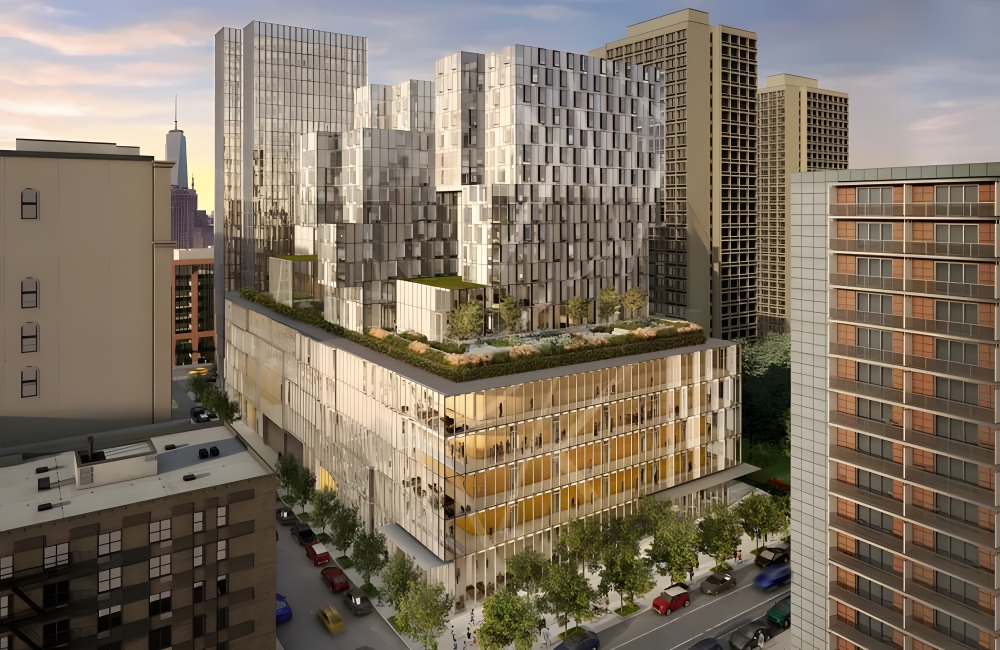
181 Mercer Street @curbed/Pinterest
This 750,000 square-foot expansion to New York University will be one of the most impressive student centers (hubs) in the United States when it’s completed. Amongst the many amenities it will boast are a theater, an athletic facility, student housing, and more than fifty classrooms.
54. Gigafactory 1
Location: Nevada, U.S.A.
Total Cost: $1.31 Billion*
Year Finished: 2020
Gigafactory 1 (or Tesla Giga Nevada) is the Queen Bee of Tesla’s electric car hive. It’s where most of the company’s famous lithium-ion batteries and other electrical components are made, so this place is pretty big. We’re talking about taking up a piece of land that’s approximately 4.5-square-miles.
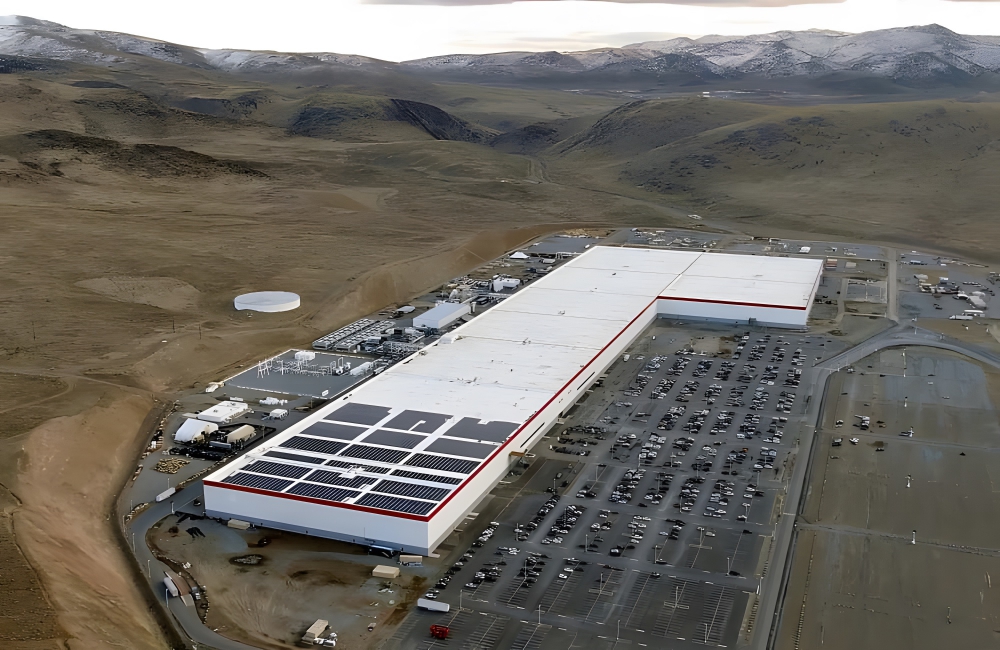
Gigafactory 1 ©Smnt/Wikimedia Commons
Tesla’s Nevada factory has been designed to run strictly off of sustainable energy sources one day, which will be quite a milestone of its own. If you’re still trying to imagine how large this place actually is, well, more than 7,000 workers are employed within its walls — and there are plans to fill a few thousand more positions in the future.
55. Royal Adelaide Hospital
Location: Adelaide, Australia
Total Cost: $1.61 Billion*
Year Finished: 2017
The Royal Adelaide Hospital was built to replace the 175-year-old Adelaide Hospital, but it did much more than simply replace it. South Australia’s new state-owned hospital (“the Rah”) is the state’s most expensive and largest hospital to date.
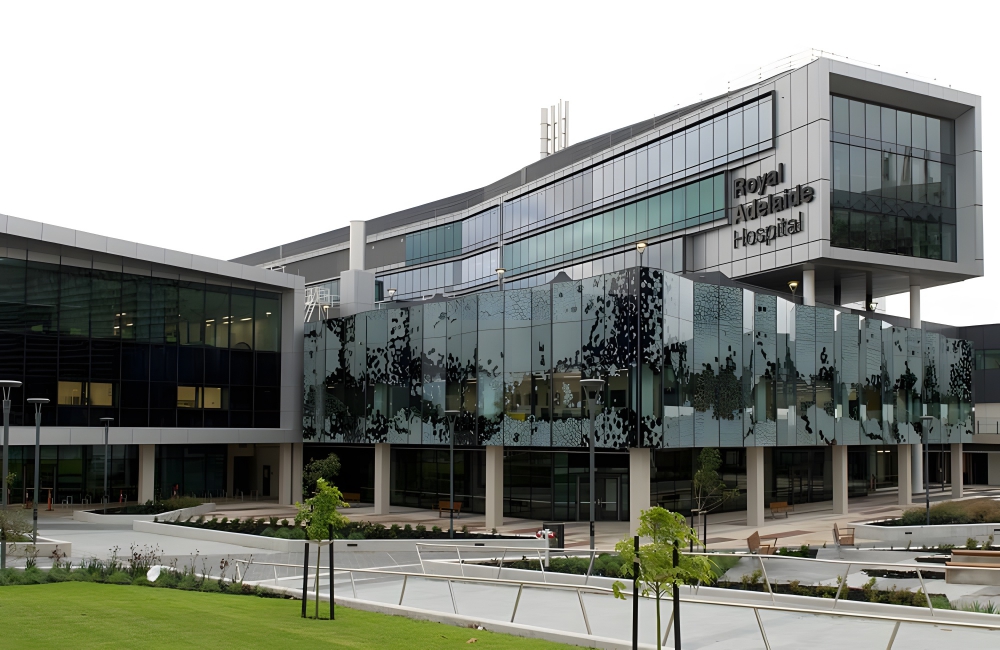
Royal Adelaid Hospital ©Sandyx99/Wikimedia Commomns
This Hansen Yuncken and Leighton Contractors joint venture cost a little more than $1.6 billion. However, now that it’s been completed, the Royal Adelaide Hospital was large enough to house forty 700-square-foot operating theaters. It will also employ upwards of 6,000 staff. “The Rah” has been designed to harvest rainwater for reuse as well as reduce its greenhouse emissions by 50%, comparatively.
56. Petronas Twin Towers
Location: Kuala Lumpur, Malaysia
Total Cost: $1.16 Billion*
Year Finished: 1999
Between 1998 and 2004, if someone had traveled to see the tallest building in the world, they would have ended up in Malaysia’s capital city, Kuala Lumpur, staring at the Petronas Twin Towers. No, we’re not talking about a spell from Harry Potter, but they’re every bit as impressive.
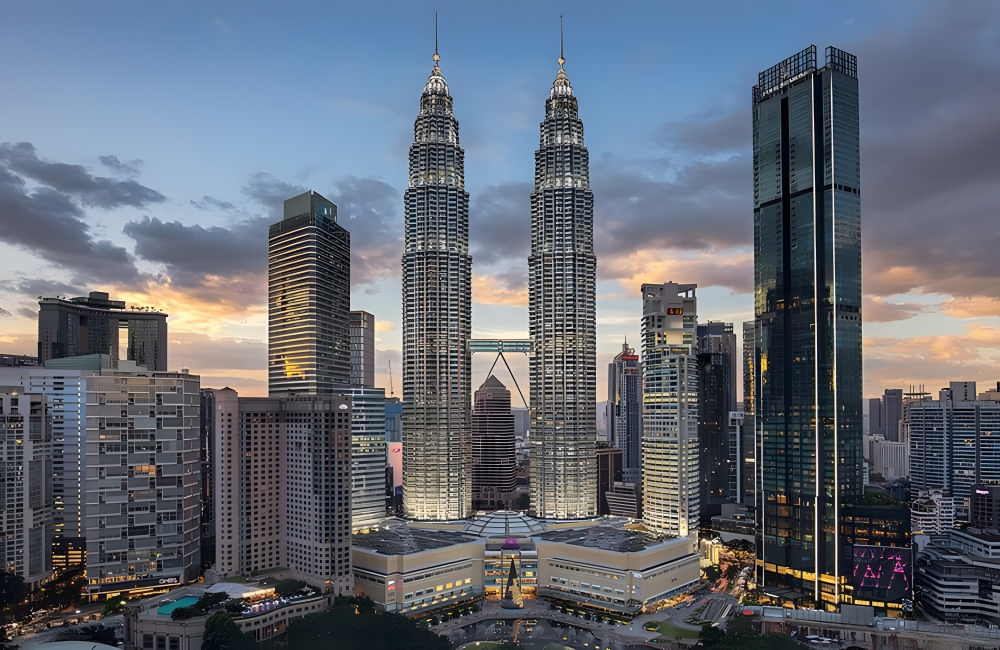
Petronas Twin Towers ©Wirestock Creators/Shutterstock
Staring down from 1,482 feet above the world are the tops of the $1.16 billion (closer to $2 billion today) 88-story Petronas Towers. The buildings’ unique form was created by architect Fazlur Rahman Khan, who also designed the structure with an Islamic art motif in mind.