
61. The Chevrolet Impala
Where It Was Sold: Chevy Dealerships
Company: Chevrolet
Original Price: $2,500-$2,800*
Companies like Ford, Chevrolet, Volkswagen, BMW, and more grossed billions in profits, and American-made cars were king of the market. The T-Bird, Riviera, Pontiac GTO, Eldorado, and more were all popular from 1960 until 1970.
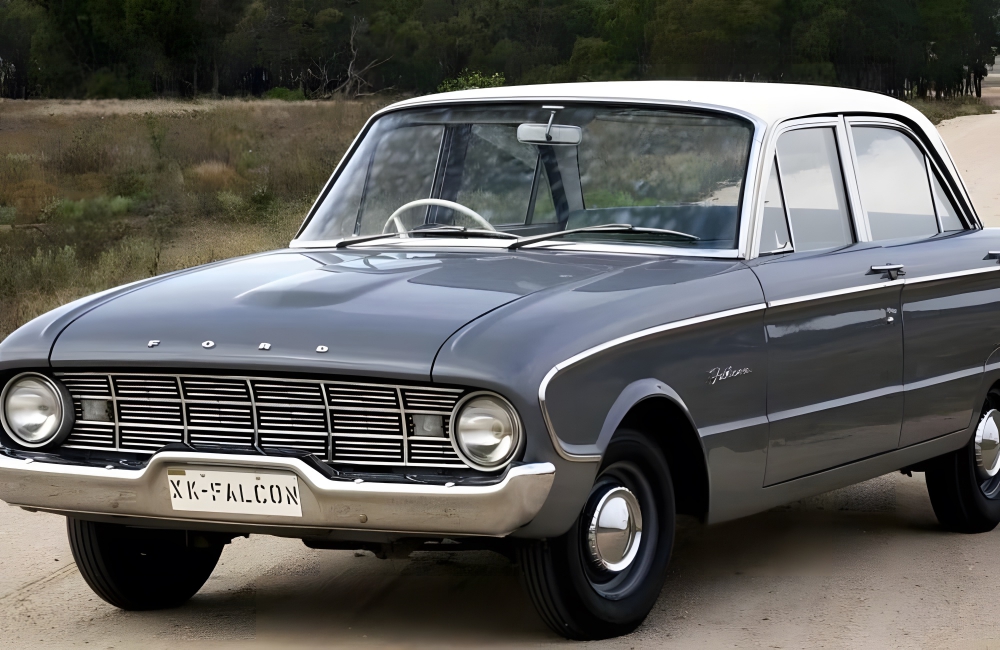
The Chevrolet Impala @Google/Pinterest
But, among them, one car led the pack: the Chevrolet Impala. This model dominated sales in America during the decade. In 1965 alone, the Impala sold 1.075 million units, a figure that remains, to this day, the highest yearly sales volume ever achieved by a U.S.-made model.
62. Quisp Cereal
Where It Was Sold: Winn-Dixie, Publix, Food Giant, Food Lion
Company: Quaker Oats
Original Price: $0.50*
Quisp became a favorite cereal for kids in 1965, the date it was launched. According to Quaker Oats, its manufacturer, its mascot, Quisp, landed on Earth carrying his “Quazy Cereal,” which has made everything “better ever since.”
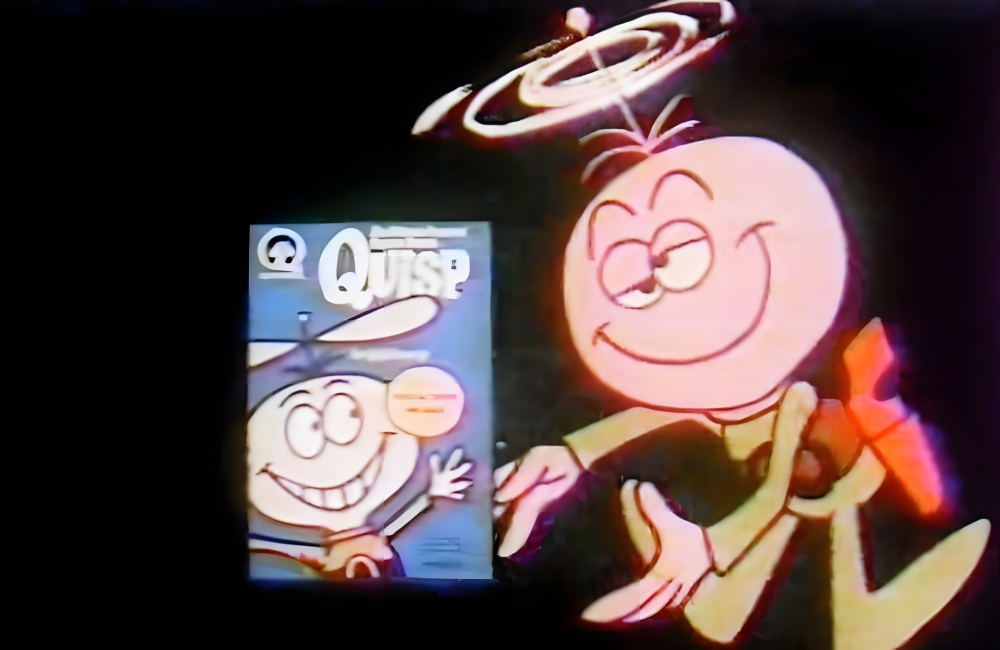
Quisp Cereal @tvdays/Youtube
The crispy, crunchy, saucer-shaped corn cereal was a hit with kids. Alas, Quisp wasn’t as long-lasting as Quaker Oats wanted it to be. It was pulled in the late seventies due to low sales; the sixties was its biggest mass-market heyday.
63. Tressy Dolls
Where It Was Sold: Macy’s, Sears, Toy Stores
Company: American Character Doll Company
Original Price: $2-$8*
The American Character Doll Company produced Tressy, a fashion doll that would, over time, fall to Barbie, in the 1960. The doll was invented by Jesse Dean, a furniture designer, and Diana Dean, his wife. The unique thing about Tressy was that her hairstyle could change from short to long.
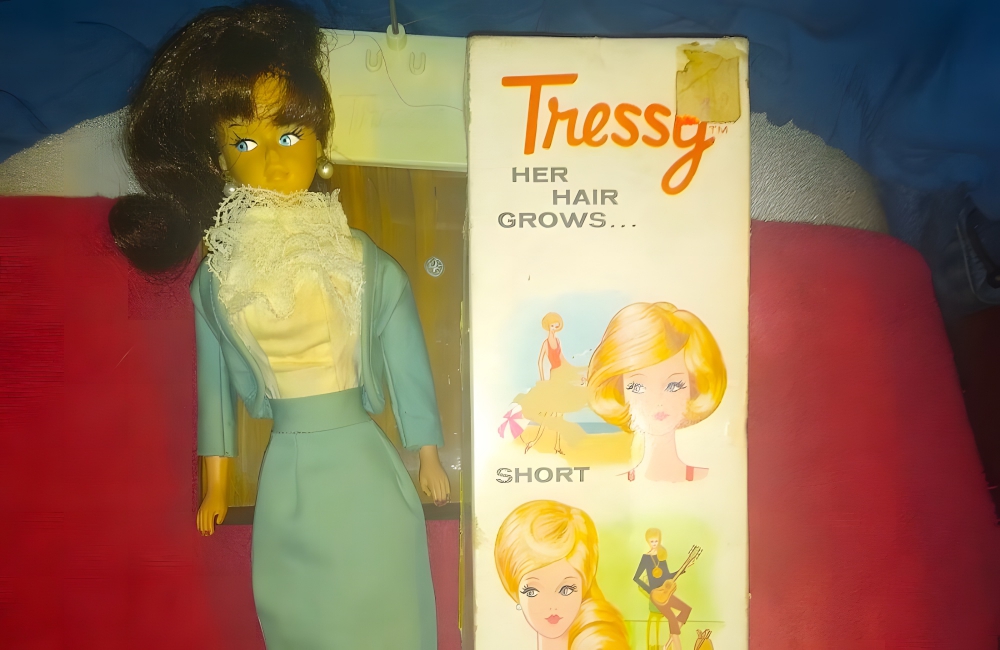
Tressy Dolls @ebay/Pinterest
You can still find these dolls on eBay, even though they aren’t really sold in stores anymore. For example, on eBay, a rare, vintage Tressy Doll from 1963 (in the box with its clothes) sells for over $425. Other, less-pristine Tressy dolls sell for around $40-$80, which is still a decent price.
64. The Wonderbra
Where It Was Sold: Macy’s, Sears, Gimbals, Marshall & Field, Clothing Stores
Company: D’Amour, Hanesbrands (Current)
Original Price: $5*
Invented by Louise Poirier in 1964, the Wonderbra was a patented bra designed to give your chest the best shape. It had fifty-four different components that promised to dramatically alter the direction of your cleavage.
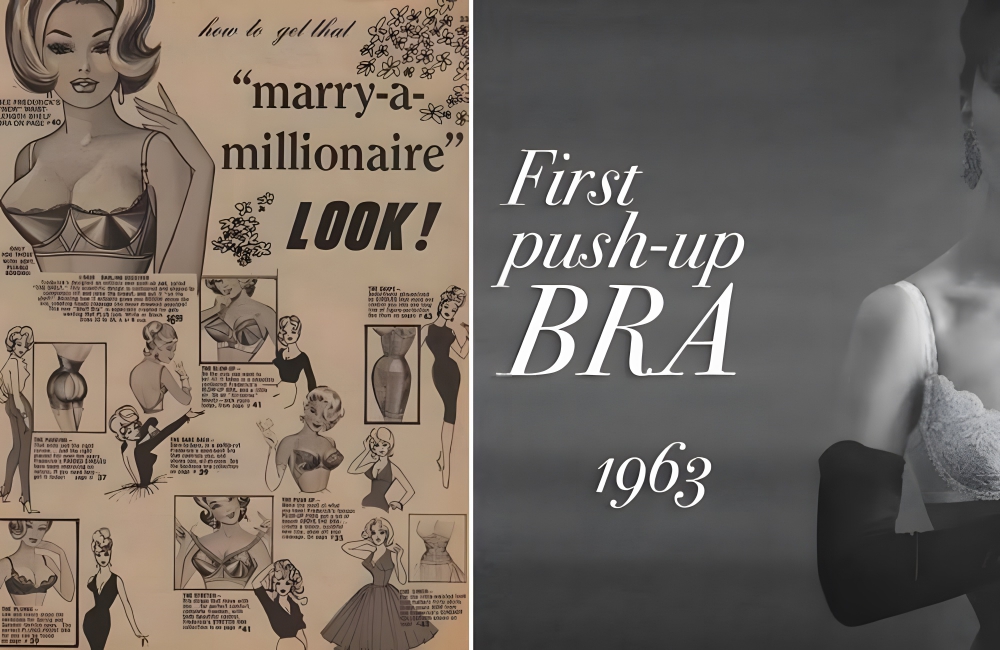
@theotherplace/Instagram
Wonderbra first became popular in Canada and Europe, though it eventually became popular all over the world. It is now produced by Hanesbrands. By the 1970s, the Wonderbra was making anywhere from $12.6 to $24.9 million in sales revenue in Canada alone.
65. Liquid Paper
Where It Was Sold: Office Supply Stores, Walmart
Company: Newell Brands
Original Price: $1-$3*
A woman named Bette Nesmith, a secretary, came up with the concept for Liquid Paper in the 1950s. By the ‘60s, Liquid Paper was the go-to mistake-corrector in the office, able to “white out” whatever blemish someone made.
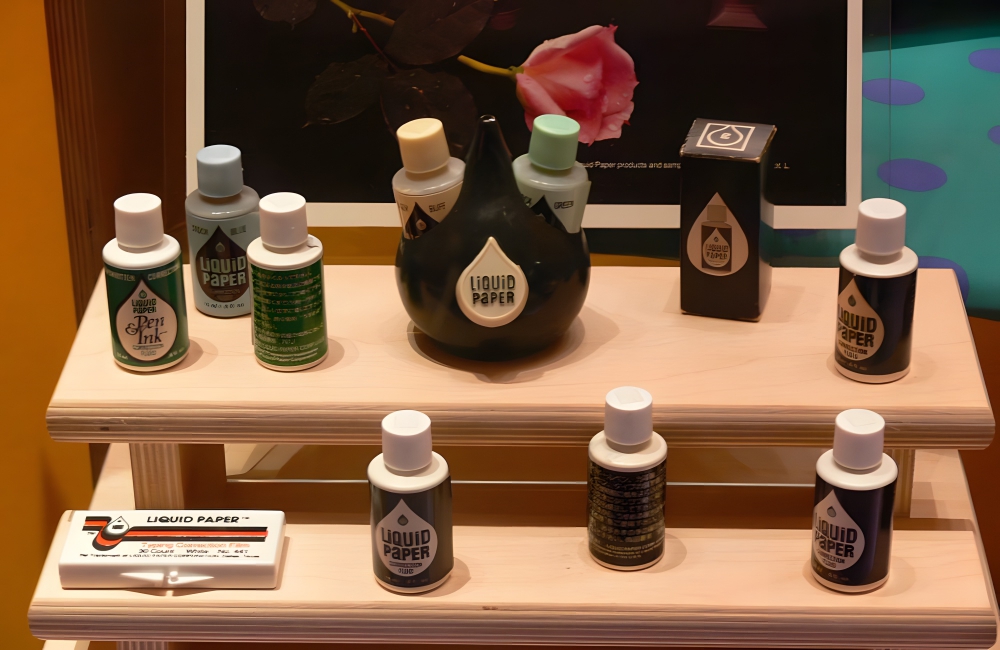
Liquid Paper ©FA2010/Wikimedia
This white, ink-like substance was used to fix mistakes made with ink pens or on typewriters. Though many people think of Liquid Paper as being the same as “White-Out,” that brand name didn’t come into existence until 1974.
66. Flatsy
Where It Was Sold: Macy’s, Sears, FAO Schwarz, Toy Stores
Company: Ideal Toy Co.
Original Price: $2-$6*
At the end of the sixties, a new cultural phenomenon would appear: Flatsy. These flat dolls, marketed to little girls, are now pricey collectors’ items. Made by Ideal Toy Co. for a period of four years, Flatsy dolls were flat with long, vividly-colored hair.
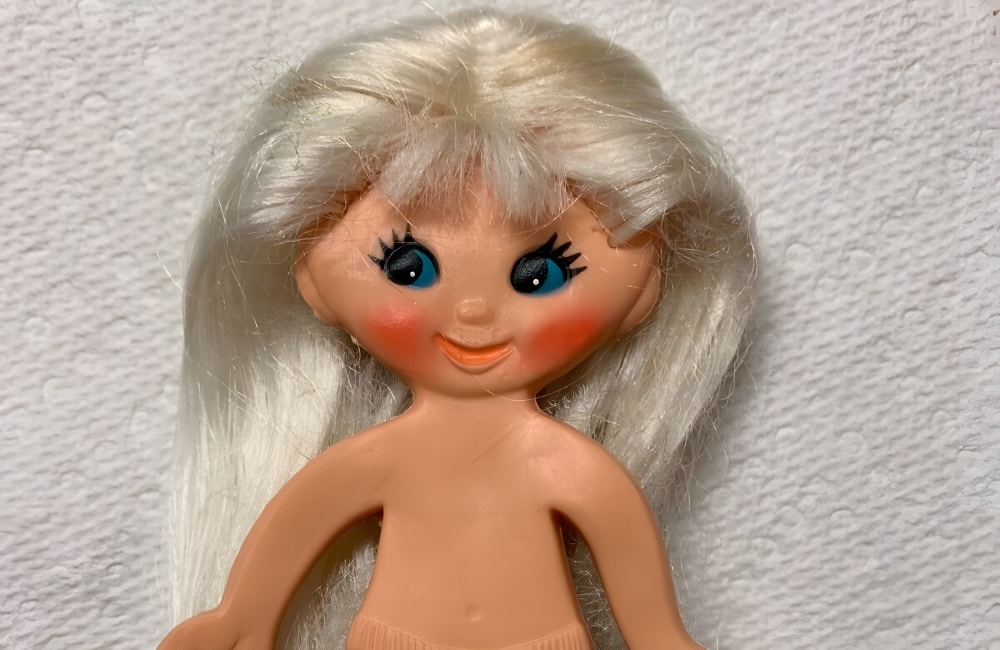
Flatsy @ebay/Pinterest
They were made from vinyl and interior wires, and they came in three sizes: Fashion, Medium, and Mini. You might remember commercials for these dolls, as they came with the catchy jingle, “She’s Flat and All That!”
67. Cyclamate
Where It Was Sold: Coca-Cola, Pepsi, Food Manufacturers
Company: DuPont
Original Price: Undisclosed (Banned Today)
You might not know the word “cyclamate” off the top of your head, but, if you grew up in the sixties, you probably consumed a product with this artificial sweetener in it. It was beloved by soda manufacturers, as well as other food companies.
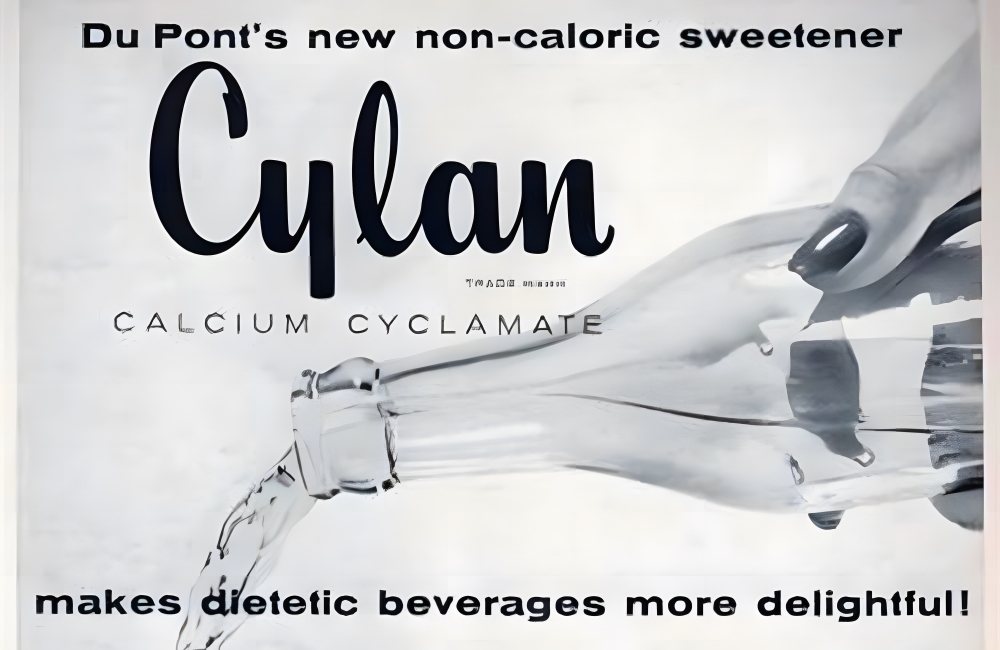
Cyclamate @Google/Pinterest
Cyclamate was the first low-cal sweetener, used much in the same way as aspartame today. Cyclamate was thirty times sweeter than regular sucrose, and people loved it…until it was banned in 1970 because it was found to potentially cause cancer.
68. Rolodex
Where It Was Sold: Zephyr American, Business/Office Supply Stores
Company: Zephyr American
Original Price: $5-$8*
The Rolodex was invented in the mid-1950s, and it really caught on during the 1960s, becoming somewhat of a “practical fad.” Invented by Danish engineers, this rotating card file was used to store contact information, business details, and more.
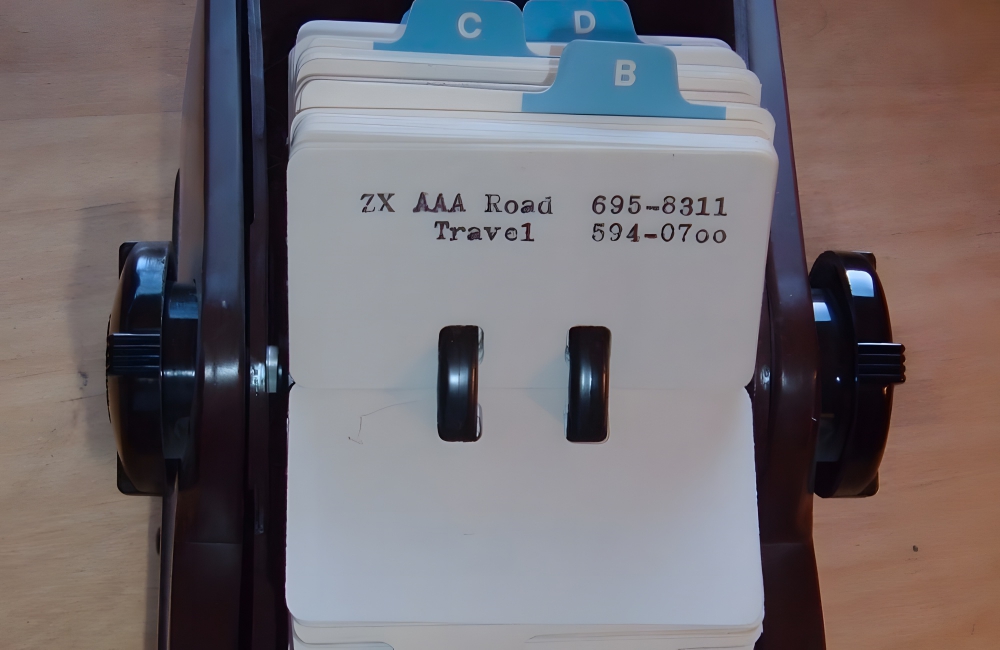
Rolodex ©ArnoldReinhold/Wikimedia
Zephyr American was somewhat of a catch-all business supply company, as it invented other handy gadgets like the Punchodex hole punch, Clipodex, Swivodex, and more. Believe it or not, Rolodex card files are still made as of 2023.
69. Sharpie Markers
Where It Was Sold: Office Supply Stores, Marshall Field’s, Hills
Company: Sharpie
Original Price: $0.50*
Chances are, you have Sharpie markers somewhere in your house now. These markers are one of the most popular writing utensils in the world, known for their permanence and ease of use. Sharpies came out in the 1960s.
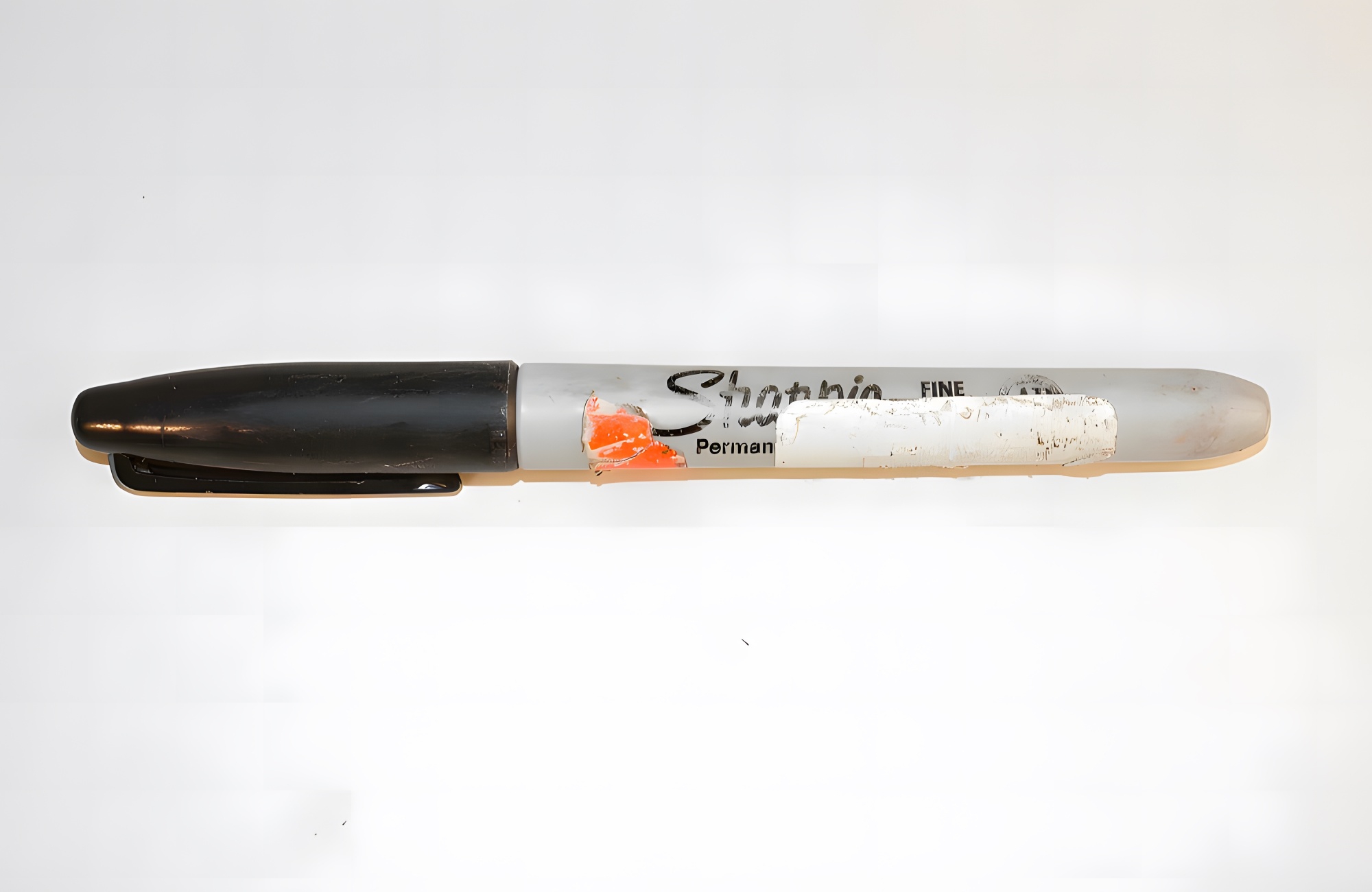
Sharpie Markers @amhistorymuseum/Pinterest
In 1964, the first Sharpie Fine Point Black Marker hit the market as the first permanent, pen-style marker. People were amazed by it, as it was able to write on anything, including plastic, metal, wood, stone, glass, and, of course, regular old paper.
70. Hula-Hoops
Where It Was Sold: Macy’s, Toy Stores, Sears, Walmart
Company: Wham-O
Original Price: $1*
Both kids and adults loved the Hula-Hoop when it came out decades ago. This swiveling toy immediately became a huge fad, five years after it was patented. During the first four months of its product, Wham-O sold 25 million Hula-Hoops.

Hula-Hoops ©GeorgeLouis/Wikimedia
Within two years, over 100 million units had been sold. The company who invented the Hula-Hoop, Wham-O, took inspiration from Australian gym classes, wherein the students would exercise by twirling bamboo hoops around their waists.
71. Kevlar
Where It Was Sold: DuPont distributors
Company: DuPont
Original Price: $12 per pound*
Kevlar was invented by accident, but its invention changed the world, as this product of the ‘60s is used in quite a few applications today. It was invented by Stephanie Kwolek, a DuPont employee, in 1965, and this heat-resistant, strong fiber was immediately identified as something special.
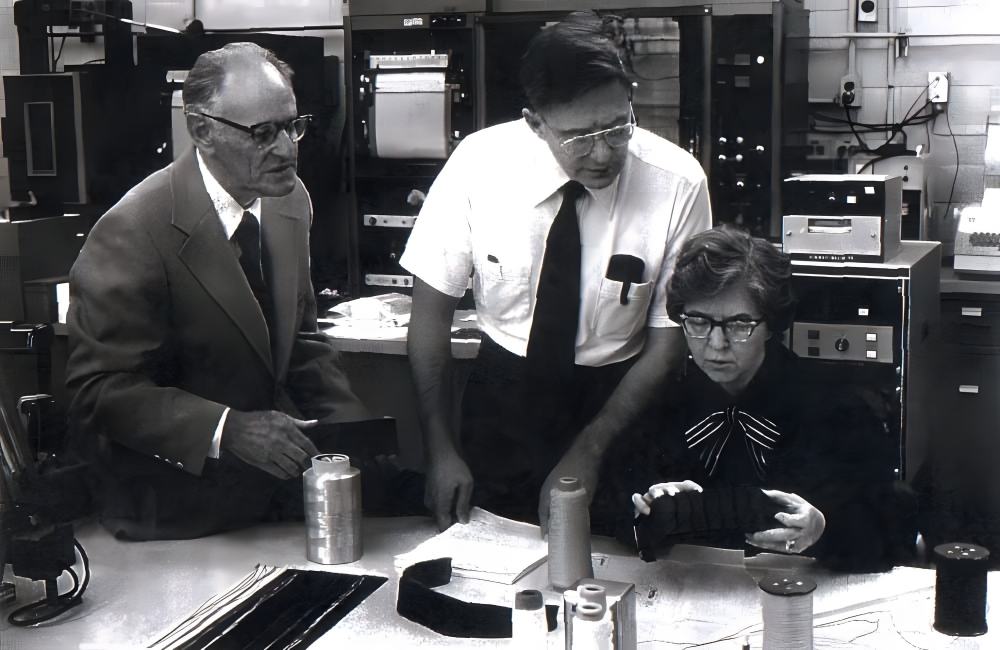
Kevlar @smithsonian/Pinterest
Today, we use Kevlar commercially in military uniforms, bulletproof vests, gloves, jackets, protective clothing, sports equipment, and more. The first time Kevlar was used commercially was as a replacement for the steel in racing tires.
72. Bubble Wrap
Where It Was Sold: Sealed Air Corp. distributors
Company: Sealed Air Corporation
Original Price: $1-$3 per roll*
Though Bubble Wrap was invented in the late ’50s (it was originally supposed to be used as three-dimensional wallpaper), it didn’t catch on until 1961, when manufacturers realized the wrap could be used to protect items during shipping and transport.
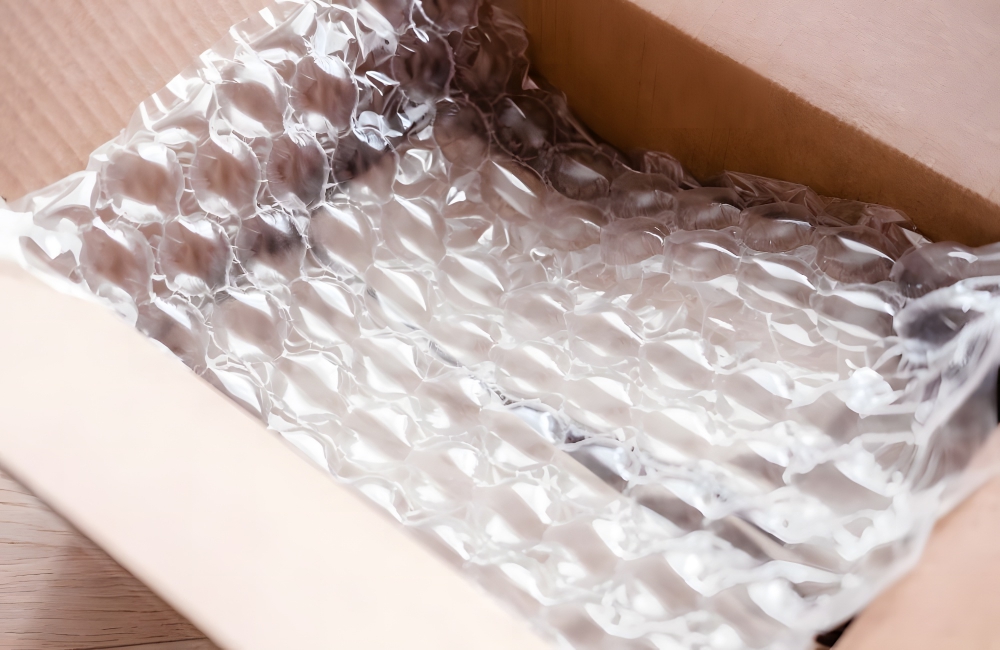
Bubble Wrap ©July Prokopiv/Shutterstock
The way Bubble Wrap was invented was pretty simple, actually. Marc Chavannes and Alfred Fielding, its inventors, sealed a pair of shower curtains together, trapping the air bubbles inside. It was somewhat of an accidental invention, as Bubble Wrap’s intended purpose was totally discarded in favor of protective packaging.
73. The Thingmaker (AKA Creepy Crawlers)
Where It Was Sold: Macy’s, Sears, Hudson’s, Toy Stores
Company: Mattel
Original Price: $10-$30*
Mattel came up with this activity toy called the Thingmaker (AKA Creepy Crawlers). The toy consisted of a series of metal molds, into which Plasti-Goop, a slimy, chemical substance, was poured. The hot plate would turn the plastic substance into the shape of the mold.
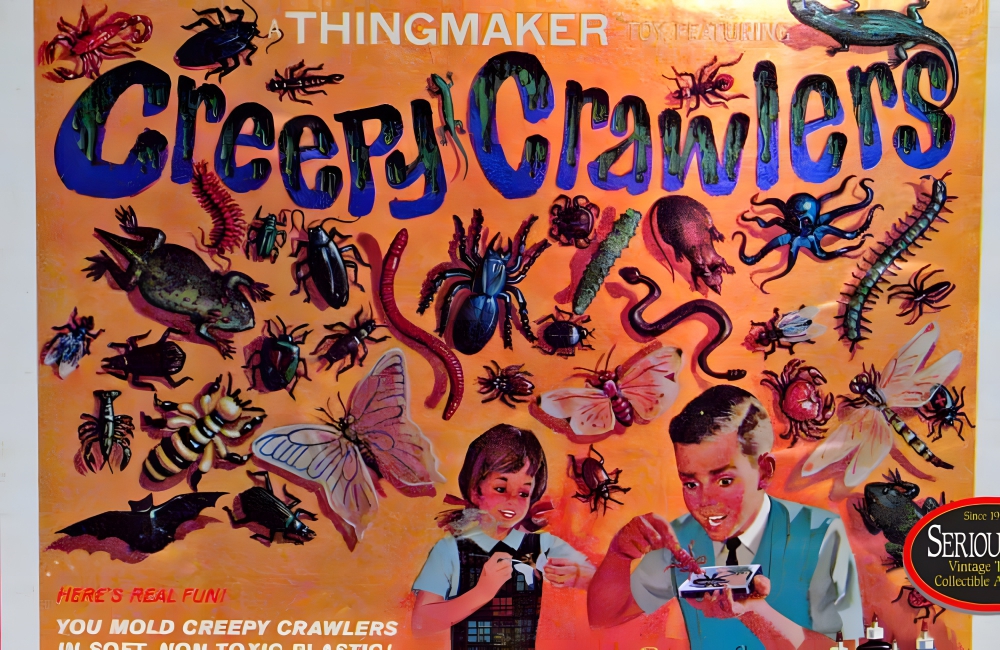
The Thingmaker (AKA Creepy Crawlers) @bingteam/Pinterest
The toys were relatively short-lived, thanks to the Consumer Product Safety Commission, which formed in 1973. The Thingmaker might have been a great educational toy, but it wasn’t safe enough to remain on the market thanks to it using chemicals and heat.
74. Star Trek” and “Batman” Action Figures
Where It Was Sold: FAO Schwarz, Toys R Us
Company: Mego Corporation
Original Price: $2.49*
A phenomenon of their own, these action figures by Mego Corporation ruled the shelves of toy stores like FAO Schwarz and Toys R Us in the 60s. Little did anyone know that these 8-inch plastic marvels would become iconic collector’s items. With their fabric costumes and unique character-specific accessories, these action figures paved the way for action figure production for years to come.
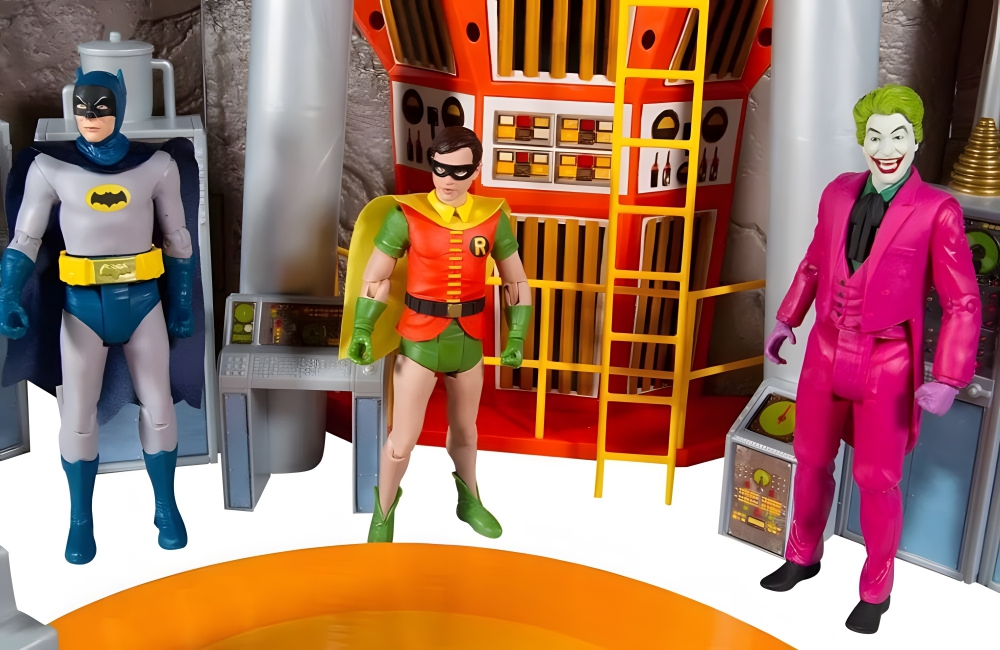
“Star Trek” and “Batman” Action Figures @amazon/Pinterest
The magic of owning a Spock or Batman action figure was almost like having a ticket to a parallel universe, where you could fight evil and explore strange new worlds. For fans, these action figures were more than just toys. They were tangible links to beloved characters and their stories, sparking imaginations and providing endless hours of adventure-filled playtime.
75. The Beatles Albums
Where It Was Sold: Sam Goody, Tower Records
Company: Parlophone (UK), Capitol Records (US)
Original Price: $3.98*
The Beatles were not just a band, they were a phenomenon, a lifestyle, a revolution. Their albums, stocked in music stores like Sam Goody and Tower Records, flew off the shelves almost as soon as they were displayed. This British band took America by storm with their fresh, new sound, and owning a Beatles album in the 60s was like owning a piece of history, of culture, of change.
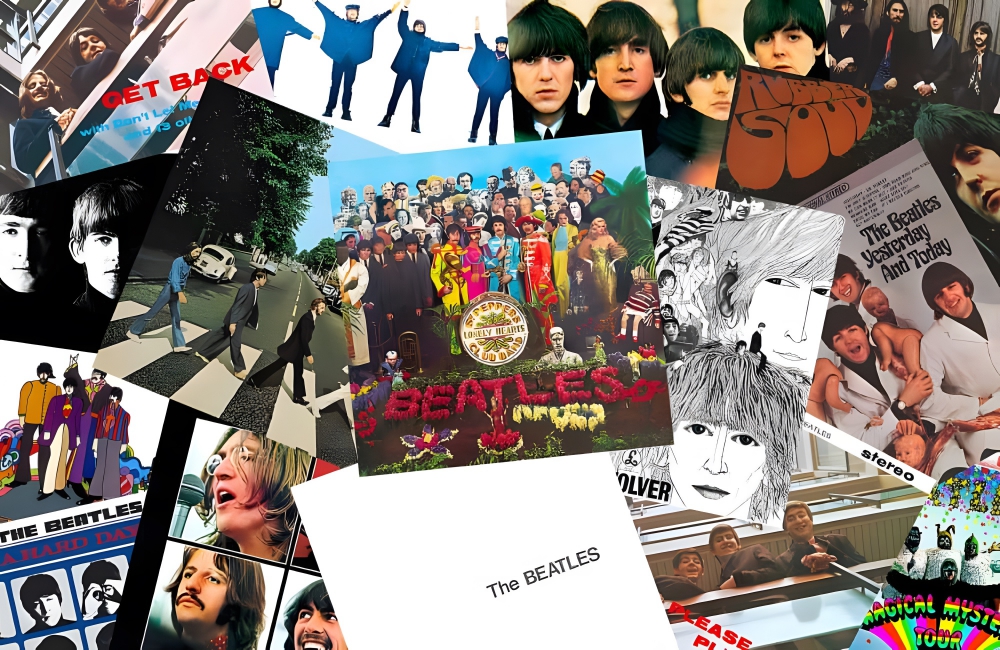
The Beatles Albums @BraineyJayney/Twitter
It was an exhilarating blend of rock ‘n roll, pop, and soul that continues to resonate with millions of fans to this day. Their messages of peace, love, and freedom perfectly encapsulated the spirit of the ’60s and owning one of their albums became a symbol of being a part of this cultural shift.