
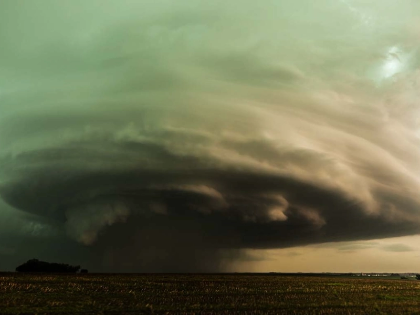
Among the most amazing and strong natural weather events are supercell thunderstorms. Both researchers and storm chasers will find great fascination in these large storm systems distinguished by their revolving updrafts and long-lasting strength. Uncovering the mysteries of nature’s ultimate storm machine, this article explores the amazing realm of supercells, including their creation, structure, and effects on our environment and society.
1. The Anatomy of a Supercell Thunderstorm
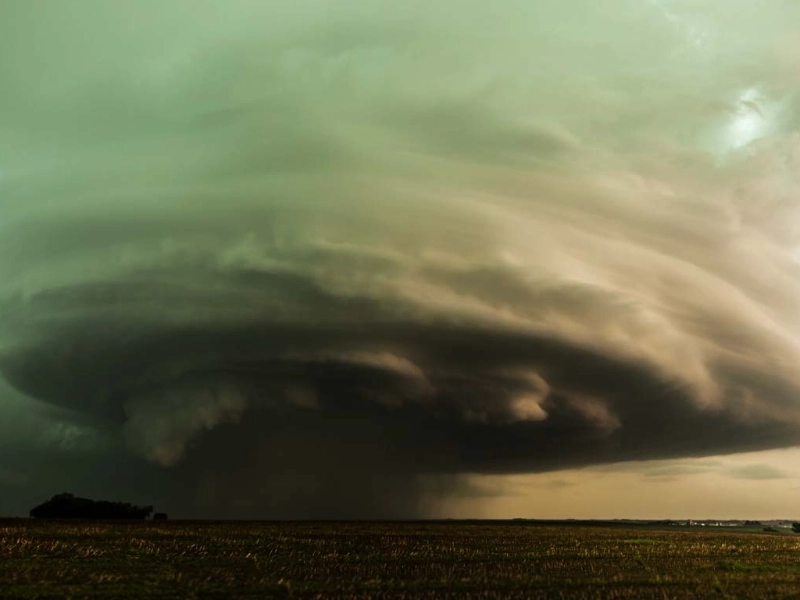
Rising behemoths with amazing heights of up to 65,000 feet (20 km) into the atmosphere, supercell thunderstorms are the giants of the storm universe. Often spanning hours and covering vast areas across the terrain, these remarkable weather systems are distinguished by their distinct structure and long-lasting characteriszation. A supercell is fundamentally driven by its mesocyclone, a revolving updraft that distinguishes it from typical thunderstorms and provides its amazing force and lifetime.
With each element vital in the production and behaviour of the storm, a supercell’s complicated and intriguing anatomy is Fundamentally, the storm draws warm, moist air into it to drive its intensity and expansion. The unique anvil-shaped cloud top created when this air rises cools and condenses, spreading miles of shadow over the ground below. Strong updrafts and downdrafts inside the storm create a dynamic environment where hail, torrential rain, and even tornadoes can develop, hence supercells are among the most deadly and erratic storms known on Earth.
A supercell’s wall cloud—a lowering of the storm’s base sometimes preceding tornado formation—is among its most remarkable characteristics. Often the object of great research by both meteorologists and storm chasers, this menacing framework provides evidence of the amazing forces at work inside the storm. Forecasters and scientists must keep a close eye on the wall cloud since it provides a visual clue of the storm’s rotation and possibility for severe weather. Surrounding the wall cloud, rain-free sections known as flanking lines offer a clear glimpse of the storm’s structure, why supercells are a preferred topic for photographers trying to capture nature’s wrath in all its terrible glory and for weather lovers.
Unlike other kind of thunderstorms, the supercell is driven by the spinning updraft, sometimes known as mesocyclone. Strong air currents of over 100 miles per hour (160 kilometres per hour) allow severe weather to flourish in their environment. Supercells’ unique hook echo look on radar comes from the mesocyclone’s spin; this is a telltale indicator used by meteorologists to identify these threatening storms and send warnings to possibly impacted populations. Supercells are a constant menace to any place in their path since this special ability lets them last hours on end.
Large hail, strong lightning, and even tornadoes are produced in the mesocyclone by a sophisticated interaction of air currents and temperature gradients. Strong rotation can enable precipitation to be cycled through the updraft several times, resulting in the development of really huge hailstones. Supercells are able to generate some of the biggest hail on record thanks in part to this recycling mechanism; stones often reach softball or even greater size. Supercells’ great reputation also stems from their strong electrical activity; lightning strikes at a far higher frequency than in normal thunderstorms, producing an amazing but deadly light display for ground-based onlookers.
2. The Perfect Storm: Conditions for Supercell Formation
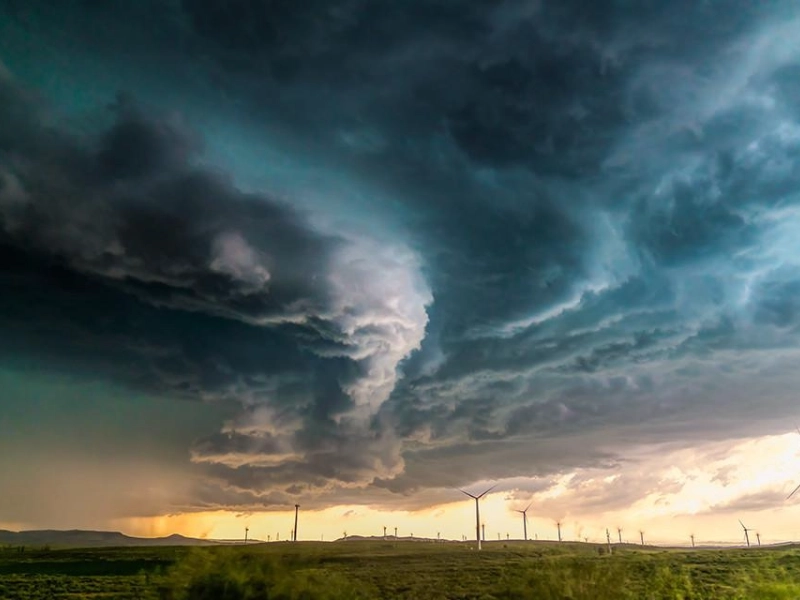
Nature’s ideal storm, supercell thunderstorms depend on particular atmospheric circumstances for development and existence. For meteorologists and scientists studying these strong weather systems, knowledge of these conditions is absolutely essential since it enables improved prediction and preparation against possible severe storm events. A supercell is the result of a delicate equilibrium of temperature, moisture, and wind patterns coming together in just the correct way to produce these amazing storms that may occupy the landscape for hours.
A major component of supercell development is atmospheric instability. This happens when the warm, wet air close to ground differs significantly in temperature from the cooler air overhead. The warm air rises and keeps accelerating to produce the strong updrafts unique to supercells. A “cap,” a layer of warm air aloft first keeps the surface air from ascending, therefore aggravating this instability. Once this cap is at last broken, pent-up energy in the atmosphere will be released and a large supercell will spawn from this violent thunderstorm development.
Wind shear—the variation in wind speed and direction with height—is another essential component in supercell development. Strong wind shear can cause the thunderstorm to rotate as required for supercell development and aid to organise it. Strong updrafts combined with wind shear produce the revolving updraft, sometimes known as mesocyclone, that defines a supercell thunderstorm. Unlike other kinds of thunderstorms, which usually fade more rapidly, this rotation is what lets the storm grow so well-organised and long-lived.
Supercell development also depends on moisture, which supplies the gasoline the storm requires to develop and get stronger. Usually collected from a vast area, a rich supply of warm, moist air near the surface is pulled into the storm from a distance—sometimes hundreds of miles before it enters the supercell. The lifting of this moist air causes condensation and latent heat release, which drives the storm’s updrafts even more and adds to its general energy and intensity. Supercells are a constant threat to any place in their path since their continuous source of moisture lets them survive for long times.
Strong jet stream presence at upper regions of the atmosphere can also help to create supercells. This fast-moving river of air might improve the wind shear and give the storm’s rising air extra lift. Further contributing to the organisation and intensity of the storm is the influence of the jet stream on the updraft and generation of the required conditions for rotation. For meteorologists trying to project the possibility for supercell development and the related hazards of severe weather, an awareness of the function of these broad atmospheric features is very vital.
Geographical elements also influence supercell formation; some areas are more likely to see these strong storms. Often referred to as “Tornado Alley,” the Great Plains of the United States are especially vulnerable to supercell development because of their unusual mix of topography and climatic circumstances. Supercell development in this area is perfect when warm, moist air from the Gulf of Mexico clashes with cooler, drier air from the Rocky Mountains. Supercells, however, can arise anywhere in the world when the required atmospheric components gather—including portions of Europe, Australia, and South America.
 zi ang