
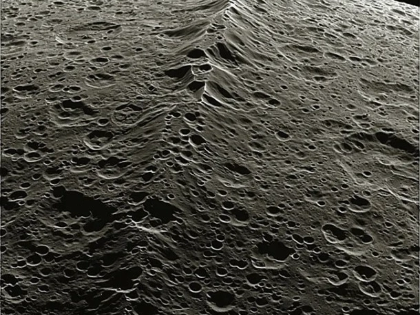
10. Iapetus’ Equatorial Ridge: The Cosmic Walnut’s Mysterious Belt
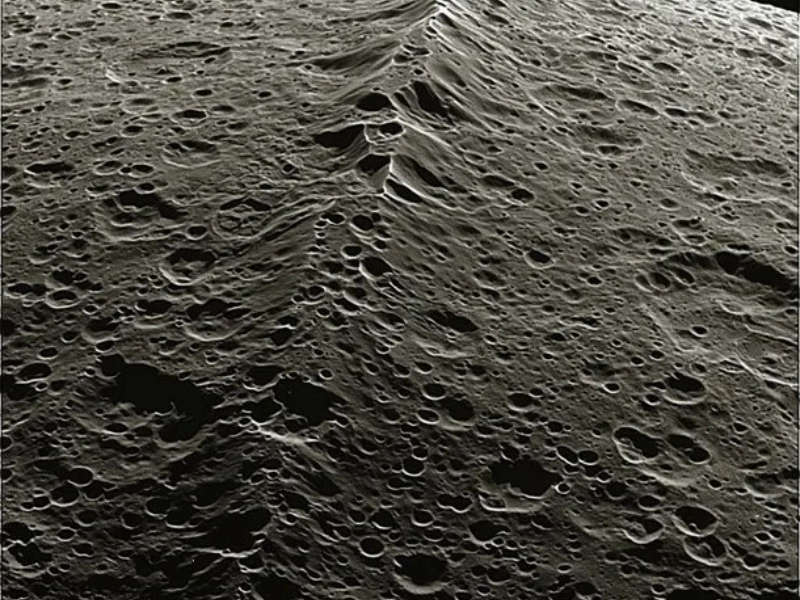
Saturn’s moon Iapetus, often referred to as the “cosmic walnut” due to its unique appearance, boasts one of the most enigmatic features in our solar system: a prominent equatorial ridge that gives the satellite its distinctive shape. This remarkable geological formation, which was first observed in high-resolution images captured by the Cassini spacecraft in 2004, has puzzled planetary scientists and ignited numerous debates about its origin and implications for Iapetus’ history.The equatorial ridge of Iapetus is a truly monumental structure. It extends almost perfectly along the moon’s equator for more than 1,300 kilometers, covering nearly 75% of Iapetus’ circumference. The ridge rises to an average height of 13 kilometers above the surrounding plains, with some peaks reaching as high as 20 kilometers. To put this into perspective, if such a ridge existed on Earth, it would be more than twice the height of Mount Everest. The width of the ridge varies but averages about 70 kilometers, creating a massive wall-like structure that dominates Iapetus’ landscape.What makes this feature even more intriguing is its near-perfect alignment with Iapetus’ equator. Such precision suggests that its formation is intimately linked to the moon’s rotation or overall shape, rather than being the result of random geological processes. The ridge also appears to be one of the youngest features on Iapetus’ surface, as it cuts across older craters and terrain, indicating that it formed relatively late in the moon’s geological history.Several theories have been proposed to explain the origin of this unique structure, each with its own merits and challenges. One of the earliest hypotheses suggested that the ridge could be the result of a convective overturn within Iapetus. According to this theory, as the moon cooled and contracted, material from the interior rose up along the equator, creating the ridge. However, this explanation fails to account for the ridge’s narrow width and sharp definition.Another intriguing theory proposes that the ridge formed from material that once orbited Iapetus in the form of a ring system, similar to Saturn’s rings but on a much smaller scale. Over time, this material could have collapsed onto the moon’s surface, accumulating along the equator due to Iapetus’ rotation. This hypothesis is supported by the ridge’s equatorial alignment and could explain its relatively young age. However, it raises questions about the origin of such a ring system and why it would have formed around Iapetus specifically.A more recent and particularly fascinating hypothesis suggests that the ridge might be the result of a giant impact early in Iapetus’ history. According to this theory, a large collision could have caused Iapetus to spin rapidly, deforming its shape. As the moon’s rotation slowed over time, the deformed material could have collapsed towards the equator, forming the ridge. This explanation could account for both the ridge’s alignment and its apparent youth relative to other surface features.The equatorial ridge not only dominates Iapetus’ appearance but also plays a significant role in the moon’s overall characteristics. The immense structure affects Iapetus’ climate and may contribute to the stark contrast between the moon’s bright and dark hemispheres. The ridge acts as a topographic barrier, potentially influencing the distribution of dark material across the moon’s surface and contributing to the temperature differences between the two hemispheres.Studying the equatorial ridge of Iapetus provides valuable insights into the processes that can shape planetary bodies. It challenges our understanding of geological evolution in the outer solar system and forces us to consider mechanisms of planetary formation and modification that we may not have previously imagined. The ridge’s existence raises questions about the potential for similar structures on other icy moons and how unique Iapetus truly is in the context of our solar system.Furthermore, the ridge offers clues about Iapetus’ internal structure and past. Its presence suggests that at least at the time of its formation, Iapetus’ interior was sufficiently malleable to allow for such a massive deformation of its surface. This information is crucial for reconstructing the thermal and geological history of the moon and, by extension, provides insights into the early stages of the Saturn system’s evolution.As our exploration of the solar system continues, the equatorial ridge of Iapetus remains a tantalizing mystery. Its study not only advances our understanding of this particular moon but also contributes to our broader knowledge of planetary geology, the diversity of worlds in our solar system, and the complex processes that shape them. The ongoing investigation of this unique feature serves as a reminder of how much we still have to learn about even the seemingly most familiar objects in our cosmic neighborhood.
 zi ang