
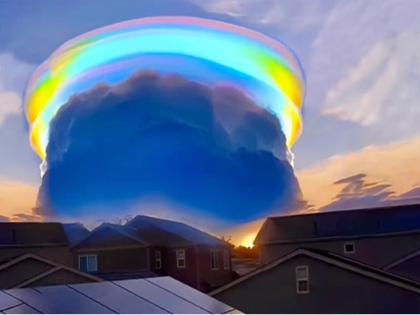
3. Geographical and Seasonal Variations
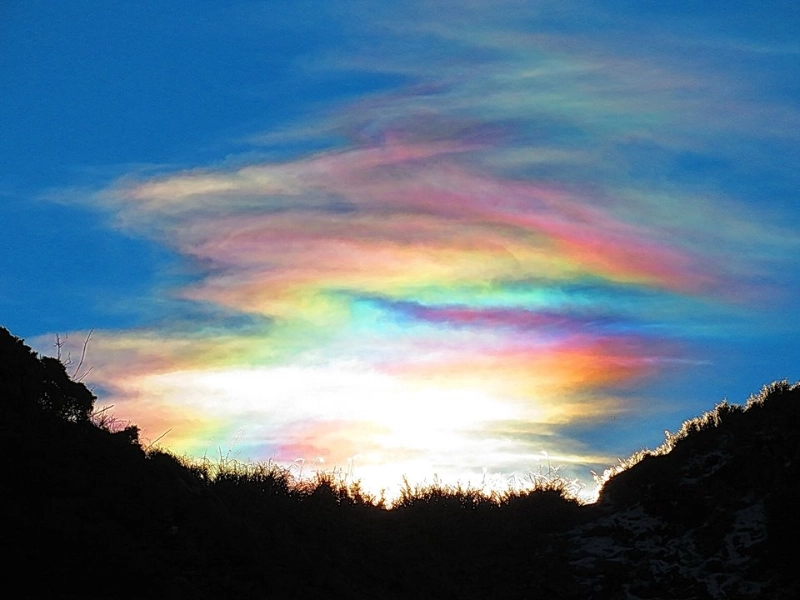
Although rainbow clouds can potentially arise anywhere in the planet, some geographical areas and seasons provide more suitable environment for their development. Knowing these trends will enable aficionados and scientists to better forecast and monitor these fascinating events as well as offer understanding of the worldwide distribution of environmental conditions fit for their generation.
Geographically speaking, localities with high-altitude mountains or those prone to cold air masses are more likely to get rainbow clouds. Ideal conditions for the development of these iridescent clouds are sometimes created by mountain ranges including the Andes, Himalayas, and Rocky Mountains. Mountains generate an orographic lift that causes air to climb, chill, and condense—forming the required high-altitude clouds. This procedure not only raises the possibility of appropriate cloud development but also generates atmospheric instabilities that can lead to the generation of the tiny, homogeneous particles needed for rainbow clouds.
Rainbow cloud sightings also more commonly occur in polar and sub-polar areas. These places offer a perfect habitat for the creation of the necessary ice crystals given their low temperatures and steady air masses. Rainbow clouds are among the amazing displays of atmospheric optics found at locations including Antarctica, Alaska, and northern Scandinavia. Furthermore improving the visibility of these events in these areas during specific times of the year are the long twilight periods, which result from the low angle of the sun providing ideal lighting conditions for iridescence observation.
Rainbow clouds often abound seasonally during transitional times like spring and autumn. These seasons sometimes bring about the required temperature variations and atmospheric conditions favourable for the development of high-altitude ice crystals. The shifting seasons can produce the ideal mix of temperatures, humidity, and cloud forms required for the production of a rainbow. Rainbow clouds can, however, arise at any time of year provided the necessary conditions match.
Global trends of climate can also affect the frequency of rainbow cloud observations. For example, El Niño or La Niña can influence atmospheric circulation patterns, therefore changing the frequency and distribution of rainbow cloud observations on a worldwide basis. As it influences temperature patterns and atmospheric composition, climate change could possibly be involved in the long-term trends of rainbow cloud occurrence.
Though their often contaminated sky, urban environments might occasionally offer special chances to see rainbow clouds. Sometimes the particulate matter in urban environments acts as nuclei for cloud development, therefore increasing the possibility of seeing these events in unusual places. < But in metropolitan places, the general air quality and visibility might also impede the view of these sensitive optical effects.
 zi ang