
103. CV90 – Sweden
Manufacturer: Hagglunds, Bofors
Primary Users: Swedish Defense Materiel Administration
Cost: $5.11 million per unit*
Combat Vehicle 90 was designed in the eighties, specifically to navigate Nordic subarctic climates. The vehicle has no problem moving through wetlands and snow, and it can carry six to eight soldiers. The Combat Vehicle 90’s major strength is that it has a lot of variations.
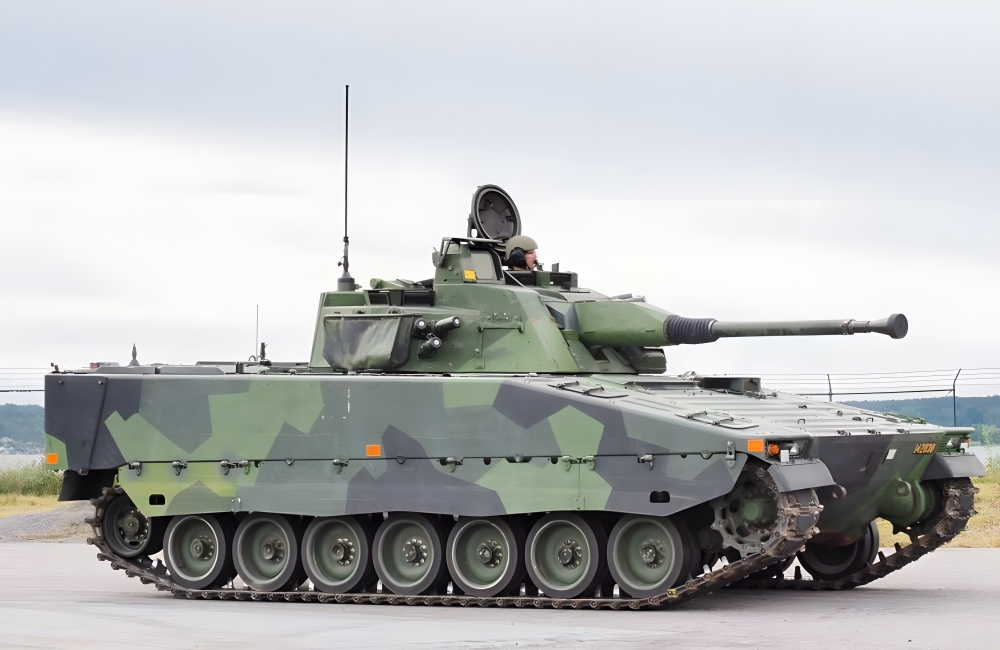
CV90 (Sweden) @FinabelEAIC / Twitter.com
Forward Observation, Armored Recovery Vehicle, Electronic Warfare, Command and Control, and more are variations of the CV90. Right now, there are fifteen variants of these vehicles in seven countries. 1,280 are in-service, with more to come. The Mk IV is the latest iteration, and it has cutting-edge developments, such as a Scania engine that gets 1,000 horsepower.
104. Xian MA60 – Zimbabwe
Manufacturer: Xi’an Aircraft Industrial Corporation
Primary Users: China Meteorological Administration, Angolan Air Force, Royal Cambodian Air Force, Cameroon Air Force
Cost: $22 million per unit*
The Xian MA60 (long name: Modern Ark 60) is an airliner produced under the AVIC in China. Though it is primarily in use with China’s Meteorological Administration, it is also used in the Air Forces of several smaller countries. The MA60 is a stretched-out version of the Y7-200A, which was made to operate with limited ground support in rugged conditions.
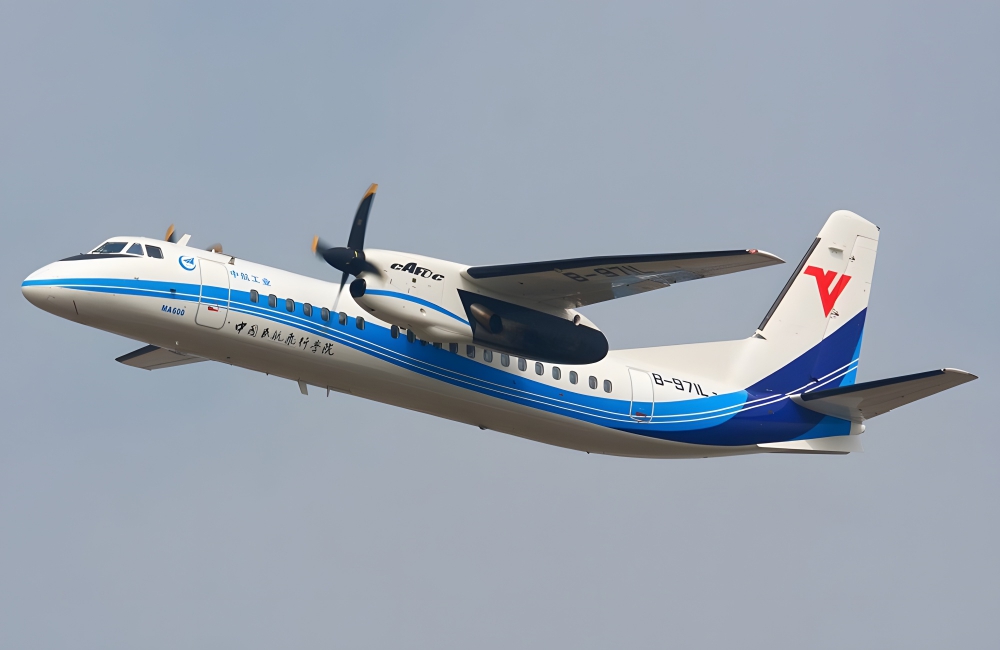
Xian MA60 (Zimbabwe) @bsupplyco / Pinterest
The MA60 has a short STOL capacity. So far, Okay Airways and Joy Air are the two primary users of these planes, and 110 have been delivered. 310 are currently in production. The Xian MA60 is a lot younger than a lot of the planes on its list, as it had its first flight in August of 2000.
105. WZ-7 Xianglong – “Soar Dragon” – China
Manufacturer: Guizhou Aircraft Industry Corporation, Chengdu Industry Aircraft Group
Primary Users: People’s Liberation Army Air Force
Cost: Unlisted
The Soar Dragon, also known as the WZ-7, is yet another high-tech Chinese aircraft to make this list. The primary user of this unmanned aerial vehicle is the People’s Liberation Army Air Force. The UAV is a HALE aircraft, meaning that it is designed for “High Altitude Long Endurance.”
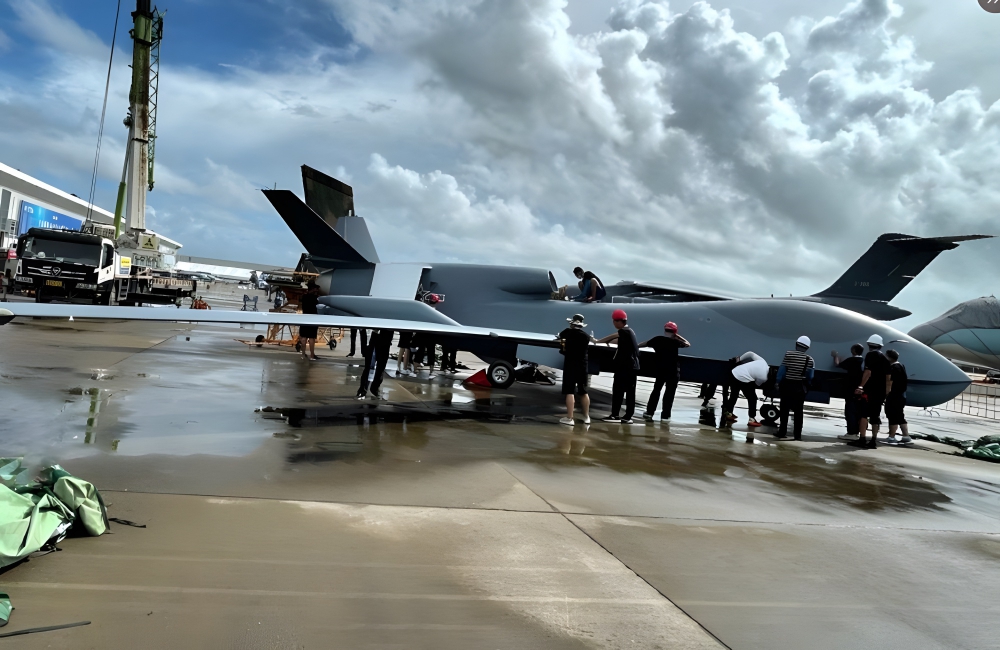
WZ-7 Xianglong – “Soaring Dragon” (China) @talhaahmad967 / Twitter.com
The Soar Dragon has an unusual-looking joined, tandem wingspan, which makes it easy to spot. The configurations have their benefits, including less complicated flight controls and a higher lift-to-drag ratio. Sixteen of these planes have been built so far, with the PLAAF using it for maritime patrol and reconnaissance missions.
106. Piranha V – Switzerland
Manufacturer: General Dynamics European Land Systems
Primary Users: Swiss Army, Danish Army
Cost: $4.2-$6.1 million per unit*
The Piranha V IFV is a fifth-generation variant of the Mowag Piranha Infantry Fighting Vehicle family. The vehicle was designed by GD’s European Land Systems Wing and produced by Mowag Motor Car Factory. The Piranha V is in use by Denmark, Switzerland, Monaco, Spain, and Romania.
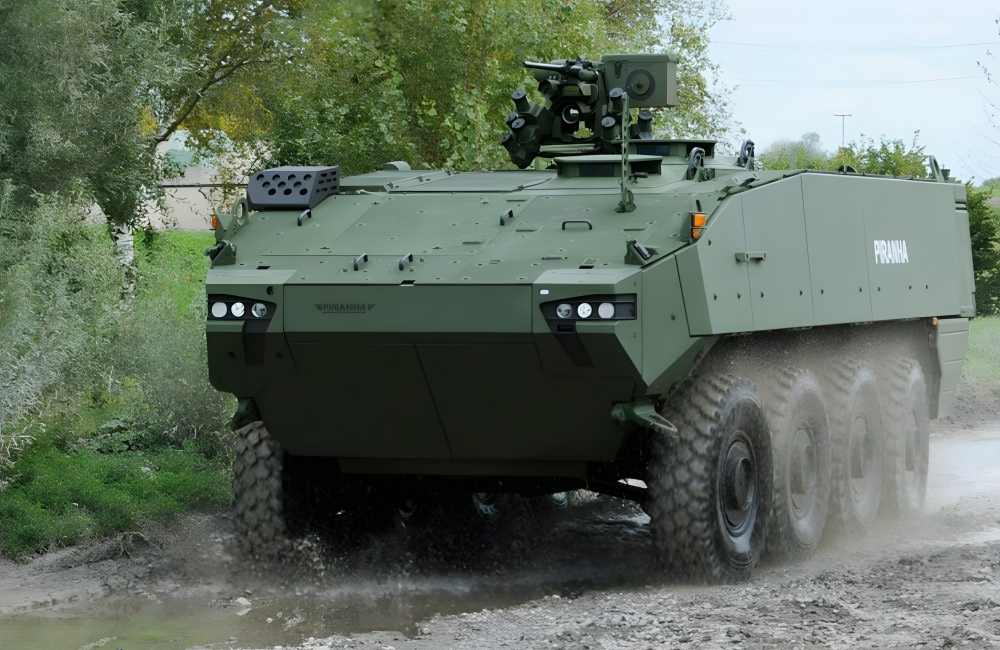
Piranha V (Switzerland) @Strategic__1 / Twitter.com
The 73,000-pound IFV is 26 feet long, 10 feet wide, and can hold three crew and eight passengers. The IFV protects its crew, even if an AT mine goes off under the hull. It is equipped with STANAG 4569 armor. There are twelve vehicles on order for the Swiss Army, along with several dozen Morser self-propelled mortar systems.
107. Boeing F-15X Eagle – USA
Manufacturer: Boeing
Primary Users: U.S. Air Force
Cost: $87.7 million per unit*
The Eagle got its start in the 1970s. Though the U.S. Air Force is its primary user, the F-15 Eagle is also in use by Japan, Saudi Arabia, and Israel. The U.S. Air Force accepted Boeing’s proposal in 1972, as the military branch was in need of a dedicated air superiority fighter.
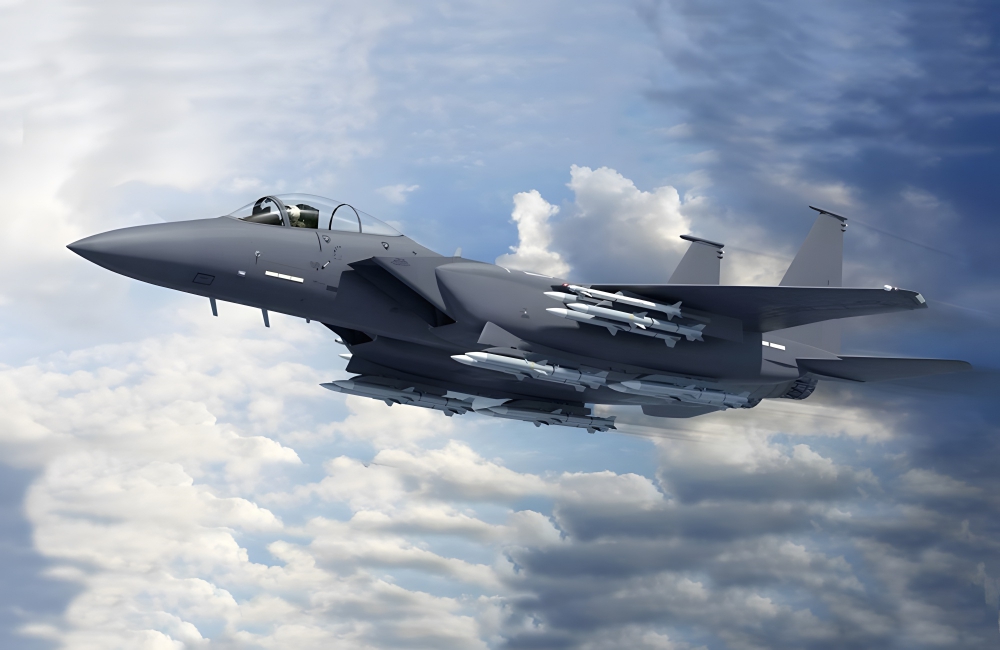
Boeing F-15X Eagle (USA) @bbfaviation / Twitter.com
The Eagle is one of the most successful fighters, and it has had 100 victories and zero losses in aerial combat since it entered service in 1976. The majority of its kills have come from the IDF, which has a special affinity for the F-15. The F-15X is the latest iteration of the Eagle, and it comes with a better payload, speed, and range. Boeing said it plans for X to be a “backbone fighter” for the U.S.A.F.
108. Bell Model 505 JetRanger X – Canada
Manufacturer: Bell Helicopter, Bell Textron Canada
Primary Users: Jamaica Defence Force, Japan Coast Guard, Montenegrin Air Force, Vietnam Helicopter Corporation
Cost: $1.2 million per unit*
The Bell 505 Jet Ranger X, also known as the JRX, is a light helicopter in service with several military and LEO operations. The Bell 505 was unveiled in 2013 at the Paris Airshow, and it flew its first flight in November of 2014. Two years later, it received its certification from Transport Canada.
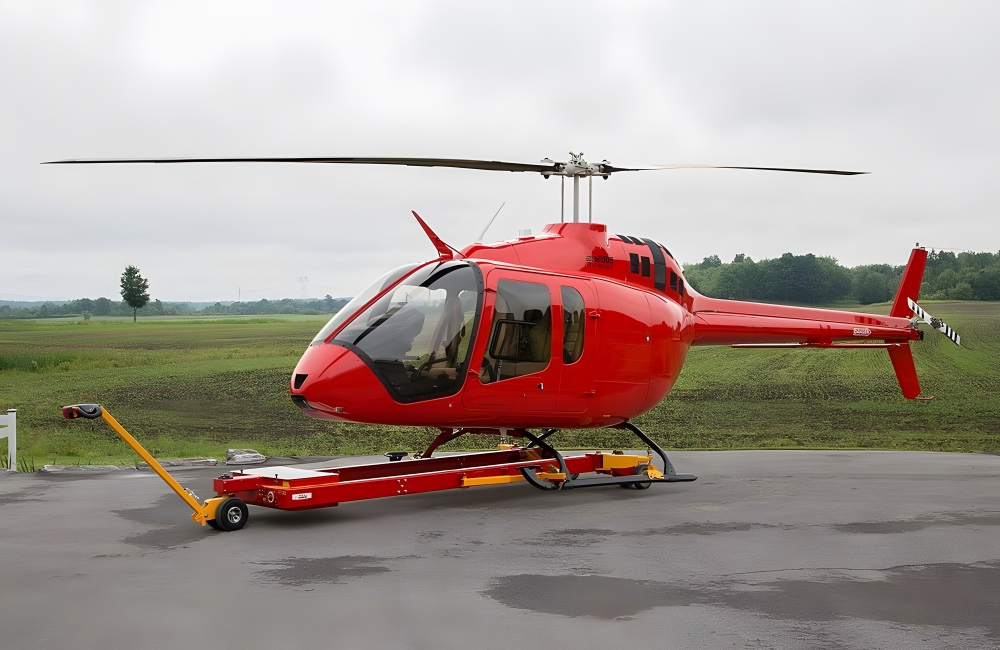
Bell Model 505 JetRanger X (Canada) @budiagus0875 / Pinterest
The JRX has a clean sheet design, for the most part. Mass production of the JRX began in 2016 at Lafayette Regional Airport’s $26.3 million hangar. In 2017, the first aircraft was delivered to a private pilot in the States. The JRX is in use in Jamaica, Japan, Vietnam, Montenegro, and Vietnam. Several police departments in America also use the JRX for law enforcement operations.
109. Warrior – UK
Manufacturer: BAE Systems
Primary Users: British Army
Cost: $1.77 billion project cost*
The Warrior is part of a tracked military vehicle family in the United Kingdom. The Warrior was designed in the 1980s as a “Mechanised Combat Vehicle” that could meet the new, post-Vietnam era. The major requirement of the Warrior was that it had a high top speed, allowing it to keep up with what would later be called the Challenger 1.
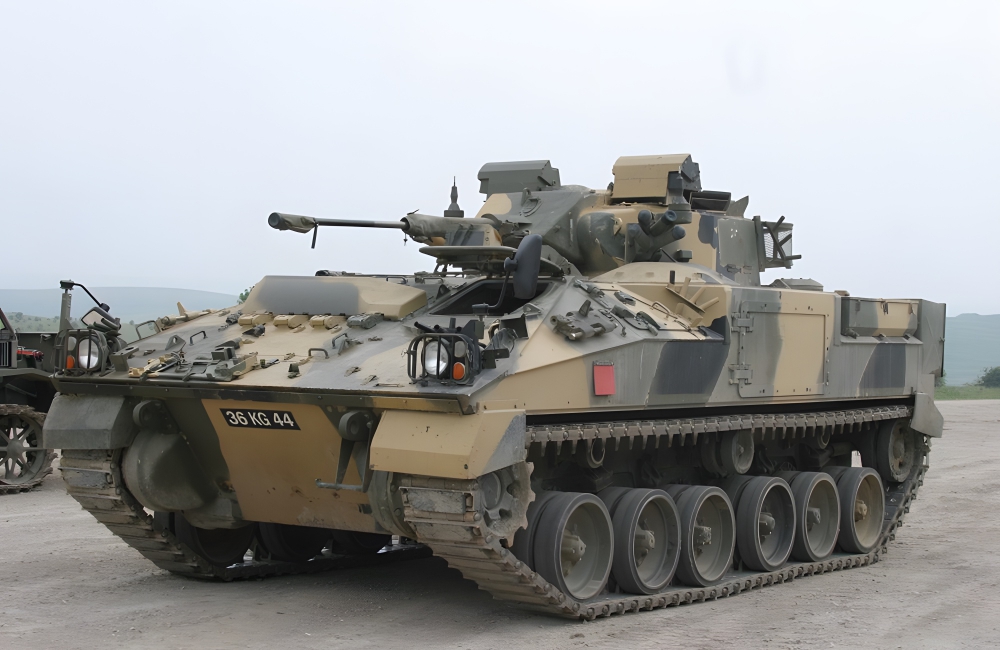
Warrior (UK) ©davric / Wikimedia.org
The Warrior’s Combat History includes Operations Granby, Grapple, Resolute, Telic, and Herrick. It has protection against anti-tank mines, rocket-propelled grenades, missiles, and small arms. The British Army recently engaged in a major upgrade program that would ensure that the service life of the Warriors would be extended for another nineteen years.
110. AgustaWestland AW101 – UK
Manufacturer: Westland Helicopters, Agusta, Finnmeccanica, Leonardo S.p.A.
Primary Users: Royal Navy, Royal Air Force, Royal Danish Air Force, Italian Navy
Cost: $28 million per unit*
The AgustaWestland AW101 is a medium-lift copter for both civil and military use. It was created in the 1990s through a partnership between Italy’s Agusta and the U.K.’s Westland Helicopters. It was designed to meet requirements from both nations for a modern naval utility helicopter.
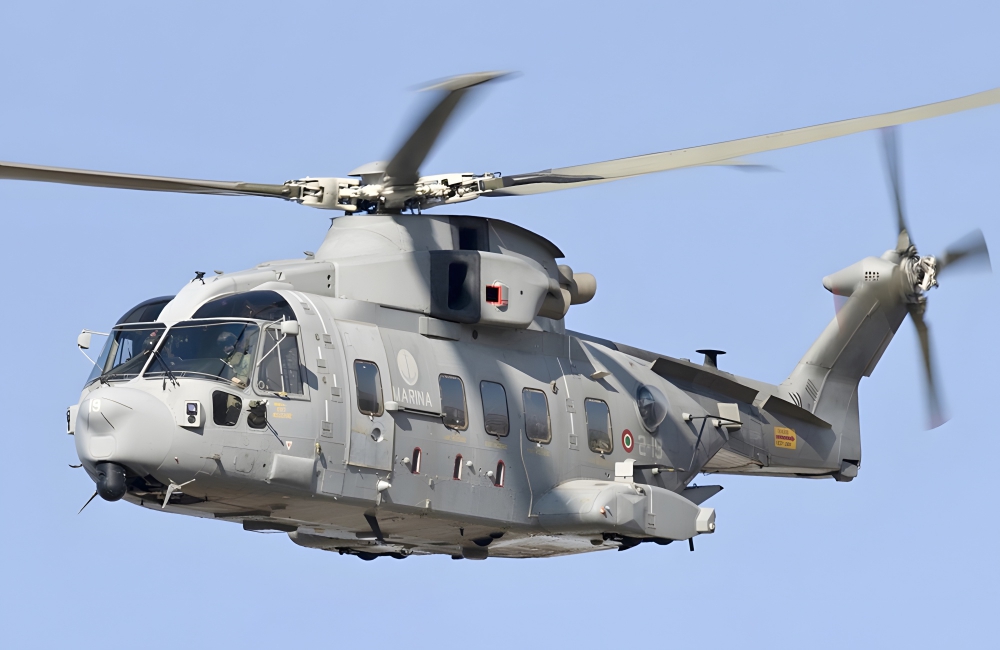
AgustaWestland AW101 (UK) ©Peng Chen / Wikimedia.org
The AW101, which is called the Merlin in Denmark, Portugal, and Brain, is manufactured in Italy, the UK, Japan, and the U.S. The AW101 is a bit of a jack of all trades, as it has been used for everything from search and rescue to anti-submarine warfare. Since 1999, it has replaced many older helicopters, such as the Sikorsky Sea King.
111. Boeing CH-47 Chinook – USA
Manufacturer: Boeing (Vertol)
Primary Users: U.S. Army, Royal Air Force, Indian Air Force, Japan Ground Self-Defense Force
Cost: $265 million project cost*
The Boeing CH-47 Chinook had its first flight on September 21, 1961. Designs for this transport helicopter began in the late 1950s, when Vertol (which would later become part of Boeing) was designing a new type of tandem-rotor helicopter. The Chinook was designed to replace the CH-37 Mojave, designed by Sikorsky.
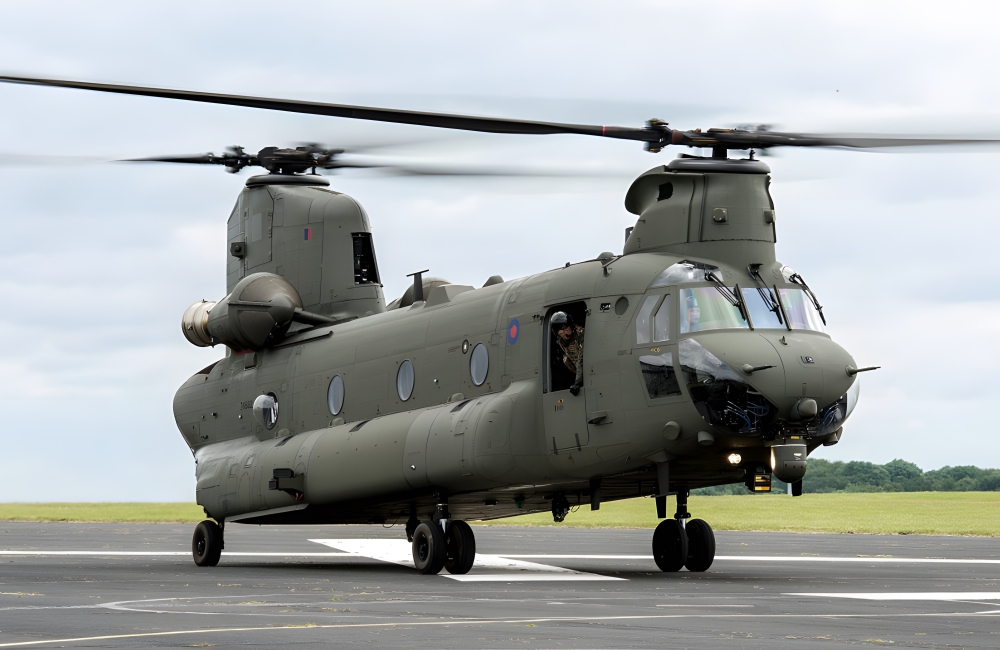
Boeing CH-47 Chinook (USA) @Nik333Alex / Twitter.com
Over 1,200 have been built since 2012. The Chinook was able to reach 200 miles per hour in the 1960s; it is still one of the Army’s fastest helicopters. The Chinook is one of few aircraft to be developed six decades ago and still remain in service.
112. USS Daniel Inouye DDG-118 – USA
Manufacturer: General Dynamics Bath Iron Works
Primary Users: U.S. Navy
Cost: $1.843 billion*
Named after Senator Daniel Inouye, a Hawaiian government official who was awarded a Medal of Honor during WWII for his bravery on the Italian front, the U.S.S. Daniel Inouye is an Arleigh-Burke-class naval destroyer. It is the third of eight Flight IIA tech insertion ships, which have elements from Flight III ships that begin with DDG-125.
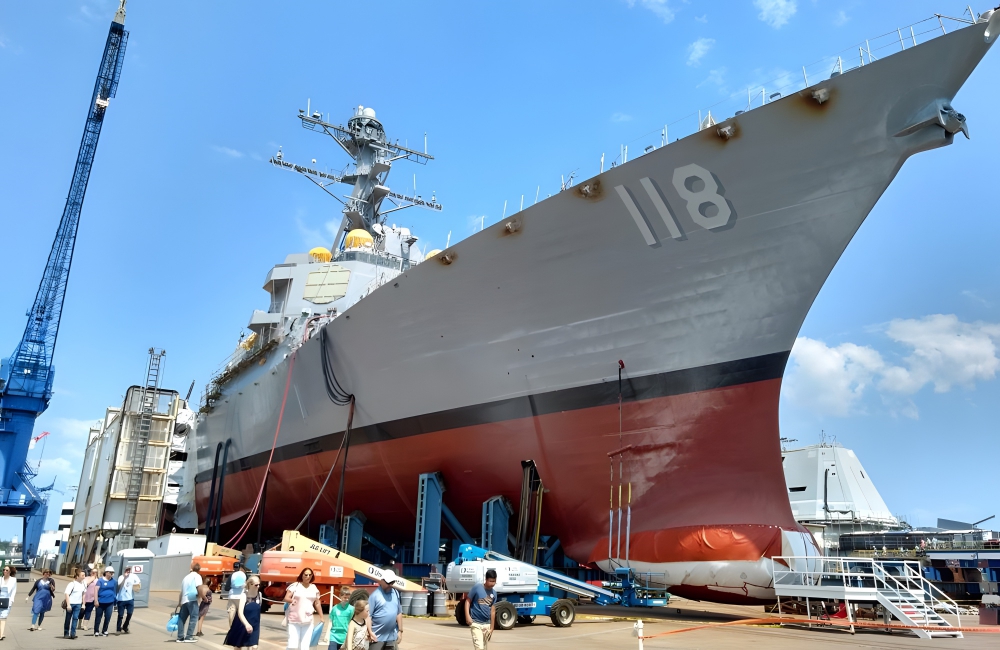
USS Daniel Inouye DDG-118 (USA) @u/USSPalau / Reddit.com
The U.S.S. Daniel Inouye is still very new. Its keel was laid in May of 2018, and Senator Inouye’s widow, Irene Hirano Inouye, christened the destroyer on June 22, 2019. In March of 2021, Bath Iron Works, part of General Dynamics, delivered the U.S.S. Daniel Inouye to the Navy.
113. The Jaguar – Israel
Manufacturer: Israel Aerospace Industries
Primary Users: IDF
Cost: Unlisted
The IDF called this their “newest, most advanced robot.” The Jaguar was developed by Israel Aerospace Industries and the IDF. It is one of the world’s first military robots that can actually act as a substitute for soldiers on the borders. The Jaguar has dozens of sensors, advanced fire capabilities, an automated driving system, and a public address system.
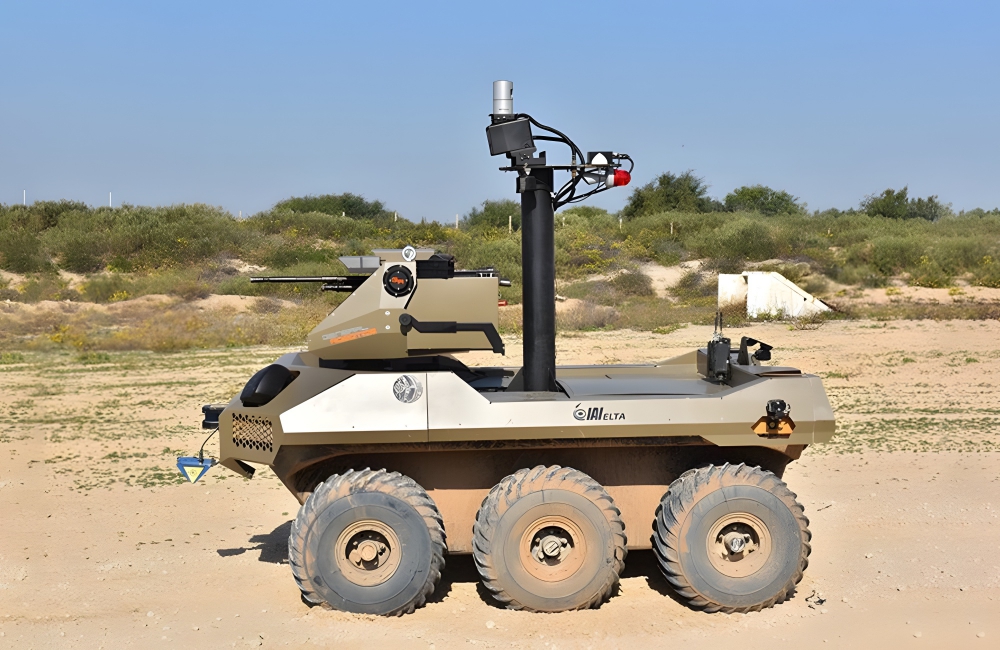
The Jaguar (Israel) @DefenceDecode / Twitter.com
The robot is changing the world of border protection because it acts as a substitute for combat soldiers. The Jaguar can spot and bypass obstacles, and it can drive itself (though IDF commanders still retain full operational control, just in case). One of the coolest features of the Jaguar is that it can self-destruct, should it fall into enemy hands.
114. ZiL Karatel – Russia
Manufacturer: OJSC AMO ZiL
Primary Users: Russian Federal Security Forces
Cost: Unlisted
Nicknamed “The Punisher,” the ZIL Karatel is in service with the military forces of not just Russia, but China, Vietnam, North Korea, Cuba, Iran, Yemen, Tanzania, Belarus, and Serbia as well. The ZIL is part of a family of multi-functional, armored, modular MRAPs.
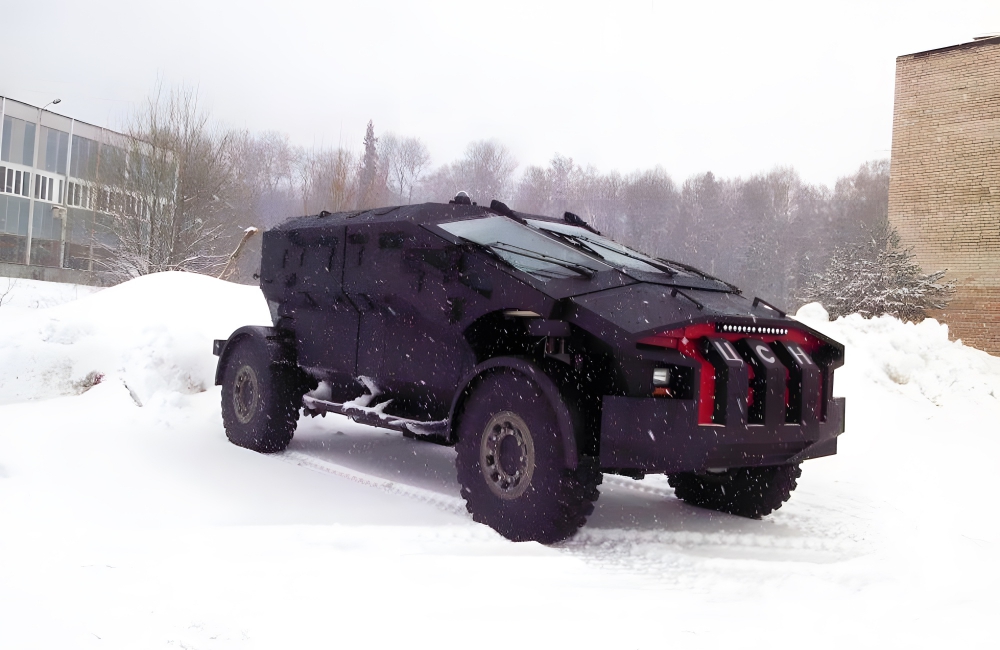
ZiL Karatel (Russia) @ariabisma / Pinterest
The ZIL Karatel is able to perform a lot of different functions, from recon, command and staff, communications, and even transportation of radioactive or biohazardous materials. The ZIL Karatel has been in service since 2013. The Punisher, specifically, has been used as a troop carrier since 2015. It can haul ten personnel, and it is bullet- and mine-resistant, allowing Russian troops to quickly and safely move across the battlefield.
115. ADV Cape Fourcroy – Australia
Manufacturer: Austal
Primary Users: Royal Australian Navy, Australia Border Force, Trinidad and Tobago Coast Guard
Cost: $242.57 million project cost (18 Boats Total)*
The ADV Cape Fourcroy is one of a couple of Cape Class Patrol Boats. The ADV Cape Fourcroy is in service with the Royal Australian Navy, and it supplements the Armidale Class. The Fourcroy requires twenty-one people to crew. The patrol vessel is part of the group replacing the Bay class of patrol boats.
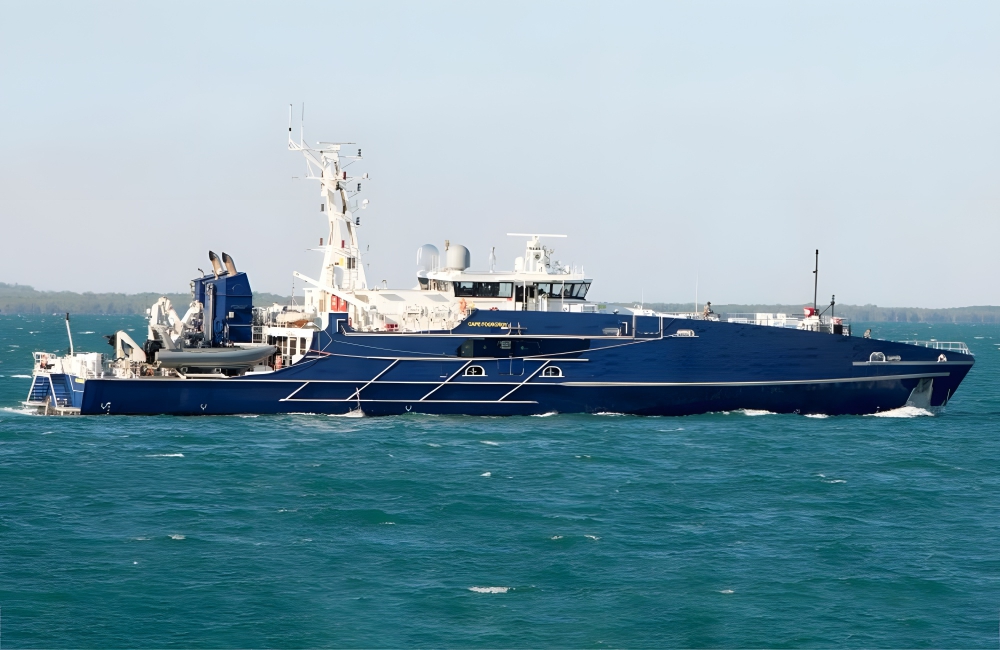
ADV Cape Fourcroy (Australia) @seawaves_mag / Twitter.com
Eighteen Cape-class boats are planned. Twelve have been completed and are active so far, with six more to go. In addition to its use by the Royal Australian Navy, the Australia Border Force and the Trinidad and Tobago Coast Guard also use this class of patrol boat.
116. Yushen-class Landing Helicopter Assault – China
Manufacturer: Hudong-Zhonghua Shipbuilding
Primary Users: People’s Liberation Army Navy
Cost: $68.6 million per unit*
The Yushen-class Landing Helicopter Assault is built by Hudong-Zhonghua Shipbuilding, and it is an amphibious assault ship. The Yushen class comes with a full-length flight deck, as well as a floodable well dock from which amphibious, armored assault vehicles and hovercraft disembark.
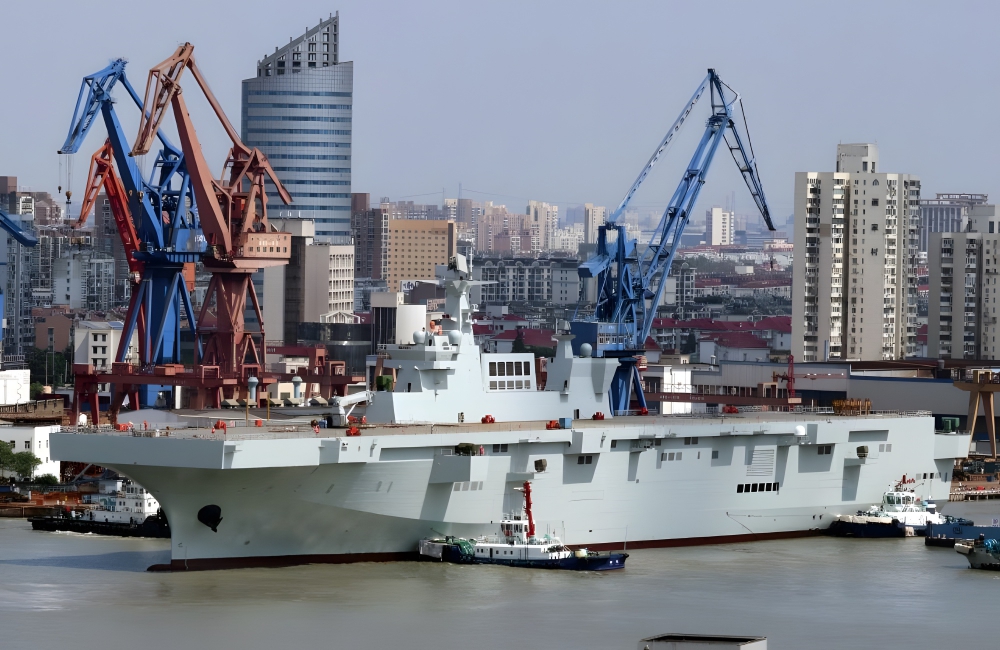
Yushen-class landing helicopter assault (China) @RupprechtDeino / Twitter.com
The Type 076 is the latest of the Yushen class. The Yushen class was first constructed in 2019, and eight are planned. Two are in construction currently, and just one is completed and active. The 40,000-ton warship is 778 feet in length and has a beam of 118 feet. It can carry thirty attack helicopters on each dock.
117. Sukhoi Checkmate Su-75 – Russia/Vietnam
Manufacturer: Sukhoi Design Bureau
Primary Users: Russian Air Force, Vietnam Air Force
Cost: $25-$30 million per unit*
This stealth fighter aircraft looks insane, and it’s not even out yet. Designed by the Sukhoi Design Bureau for use by the Russian Air Force, the Sukhoi Su-75 is expected to make its first flight in 2023. The Su-75 can fly at 40,000 feet or higher, and each unit costs between $25 and $30 million.
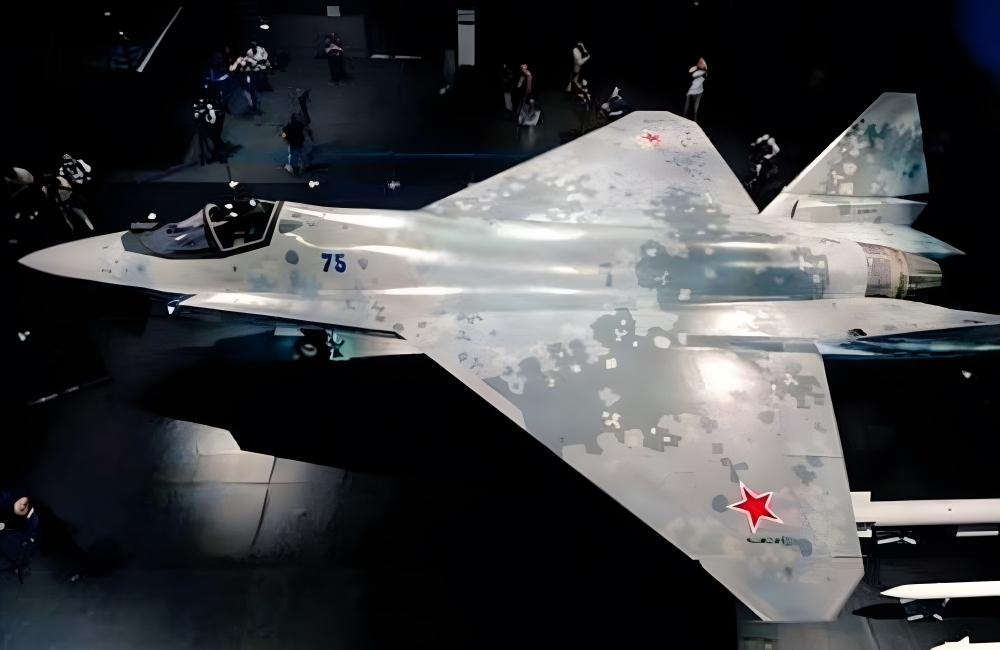
Sukhoi Checkmate Su-75 (Russia/Vietnam) @PramodMadhav6 / Twitter.com
The Su-75 will carry air-to-surface and air-to-air armaments weighing more than seven tons, and the fighter jet will be able to strike more than one target at a time. Its maximum speed is Mach 1.8, and it has internal weapons bays and a V-shaped tail both of which are meant to reduce its radar signature.