
3. The Carboniferous Rainforests: A Green Revolution

From 359 to 299 million years ago, the Carboniferous epoch represented a golden age for terrestrial plant life. Lush, tropical rainforests bursting with an amazing variety of plant species dominated large swaths of the earth during this period. Driven by towering tree-like plants long since extinct, these ancient woods were unlike anything we know today.
Often known as the scale tree, Lepidodendron was among the most famous species of the Carboniferous woodlands. With trunks two metres in diameter and heights of up to fifty metres, these giant plants may be Though they looked like trees, Lepidodendron were really more closely linked to contemporary club mosses. Their unusual scaled look came from diamond-shaped leaf scars covering their bark. Like their smaller modern cousins, these giants reproduced by spores, but on a far larger scale.
Relatives of current horsetails, the Calamites were another common genus of plants in these ancient woodlands. Rising up to thirty metres tall, these segmented plants created dense stands in the Carboniferous woodlands’ marshy sections. Their hollow, bamboo-like stalks could quickly cover the ground thanks to a network of subterranean rhizomes.
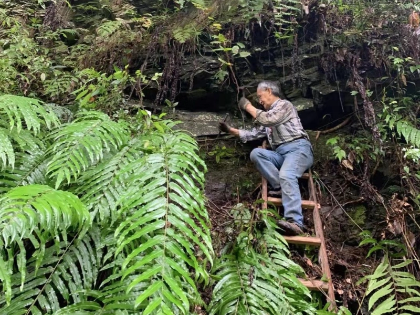
First real ferns, which developed during the Carboniferous and rapidly expanded into a great range of varieties, also found home in these forests. These comprised both huge tree ferns vying with the scale trees for canopy dominance and ground-dwelling ferns. Smaller ferns abound in the rich understory of these woods, forming a multi-layered home for a wide range of species including early reptiles and amphibians.
4. Seed Ferns: The Evolutionary Bridge
Among the most fascinating late Palaeozoic era plants were the pteridosperms, or seed ferns. Originally found in the late Devonian period and flourishing during the Carboniferous and Permian periods, these plants offer an intriguing evolutionary link between the ancient spore-producing plants and the current seed plants that define today’s landscapes.
Seed ferns combined traits of ferns and seed-bearing plants. Their big, compound leaves opened as they developed, much as those of ferns. But unlike actual ferns, seed ferns prospered by seed rather than spore reproduction. Protection for the growing embryo and a food source for the young plant were two benefits of this invention; it also let seed ferns occupy drier environments hostile to spore-producing plants.
Among the most well-known seed ferns was Glossopteris, which dominated the southern continents throughout the Permian era. Large, tongue-shaped leaves with a unique vein network defined these plants. As the hypothesis of continental drift suggested—that these landmasses were previously connected—the discovery of Glossopteris fossils on several continents now greatly apart offered some of the first proof supporting the notion.
Seed ferns were not actual ferns, nor direct descendants of contemporary seed plants despite their name. Rather, they reflect a separate evolutionary experiment in seed production. Although seed ferns finally became extinct, the seed-bearing quality they pioneered would prove to be one of the most successful adaptations in plant evolution, resulting in gymnosperms and, later, flowering plants.
 zi ang