

9. Haiti Earthquake (2010)
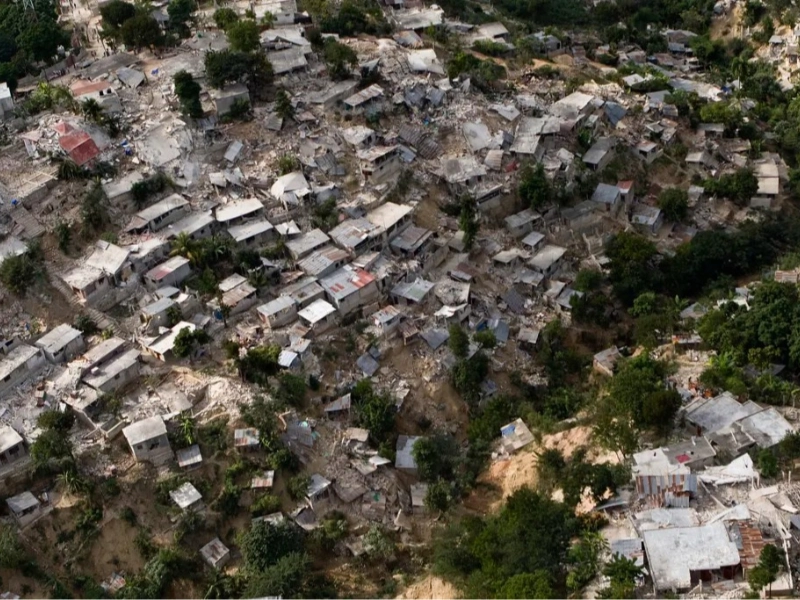
The Haiti Earthquake of January 12, 2010, stands as one of the most devastating natural disasters in modern history, not only for its immediate destructive impact but also for the long-lasting humanitarian crisis it precipitated. This catastrophic event laid bare the vulnerabilities of Haiti, the poorest country in the Western Hemisphere, and challenged the international community’s ability to respond to major disasters in developing nations.
The earthquake, with a magnitude of 7.0, struck at 4:53 pm local time, with an epicenter approximately 25 kilometers (16 miles) west of Port-au-Prince, Haiti’s capital and largest city. The shallow depth of the quake, only about 13 kilometers (8 miles) below the surface, contributed to its destructive power. The main shock was followed by numerous aftershocks, some as large as magnitude 5.9, which continued to threaten survivors and hamper relief efforts in the days and weeks that followed.
The impact on Haiti was catastrophic. The earthquake destroyed or severely damaged 250,000 residences and 30,000 commercial buildings. Critical infrastructure, including hospitals, schools, and government buildings, collapsed or were rendered unusable. The Presidential Palace, the National Assembly building, the Port-au-Prince Cathedral, and the main jail were among the prominent structures destroyed. The port facilities were so badly damaged that they were initially unusable for aid shipments.
The human toll was staggering. While the exact number of casualties has been difficult to determine due to the chaos following the disaster and the limitations of Haiti’s record-keeping systems, estimates suggest that between 220,000 and 316,000 people lost their lives. Approximately 300,000 people were injured, and over 1.5 million were left homeless. The scale of the disaster overwhelmed Haiti’s already fragile infrastructure and government capacity.
The earthquake highlighted the critical role that poverty and poor infrastructure play in amplifying the impact of natural disasters. Haiti’s widespread poverty, substandard construction practices, and lack of building codes contributed significantly to the high death toll and extensive damage. Many buildings in Port-au-Prince and surrounding areas were poorly constructed, unable to withstand the forces of the earthquake. This tragic reality underscored the importance of disaster-resistant infrastructure and the need for improved building standards in earthquake-prone regions.
The international response to the Haiti earthquake was massive but faced numerous challenges. The disaster’s scale, combined with the pre-existing poverty and weak infrastructure in Haiti, made the relief effort extraordinarily complex. The airport in Port-au-Prince was damaged and overwhelmed, creating bottlenecks in the delivery of aid. The destruction of government buildings and the deaths of many government officials further complicated coordination efforts.
Despite these challenges, the global community mobilized significant resources. Governments, NGOs, and individuals around the world pledged billions of dollars in aid. Search and rescue teams from numerous countries worked to find survivors in the rubble. Field hospitals were set up to treat the injured, and temporary shelters were established for the displaced. However, the effectiveness of the aid effort was sometimes questioned, with concerns raised about coordination, distribution, and long-term impact.
The Haiti earthquake also brought attention to the issue of disease outbreak following natural disasters. In October 2010, a cholera epidemic broke out, likely introduced by UN peacekeepers from Nepal. This secondary disaster highlighted the importance of sanitation and clean water in post-disaster environments and the potential for relief efforts to inadvertently introduce new problems.
The long-term recovery process in Haiti has been slow and fraught with challenges. Political instability, corruption, and the sheer scale of the destruction have hampered rebuilding efforts. The earthquake exacerbated pre-existing social and economic issues, leading to prolonged displacement, increased vulnerability to future disasters, and ongoing humanitarian needs.
The Haiti earthquake of 2010 serves as a stark reminder of the disproportionate impact that natural disasters can have on developing nations. It highlighted the need for improved disaster preparedness, resilient infrastructure, and effective governance in vulnerable regions. The event also prompted reflection within the international aid community about the effectiveness of disaster response strategies and the importance of long-term, sustainable development approaches.
Moreover, the Haiti earthquake underscored the complex interplay between natural hazards and human factors such as poverty, urbanization, and governance. It demonstrated how social, economic, and political conditions can turn a natural event into a catastrophic disaster. This understanding has informed subsequent approaches to disaster risk reduction, emphasizing the need to address underlying vulnerabilities alongside improving immediate response capabilities.
As Haiti continues to grapple with the long-term impacts of the 2010 earthquake, the event remains a powerful case study in disaster response and recovery. It continues to inform global discussions on resilience, sustainable development, and the international community’s role in supporting vulnerable nations in the face of natural disasters. The lessons learned from this tragedy continue to shape policies and practices in disaster management and international aid, serving as a somber reminder of the ongoing need to build more resilient communities in the face of natural hazards.
 zi ang