

10. Climate Change and Sea Level Rise
Climate change and associated sea level rise represent one of the most significant long-term geological processes impacting human civilization in the modern era. Unlike sudden catastrophic events, these phenomena are gradual but relentless, with far-reaching consequences for coastal regions, global ecosystems, and human societies worldwide.
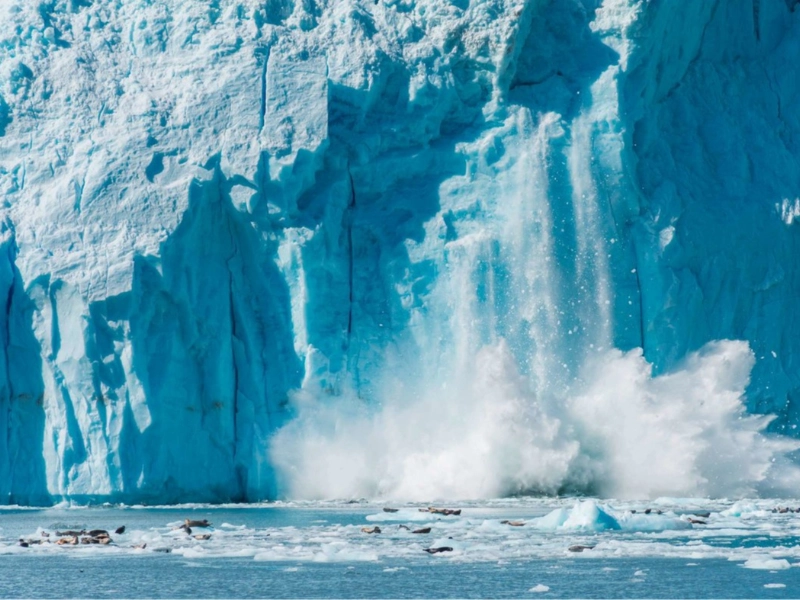
The primary driver of current climate change is the increase in greenhouse gases in the atmosphere, primarily carbon dioxide, resulting from human activities such as burning fossil fuels, deforestation, and industrial processes. This enhanced greenhouse effect is leading to global warming, which in turn is causing sea levels to rise through two main mechanisms: thermal expansion of the oceans as they warm, and the melting of land-based ice, particularly glaciers and ice sheets in Greenland and Antarctica.
Global sea levels have been rising at an accelerating rate. Over the 20th century, sea levels rose by about 15-20 centimeters (6-8 inches). However, satellite measurements show that since 1993, the rate has increased to about 3.3 millimeters per year. Projections for future sea level rise vary, but even conservative estimates suggest a rise of 0.3-0.6 meters (1-2 feet) by 2100, with more extreme scenarios predicting over 2 meters (6.6 feet) of rise if greenhouse gas emissions continue unabated.
The impacts of sea level rise are already being felt in many coastal areas around the world. Low-lying islands and coastal regions are particularly vulnerable. Some Pacific island nations, such as Kiribati and Tuvalu, face existential threats from rising seas, with the potential for entire countries to become uninhabitable. In more developed areas, cities like Miami, New Orleans, Venice, and Bangkok are grappling with increased flooding and saltwater intrusion into freshwater aquifers.
The consequences of sea level rise extend far beyond simple inundation. Higher sea levels exacerbate the impacts of storm surges and coastal erosion, threatening infrastructure, agriculture, and ecosystems. Salt water intrusion into coastal aquifers and agricultural lands can contaminate freshwater resources and reduce soil fertility. Wetlands and mangrove forests, which provide crucial ecosystem services and act as natural buffers against storms, are at risk of being submerged if they cannot migrate inland fast enough.
From a human perspective, sea level rise poses significant challenges for coastal communities and economies. Millions of people live in low-lying coastal areas, and many of the world’s largest cities are located near coastlines. The potential for large-scale displacement of populations, known as climate refugees, is a growing concern. The World Bank estimates that by 2050, climate change could force more than 140 million people to migrate within their countries in Sub-Saharan Africa, South Asia, and Latin America alone.
The economic implications of sea level rise are equally profound. Coastal real estate, infrastructure, and industries are at risk. The costs of protecting coastlines, through measures such as sea walls and elevated structures, are enormous. Some estimates suggest that without adaptation, the global cost of damage from sea level rise could reach $14 trillion annually by 2100.
Adapting to sea level rise presents complex challenges. Strategies range from hard engineering solutions like building sea walls and flood barriers to “soft” approaches such as restoring natural coastal ecosystems. Some areas are implementing managed retreat, planning for the gradual abandonment of the most vulnerable coastal zones. However, these adaptation measures are often costly and politically challenging to implement.
The issue of sea level rise also intersects with questions of global equity and justice. Many of the countries most vulnerable to sea level rise, such as small island developing states, have contributed least to global greenhouse gas emissions. This disparity raises important ethical questions about responsibility and support for adaptation and mitigation efforts.
In the realm of international politics, sea level rise is becoming an increasingly important issue. It has implications for maritime boundaries, as rising seas could alter coastlines and potentially submerge entire island nations, raising unprecedented legal questions about territorial waters and exclusive economic zones.
The challenges posed by climate change and sea level rise underscore the need for global cooperation and action. International efforts, such as the Paris Agreement, aim to limit global temperature increase and, by extension, sea level rise. However, even with aggressive mitigation efforts, some degree of sea level rise is now inevitable due to the long-lived nature of greenhouse gases in the atmosphere and the slow response of oceans and ice sheets to warming.
As we move further into the 21st century, addressing the impacts of climate change and sea level rise will be one of the defining challenges for human civilization. It will require unprecedented levels of planning, innovation, and cooperation at local, national, and international levels. The decisions made in the coming decades regarding greenhouse gas emissions, coastal development, and adaptation strategies will have profound implications for future generations and the shape of human society in coastal regions around the world.
As we reflect on these geologic events, it becomes clear that they are not mere footnotes in history but rather keystones that have shaped the very foundations of human civilization. The Toba Supervolcano, the tremors of Lisbon, the Dust Bowl’s winds, and the silent rise of sea levels—all have contributed to the intricate mosaic of our shared past.
Moreover, these events have not only left physical imprints on the landscape but have also influenced the collective psyche of humanity. They have prompted philosophical reflections, inspired advancements in science and technology, and catalyzed societal shifts in the wake of disaster.
Looking forward, these geological chapters offer valuable lessons. They underscore the importance of understanding and adapting to the dynamic nature of our planet. As we grapple with contemporary challenges like climate change, these historical events serve as cautionary tales and sources of inspiration for resilience, innovation, and global cooperation.
In closing, the story of human history is inseparable from the geological forces that have shaped it. The Earth, with its seismic whispers and climatic orchestrations, continues to be an active participant in our unfolding narrative. Through an appreciation of these geologic events, we gain not only a deeper understanding of our past but also a clearer perspective on the challenges and opportunities that lie ahead. As stewards of this planet, it is our responsibility to heed the lessons of history and navigate the ever-changing terrain with wisdom and foresight.
 zi ang