
156. Ditch Digger Uncovers Lost Sanxingdui Treasures
Location: Guanghan, China
Year Discovered: 1929
Est. Value: Unknown
The Sanxingdui were an ancient people living in China. Their artifacts were first found at what would later be called the Sanxingdui Site in 1929 by Yan Daocheng, a local Guanghan resident. Daocheng, a farmer, was digging a ditch on his property when he stumbled across a hoard of jade and other treasures.
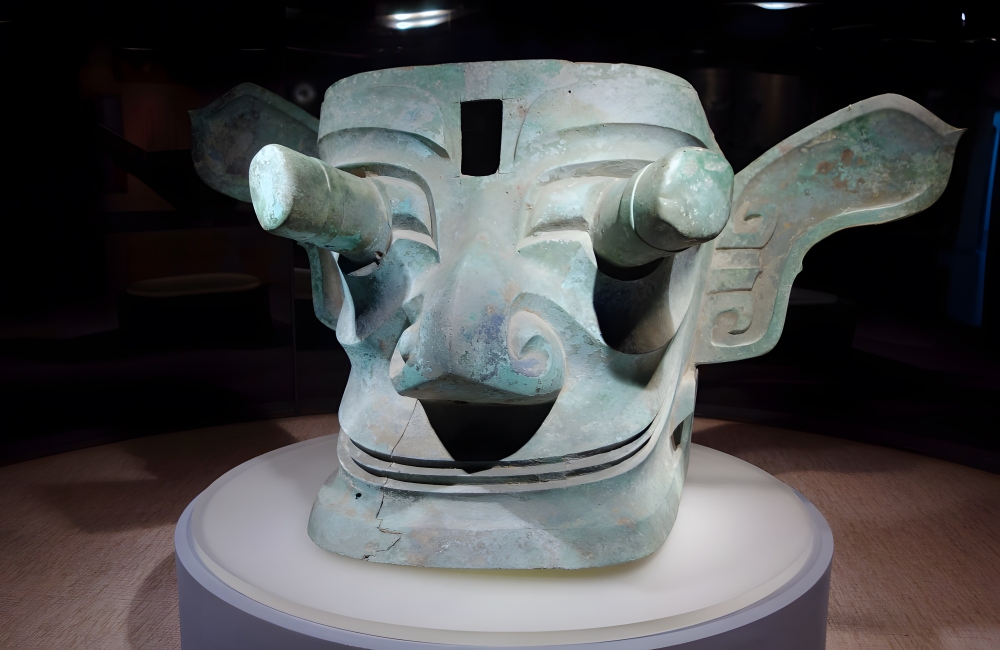
A Ditch Digger Uncovered Lost Sanxingdui Treasures ©Tyg728/Wikimedia
Over the decades, many incredible things have been found at the Sanxingdui Site. A renewed slate of investigations in 2020, 2021, and 2022 yielded gold mask fragments, bronze ware with depictions of animals, ivory carvings, and traces of silk. It will be interesting to see what else Sanxingdui has to show us over the next few years.
157. Mysterious Wall Khatt Shebib Mystifies Archaeologists
Location: Southern Jordan
Year Discovered: 1948
Est. Value: N/A
Located in Southern Jordan, Khatt Shebib is an ancient wall first identified by Sir Alec Kirkbride, a British diplomat, in 1948. Khatt Shebib is 93.2 miles long, making it Jordan’s longest linear archaeological site.
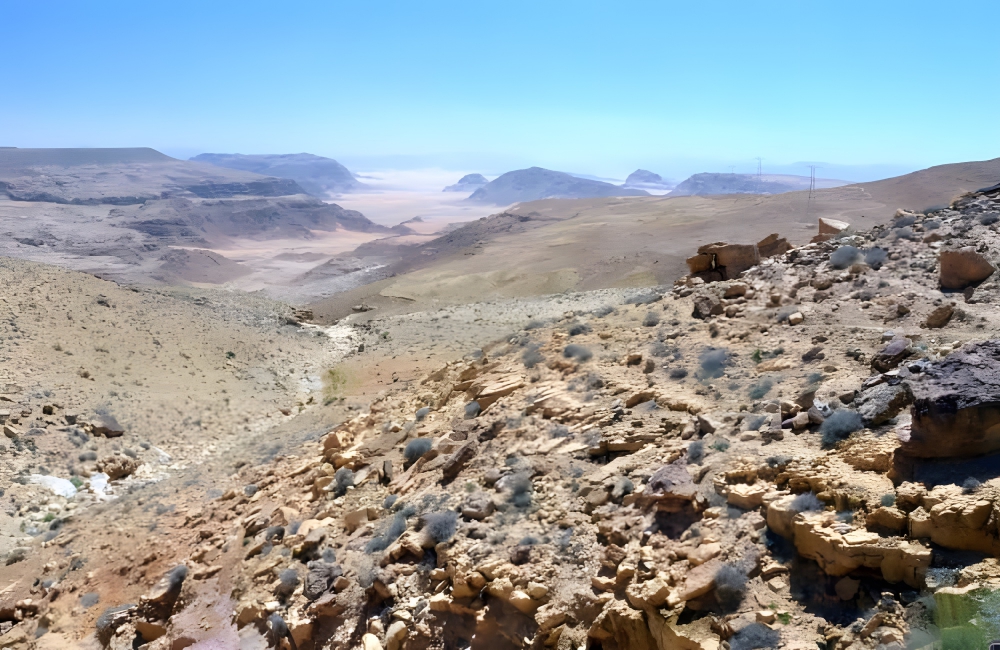
A Mysterious Wall Called Khatt Shebib Mystifies Archaeologists @ohohohmar10/Pinterest
Ever since this long wall was discovered, scientists and researchers from all disciplines have sought to figure out its purpose. Some believe it was built in the Iron Age, while others feel it was built in the Nabataean Period. Key features of Khatt Shebib include parallel and perpendicular walls that extend from the main wall, as well as 100 small towers. Perhaps one day, as technology advances, archaeologists will be able to learn more about this unusual ancient structure.
158. Gigantic Stone Circles Discovered in Jordan and Syria
Location: Jabal Khashabiyeh, Jordan and Syria
Year Discovered: 2014
Est. Value: N/A
The Khatt Shebib is far from the only unusual discovery in Jordan. The region is historically significant and full of important insights into ancient peoples. Not all of these insights are clear, however. The Big Circles, as they’re known, are a series of twelve large, circular stone constructions spread across Syria and Jordan.
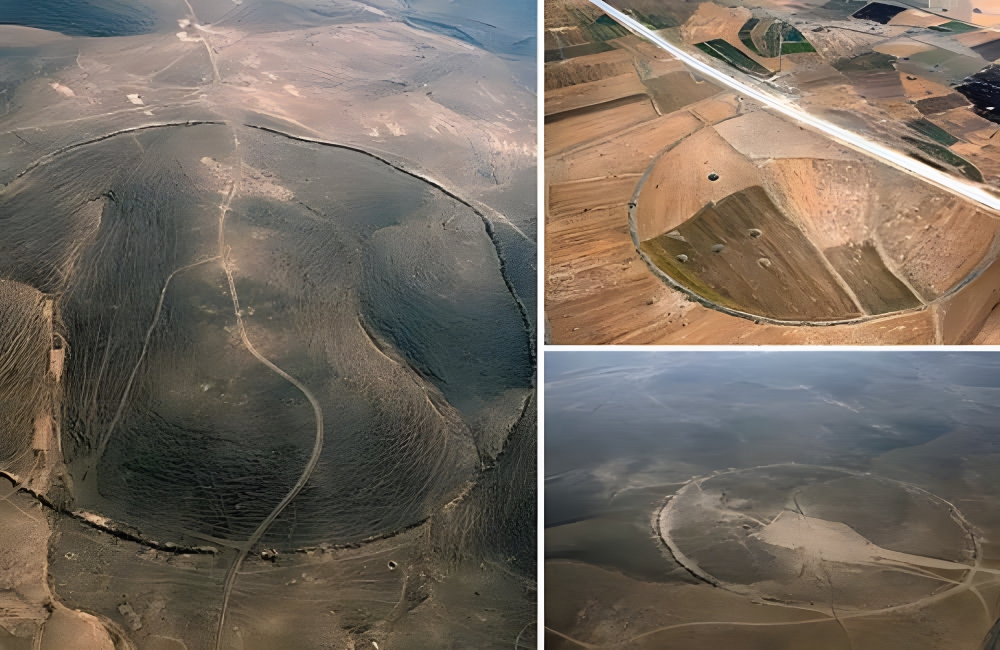
Gigantic Stone Circles Discovered In Jordan @dailymail/Pinterest
They are over 2,000 years old. Archaeologists haven’t paid much attention to the Big Circles, and they remain a mystery, even among experts in local Syrian and Jordanian history. Almost all of the circles are 1,312 feet in diameter, making them an easy target for aerial photography, though these pictures haven’t done much to solve the mystery behind the Big Circles.
159. Archaeologists in Scotland Find a Stone Slab with Strange, Swirled Markings
Location: Auchnacraig, Faifley, West Dunbartonshire, Scotland
Year Discovered: 1885, 2016
Est. Value: Unknown
Also known as the Druid Stone, the Cochno Stone was found in West Dunbartonshire, Scotland by a team of archaeologists. It appears that ancient aliens aren’t to be blamed for the Cochno Stone—druids are.
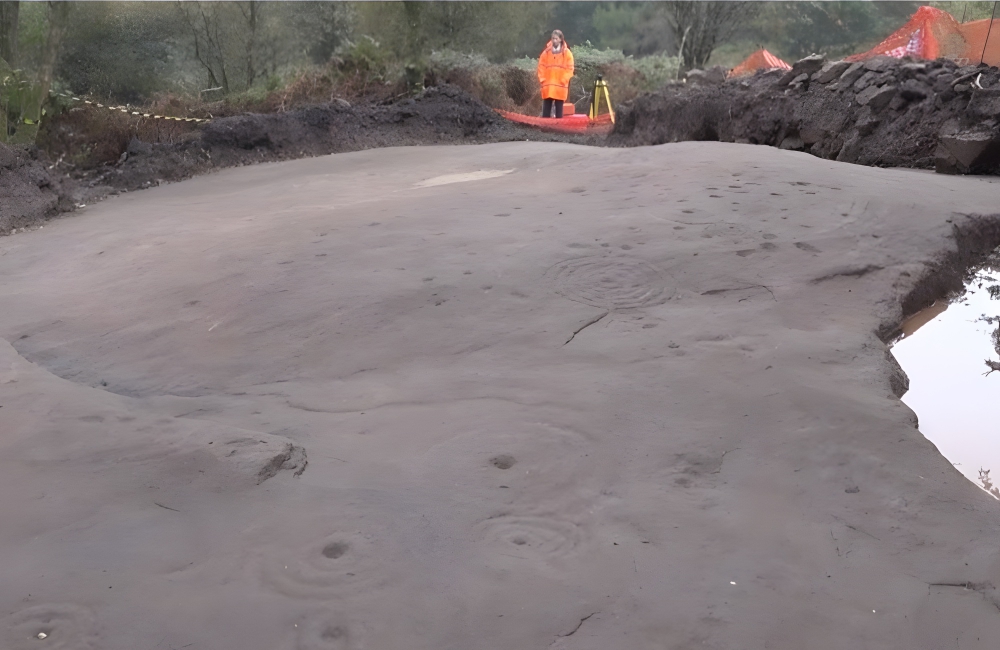
Archaeologists In Scotland Found A Stone Slab With Strange, Swirled Markings @onediocom/Pinterest
Dating back to the Bronze Age, the Cochno Stone measures 42’ by 26’ feet, and it was first documented in 1887 by a local reverend. Since then, there have been multiple excavations of the Cochno Stone, including one in 2015. The Stone is one of Scotland’s best-preserved petroglyphs, and its notable feature is its ninety carved, swirling indentations. In the mid-1960s, the Stone was reburied in order to protect against vandalism (or from unleashing ancient Druidic magic, perhaps?).
160. The Riddle of the Roman Holey Jar
Location: Ontario, Canada
Year Discovered: 2011
Est. Value: Unknown
This vessel was originally discovered in a set of 180 pieces, so you can imagine the painstaking efforts researchers took to piece this “Holey Jar” back together. The pieces were originally located in a storage room of a Canadian museum.
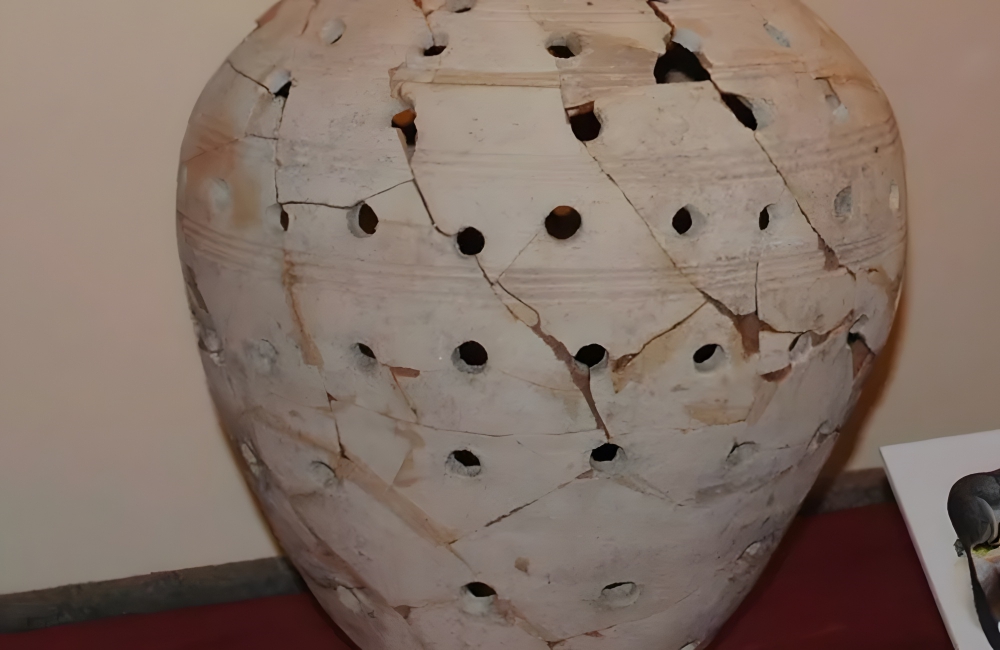
A Literal “Holey” Jar From Roman Britain Is On Display In Ontario, Canada @ancientorigins/Pinterest
Scientists put the pieces back together, revealing a sixteen-inch-tall clay vessel that is about 1,800 years old. The vessel’s unique feature is that it is riddled with small, circular holes. The vessel has stumped researchers, as there is nothing else like it in the world. Theories range from this holey vase having been used by ancient Romans as a lamp to it being a container for rodents or snacks.
161. Ohio Man Buys Thrift Store Poster That Ends up Being a Picasso
Location: Columbus, Ohio
Year Discovered: 2012
Est. Value: $7,000*
This feel-good story involves a man down on his luck and a miraculous artistic find. In 2012, a man named Zachary Bodish was poking around a Columbus, Ohio thrift store when he saw a cool poster that he believed was a reproduction of an ad for a Picasso exhibit. He bought it for $14.14, took it home, and then had it appraised.
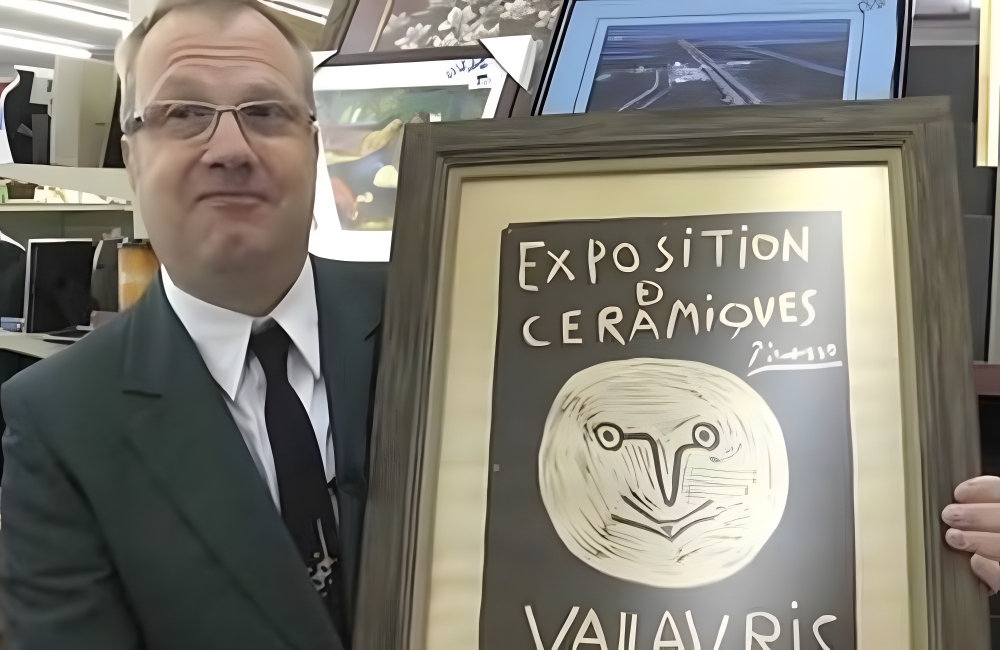
A Thrift Store Poster Ended Up Being A Picasso @dailymail/Pinterest
He discovered after the appraisal that this poster was an authentic print created and signed by Pablo Picasso himself. Bodish was able to resell it for $7,000, a windfall for the thrifter, who was cash-strapped after recently losing his job as a manager at an art center.
162. $1,000 in 1934 Bills Found Hidden in a New Jersey Home
Location: Wildwood, New Jersey
Year Discovered: 2022
Est. Value: $1,000*
A homeowner in Wildwood, New Jersey was removing dirt and rubbish from his home in 2022 when he discovered $1,000 in bills dated back to 1934. In the mid-1930s, this money would have been worth around $20,000.
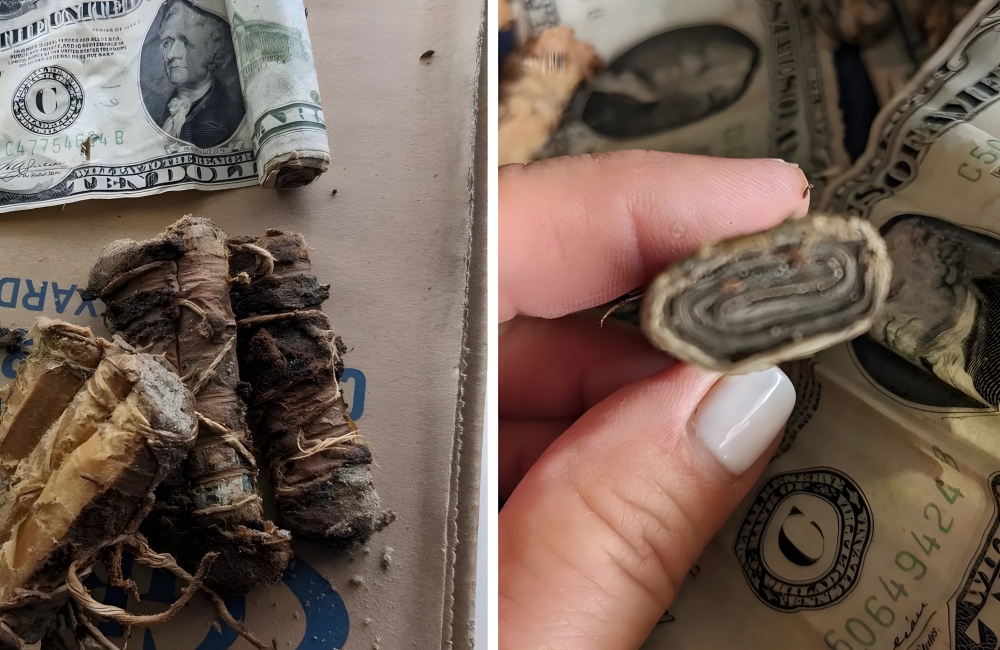
$1,000 In 1934 Bills Hidden In A New Jersey Home @njdotcom/Pinterest
The Wildwood cottage was built in the 1920s, so the homeowner assumed that this money belonged to the first owners. The bills were buried where the home’s porch was once located in small, rubber-band-bound rolls. The $10s and $20s could have been tied to illegal activity, according to the treasure-finder, as Prohibition had just ended the year before.
163. Strange Cemetery Uncovered in Johannesburg, South Africa
Location: Johannesburg, South Africa
Year Discovered: 2010
Est. Value: N/A (Human Remains)
An ancient cemetery isn’t exactly a great find for anyone, as the last thing you want to do, if horror movies are to be believed, is disturb those who are at rest. However, that is exactly what happened at the Crown Mine in Johannesburg, South Africa in 2010.
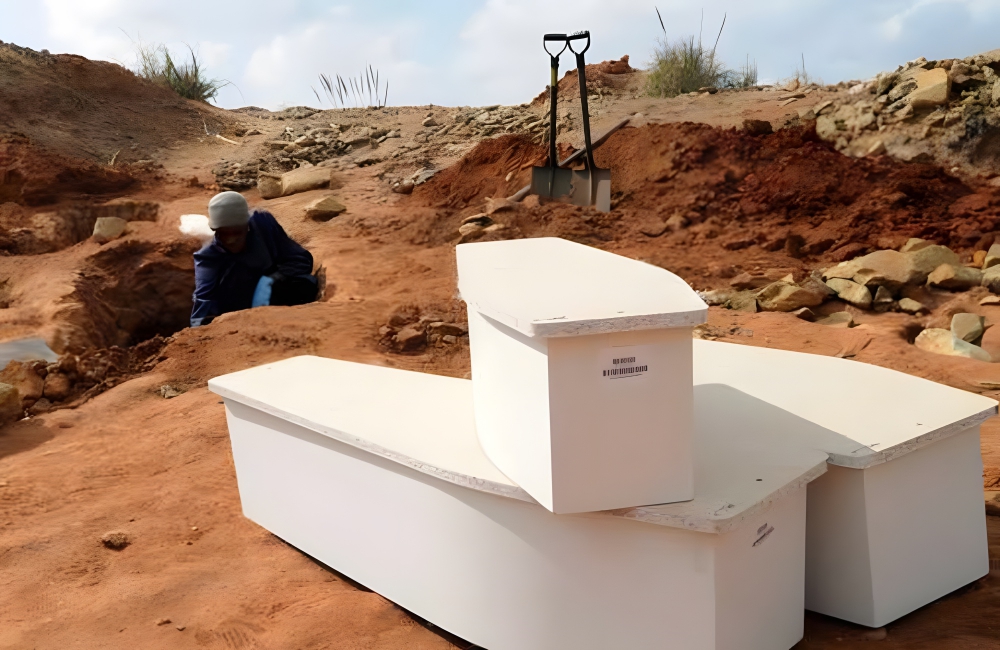
Strange Cemetery Uncovered In Johannesburg, South Africa @IndyOnline/Pinterest
Crown Mine security staff notified police when they found bones sticking out of the ground in October 2010. An investigation turned up 650 skeletons from the early 1900s, making this one of the largest cemeteries in the city. The main mystery behind this find is the lack of documentation. There is no record of any cemetery being built in this location, puzzling researchers who wonder why this large gravesite was kept secret.
164. The Sunken City of Cuba Gives Rise to New “Atlantis” Speculation
Location: Pinar del Río, Cuba
Year Discovered: 2001
Est. Value: Unknown
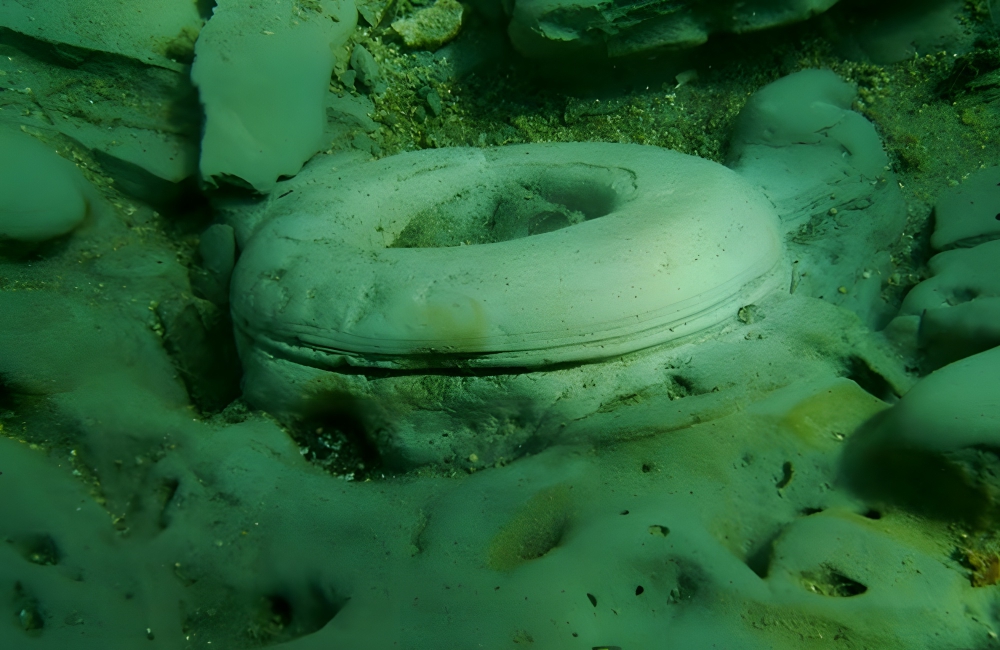
There have been many “Sunken Cities” around the world, and each one gives rise to speculation that Atlantis, the famous lost underwater city, could have been located at each site. Off the coast of Pinar del Rio, a Cuban underwater formation was found through sonar imaging in 2001.
The Sunken City of Cuba Gives Rise To New “Atlantis” Speculation @dailymail/Pinterest
Various circular structures and pyramids were discovered, and these formations were made from hewn granite in smooth, large blocks. According to Manuel Iturralde, a marine geologist, more samples are needed from the site before it is determined what it is. Iturralde described the formations as “out of time” and “out of place.” For what it’s worth, many marine experts believe this “sunken city” is actually a natural formation.
165. $17 Billion Shipwreck Found Beneath the Waters of Offshore Colombia
Location: Off The Coast of Colombia
Year Discovered: 2015
Est. Value: $17 billion*
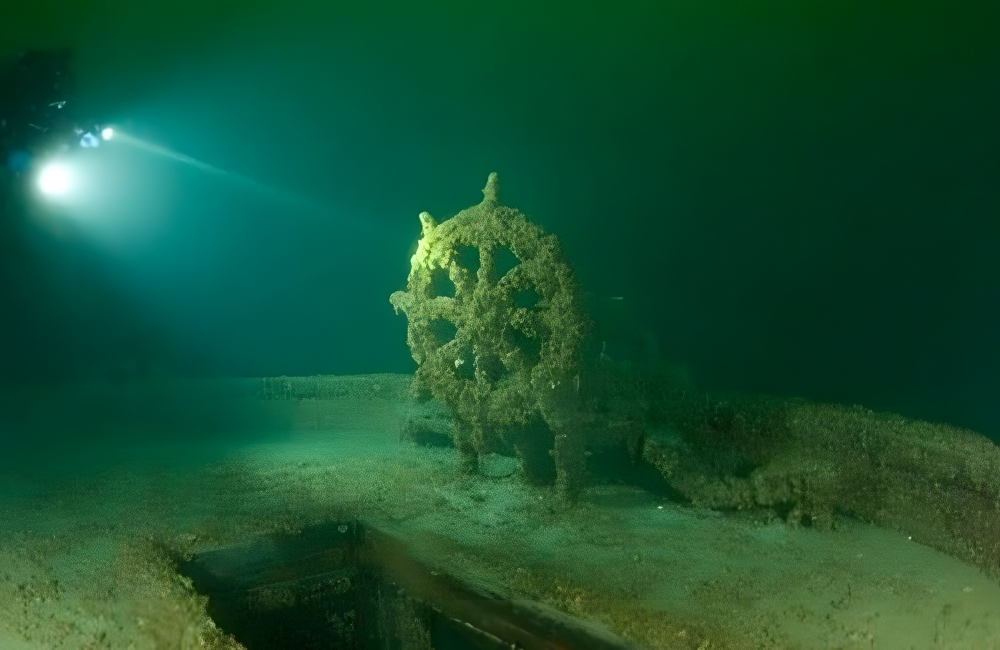
This is one of the richest shipwrecks in the world. Discovered off the coast of Colombia, the wreckage of the San Jose, a treasure galleon, is estimated at $17 billion. The precise location, which was discovered by an R.O.V., is being kept hush-hush to avoid treasure hunters swarming the area.
$17 Billion Shipwreck Found Beneath The Waters Of Offshore Colombia ©u/jaykirsch/Reddit
The San Jose sank in 1708, going down with billions of dollars worth of jewels, gold, and silver. Also on the ship are coins, canons, and even a delicate set of unbroken porcelain. Though the ship’s hull is covered in greenish marine growth, the rest of the ship is remarkably well-intact, which bodes well for the Colombian government if they decide to unearth this lost ship.
166. The Mysterious Voynich Manuscript That Puzzled Decoders for Years
Location: Italy
Year Discovered: 1912
Est. Value: Unknown
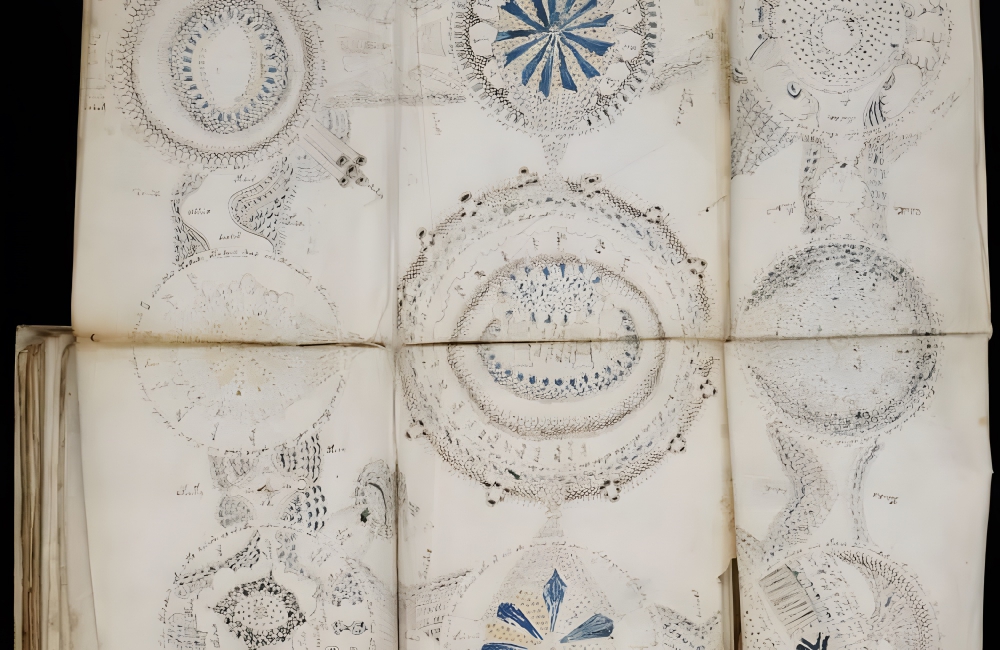
For hundreds of years, the Voynich Manuscript has puzzled decoders. The Manuscript is an illustrated codex that was hand-written in what would later be termed “Voynichese,” a still-unknown writing system. The 240 vellum pages contain illustrations of plants, floating heads, zodiac signs, dragons and other mythological creatures, nude women, astronomical symbols, castles, and more.
Voynich Manuscript Has Puzzled Decoders For Years ©Beinecke Rare Book & Manuscript Library, Yale University/Wikimedia Commons
The Manuscript is written on vellum that has been carbon dated to the early 1400s, and stylistic analyses concluded that the Manuscript could have been made in Italy during the transformative period known as the Italian Renaissance. Some have claimed that the Manuscript is just an elaborate hoax, designed to be a puzzle with no solution.
167. A Once-Lost, $100 Million Pirate Treasure Uncovered off the Coast of Cape Cod
Location: Off The Coast Of Cape Cod
Year Discovered: 1984
Est. Value: $100 million*
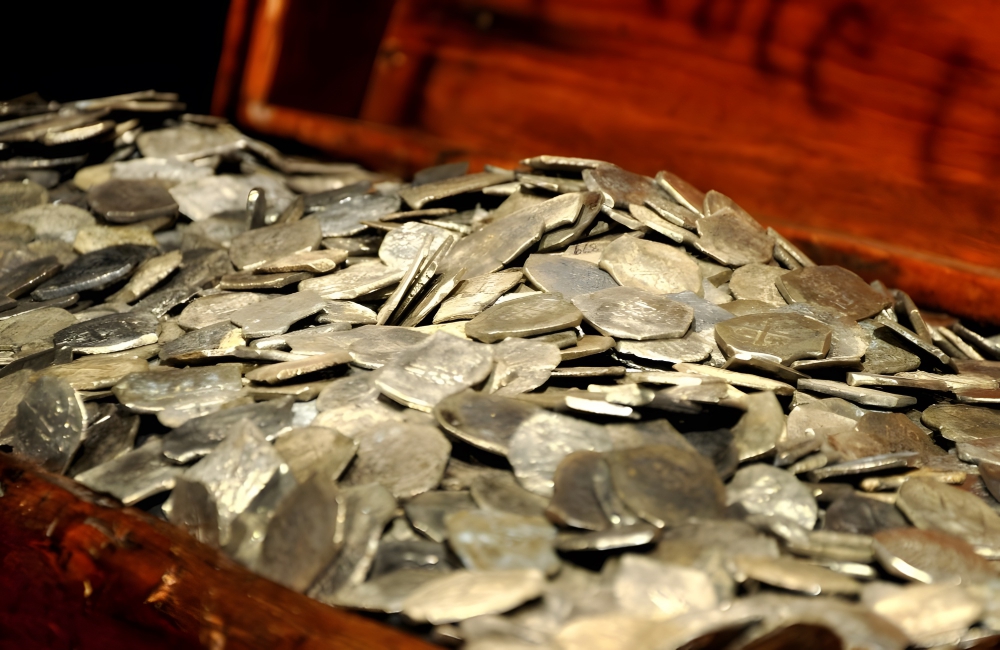
Known as the Whydah Gally Treasure, this hoard remains the only pirate treasure ever actually discovered in the world. The Whydah was launched in London, and, in the 1700s, it was captured by “Black Sam” Bellamy, an infamous pirate who held a major role in the Golden Age of Piracy.
A Once-Lost, $100 Million Pirate Treasure Was Uncovered Off The Coast Of Cape Cod ©Theodore Scott/Wikimedia
In 1717, Black Sam’s captured ship went down off the coast of Cape Cod. Crewmembers who survived the shipwreck were quickly punished for piracy. The Whydah Gally’s treasure eluded people for centuries until 1984 when the wreck was finally discovered beneath fifty feet of sand. The treasure onboard this sunken pirate ship was worth $100 million, as the pirates had been hauling 10,000 pounds of silver, gold, gold dust, and jewelry at the time of the wreck.
168. Surfside Rubble Yields $1 Million, a Surprising Find From the Tragedy
Location: Surfside, Florida
Year Discovered: 2021
Est. Value: $1 million*
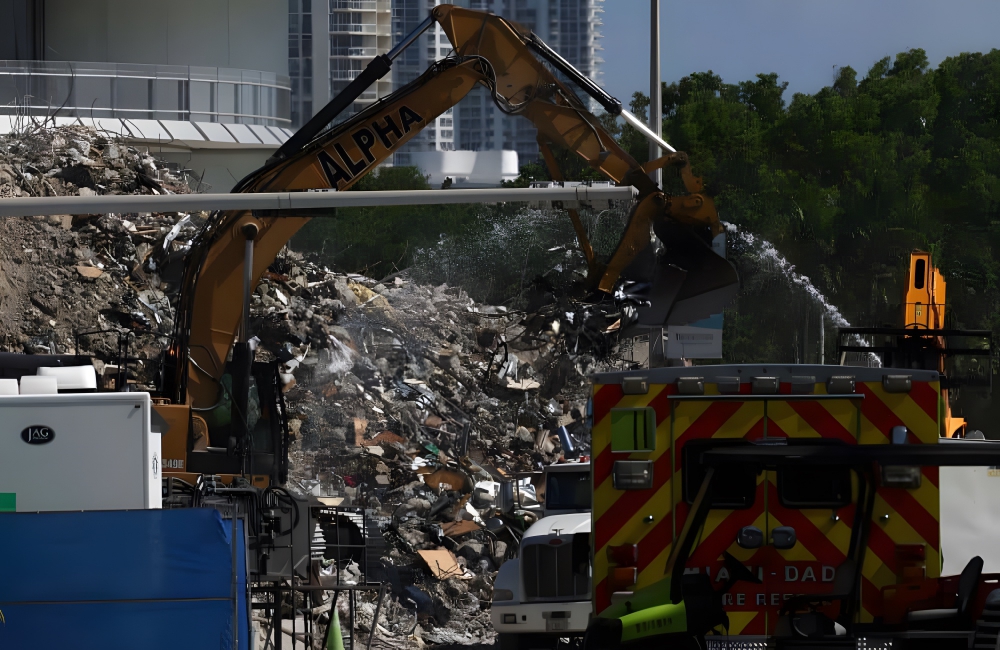
In 2021, a shocking tragedy occurred in Surfside, Miami, Florida that made headlines around the world. In the middle of the summer, the Champlain Towers South, a twelve-story condominium, partially collapsed. It was found, through a year-long, detailed investigation, that 40 years’ worth of shoddy construction, neglect, damage, and design flaws caused this tragedy.
Surfside Rubble Yields $1 Million, a Surprising Find From the Tragedy Anna Moneymaker / Getty Images
In the rubble, rescue workers found $1 million in wallets, safes, and purses in the rubble. The money, according to officials, will be distributed back to victims and their families, though that process is still ongoing. If the money cannot be identified, it will be spread out equally among survivors.
169. Shigir Idol From 10,000 B.C. Found at the Bottom of a Peat Bog
Location: Ural Mountains, Shigir, Russia
Year Discovered: 1890
Est. Value: Priceless
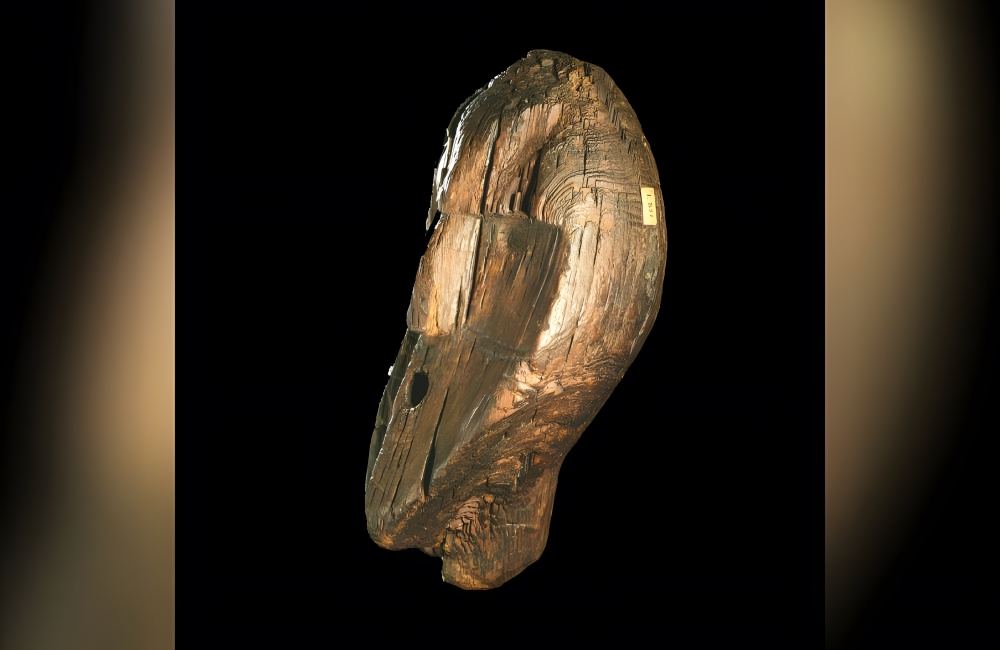
The Shigir Idol, also known as the Shigir Sculpture, holds the distinction of being the oldest wooden sculpture in the world. The Shigir Idol was made shortly after the final Ice Age ended during the Mesolithic Period. The wood from which the Idol is carved is 12,000 years old.
Shigir Idol From 10,000 B.C. Found At The Bottom Of A Peat Bog @dailymail/Pinterest
The Idol was discovered in 1890, thirteen feet below the surface of a peat bog in the Ural Mountains of Shigir, Russia. Researchers had been combing through the area for years, as many prehistoric objects had been found there. None, however, were as amazing as this Shigir Idol. It is thought that this tall, wooden monument could have served as a religious icon, a warning, or a navigational aid.
170. Valuable Poster Hidden Behind An Ordinary Painting
Location: Summerville, South Carolina
Year Discovered: 2007
Est. Value: $20,000*
Laura Stouffer, an art collector, and dealer, often traveled to secondhand stores to see if she could find any art pieces of value. In 2007, when she visited a thrift store in Summerville, South Carolina, Stouffer found a print of a painting made in the mid-1800s.

Valuable Poster Hidden Behind An Ordinary Painting @Jer Cho/Youtube
Though that had value itself, the real moneymaker was hidden behind the painting in its backing. Behind the backing was an original poster from All Quiet on the Western Front, a 1930s movie that won an Oscar. The poster was a gold mine for Stouffer, as it was estimated to have a value of around $20,000.