
46. Navajo Bridge
Located in: Page, Arizona
Established: 1927 (Original), 1993 (Second)
Cost: $5.94 million* (Original), $25.12 million (Second)
Named after the Native American tribe that populates Arizona, two steel spandrel arch bridges come together to form the Navajo Bridge, which crosses the Colorado River, located in the Grand Canyon National Park. The newer bridge, built in 1993, is part of US Route 89A. The older of the two, built in 1927, is only suited for pedestrian and equestrian usage.
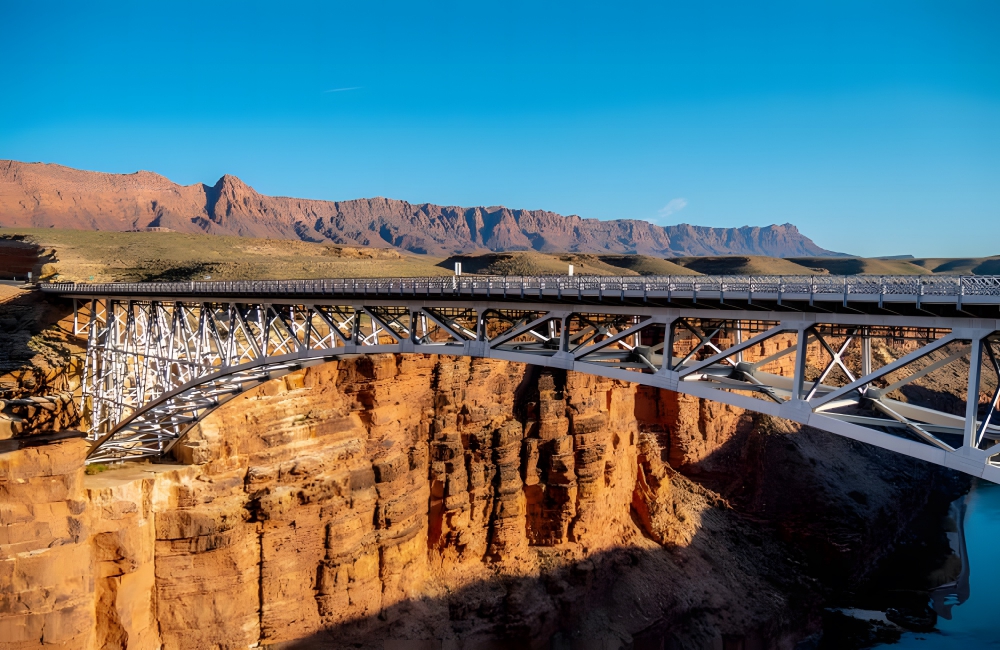
Navajo Bridge ©4kclips / Shutterstock
The Navajo Bridge was originally named the Grand Canyon Bridge until the Arizona State Legislature changed the name in 1934. The Navajo Bridge is the ninth-tallest bridge in thee US, with the first span reaching 467 feet in height and the second reaching 470 feet.
47. Wind and Rain Bridge
Located in: Liuzhou, China
Established: 1912
Cost: $4.29* (To Cross)
The Yongji Bridge of Chengyang, more simply known as the Chengyang Bridge, is a bridge located in Guangxi, China. It is a covered bridge (langqiao) and it is one of multiple Fengyu bridges that you can find in the Dong Minority Region of China. The bridge’s construction ended in 1912.
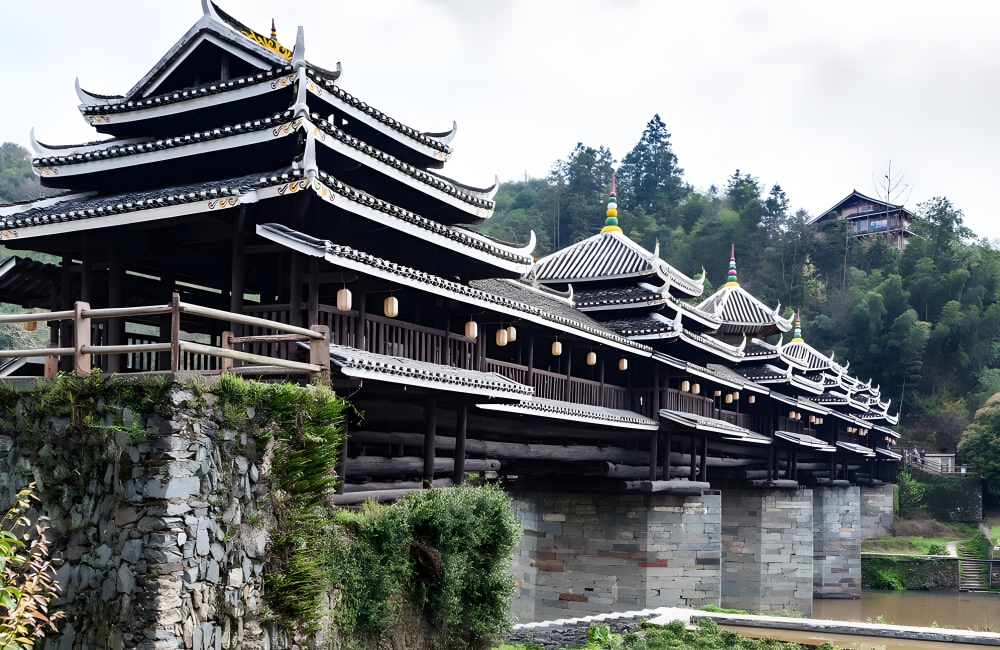
Wind and Rain Bridge ©vvoe / Shutterstock
The three-span bridge is short, stretching just 211 feet. It is 33 feet tall. The covered bridge is known also as the Wind-Rain Bridge, and it is a beautiful tourist attraction. The roof is covered in tiles, and the bridge’s upper structures are made of wood. It has three piers, five pavilions, three floors, and nineteen verandas.
48. Octavio Frias de Oliveira Bridge
Located in: São Paulo, Brazil
Established: 2008
Cost: $456 million*
The Octavio Frias de Oliveira Bridge is a cable-stayed bridge that is located in Sao Paulo, Brazil. It is better-known in Brazil as Ponte Estaiada, and it is 453 feet tall and connects Jornalistia Roberto Marinho Avenue to Marginal Pinheiros. It is named after a famous Brazilian media mogul.
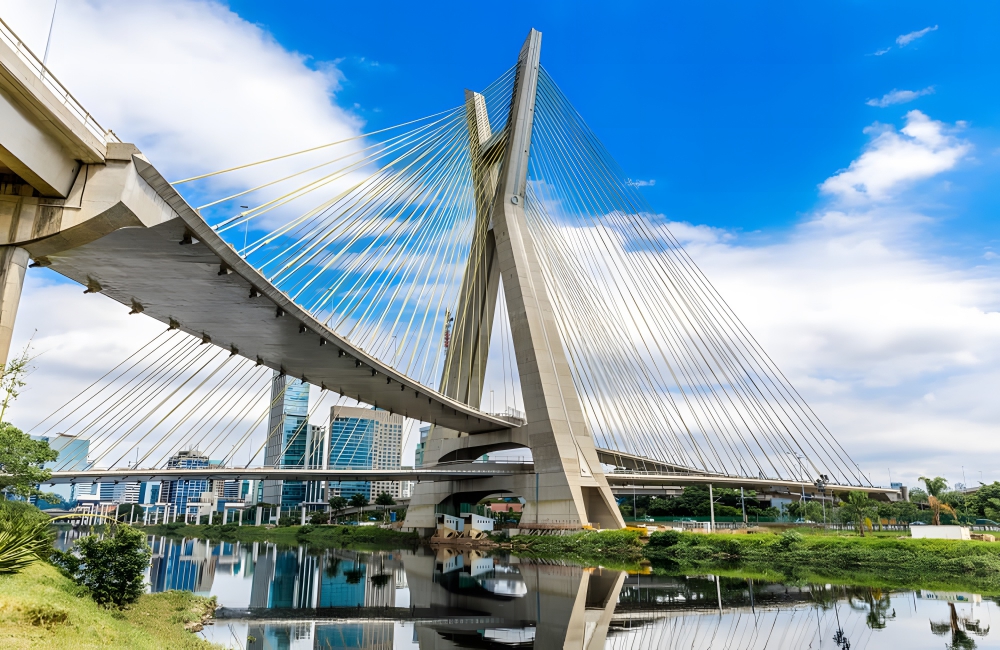
Octavio Frias de Oliveira Bridge ©ESB Professional / Shutterstock
The bridge deck is unique because of its X-shaped form. The X measures 249.3 feet at its base and 116.1 feet at its top. The Octavio Frias de Oliveira Bridge is, unfortunately, often a target for vandals who steal searchlights and wire. Repairs from vandals have cost the Brazilian government more than $400,000 since 2011.
49. Eshima Ohashi
Located in: Japan
Established: 2004
Cost: $100-$200 million*
Construction began on Eshima Ohashi in 1997 and ended in 2004. This rigid-frame bridge crosses the Nakaumi Lake in Japan, connecting Sakaiminato in the Tottori Prefecture with Matsue in the Shimane Prefecture. The bridge seems very steep if you take a picture from a distance, which is why the Eshima Ohashi has been so widely-circulated online.
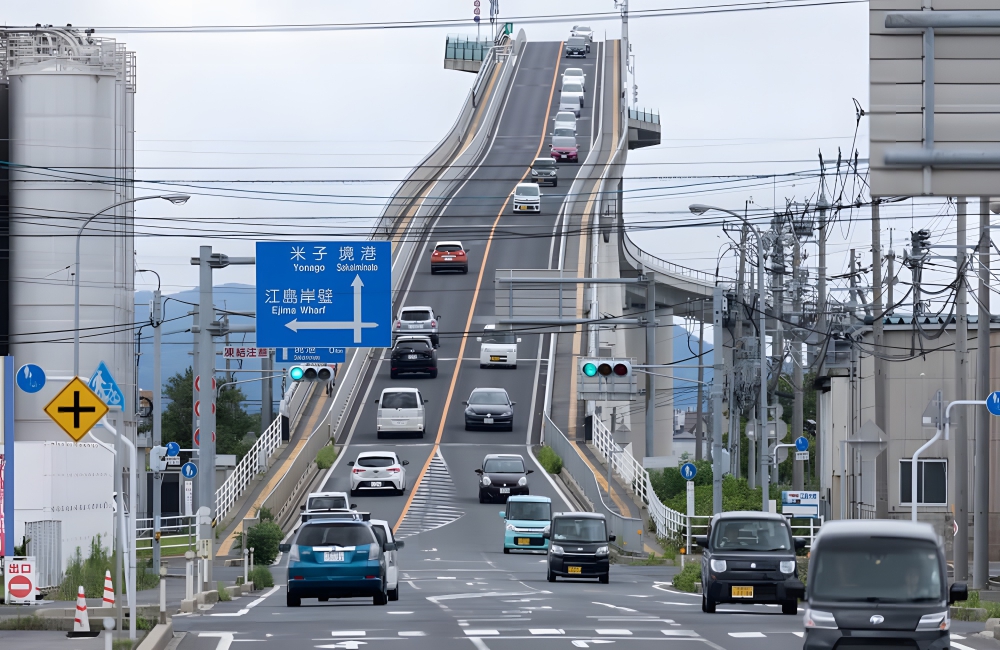
Eshima Ohashi ©AGATAFOTO / Shutterstock
The reason for the steepness is to allow larger ships to more easily pass under the roadway. However, the Bridge actually has just a 6.1% gradient on one side and an even less-steep 5.1% gradient on the other, making it a unique optical illusion. Eshima Ohashi is 1.06 miles long and 147 feet in height. It cost
50. Moses Bridge
Located in: The Netherlands
Established: 2010 (1628 for Fort de Roovere)
Cost: $330,325*
The Moses Bridge’s site has been around since 1628, but it was called Fort de Roovere back then. It was created by Maurice of Nassau during the Eighty Years War as part of the Hollandse Waterlinie (Dutch Water Line). The Moses Bridge joined others of its kind as a part of a group of water-based defenses.
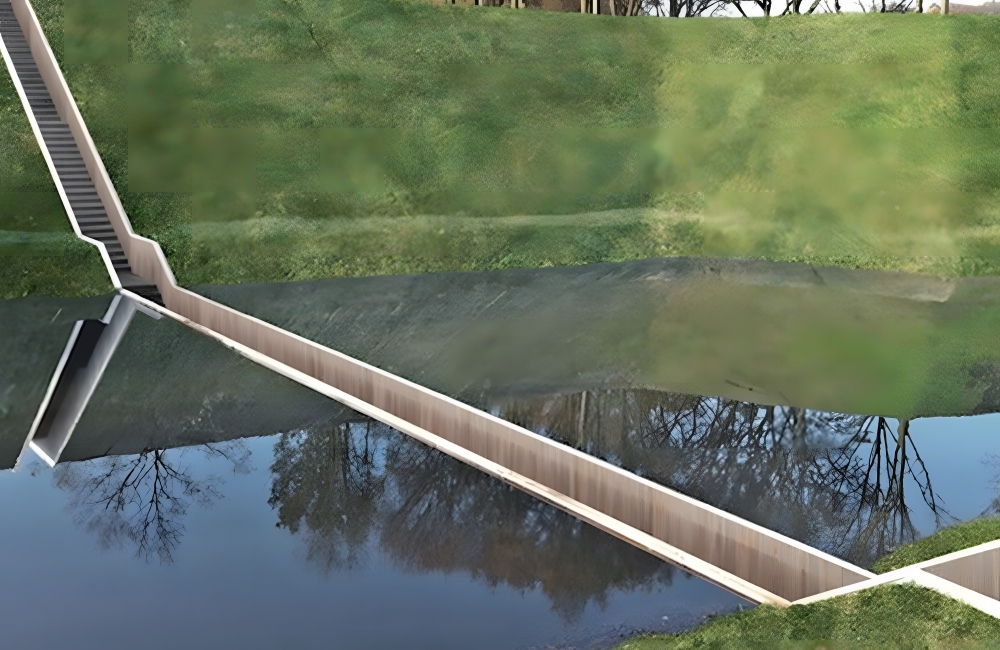
Moses Bridge @Imaan Khalil / Pinterest
The Moses Bridge is partially-submerged. RO&AD Architecten, the firm behind the Bridge, built it in 2010. It divides the moat in two. The clearing of Fort de Roovere was met by many protesters, who felt that there wasn’t enough architectural research done on the many battles in the area.
51. Slauerhoffbrug
Located in: Leeuwarden, Netherlands
Established: 2000
Cost: $1-$3 million*
Designed by Van Driel Mechatronica, the Slauerhoffbrug is truly a small engineering wonder. It is a fully-automatic tail bridge (AKA a bascule bridge) in the Netherlands. The Slauerhoffbrug connects the Slauerhoffweg over the Harlingervaart. The bridge was opened to the public in 2000.
Slauerhoffbrug ©Adrie Oosterwijk / Shutterstock
It uses two arms, which swing part of the road in (and out) of place. The deck of the bridge measures around 50 feet, while the bridge is also around 50 feet long. The movable bridge has been nicknamed “The Flying Drawbridge” in the press. It is painted in blue and yellow, which is the color of Leeuwarden, Netherlands’ flag and seal.
52. Mathematical Bridge
Located in: Queens’ College, Cambridge, UK
Established: 1749 (Rebuilt in 1866 and 1905)
Cost: Unknown
The Mathematical Bridge is a wooden footbridge in Cambridge. It crosses the River Cam, and its official name is “Wooden Bridge.” It got the moniker after a popular fable credited famous physicist Sir Isaac Newton with designing and building the bridge without using nuts or bolts. The story goes that Newton used just mathematical equations to design a sturdy bridge.
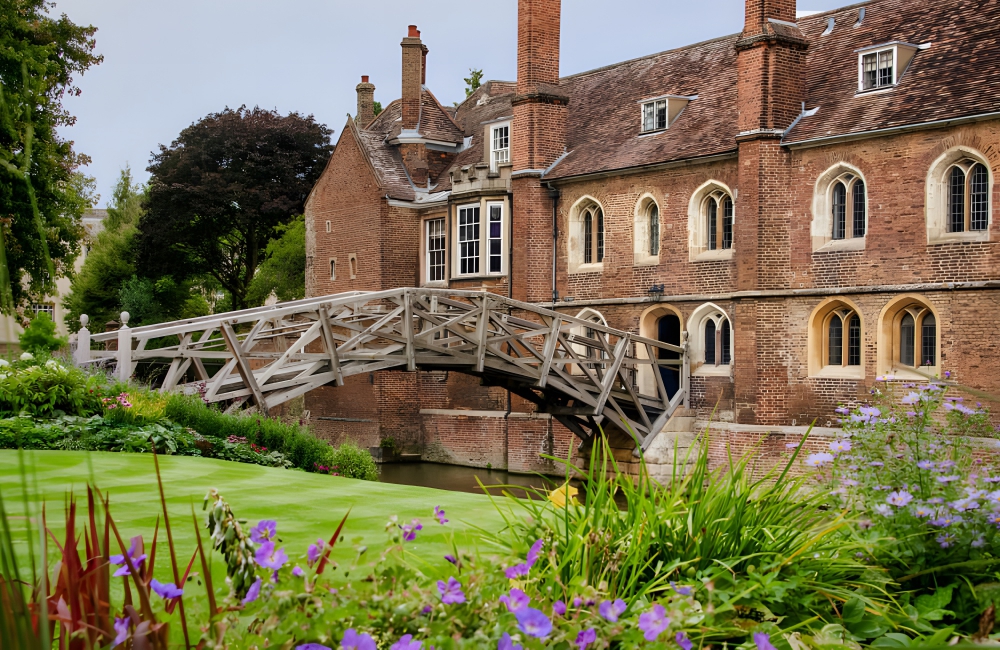
Mathematical Bridge ©JoanneJean / Shutterstock
This popular tale proved untrue, as Sir Isaac Newton died before the bridge was built. However, Leonardo Da Vinci did come up with the design for an almost identical bridge in the 1490s, so perhaps the mystery builder has Da Vinci to credit for his inspiration.
53. Captain William Moore Bridge
Located in: Skagway Municipality, Alaska
Established: 1976
Cost: $64.85 million*
In 1974, engineers with the State Department of Alaska came up with the design for the Captain William Moore Bridge. The Bridge is a cable-stayed, single-pylon bridge that spans Moore Creek Gorge. It connects Skagway, Alaska with Whitehorse, Yukon. Before the Bridge was constructed, the two areas could reach one another only by railroad.
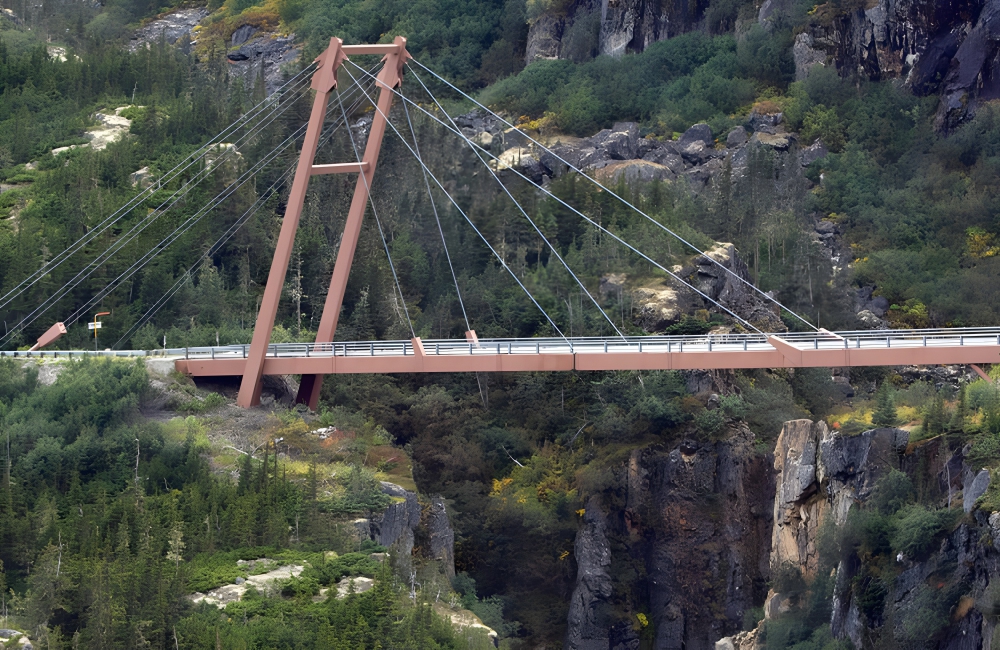
Captain William Moore Bridge ©Steve Smith / Shutterstock
The William Moore Bridge has anchors only at the south bank end in order to minimize damage from earthquakes, as the Moore Gorge is seated along a fault line. The original Captain William Moore Bridge was repurposed as a historic attraction and pedestrian viewpoint, while another buried bridge was opened for traffic.
54. Crab Bridge
Located in: Cocos Islands & Christmas Island, Australia
Established: Unknown
Cost: Unknown
The Christmas Island red crab is native to the Indian Ocean’s Cocos Islands and Christmas Island. These giant crabs emerge from their homes to mass-migrate every year. The mass migration process is an amazing feat, as the crabs look like a red sea, crossing the islands.
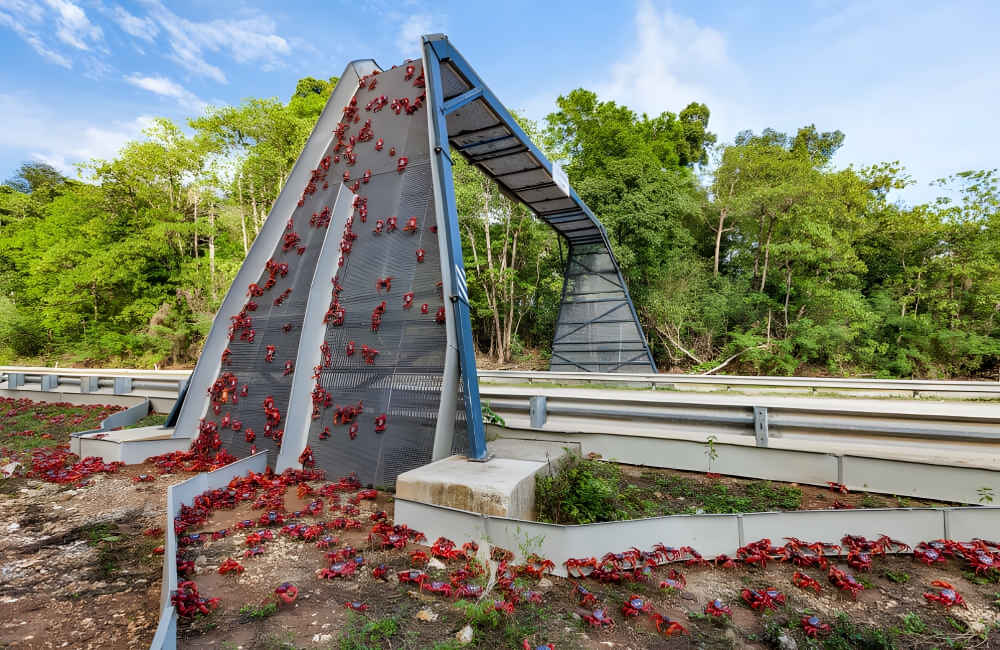
Crab Bridge @CrabParra / Twitter.com
The locals who live on Christmas Island and the Cocos Islands decided to give the crabs a hand. Constructed on the island are crab bridges and tunnels, which help the crabs make the treacherous journey across the island more safely. Millions of red crabs use these bridges, which public notice boards ban humans from using.
55. The High Line
Located in: Manhattan, NYC, New York
Established: 2009
Cost: $152.3 million*
The High Line, located in Manhattan in New York City, is a greenway, rail trail, and elevated linear park. A former NY Central Railroad spur was repurposed to form the High Lane. James Comer Field Operations, Piet Oudolf, and Diller Scofidio + Renfro renovated the abandoned spur, redesigning it as a “living system.” Since its opening in 2009, the High Line has become a contemporary landscape icon.
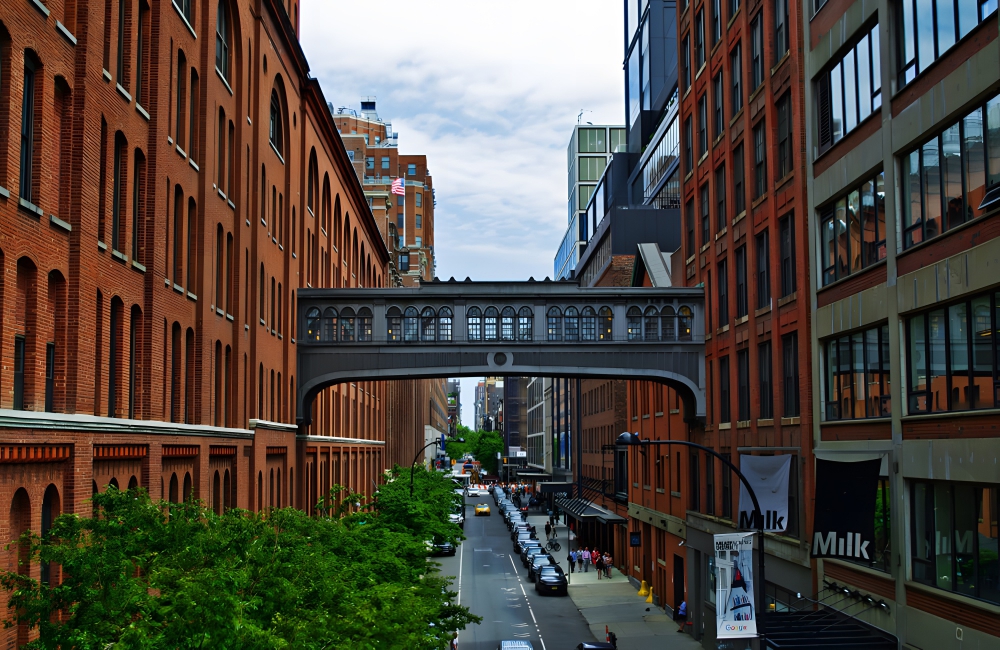
The High Line @SolieT / Shutterstock
The designers were inspired by the 2.9-mile-long Promenade plantee, located in Paris, which repurposed a railway into a park in 1933. The High Line has inspired American cities to repurpose old railways into beautiful, eco-friendly urban parks. The High Line draws eight million visitors a year.
56. Da Vinci Bridge
Located in: Nygard, As, Akershus, Norway
Established: 2001
Cost: $2.03 million*
The Da Vinci Bridge is part of the larger Vebjorn Sand da Vinci Project. The Bridge is a parabolic-arch, laminated-wood pedestrian bridge that crosses over Route E18 in Norway. Artist Vebjorn Sand and the Norwegian Public Roads Administration partnered to create this feat, which was partially based on designs by Leonardo Da Vinci himself.
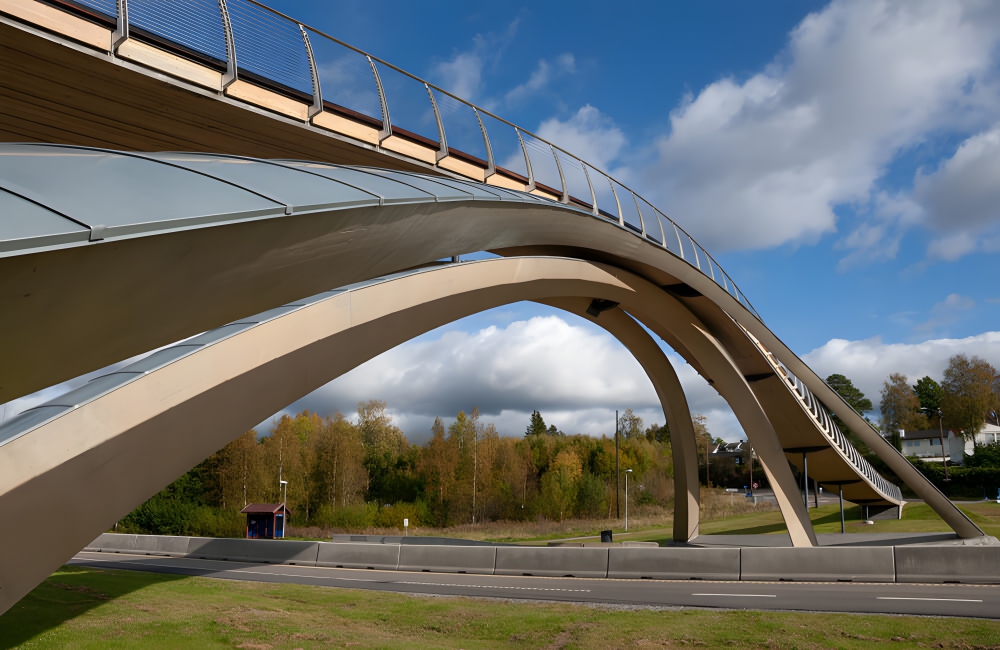
Da Vinci Bridge ©Nick Photoworld / Shutterstock
Da Vinci presented designs for a 1,201-foot bridge in 1502 to the Sultan of Constantinople. The sketch would have been the world’s longest bridge, but the Sultan didn’t want to implement it. Vejborn proposed an altered version of Da Vinci’s original sketch to the NPRA, which, unlike the Sultan, approved the project in 1997. It opened to the public in 2001.
57. The Living Roots Bridge
Located in: Pynrusla, India, Nongriat Village, India
Established: 1844 (First Written Record)
Cost: $0*
Living root bridges are types of simple suspension bridges. They are formed by tree-shaping, which is a practice of guiding the roots of a tree (usually Ficus elastica) across a river or stream. Then, you wait, allowing the roots to strengthen and grow over time. It can take decades before a living root bridge is able to hold human weight.
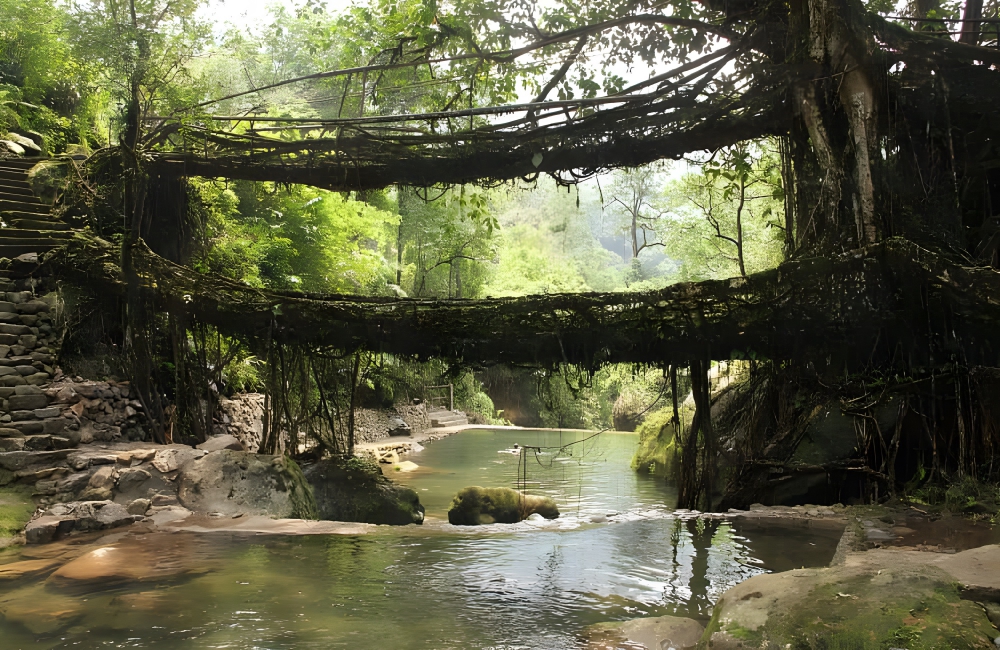
The Living Roots Bridge ©/
The most famous of these bridges is the Living Root Bridge, which is 164 feet long and located in Pynursla, India. Another famous Living Root Bridge is the Nongriat Village’s Double Decker Bridge. The exact date that these bridges formed is unknown—the first written record was in 1844, when a British colonel detailed in his diary his “astonishment” at their growth.
58. Hanging Bridge of Ghasa
Located in: Lete, Nepal
Established: Unknown
Cost: Unknown
Listed on several websites as one of the most dangerous bridges in the word, the Hanging Bridge of Ghasa is located in Lete, Nepal. It provides access for not only people in neighboring Nepalese villages, but also cattle. Shepherds ferry their livestock across daily.
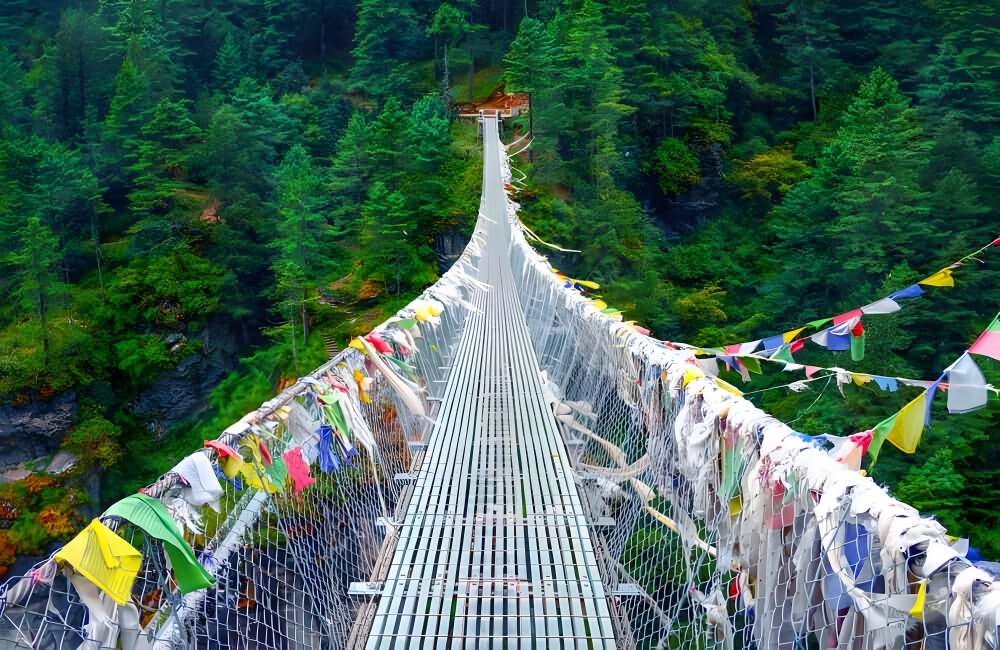
Hanging Bridge of Ghasa ©Vixit / Shutterstock
Though it is used often by locals, the bridge would definitely not be approved for pedestrian use nationally. The narrow bridge is hundreds of feet over a mountain valley, and it is unstable and shakes badly in the wind. Shepherds, according to locals, have to put blinders on their herds sometimes to prevent them from becoming too afraid to cross.
59. Shaharah Bridge
Located in: Anhum Mountain Range, Yemen
Established: 1600s
Cost: $1.693 million*
The Shaharah Bridge is located in the Ahnum Mountain Range in Yemen, about eighty-seven miles from the country’s capital city of Sana’a. The Shaharah connects the Jabal al Faish and the Jabal al Emir, stretching across the canyon that spans the two mountains. The Shaharah clears 300 feet, and it stretches 65 feet.
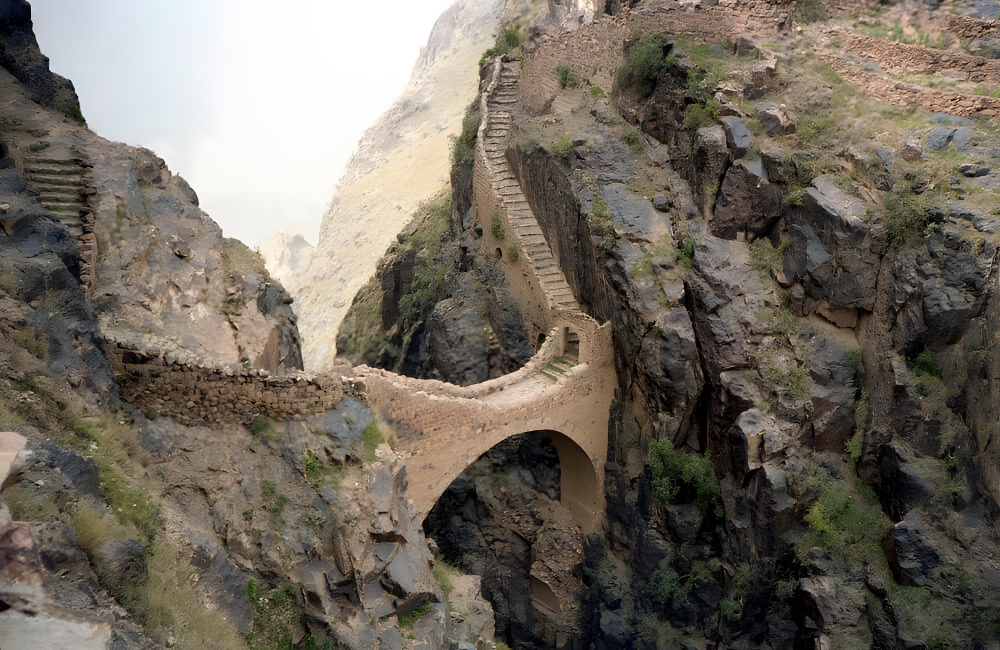
Shaharah Bridge ©Bernard Gagnon / Wikimedia.org
The Shaharah is made of limestone, which is very abundant in the region. The bridge was designed to be easily-destroyed in the event that the Turkish military attempted an invasion. It not only serves as a functioning bridge, it is collapsible, as the limestone can crumble with the assistance of merely a giant hammer.
60. Kawarau Gorge Suspension Bridge
Located in: Otago, South Island, New Zealand
Established: 1880
Cost: $1-$5 million*
The Kawarau Gorge Suspension Bridge was the first-ever commercial bungee-jumping site in the world. It crosses the Kawarau River, which is located in Otago, New Zealand. The bridge is used by the AJ Hackett Bungy Company. It forms part of Queenstown Trail, a popular New Zealand trail that lets bikers and pedestrians pass across the Kawarau River.
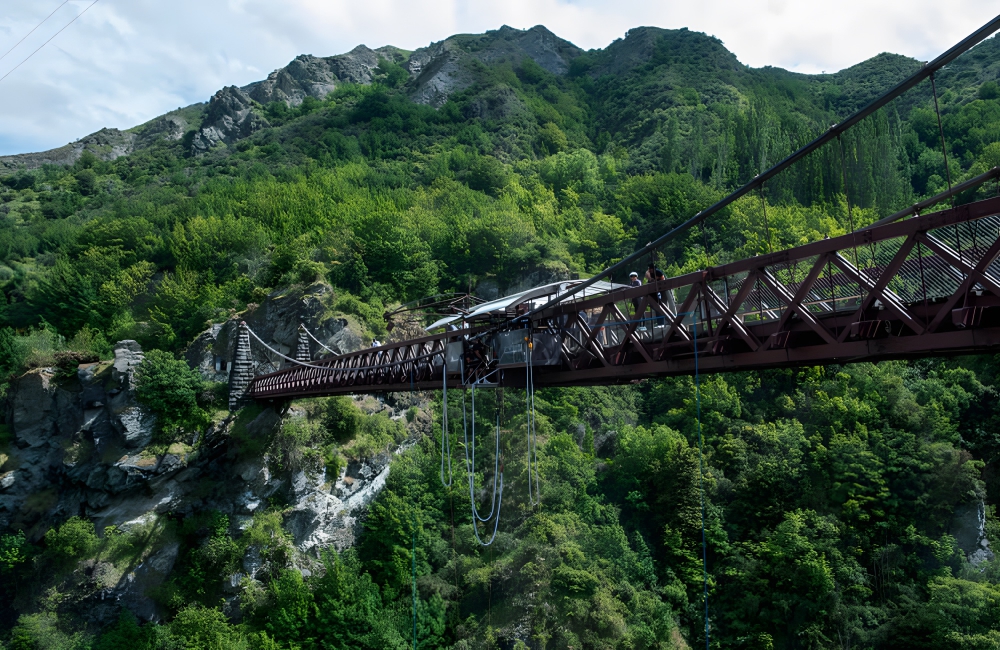
Kawarau Gorge Suspension Bridge ©Zuhairi Ahmad / Shutterstock
Built in 1880, the Bridge’s lead designer was Harry Higginson. The Bridge helped miners access the Central Otago goldfields. In 1963, the bridge got a highway added near it, which relegated the Kawarau Gorge Suspension Bridge to a tourist attraction and Category I historic place.