
121. Oxygen Mask
What it is: Oxygen mask powered by a plant
Invented: 2013
Average Price: Unknown
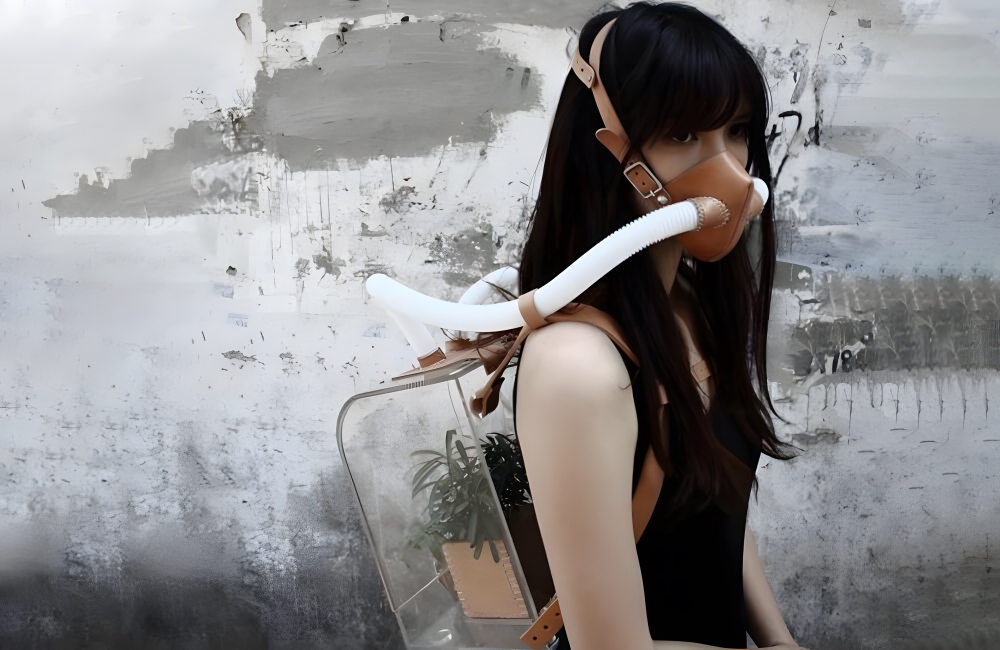
Chiu Chih created this dystopian oxygen mask that is sure to creep people out (and make a strong statement about the state of our environment). The oxygen mask attaches to a backpack through two tubes, and the backpack contains a plant for filtering oxygen. Chih titled her project “Voyage on the Planet.”
Kaido Racers @abeer0975 / Pinterest
When creating her vision, the designer said she envisioned a world fallen into disrepair, where the air was so poisoned that you could only breathe with the help of a plant companion. As CNET said, it was more an artistic statement than an actual working, viable oxygen tank.
122. Ramen Noodle Bath
What it is: Bathing in a vat of pork ramen noodles
Invented: 2015
Average Price: $28.63 per hour*
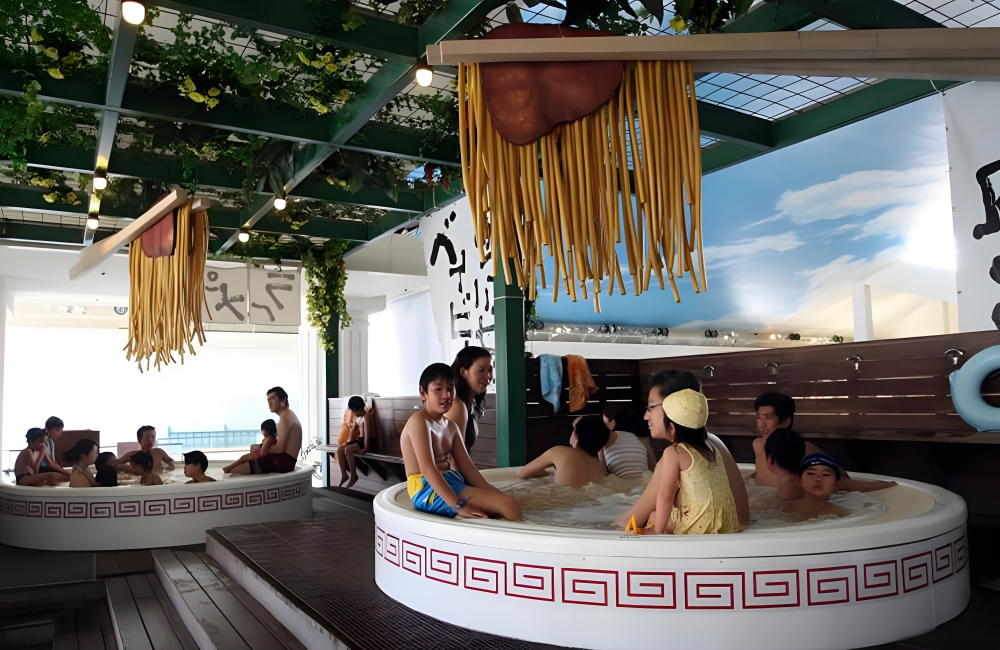
Ramen noodles are a nice snack for when you’re low on cash and want some noodles, but, in Japan, they serve another purpose. In Japan, there are centuries-old traditional bathhouses. One such bathhouse, Hakone’s Yunessun Spa Resort, has taken the tradition and given it a twist.
Ramen Noodle Bath ©hadiadnanhameed / Pinterest
Instead of soap and water, you can, instead, bathe in a vat of ramen noodles. The bathhouse says that the “pork-based broth” has “collagen,” which will help promote “beautiful skin.” If ramen noodle baths don’t appeal to you, don’t worry. Yunessun Spa also has green tea baths, sake baths, and even coffee baths.
123. Sea Lion Curry In A Can
What it is: Curry made from the meat of sea lions
Invented: Unknown
Average Price: $25 per can*
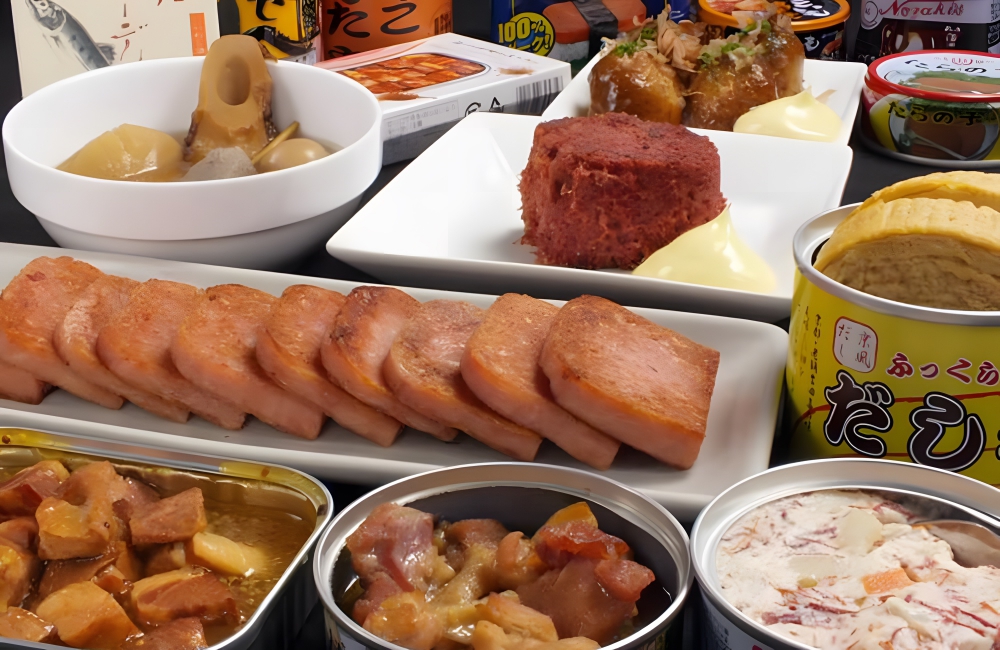
Mr. Kanso is a chain of restaurants with a twist—instead of serving meals on plates, they serve canned food. These canned food bars appear to have taken off, and there are forty locations (and counting) in Japan. Diners can choose from over three-hundred dishes.
Sea Lion Curry In A Can @arrk3202 / Pinterest
And not all of these dishes are regular old canned food. There are eccentric plates like sea lion curry, French salad in a tin, and the chrysalis of a Korean silkworm. The sea lion curry joins bear curry as one of the more unusual meat dishes made from the meat of wild animals.
124. Dekotora Trucks
What it is: Trucks decorated with extravagant art and lights
Invented: 1970s
Average Price: $200,000*
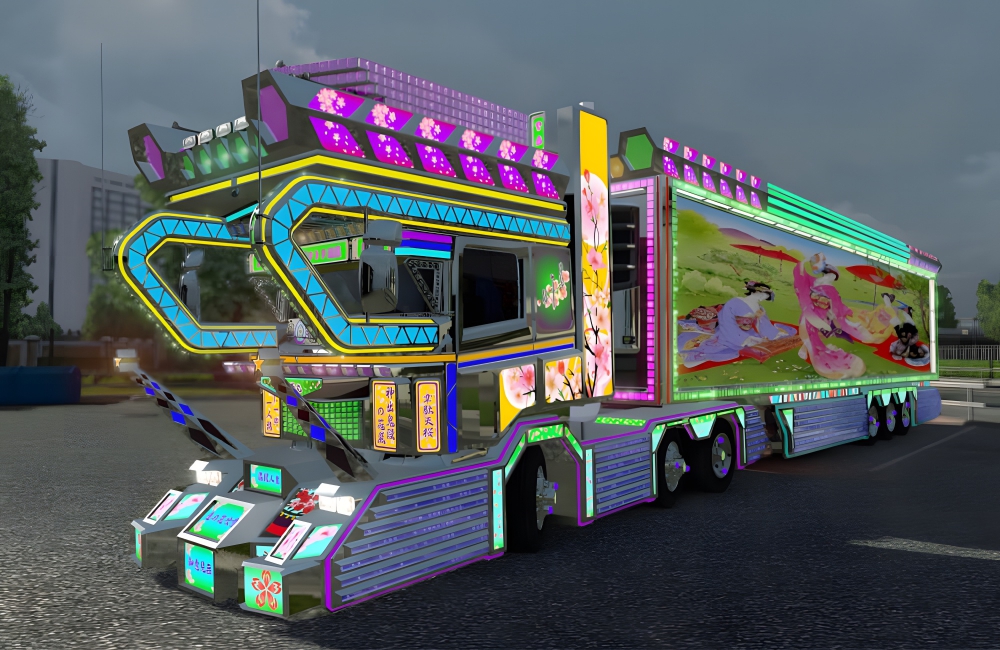
Dekotora Trucks, also known as “Atotorakku” or “Art Trucks,” are regular trucks with extravagant decorations made of paint, lights, neon signs, and stainless steel and golden parts. Dekotora trucks can be made by pretty much anyone, whether workers having a bit of fun with their work trucks or hobbyists making them for special events.
Dekotora trucks @rvryt / Pinterest
These trucks date back to 1975, when Toei released the first of ten Torakku Yaru movies, which featured Dekotora trucks. People, inspired by the beloved film, began making the cars themselves, and, by the ‘90s, there were even different styles of Dekotora, including Kansai-, Kanto-, and Retro-style trucks.
125. Holiday Resort Island For Bunnies
What it is: An island inhabited by bunnies
Invented: 1946
Average Price: $5.92* (Round-Trip Ferry Ride)
The best island in the world isn’t some sun-soaked paradise, it is actually a small island off the eastern coast of Hiroshima, called “Bunny Island” (it’s real name is Okunoshima). Bunny Island is occupied by hundreds and hundreds of very cute, wild rabbits that roam the island, following tourists around for food.
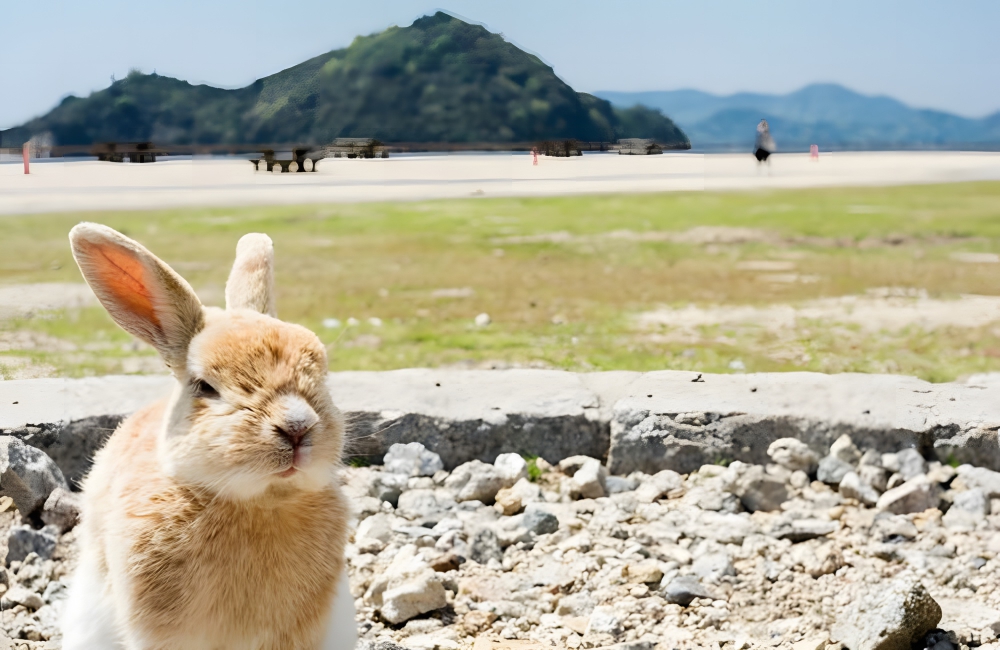
Holiday Resort Island For Bunnies @minako2593 / Pinterest
You can pet all the bunnies, as they’ve grown pretty comfortable with humans. Bunny Island draws tourists from around the world who go to see the adorable fluffy rabbits. An entire tour of the island, with its vistas and ruins, takes two hours, but that time will be more, if you stop to pet every rabbit you see.
126. Puppy Vending Machine
What it is: Vending machine that sells puppies
Invented: 2009
Average Price: $100-$130*
The vending machine culture in Japan is a sight to behold, and there are few items that a vending machine over there won’t vend. Even puppies can’t escape the vending machine world, and this puppy vending machine captivated everyone in Tokyo. It was closely followed by a kitten vending machine.
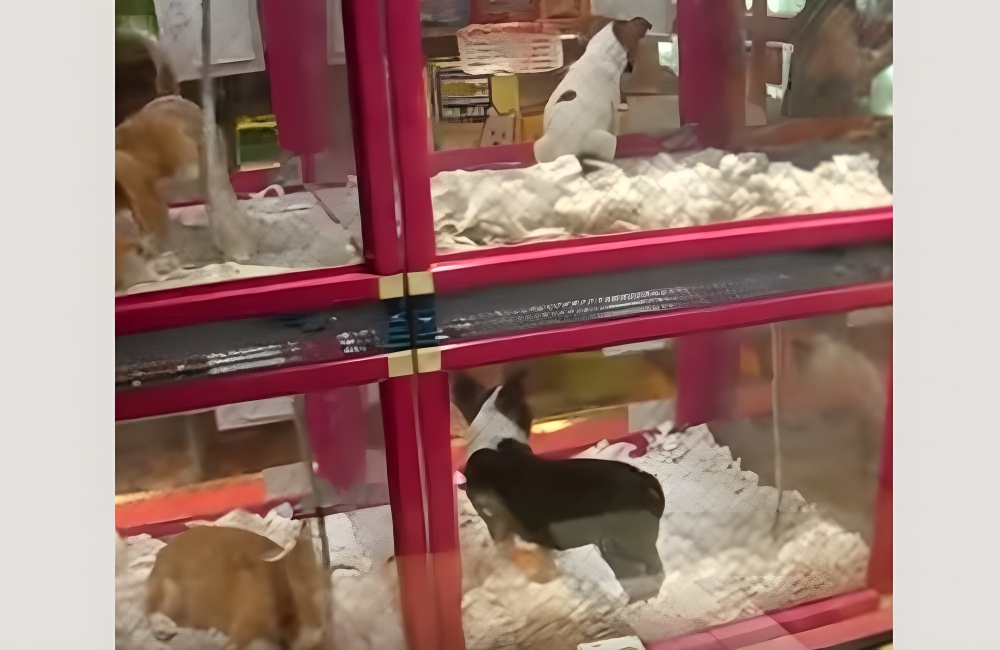
Puppy Vending Machine @aprenderjaponesfacil / Pinterest
Each clear box holds one of the baby animals, and there is a door attached to the front. Each of the puppies and kittens are individually priced. You simply put in the number of the baby you want, and it vends him or her to you. Let’s hope the animals aren’t stuck in there all day.
127. Hachinoko
What it is: Canned, candied wasp larvae snack that’s commonly eaten in Japan
Invented: Unknown
Average Price: $37*
One of the great things about different cultures is the opportunity to look at the world anew. Things we’d never eat in the West get a second chance at being dinner over in countries like Japan. Wasps and bees are delicacies, especially in central Japanese regions like Chubu.
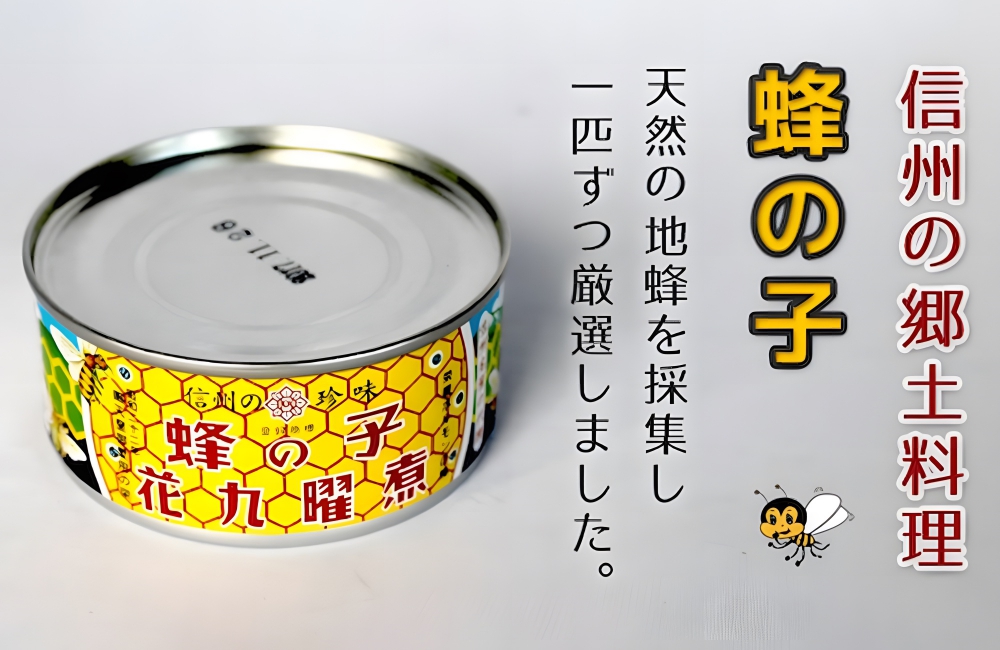
Hachinoko (Wasp Larvae Snack) @jirek / Pinterest
Mature wasps are often eaten, though they’re reportedly not as delicious as the wasp larvae that fills up wasp nests. You can even find these larvae in cans in supermarkets. So, what do they taste like? According to SplendidTable.org, they have a “sweet nuttiness” that is really brought out if you give them a “slight char on the grill.”
128. Human Contact Store
What it is: Cafe that sells cuddles and warm hugs
Invented: 2012
Average Price: $77/hour*
Need a hug? If you’re living in Tokyo, you can actually buy one. The Soineya Cuddle Café, located in Akihabara, is a “co-sleeping specialty shop.” The shop opened in 2012 with a very specific service in mind: cuddles and warm hugs.

Human Contact Store @woemedia / Pinterest
You can take a nap while being cuddled in the café. The fee is pretty pricey, costing around $77 an hour or $640 for ten hours. You also have to pay an extra fee if you want to specifically choose the girls with whom you’re cuddling. Extra add-ons include head petting and making eye contact for one minute.
129. Beer for the Blind
What it is: Beer cans stamped with the word “beer” in Braille
Invented: 2006
Average Price: $2-$5/can*
When you think about it, it’s amazing that this hasn’t become more commonplace. Visually-impaired people aren’t able to distinguish one can from the other. Someone hoping to crack open an ice-cold soda might end up taking a swig of beer, which could be disastrous, depending on the person.
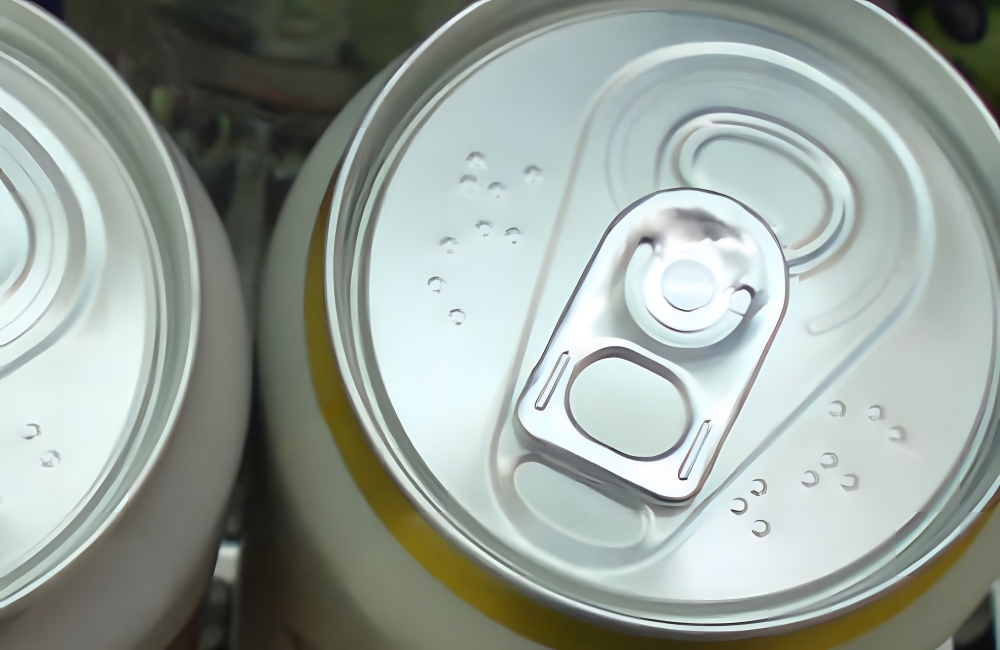
Beer Can Braille @u/pagesandpages / Reddit.com
In Japan, brewers began stamping “Beer” in Braille onto aluminum cans. The practice began in 2006. People needing extra help with the label can feel for the Braille near the tab, reading it to make sure it’s their intended beverage. Here’s to hoping we see something this progressive and widespread in the States soon.
130. Blue Traffic Lights
What it is: Blue traffic lights instead of green
Invented: 1930s
Average Price: $7,500*
If most of us saw a traffic light turn blue in the States, we’d stop the car. In Japan, they keep on going. Over there, there are blue traffic lights instead of green, and the reason why has to do with the Japanese language. Hundreds of years in the past, the Japanese language had words to describe black, white, red, and blue.
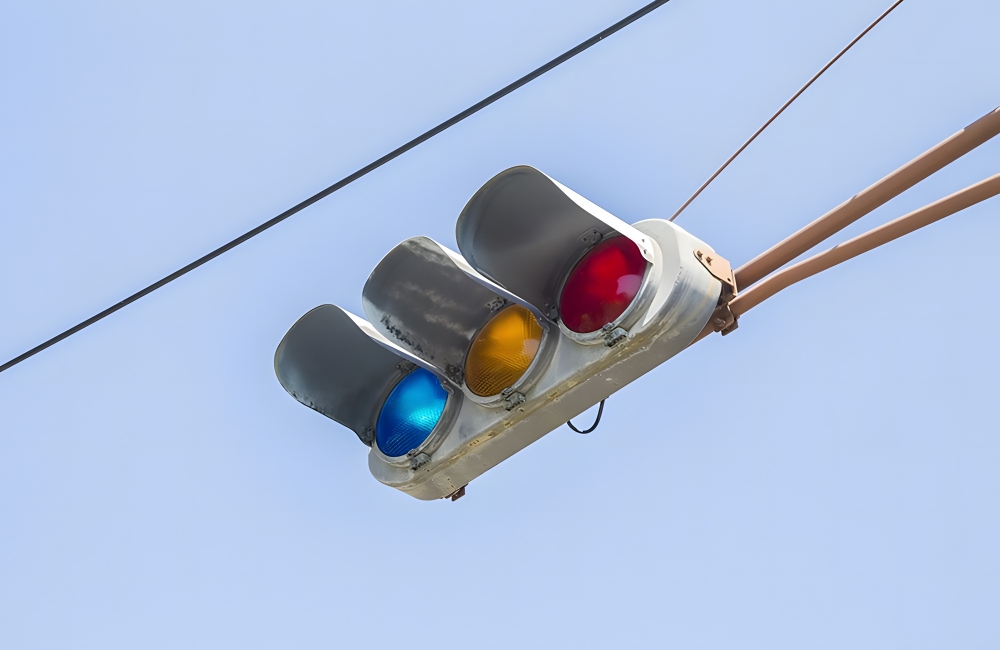
1024 Blue Traffic Lights © Salaryman / Shutterstock
Anything green was described with the same word used for blue: ao. Even when midori began to be used for green, midori was still considered a shade of ao. The overlap of the two led to blue go-lights.
131. Tuna Auctions
What it is: Auctions of heavyweight bluefin tuna for exorbitant prices
Invented: 2000s
Average Price: $3.1 million for a 613-pound bluefin*
Bluefin tuna is one of the largest species of tuna, and these fish can grow to 500 pounds, if not more. They are endangered, and part of the reason for that endangerment is their use in sushi. There’s only so many bluefin in the ocean, and the price has been driven up for these fish as demand increases and supply decreases.
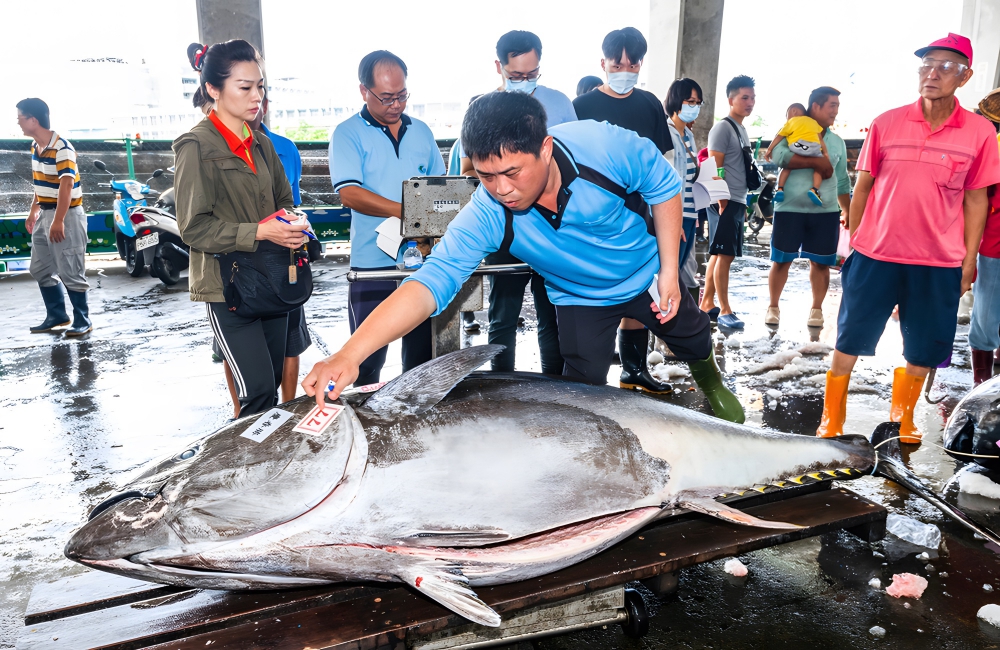
Tuna Auctions ©Jack Hong/Shutterstock
There are even tuna auctions in Japan. In January of 2021, one restaurant chain owner, Kiyoshi Kimura, paid $3.1 million for a 613-pound bluefin tuna that had been caught off the coast of the Aomori prefecture. This was nearly double what Kimura had paid for a similar tuna six years ago at auction. Tuna auctions are a lucrative business in Japan, to say the least.
132. Pachinko “Gambling”
What it is: A type of gambling that is legal in Japan (where gambling for cash is illegal)
Invented: 1920s
Average Price: $0.01-$0.05 per token*
Pachinko is a type of arcade game that also doubles as a gambling device. It fills the same niche as slot machines do in the West. Although it is illegal to gamble for cash in Japan, low-stakes pachinko gambling has managed to find a loophole. Pachinko balls won in the arcade games cannot be exchanged for cash or removed from the premises.
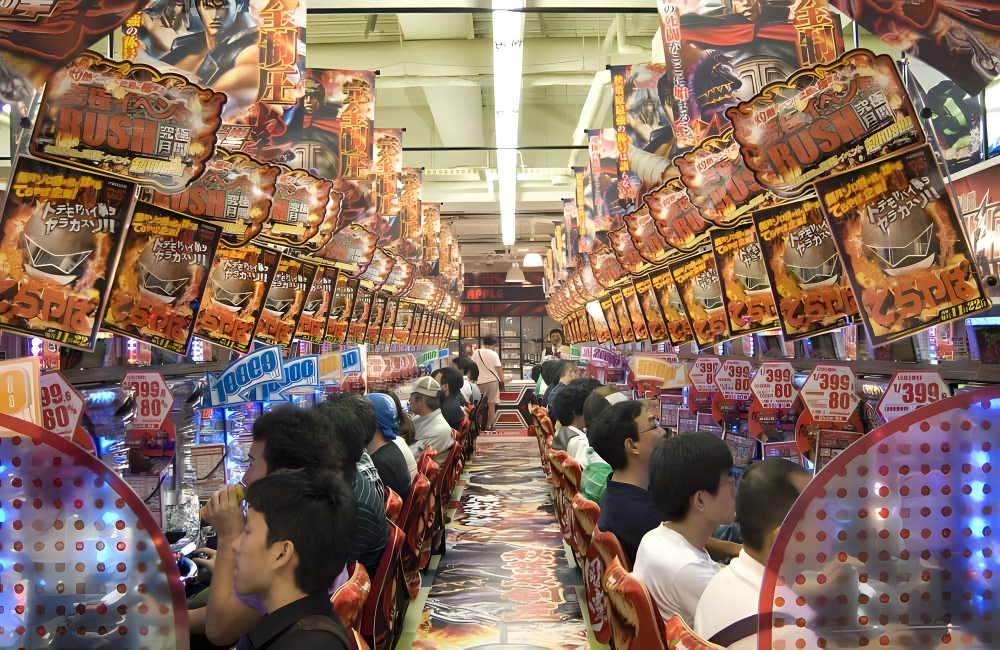
Pachinko “Gambling” @gamingguide / Pinterest
They can, however, be traded to the parlor for tokens, which, in turn, can be exchanged for cash to an off-premises third party. Pachinko parlors are big money makers, as they rake in around $188 billion per year in revenue.
133. Umbrella Vending Machine
What it is: Vending machine that sells umbrellas
Invented: Unknown
Average Price: $9-$15/umbrella*
As mentioned before, vending machine culture in Japan ranges from downright crazy to actually quite useful. If you’re caught in a surprise rainstorm and don’t have an umbrella, you can stop at an umbrella vending machine to purchase one.
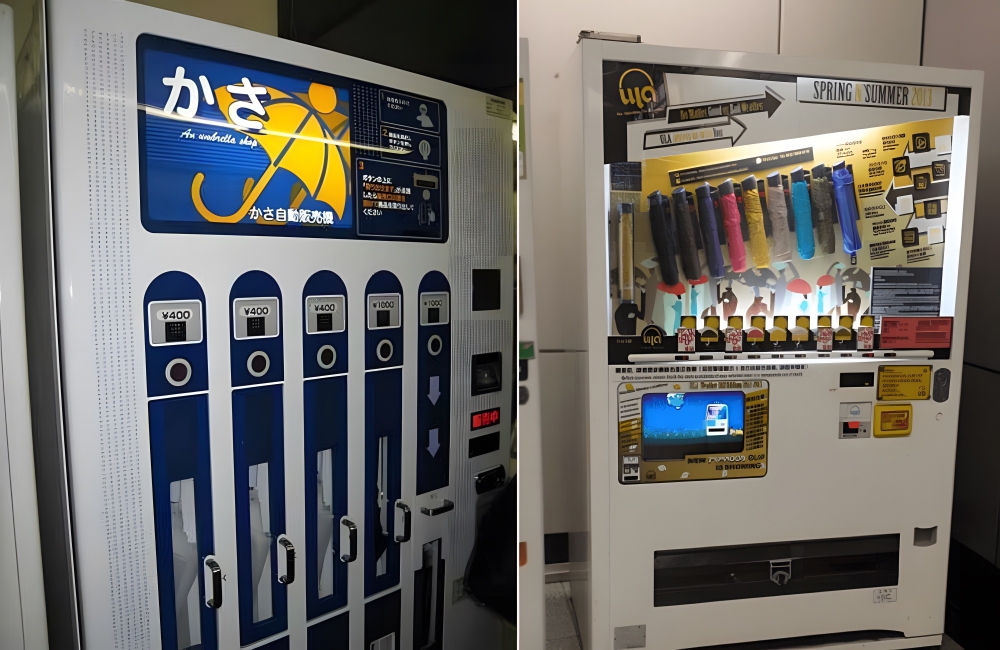
Umbrella Vending Machine @onecreativechic / Pinterest
These machines exist all over Japan, letting you buy umbrellas on the go for $9-$15, usually. This is pretty helpful, considering that the Asian nation gets a lot of rain every year. It’s a rainy country with a lot of humidity, though some regions are dryer than others. Either way, you never know when you’re going to need an emergency umbrella.
134. White Strawberries
What it is: Strawberries with white skin
Invented: 2010s
Average Price: $10/strawberry*
White strawberries are a luxury item in Japan, boasting a $10 per strawberry price tag. These berries were invented in the 2010s, and looking at them feels like you’re seeing an optical illusion. White strawberries are made by crossbreeding a variety of strawberries.
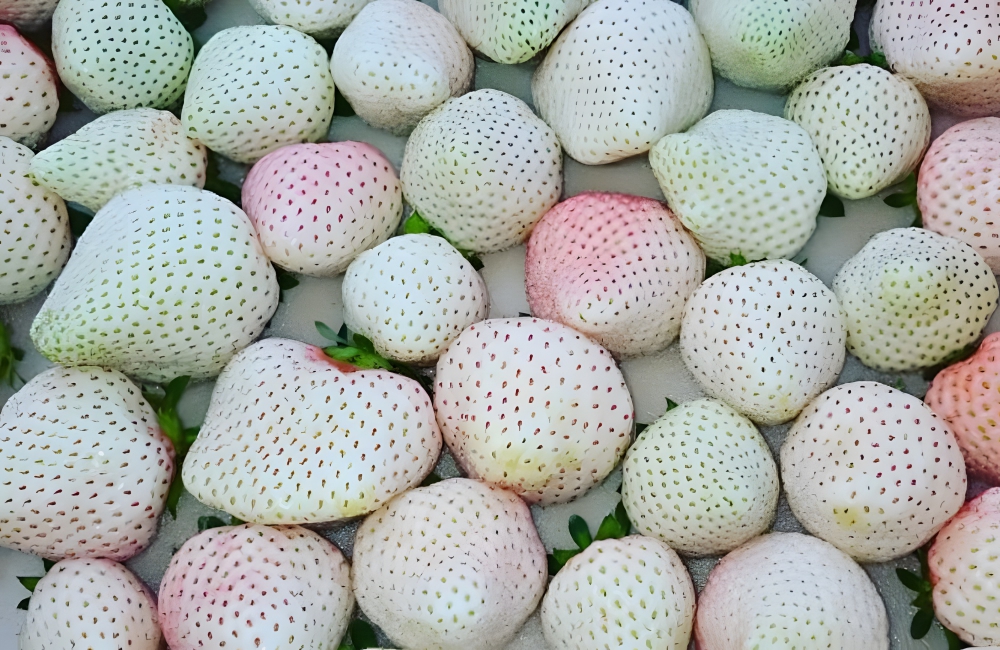
White Strawberries @sophiecmartinea / Pinterest
The process takes years, and, even when it’s successful, these berries are still relatively rare, hence the high price tag. Though the strawberry might be colorless, the flavor is anything but. Taste-testers describe the flavor of these albino berries as “sweet” and even a little “reminiscent of pineapple.” Not all varieties can be found on the market, but those that can are major money-makers for farmers lucky enough to figure out the winning formula.
135. Cars With TV Screens
What it is: TV screen kits you can put in your cars
Invented: 2010s
Average Price: $15-$35/kit*
According to Japanese law, drivers can’t watch TV while they’re driving (seems reasonable). However, the law doesn’t say anything about occasionally glancing at a TV screen, and it’s that loophole that carmakers have exploited. Cars with TV screens exist in Japan, and automakers like Autobacs Seven say that they’re just “respond[ing] to…customers’ needs.”
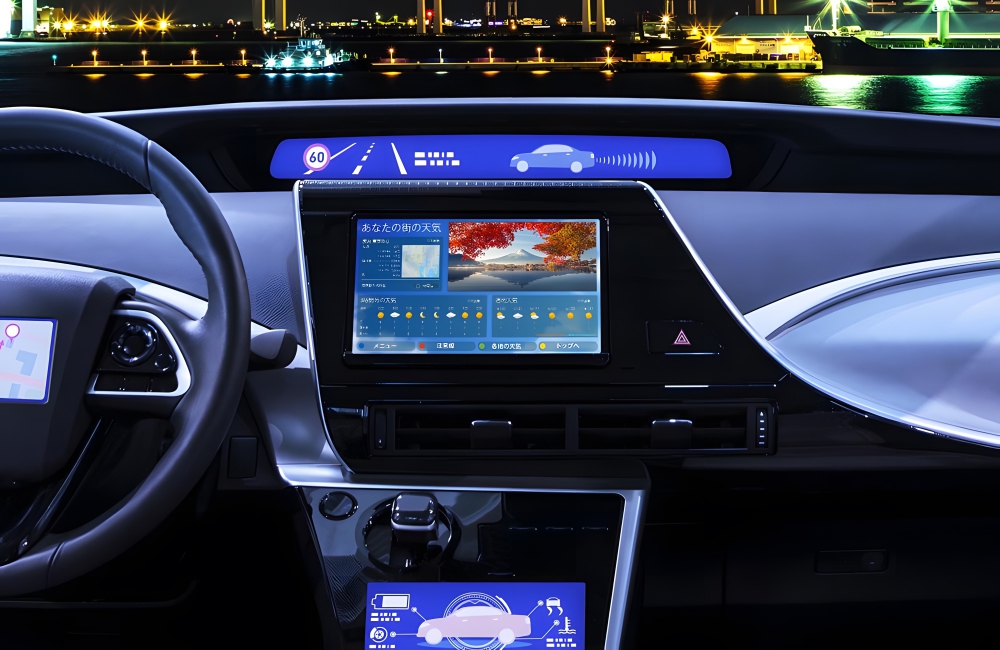
Cars With TV Screens @ella777111 / Pinterest
Front-seat TV viewing is nicknamed “Driving While Watching,” or DWW. As Autobacs spokesman Yasunari Shiino says, the customizers who put in these TV screens aren’t “recommending” DWW. Kits to put in a TV screen into your car are remarkably cheap, selling for $15-$35 at auto part stores.