
61. Global HET
Entered Service: 2008
Manufacturer: Oshkosh Defense
Cost: $15.08 million*
Oshkosh Defense introduced the Global HET twelve years ago. The HET is similar to the M1070A1, except in terms of configuration. The HET has three axles (as opposed to the A1’s four). Global HET was designed initially for the UAE’s Al Jaber Group, which needed a tractor unit for mounting the Jobaria MLRS onto it.
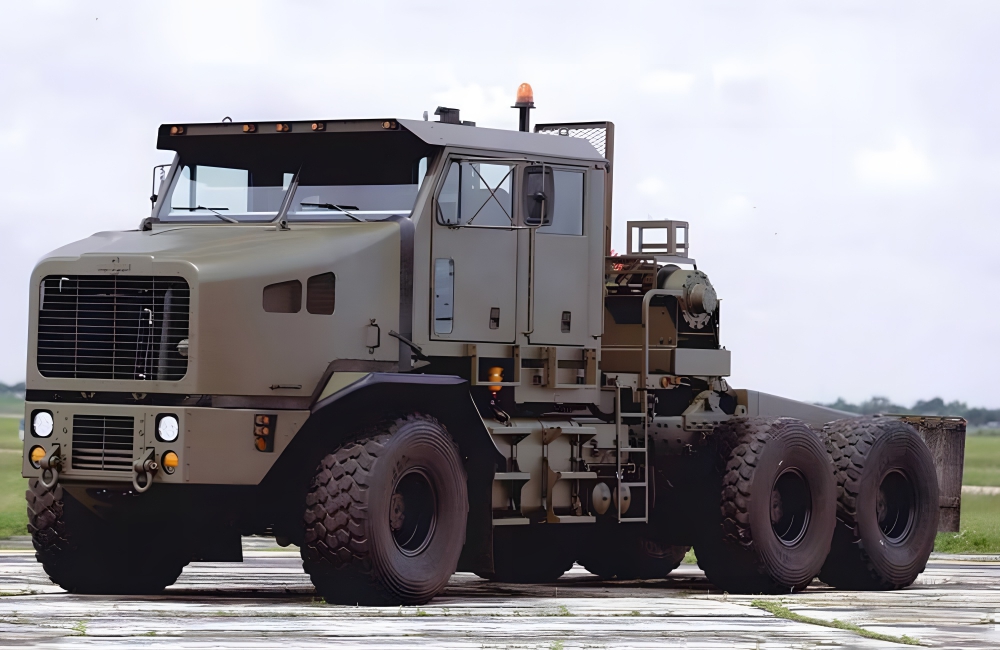
Global HET @americanbestthings / Facebook.com
The HET is a transporter tractor unit. The primary purpose is to transport an M1 Abrams tank. In addition to carrying a tank, it can also evacuate, transport, and deploy armored bulldozers, self-propelled artillery, and armored personnel carriers, in addition to the other heavy equipment and vehicles of all kinds.
62. Derivatsia-PVO
Entered Service: N/A (Still in trials)
Manufacturer: Uralvagonzavod
Cost: $1.862 million*
The Derivatsia-PVO is a Russian-designed vehicle. It is one of the newest armored vehicles in existence. The PVO is a SPAAA (Self-Propelled Anti-Aircraft Artillery) vehicle. It is lightly-armored and comes with a rapid-firing automatic gun. The PVO began trials in 2017, and it was designed by Uralvagonzavod.
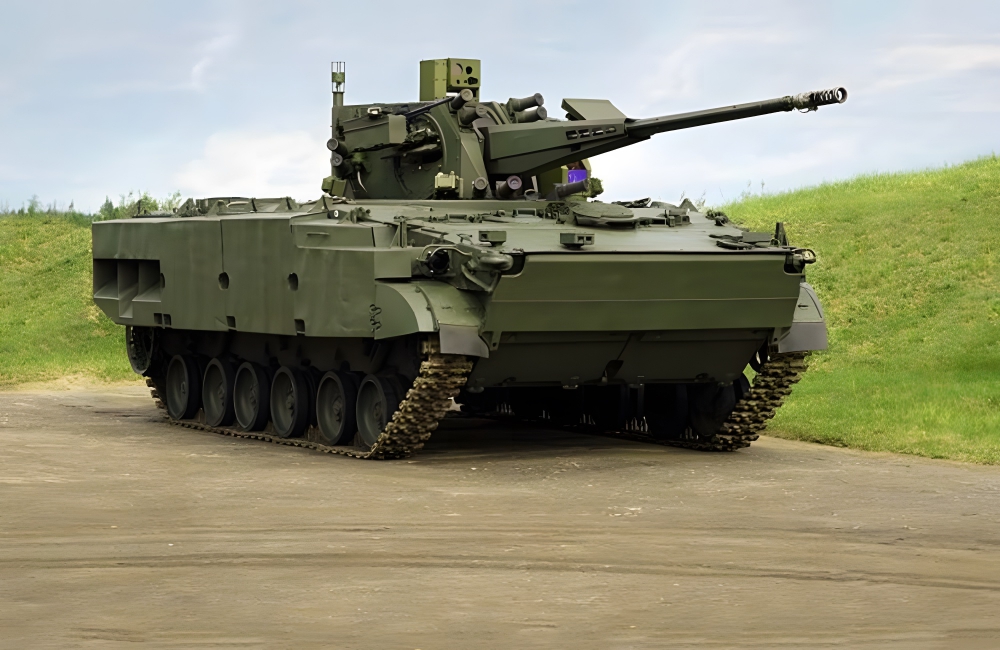
Derivatsia-PVO @Proelasi / Twitter.com
Russia has long been wanting a lightweight, self-propelled, low-level airspace denial system. The PVO fits all of these requests. The hull of the Derivatsia-PVO is based on the IFV from the BMP-3 series. The two look very similar—there is a horizontal glacis plate, flat sides, flat rear panels, and a flat roofline.
63. Black Knight Transformer
Entered Service: N/A (still in testing)
Manufacturer: Advanced Tactics
Cost: $1.98 million*
The Black Knight Transformer successfully completed testing in 2014. The Black Knight is a VTOL aircraft. Advanced Tactics is the designer behind this vehicle, which will be used by the Marines. The Transformer has the same capabilities as a helicopter and an off-road automobile. That’s right—it is a flying truck.
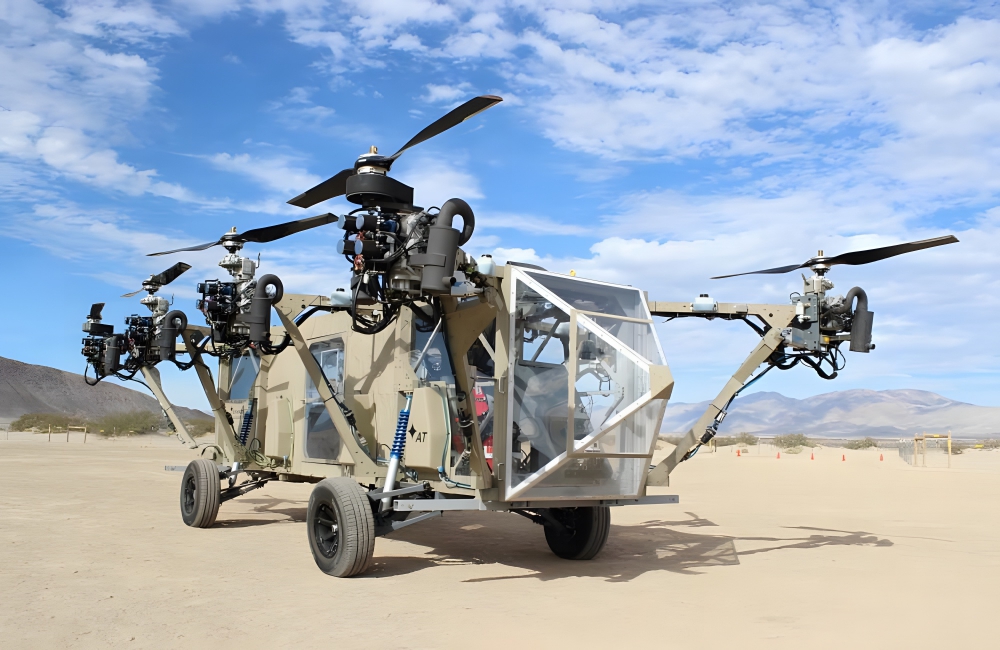
Black Knight Transformer @FstAviationData / Twitter.com
The Black Knight is the largest multicopter of its kind in the world. Its maximum takeoff weight is 4,400 pounds. The Black Knight is designed to protect pilots during dangerous missions. The multicopter’s acceptance as a military vehicle is growing, and Advanced Tactics is designing a whole fleet of them for US use.
64. M9 Combat Armored Earthmover
Entered Service: 1970s
Manufacturer: United Defense
Cost: $300 million (total program cost)*
Move or be moved. The M9 Armored Combat Earthmover (AKA ACE) is a mobile armored vehicle. The ACE provides support to front-line forces and is used by combat engineers. The M9 came from the Universal Engineered Tractor. The ACE is a tractor, scraper, and dozer, and it was first fielded in the mid-eighties.
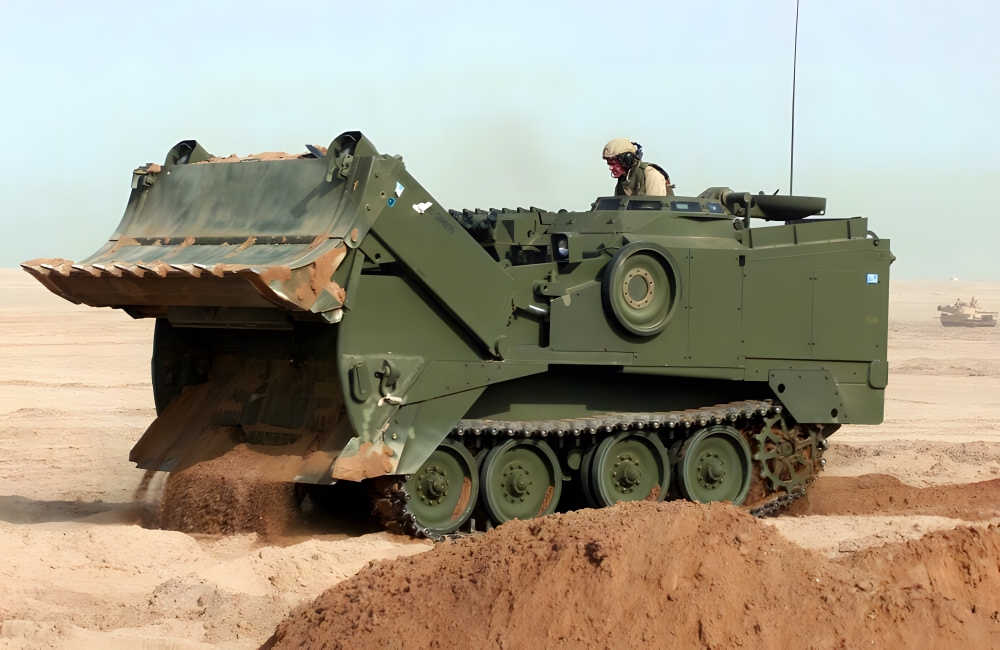
M9 Combat Armored Earthmover @shiensyaryo_bot / Twitter.com
It can support troops in both defensive and offensive operations. It performs tasks like digging hull fighting positions, breaching berms, preparing combat roads and anti-tank ditches, removing roadblocks, and bulldozing water obstacles. The M9 ACE weighs 24.4 tons (36,001 pounds), and it requires only one person to crew it. Its main armament is smoke dischargers.
65. Hanwha AS21 Redback
Entered Service: 2020
Manufacturer: Hanwha
Cost: $3.5 million*
Hanwha is a South Korean company. The defense company recently proposed the Hanwha AS21 Redback, which will be developed from the K21. The Redback will come with a 40mm automatic cannon. The AS21 Redback will be used by the Australian Army in its LAND 400 competition to determine the next IFV (Infantry Fighting Vehicle).
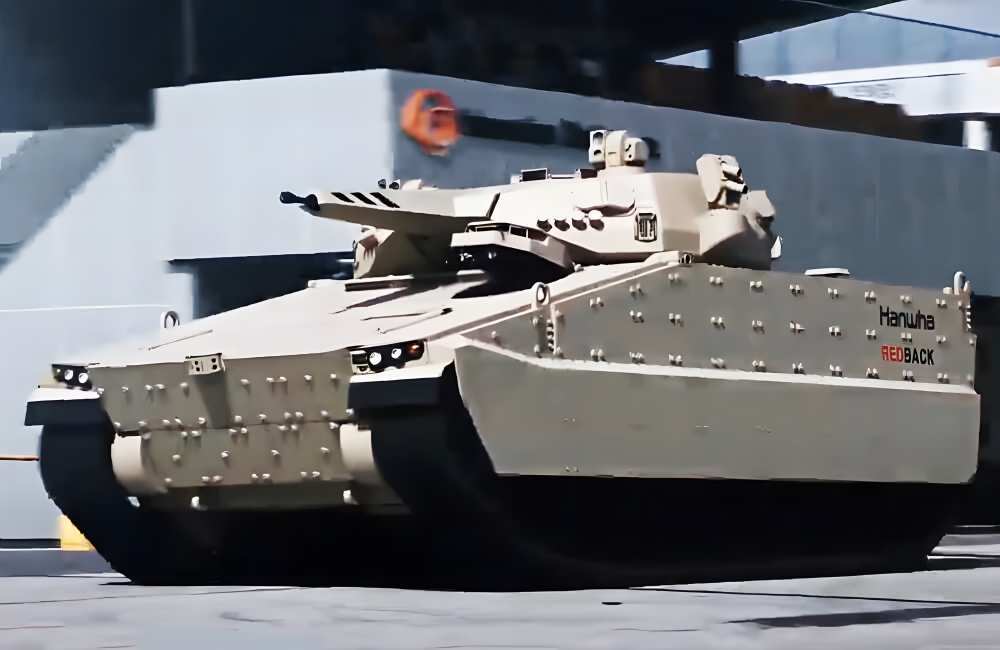
Hanwha AS21 Redback @IlkayEfetr / Twitter.com
The Redback is currently competing for the Land 400 Phase 3 competition against the Lynx K41 IFV. In the fall of 2019, the two were shortlisted for consideration. One of the coolest features on the Redback is the fire control system which can spot/track targets up to 3.7 miles away, and ID them positively from 1.9 miles away.
66. Hanwha Tigon
Entered Service: 2019
Manufacturer: Hanwha
Cost: $3.21 million*
Hanwha Defense has built the Tigon, a 6×6 armored vehicle that is one of the defense company’s most impressive offerings. Hanwha’s Tigon can carry up to eleven people and pretty much any weapons system. It has a 525HP engine. The combat weight is twenty-one tons. A key feature of the Tigon is its mine and bullet protection capabilities.
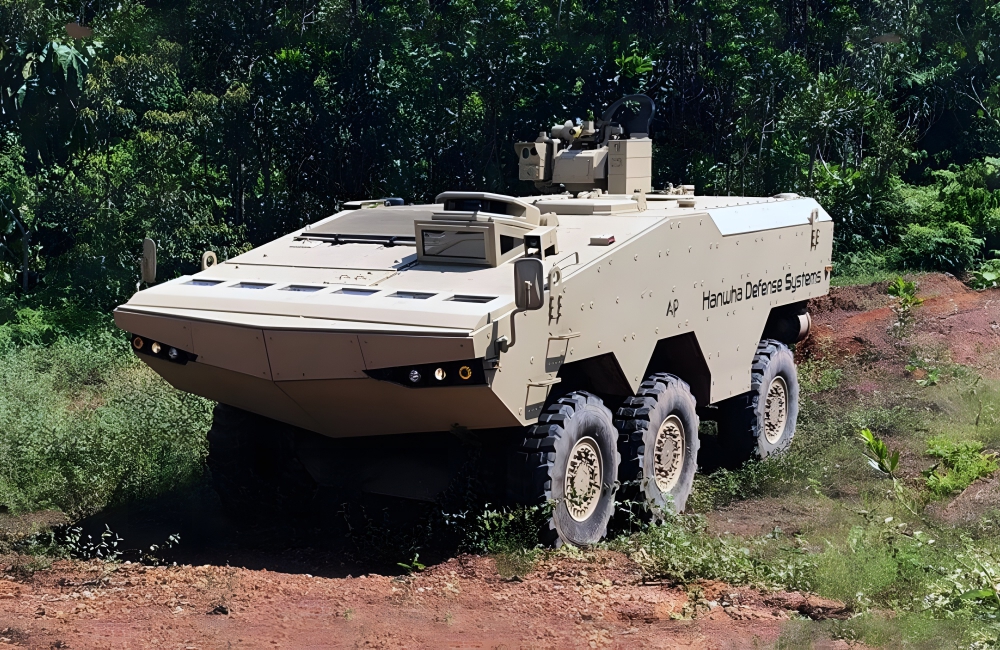
Hanwha Tigon @oscar198o / Twitter.com
These have been improved from previous versions of 6×6 armored vehicles. The Tigon is compatible with add-on armor and weapons systems like the 7.62mm MG and 90mm cannon. It also obtains auxiliary equipment, such as CTIS, air conditioning, ABS (anti-lock brake system), and more.
67. M2 Bradley Fighting Vehicle
Entered Service: 1981
Manufacturer: United Defense
Cost: $3.166 million*
The M2 is a member of the Bradley Fighting Vehicle group. It is made by BAE. The M2 is an IFV designed to transport infantry while protecting them from small arms fire. The M2 is equipped with firepower that can suppress and eliminate any threats to the infantry it carries. It is also designed with reconnaissance capabilities.
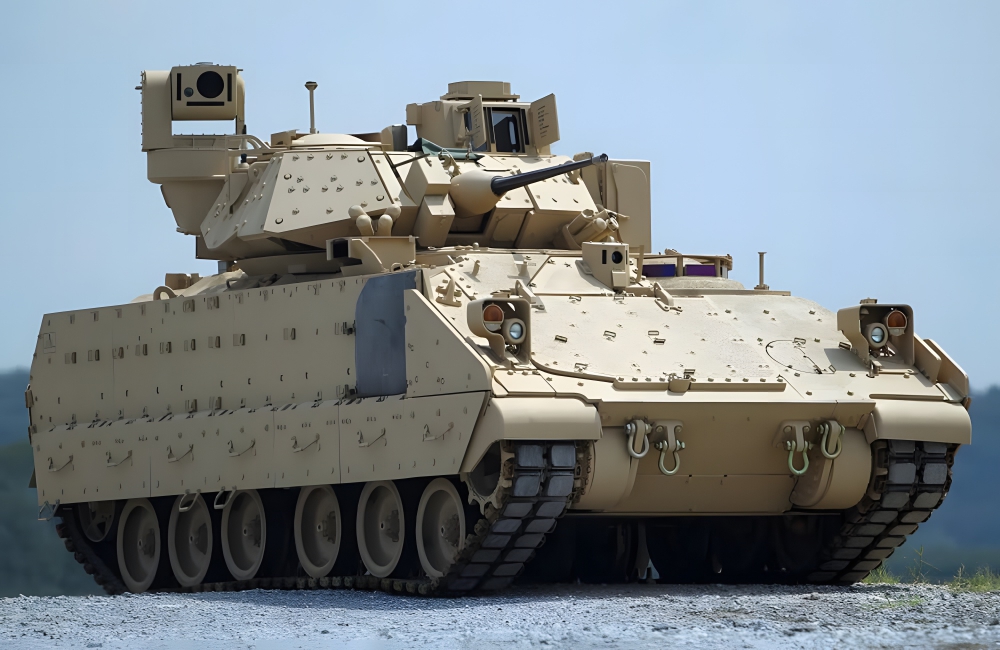
M2 Bradley Fighting Vehicle @Military Archive / Youtube.com
The M2 is flexible and fast. It can transport six soldiers and requires a crew of three. Each unit costs $3.166 million, and the entire program cost for the M2 is $5.66 billion. The main armament on the M2 is the M242 Chain Gun (equipped with 900 rounds) and seven TOW missiles.
68. Buffalo Clearance Vehicle
Entered Service: 2003
Manufacturer: Force Protection, Inc. (General Dynamics)
Cost: $10 million*
General Dynamics’ Force Protection, Inc. built the Buffalo, a wheeled mine-clearance vehicle that weighs 56,000 pounds and is 27 feet long. It is the largest vehicle in the FPI lineup, even larger than the Ocelot LPPV and the Cougar MRAP. The Buffalo has six-inch-thick glass armor. It has BAE LROD cage armor that can withstand RPG-7 anti-tank rounds.
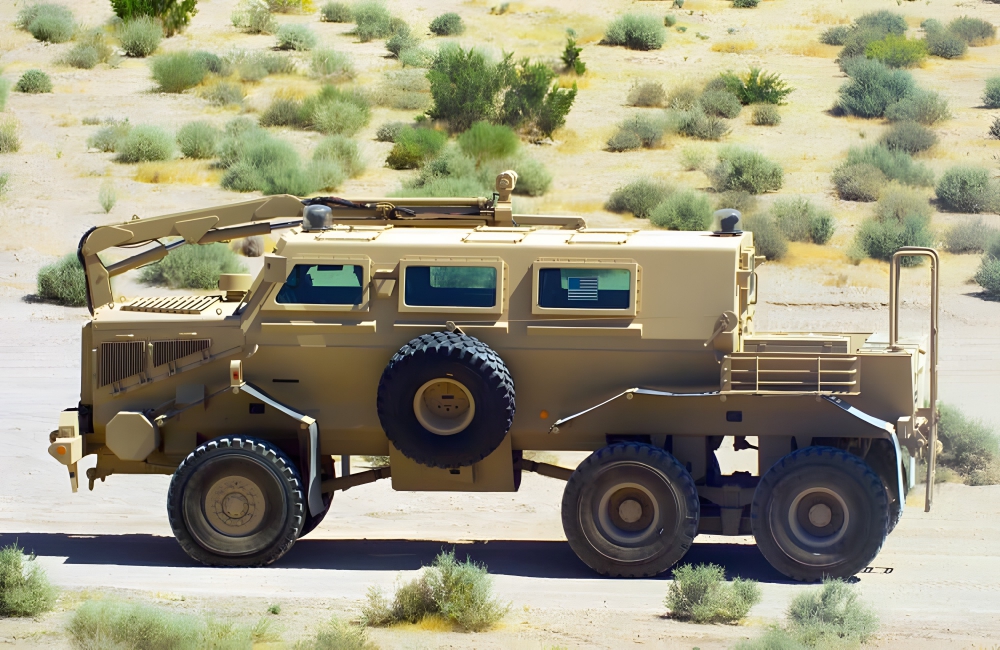
Buffalo Clearance Vehicle ©Ken Drylie / Wikimedia.org
One of the coolest features on the Buffalo is its infrared technology. This technology can detect the presence of a deadly explosive. A 30-foot robotic arm with a claw can then extend to disable the explosive. The Buffalo has a surprisingly-swift maximum speed of 65MPH.
69. Norinco CS VN3C
Entered Service: 2020
Manufacturer: Norinco
Cost: $1.695 million*
Another 4×4, light-weight armored car that is brand-new is the Norinco CS/VN3C. This armored vehicle is built by a Chinese company. The CS has excellent ground clearance and a turbo-charged diesel engine under the hood. The entry points in the cabin have firing ports and vision slots.
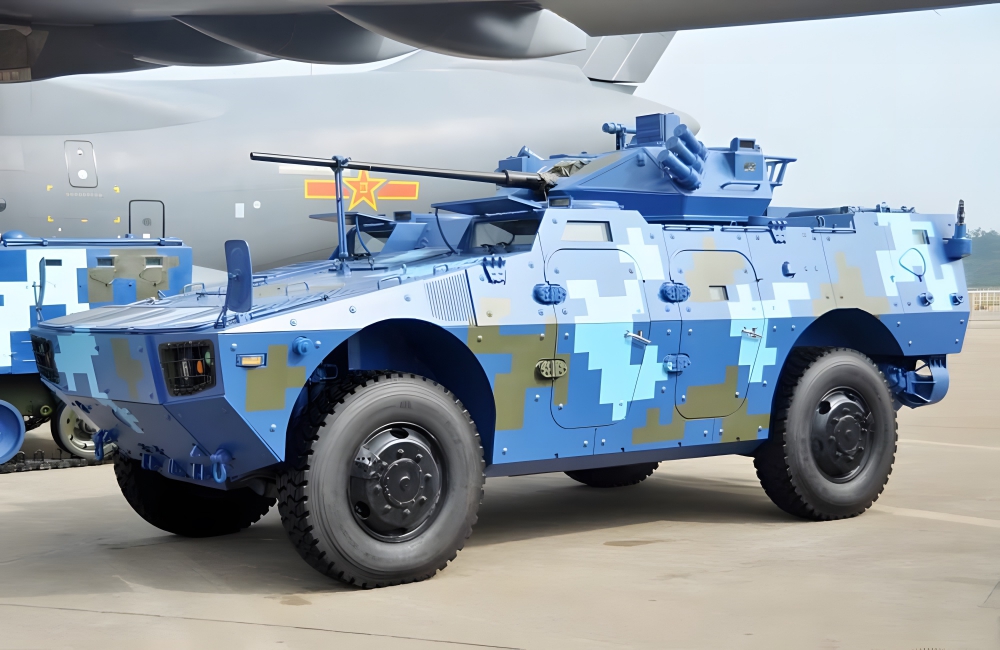
Norinco CS VN3C @Владимир Куценко / Facebook.com
The Chinese military introduced the CS on May 12, 2020. There was a “christening” ceremony in the country’s Hubei Province. China has been determined to modernize its assault capabilities, and the CS/VN3C is the first non-tracked vehicle in the Chinese military. The CS is armed with a 30mm automatic cannon, a 7.62mm machine gun, and a 12.7mm HMG.
70. Norinco PCL-181
Entered Service: 2020
Manufacturer: Norinco
Cost: $3 million*
Norinco has introduced the PCL-181, which weighs 25 tons and, like the aforementioned CS, is China’s attempt to modernize and enhance its military equipment. The PCL-181 was also introduced in May of 2020. It is a 6×6-wheeled truck. It is able to rapidly set up, fire, and relocate without being detected.
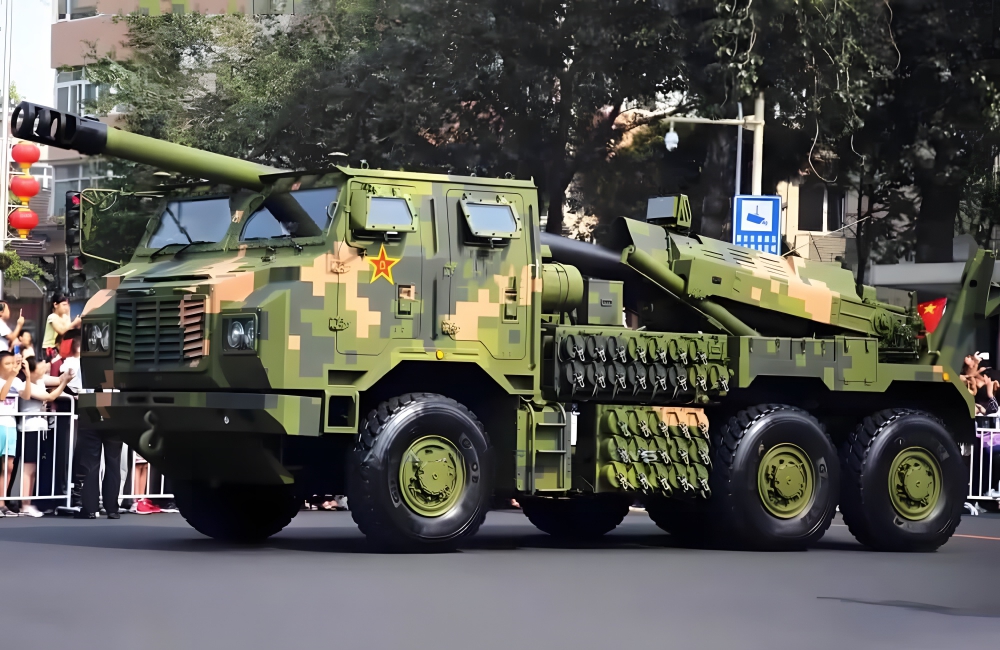
Norinco PCL-181 @Asia Pacific Defence News / Youtube.com
The PCL-181 is slated to succeed a number of Soviet-Era vehicles (the D-20 and the M-464). The new PCL-181 weighs less, is more flexible, and has lower procurement and operating costs. The Chinese government cited these improvements as the reason behind choosing Norinco for the 6×6 truck.
71. Nurol Yoruk
Entered Service: 2019
Manufacturer: Nural Makina
Cost: $204,130*
Turkey’s Nural Makina has made this 4×4 vehicle the jack-of-all-trade for the Turkish military. It is a LAV (Light Armored Vehicle). The NMS Yoruk has twin axles, excellent off-roading capabilities, and high ground clearance. It is impervious to artillery spray and small arms fire, and it can survive in hot zones (though not for overly long).
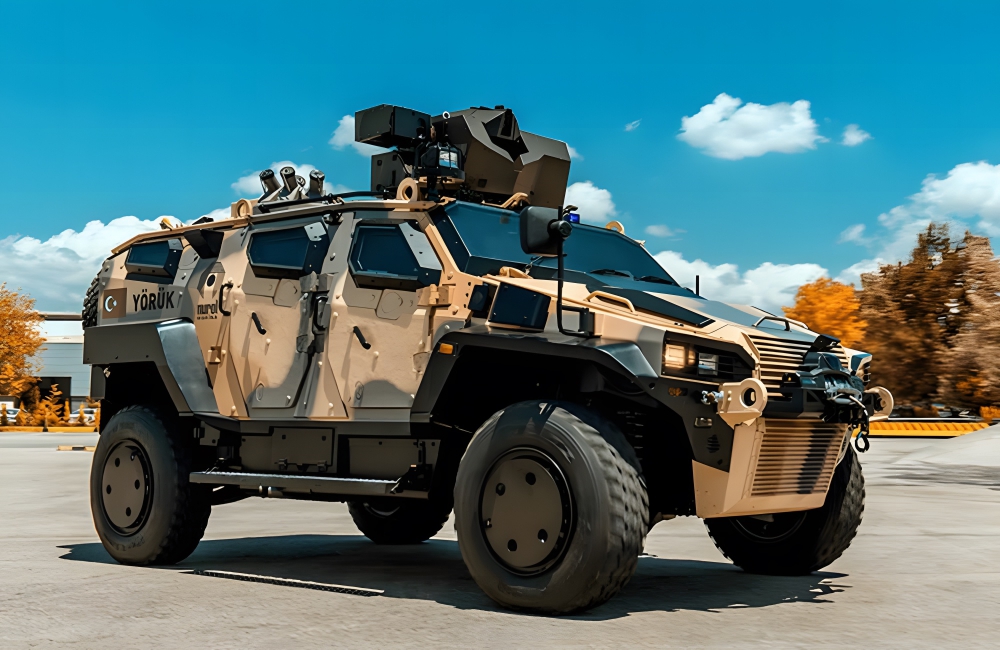
Nurol Yoruk @angkasareview / Twitter.com
The Yoruk has a few variations: the Armored Combat Vehicle, Anti-Tank Missile Vehicle, Air Defense Vehicle, Reconnaissance & Surveillance Vehicle, and the Armored SWAT Vehicle. Armored Combat is the base form, and it has a Remote Weapon Station mounted on the roof and 2.75” missiles.
72. S-500 Prometey
Entered Service: 2021 (planned)
Manufacturer: Almaz-Antey
Cost: $5.324 million (program cost)*
The S-500 Prometey (which is Russian for Prometheus, the Titan god of fire) is also called the Triumfator-M. The S-500 is an anti-ballistic/surface-to-air missile system attached to a 77P6 10×10 truck. It is intended to succeed the A-135 system, which the Russian military currently uses. This system will supplement the S-400.
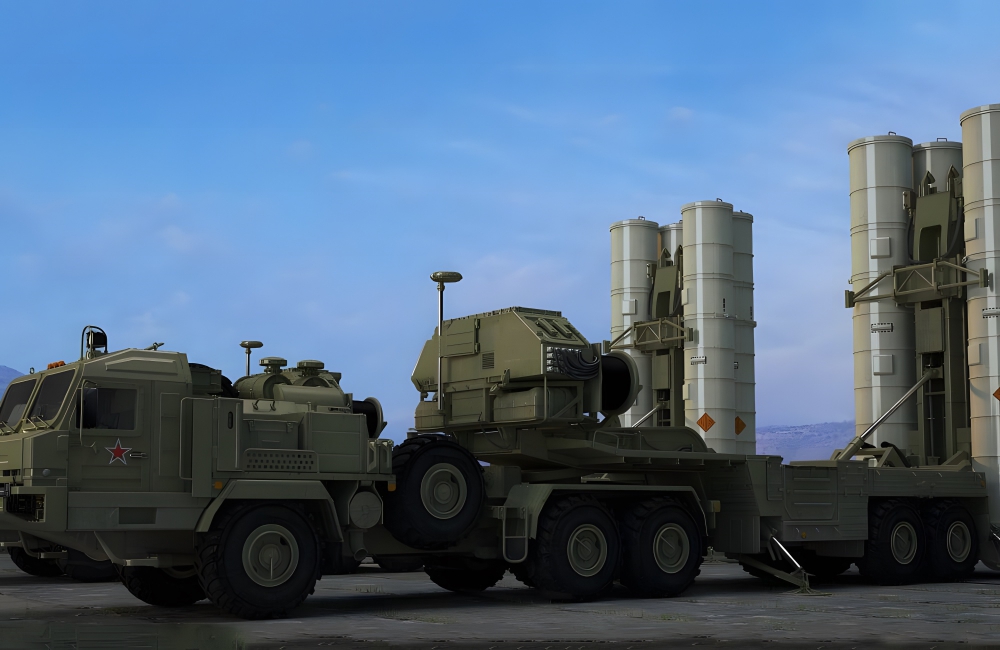
S-500 Prometey @Aleksandr Kojokaru / Facebook.com
The Prometey was introduced in 2009, when it was still in the design stage. It was planned for production in 2014, but that changed, and 2021 is now the new delivery date. Pravda Report describes the Prometey as “unrivaled” by any other system of its kind (space-defense weapons) in the world, save for the US Terminal High Altitude Area Defense system.
73. M109A7 Tank
Entered Service: 2013
Manufacturer: United Defense
Cost: $575,760*
The M109A7 is the most recent version of the M109 howitzer, which is a 155mm, self-propelled, turreted howitzer first introduced in the sixties as a replacement for the M44. The M109A7 has the same chassis as the BFV, including the same engine, tracks, and transmission. This has helped maximize cost-savings.
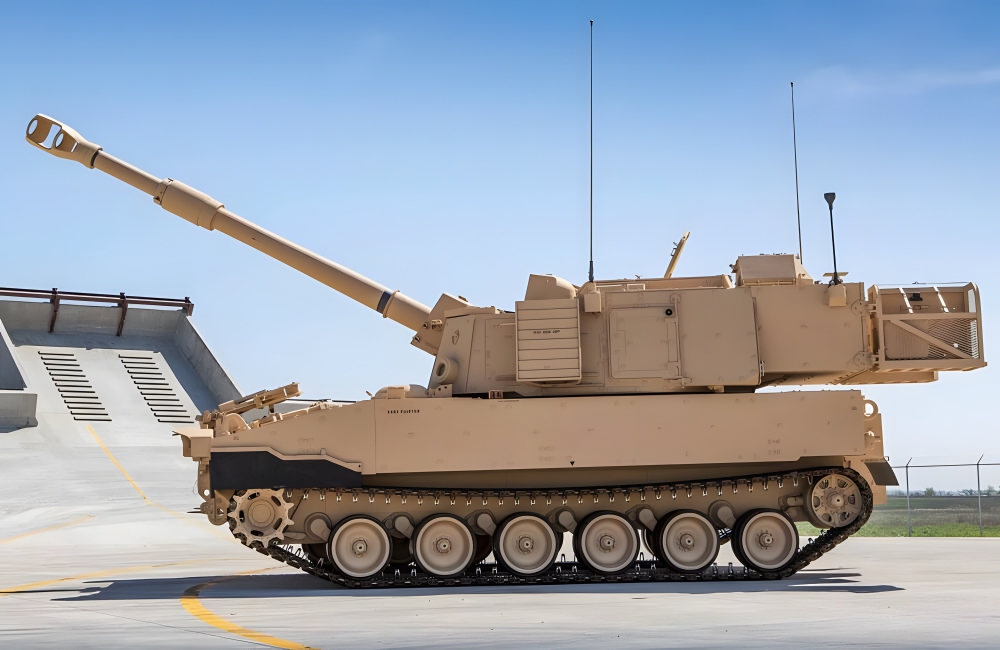
M109A7 Tank @MajalahMiliterOnline / Facebook.com
The M109A7 has the same tech created for the Non-Line-of-Sight Cannon. Improvements on previous versions include a faster electric drive and a better automatic rammer (more accurate and more consistent velocities). The M109A7 weighs 78,000 pounds, which is a full 10,000 pounds heavier than its predecessor. The Army recently announced that it is planning to add a XM1113 RAP to the M109A7.
74. EA-18G Growler
Entered Service: 2006
Manufacturer: Boeing
Cost: $74.8 million*
The Boeing EA-18G Growler is a carrier-based aircraft that specializes in electronic warfare. It was designed as the replacement for the EA-6B Prowlers, a Northrop Grumman creation. The Growler had its first flight on August 15, 2006, and it was introduced on September 22, 2009.
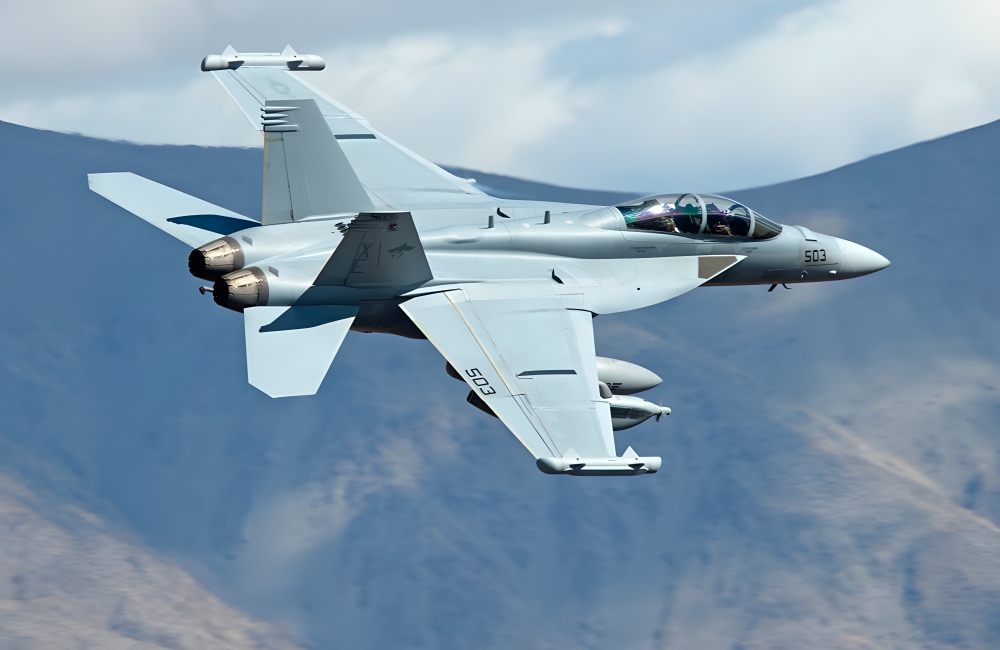
EA-18G Growler ©Peter R Foster IDMA / Shutterstock
The Boeing Co Growler, in addition to its service with the U.S. Navy, also serves the Royal Australian Air Force. Australia bought twelve Growlers in 2017. The Growler has over 90% in common with the Super Hornet, sharing the same airframe, weapons systems, and AESA Radar. New gadgets include the wideband receivers and jamming pods.
75. WC-135W Constant Phoenix
Entered Service: 1993
Manufacturer: Boeing
Cost: $208 million*
This aircraft was inspired by the C-135 Stratolifer, and it has been in use by the USAF since 1965. The WC-135 Constant Phoenix, which is often nicknamed the “sniffer” or “weather bird” by program workers/international media, has a special purpose. It is used to detect (“sniff out”) and identify nuclear explosions.
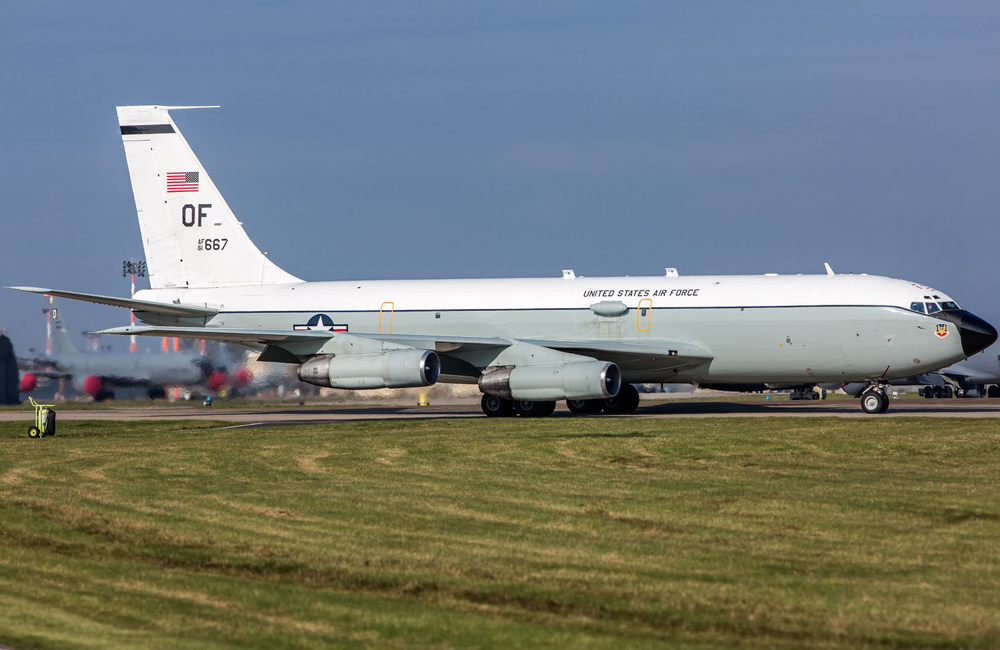
WC-135W Constant Phoenix @CivMilAir / Twitter.com
The Boeing WC-135 isn’t very numerous—only ten have been built, and just two are in active service today. The WC-135 has a variant, the OC-135B Open Skies, which is used far more often. Most of the other ten WC-135s were placed into storage in the early nineties, after Cold War tensions dwindled.