
Beaches are more than just sun-soaked havens; they’re showcases of nature’s artistic palette. Beyond the typical golden sands lie a spectrum of exotic varieties that captivate the imagination. From pristine white powders to sands tinted in surprising hues of pink, green, and even purple, these unique shorelines offer a feast for the eyes. Our exploration delves into the top 10 most exotic sand types found on beaches worldwide, each with its own fascinating origin story and alluring beauty. Join us as we uncover the geological marvels and natural phenomena that create these distinctive sands, transforming ordinary coastlines into extraordinary, picturesque destinations that beckon travelers and beach enthusiasts alike.
1. The Enchanting Pink Sands of Harbour Island, Bahamas
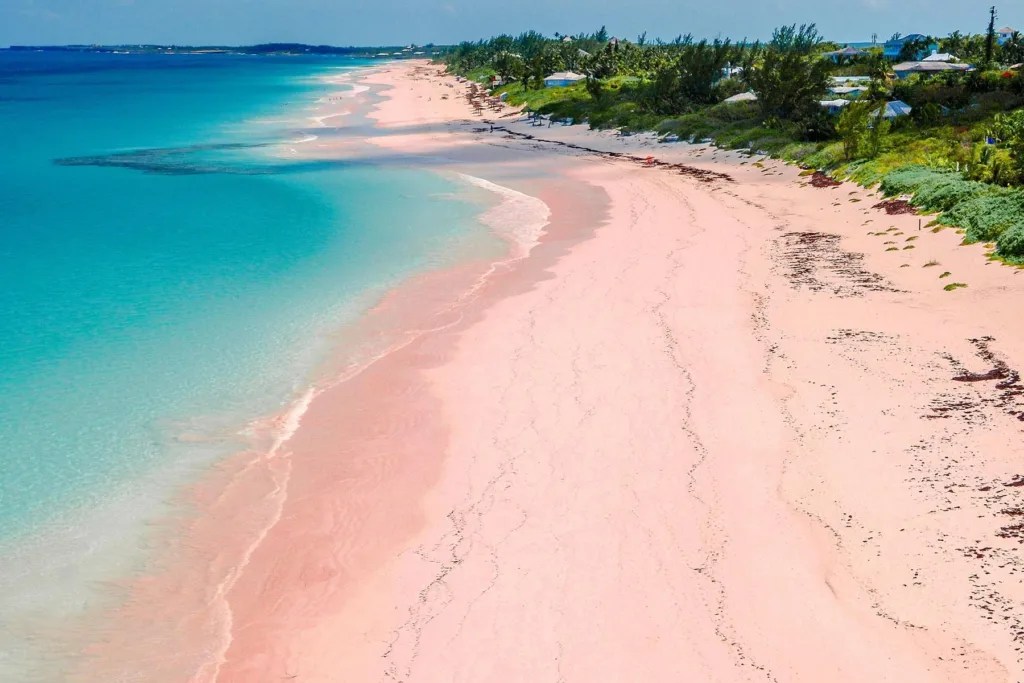
Nestled in the azure waters of the Caribbean, Harbour Island in the Bahamas is home to one of the world’s most captivating natural wonders – the Pink Sands Beach. Stretching along the eastern shore of this idyllic paradise, this three-mile expanse of rosy-hued sand has captivated visitors for generations, earning its place among the most sought-after destinations for beach enthusiasts and nature lovers alike. The allure of Pink Sands Beach lies not only in its stunning visual appeal but also in the fascinating geological processes that have given rise to its unique coloration. Unlike traditional beaches composed of quartz or coral fragments, the sand here owes its distinctive pink tint to the presence of microscopic marine organisms known as Foraminifera. These tiny creatures, barely visible to the naked eye, play a crucial role in shaping the beach’s ethereal appearance, their pink or red shells mixing with coral and shell fragments to create a mesmerizing palette that shifts and shimmers with the changing light. The result is a shoreline that seems to glow with an otherworldly radiance, particularly during the golden hours of sunrise and sunset when the sun’s rays dance across the sand, intensifying its rosy hues and creating a spectacle that has to be seen to be believed. The formation of Pink Sands Beach is a testament to the intricate interplay between marine life and geological processes that unfold over vast stretches of time. As waves crash upon the shore, they gradually erode the shells of countless Foraminifera, along with fragments of coral and other marine organisms, grinding them down into fine particles that accumulate along the coastline. This constant cycle of erosion and deposition ensures that the beach maintains its signature pink hue, even as the sand is continually reshaped by the ebb and flow of the tides. The presence of Foraminifera in such abundance speaks to the rich biodiversity of the surrounding waters, highlighting the delicate balance of ecosystems that contribute to the beach’s unique characteristics.
2. The Geological Marvel of Papakolea Beach, Hawaii
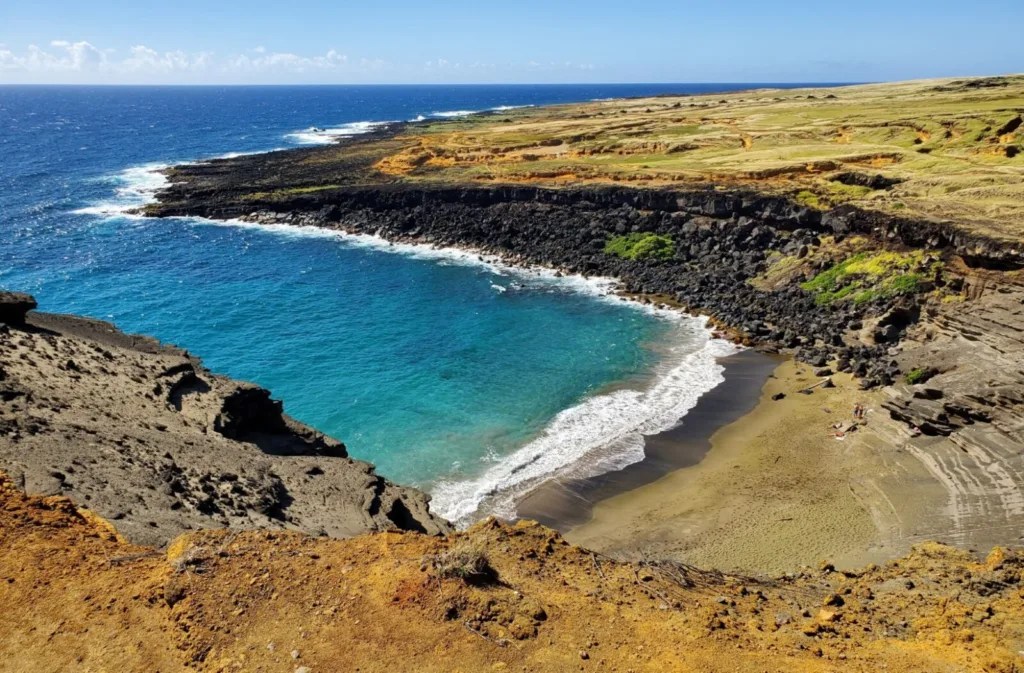
On the southern tip of Hawaii’s Big Island lies a geological wonder that defies conventional expectations of what a beach should look like. Papakolea Beach, also known as Green Sand Beach, stands as a testament to the raw power of volcanic activity and the breathtaking beauty that can emerge from Earth’s most violent processes. This crescent-shaped cove, nestled at the base of Pu’u Mahana cinder cone, boasts a shoreline covered in olive-green sand that seems almost alien in its appearance. The origin of this extraordinary hue can be traced back to the volcanic history of the Hawaiian Islands, specifically to the mineral olivine, which is abundantly present in the surrounding landscape. Olivine, also known as peridot when of gem quality, is a mineral formed deep within the Earth’s mantle and brought to the surface through volcanic eruptions. The presence of olivine-rich basaltic lava from the nearby Pu’u Mahana cinder cone has played a crucial role in shaping the unique character of Papakolea Beach. Over thousands of years, the relentless action of wind and waves has eroded the volcanic rocks, liberating countless olivine crystals that have accumulated along the shoreline. These tiny green gems, mixed with black volcanic sand and fragments of lava rock, create a mesmerizing mosaic that shifts and changes with the play of light and water. The result is a beach that seems to shimmer with an otherworldly green glow, particularly when wet or viewed under the bright Hawaiian sun. The geological processes that have given rise to Papakolea Beach are ongoing, with the constant erosion of the surrounding cliffs continuing to supply fresh olivine crystals to the shore. However, this also means that the beach is in a state of constant change, with the green sand gradually being washed away by the ocean currents. This dynamic nature adds an element of urgency to the experience of visiting Papakolea Beach, as the forces of nature continue to shape and reshape this unique landscape.
3. The Transformed Shores of Glass Beach, Fort Bragg, California
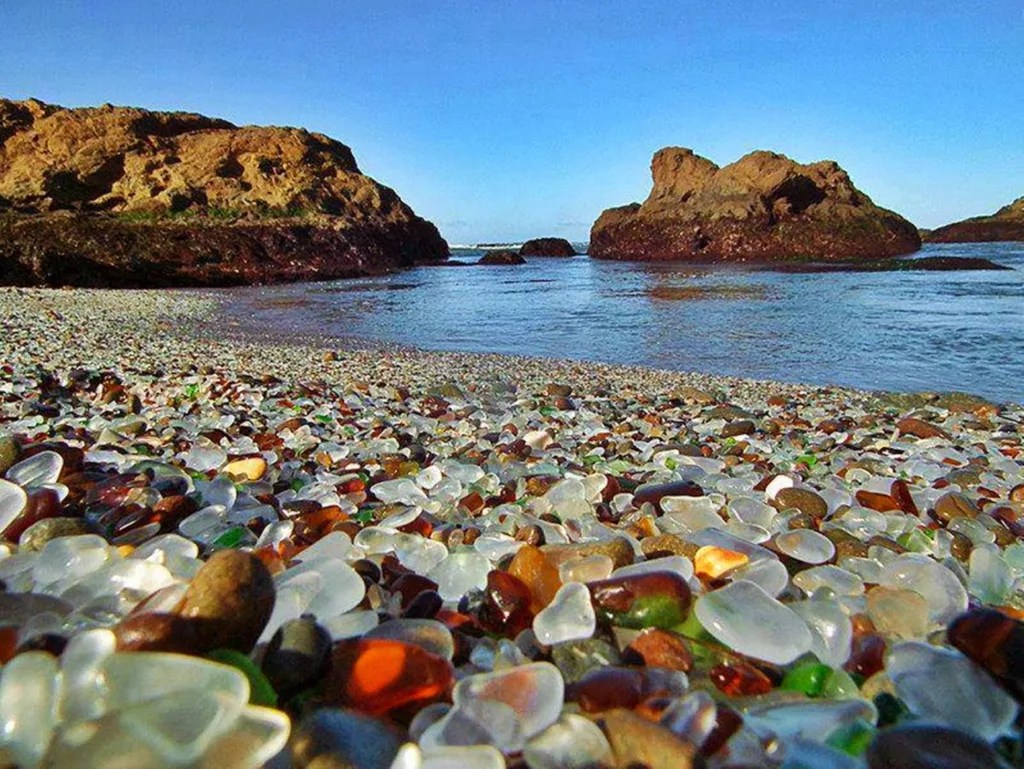
In the annals of environmental transformation, few places tell a story as compelling as Glass Beach in Fort Bragg, California. This unique shoreline stands as a testament to nature’s remarkable ability to reclaim and repurpose human waste, turning what was once an eyesore into a captivating attraction that draws visitors from around the world. The history of Glass Beach is inextricably linked to the town’s past practices of waste disposal, a reminder of a time when environmental consciousness was not as prevalent as it is today. For decades, the residents of Fort Bragg used the area as a dumping ground, discarding everything from household garbage to old appliances along the coastline. Among this debris were countless glass bottles and containers, which would eventually become the defining feature of this extraordinary beach. The transformation began in 1967 when the North Coast Water Quality Board closed the area to dumping, initiating a process of natural remediation that would span decades. Over time, the relentless action of the ocean waves began to break down the discarded glass, tumbling and polishing the shards into smooth, colorful pebbles that now carpet the shore. This process, known as sea glass formation, typically takes 20 to 30 years, with the ocean gradually wearing away the sharp edges and chemical impurities of the glass, leaving behind frosted, jewel-like pebbles in a variety of colors. The result is a shoreline that glitters with an array of hues, from soft sea greens and blues to more uncommon amber and red pieces, each fragment telling a part of the beach’s complex history.
4. The Volcanic Legacy of Reynisfjara Beach, Vik, Iceland
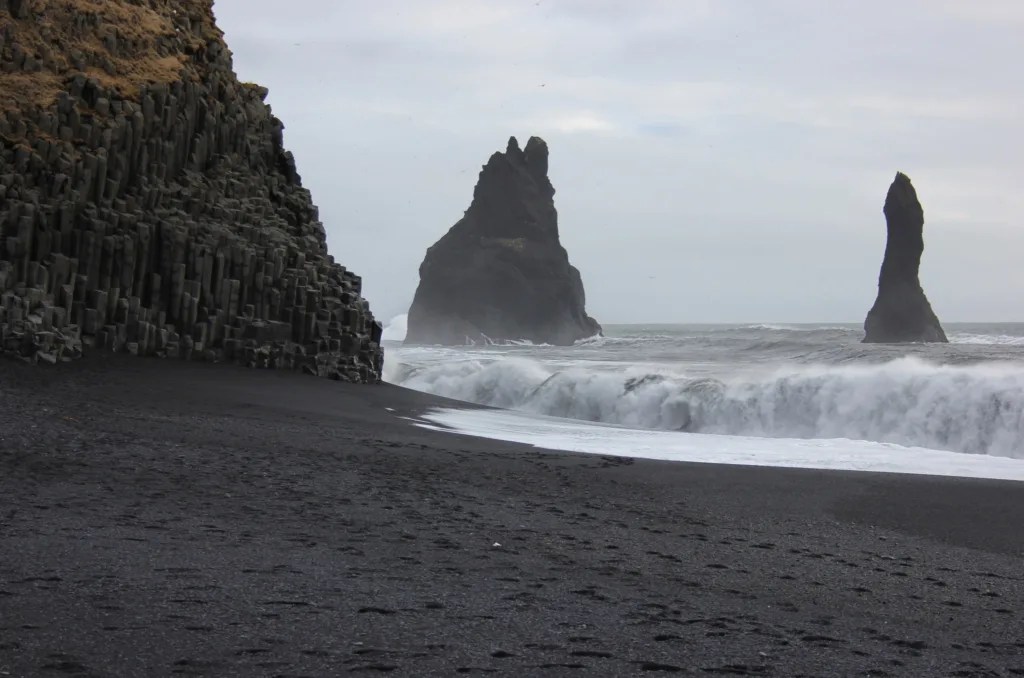
Along the southern coast of Iceland, near the small village of Vik, lies a stretch of shoreline that seems to have been plucked from the pages of a gothic novel. Reynisfjara Beach, with its expansive swaths of jet-black sand, stands as a stark and dramatic testament to Iceland’s volcanic heritage. This otherworldly landscape, framed by towering basalt cliffs and pounded by the relentless waves of the North Atlantic, offers visitors a glimpse into the raw power of geological forces that have shaped this island nation over millions of years. The origins of Reynisfjara’s distinctive black sand can be traced back to Iceland’s position astride the Mid-Atlantic Ridge, a vast underwater mountain range that marks the boundary between the North American and Eurasian tectonic plates. This geological setting has made Iceland one of the most volcanically active regions on Earth, with frequent eruptions contributing to the island’s ever-changing landscape. The black sand of Reynisfjara is composed primarily of basalt, a dark, fine-grained volcanic rock that forms when lava cools rapidly upon contact with water or air. As volcanic eruptions spew forth molten rock, much of it eventually makes its way to the coast, where it encounters the frigid waters of the North Atlantic. The rapid cooling causes the lava to fragment into small, glassy particles, which are then shaped and distributed along the coastline by the action of waves and currents. This ongoing process of volcanic activity and erosion ensures a constant supply of black sand to Reynisfjara and other similar beaches around Iceland, maintaining their distinctive appearance even as the ocean continually reshapes the shoreline. The result is a beach that seems to absorb light rather than reflect it, creating a somber yet breathtakingly beautiful atmosphere that has captured the imagination of visitors and filmmakers alike.
5. The Luminous Shores of Vaadhoo Island, Maldives
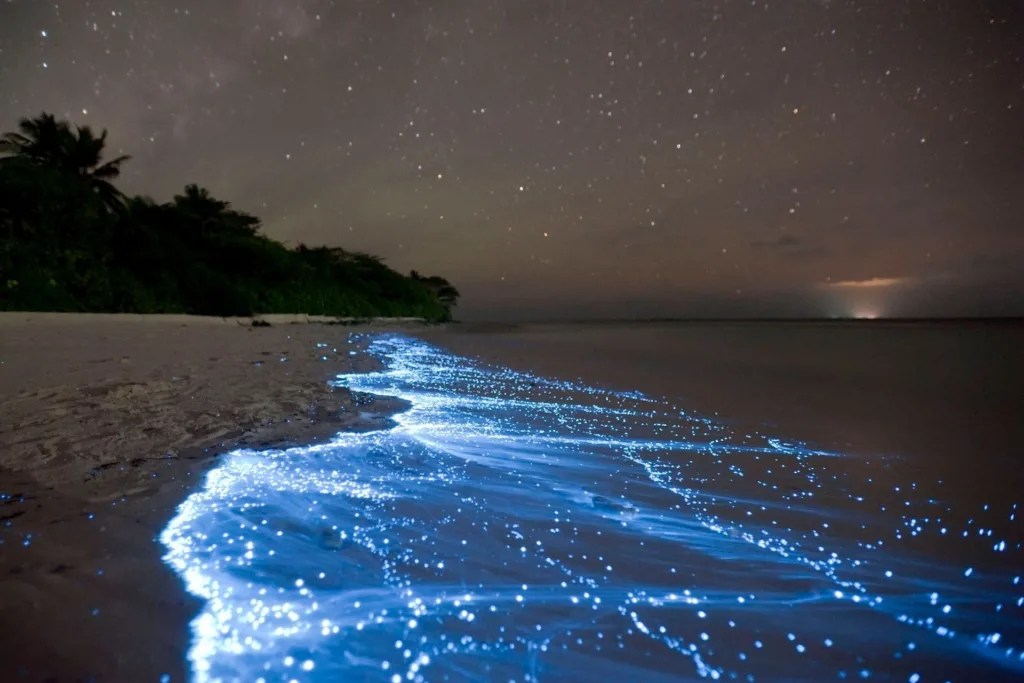
In the vast expanse of the Indian Ocean, the Maldives archipelago is renowned for its pristine beaches and crystal-clear waters. However, on Vaadhoo Island, a natural phenomenon occurs that transforms the shoreline into a spectacle of otherworldly beauty. As night falls, the beaches of Vaadhoo come alive with a mesmerizing display of bioluminescence, creating what appears to be a sea of stars lapping at the shore. This enchanting effect, often referred to as the “Sea of Stars,” is not the result of any unique properties of the sand itself, but rather the presence of bioluminescent phytoplankton in the surrounding waters. These microscopic marine organisms, primarily a species of dinoflagellate called Noctiluca scintillans, possess the remarkable ability to produce and emit light through a chemical reaction within their cells. The bioluminescent display is thought to serve several purposes in nature, including defense against predators, attraction of mates, and communication within the species. For visitors to Vaadhoo Island, however, it creates a magical experience that seems to blur the line between sea and sky. The phenomenon of bioluminescence is not unique to the Maldives, occurring in various locations around the world where conditions are favorable for these light-emitting organisms. However, the clarity of the water and the dark skies of the Maldives create an ideal setting for observing this natural light show. As waves break upon the shore or boats move through the water, they agitate the phytoplankton, triggering a cascade of blue-white light that ripples across the surface of the sea. Footsteps along the water’s edge leave glowing footprints, and splashing in the shallows sends sparks of light dancing through the air. This interplay between human activity and natural bioluminescence creates an interactive experience that is both awe-inspiring and deeply connecting, allowing visitors to feel a part of the living ecosystem around them.
6. The Majestic Purple Hues of Pfeiffer Beach, California
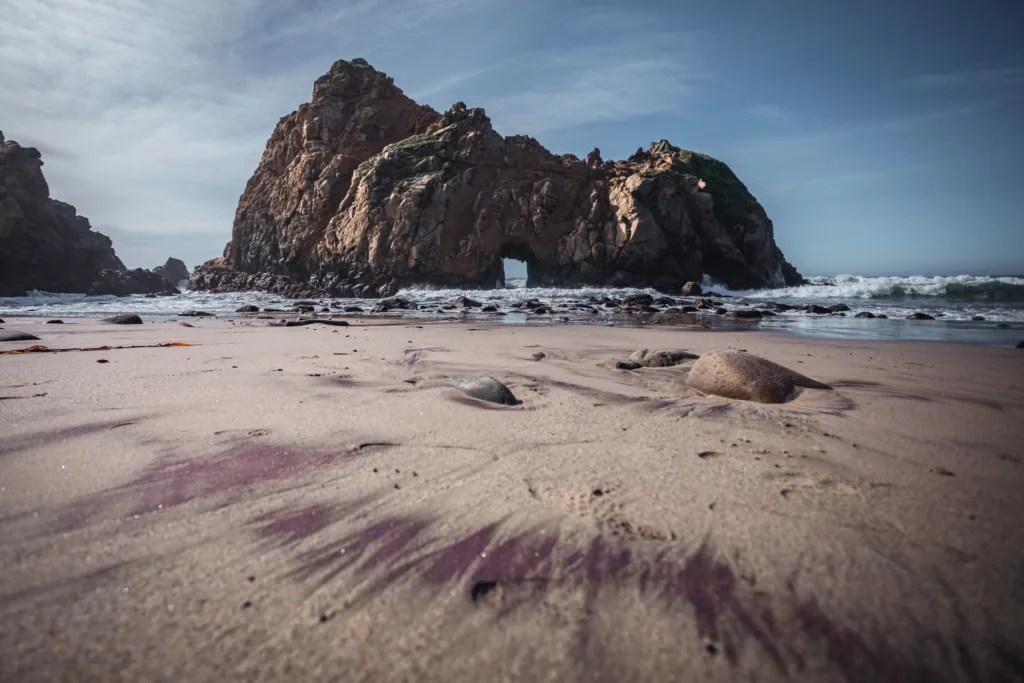
Nestled along the rugged coastline of Big Sur in California, Pfeiffer Beach stands as a testament to nature’s extraordinary palette, boasting sands that shimmer with an enchanting purple hue. This hidden gem, tucked away off the beaten path, offers visitors a visual feast that seems almost too surreal to be natural. The beach’s unique coloration is a result of a fascinating geological phenomenon that has captivated scientists and beachgoers alike for generations. The source of Pfeiffer Beach’s distinctive purple sand lies in the composition of the surrounding cliffs and hillsides, which are rich in manganese garnet deposits. Over countless millennia, the relentless forces of erosion have worked to break down these mineral-rich rocks, gradually releasing tiny particles of manganese garnet into the environment. As rain and wind carry these particles down from the hills, they mix with the more traditional quartz sand on the beach, creating patches of sand that range from a subtle lavender tint to a deep, rich purple. This process is ongoing, ensuring that the beach maintains its unique appearance even as the ocean continuously reshapes the shoreline. The intensity of the purple coloration can vary significantly depending on several factors, including recent rainfall, the time of year, and even the angle of the sunlight. After heavy rains, when runoff from the hills is at its peak, the purple hues tend to be more pronounced, creating stunning patterns as the colored sand mixes with the regular beach sand. This dynamic nature of the beach’s appearance adds an element of excitement for visitors, as no two visits are likely to yield the same visual experience. The presence of the purple sand is not uniform across the entire beach, instead appearing in concentrated patches that create a mesmerizing patchwork effect along the shoreline. This variability adds to the beach’s allure, encouraging exploration and discovery as visitors search for the most vibrant displays of color.
7. The Fiery Red Sands of Kaihalulu Beach, Hawaii
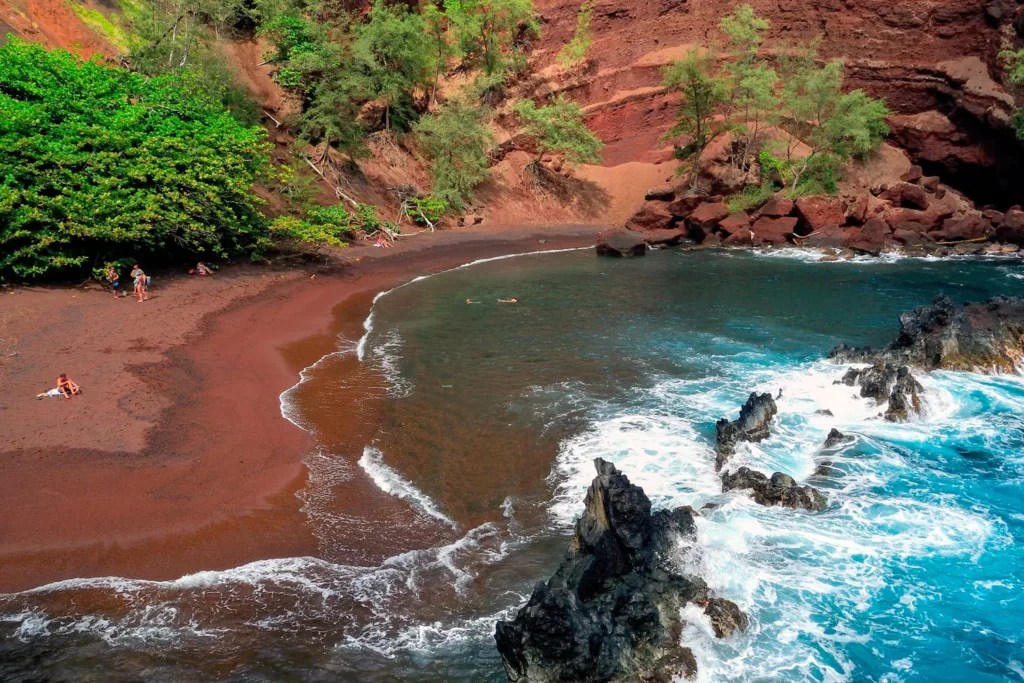
Tucked away on the eastern coast of Maui, Hawaii, lies a hidden treasure that seems plucked from the pages of a fantasy novel. Kaihalulu Beach, more commonly known as Red Sand Beach, offers visitors a glimpse into a world where the very earth seems to glow with an inner fire. This small, crescent-shaped cove is renowned for its striking red sand, a feature so unusual and visually arresting that it has become one of Hawaii’s most sought-after natural wonders. The origin of Kaihalulu Beach’s distinctive coloration is deeply rooted in the volcanic history of the Hawaiian Islands, specifically in the composition of the towering cinder cone cliffs that surround and shelter the cove. These cliffs are composed primarily of iron-rich volcanic rock, a legacy of the intense geological activity that formed the Hawaiian archipelago millions of years ago. As the relentless forces of wind and water erode these cliffs, they gradually break down the iron-rich rock into fine particles that accumulate along the shoreline. The result is a beach that seems to smolder with an inner glow, its sands ranging from deep burgundy to bright crimson depending on the light and moisture conditions. The contrast between the fiery red sand and the deep blue of the Pacific Ocean creates a visual spectacle that is both jarring and mesmerizing, challenging our preconceptions of what a beach should look like. The process that creates and maintains the red sand is ongoing, with fresh material constantly being eroded from the surrounding cliffs. This means that the beach is in a constant state of renewal, with the ocean currents and tides working to distribute the red sand along the shoreline. However, this also highlights the fragile nature of this unique ecosystem, as the beach’s existence is dependent on the delicate balance between erosion and deposition. The iron-rich composition of the sand also gives it a slightly magnetic quality, an intriguing property that adds another layer of fascination for those who visit.
8. The Pristine Shell-Covered Shores of Shark Bay, Australia
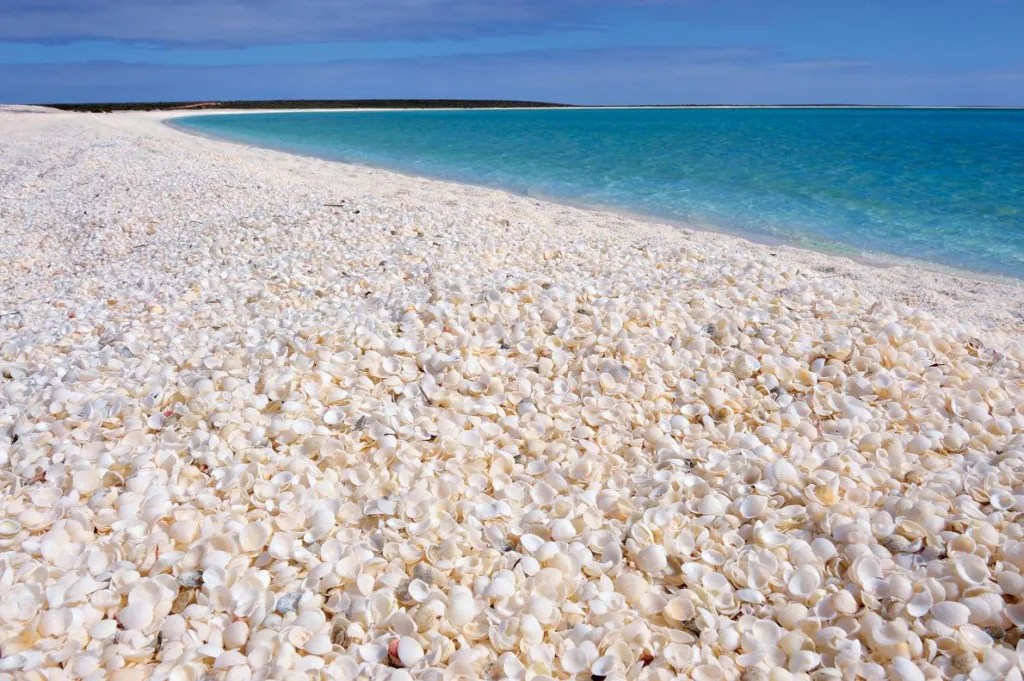
In the remote reaches of Western Australia, Shark Bay harbors a natural wonder that defies conventional expectations of what constitutes a beach. Shell Beach, as its name suggests, is not covered in sand at all, but rather in a thick blanket of tiny white cockle shells that stretches for dozens of kilometers along the coastline. This extraordinary landscape is the result of a unique set of environmental conditions that have persisted for thousands of years, creating an ecosystem unlike any other in the world. The formation of Shell Beach is intrinsically linked to the hypersaline waters of Shark Bay, where salinity levels can reach two to three times that of normal seawater. These extreme conditions are inhospitable to many forms of marine life but provide the perfect environment for certain species of cockles, particularly the Fragum erugatum. These small bivalve mollusks thrive in the hypersaline waters, reproducing in vast numbers and accumulating in enormous quantities along the shoreline. Over time, as generations of cockles lived and died, their shells were gradually deposited on the beach, creating layers that in some areas reach depths of up to 10 meters. The process of shell accumulation is ongoing, with new layers constantly being added to the beach as more cockles complete their life cycles. The result is a landscape that seems almost otherworldly, with the pristine white shells crunching underfoot and stretching as far as the eye can see. The absence of sand and the uniformity of the shell coverage create a unique sensory experience for visitors, who often describe walking on the beach as akin to traversing a field of snow. The shells themselves, bleached white by the sun and polished smooth by the action of waves and wind, create a surface that reflects light in dazzling ways, particularly during sunrise and sunset when the low angle of the sun sets the entire beach aglow.
9. The Emerald Shores of Talofofo Beach, Guam
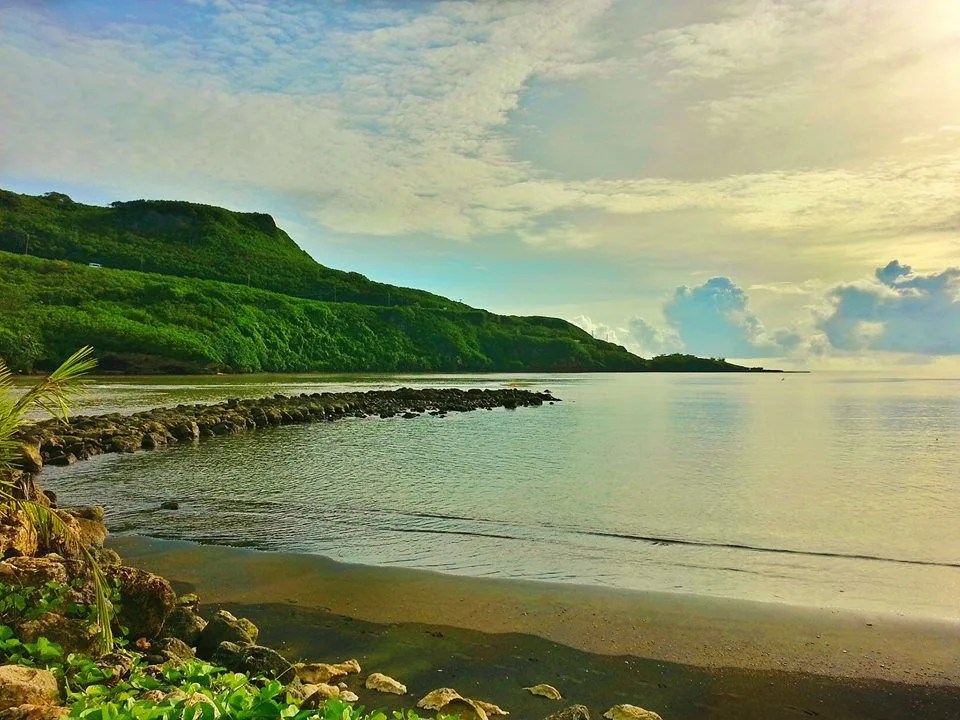
On the eastern coast of Guam, an island territory of the United States in the western Pacific Ocean, lies a beach that seems to have been touched by the hand of a master jeweler. Talofofo Beach, with its striking olive-green sand, offers visitors a glimpse into the complex geological processes that shape our planet’s most unique landscapes. The beach’s distinctive coloration is the result of a mineral called olivine, the same substance responsible for the green sand beaches found in Hawaii and other volcanic regions around the world. However, the story of Talofofo Beach is uniquely tied to the geological history of Guam and the surrounding Mariana Islands. The presence of olivine-rich sand at Talofofo Beach is a direct result of the volcanic activity that formed Guam millions of years ago. Olivine, also known as peridot in its gem-quality form, is a mineral that crystallizes from magma deep within the Earth’s mantle. As volcanic eruptions brought this material to the surface, it became incorporated into the island’s bedrock. Over time, the relentless action of wind, rain, and waves has eroded these olivine-rich rocks, liberating countless tiny crystals that have accumulated along the shoreline. The process of erosion and deposition is ongoing, ensuring a constant supply of fresh olivine crystals to maintain the beach’s unique appearance. The olivine sand at Talofofo Beach ranges in color from a pale yellowish-green to a deep olive, with the intensity of the color often varying depending on factors such as moisture content and the angle of sunlight. When wet or viewed under bright sunlight, the sand seems to glow with an inner light, creating a mesmerizing effect that draws visitors from around the world. The presence of olivine in such abundance speaks to the unique geological composition of Guam, offering insights into the volcanic processes that shaped the island and continue to influence its landscape to this day.
10. The Microscopic Marvels of Star Sand Beach, Iriomote Island, Japan
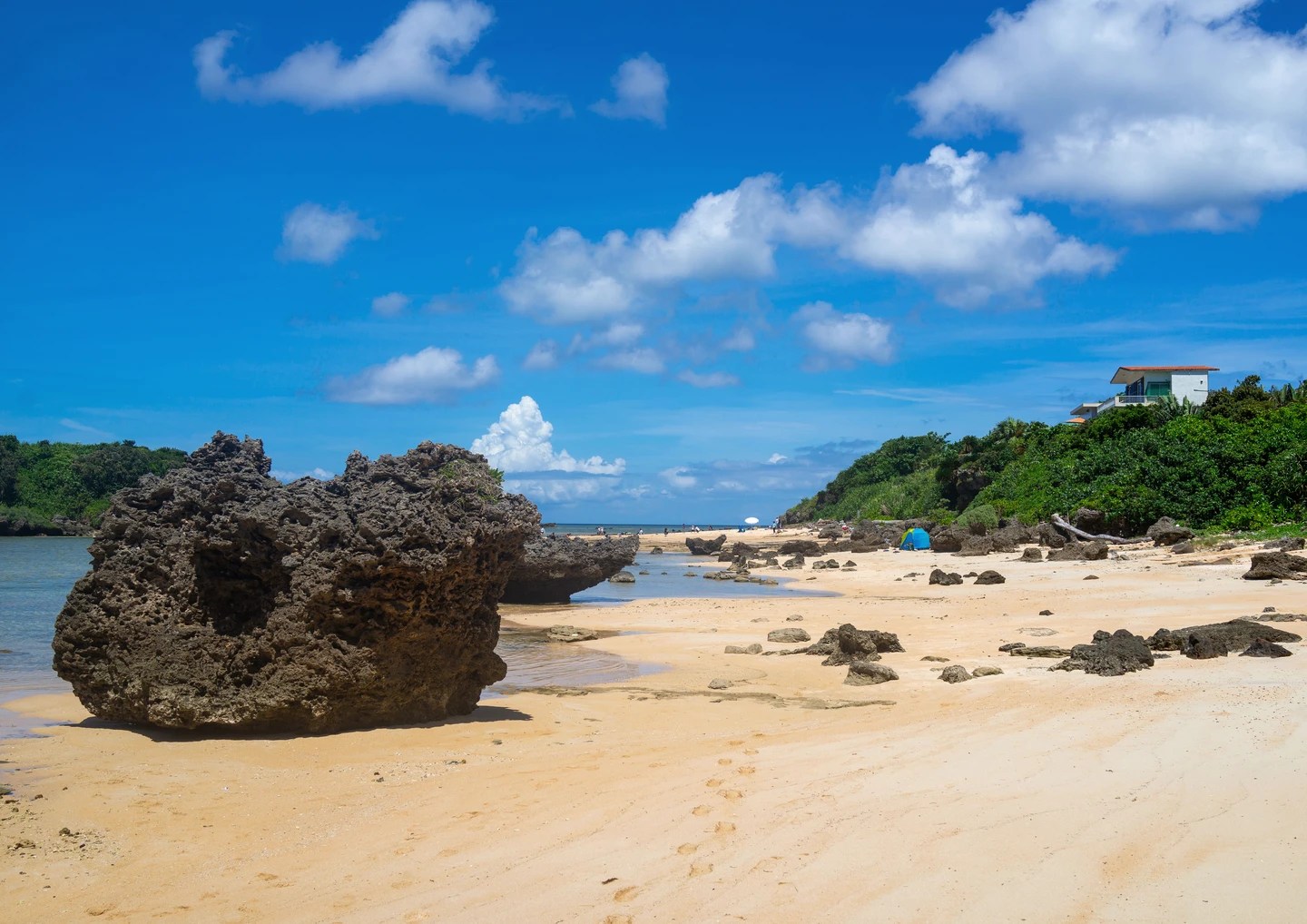
In the southernmost reaches of Japan’s Okinawa Prefecture, on the remote and lush Iriomote Island, lies a beach that seems to have been sprinkled with stardust from the heavens above. Star Sand Beach, known locally as Hoshizuna-no-Hama, is renowned for its unique sand composition, which includes countless tiny star-shaped particles that have captivated visitors and scientists alike for generations. These miniature stars, barely visible to the naked eye and typically measuring between 0.5 to 1.5 millimeters in diameter, are not the product of some cosmic event but rather the fossilized remains of microscopic marine organisms that lived in the surrounding waters millions of years ago. The star-shaped particles that give Star Sand Beach its name and fame are actually the exoskeletons of Foraminifera, a type of single-celled protist that has inhabited the Earth’s oceans for hundreds of millions of years. Specifically, the stars are formed by a species called Baculogypsina sphaerulata, which builds intricate, star-shaped shells to protect its soft body. When these organisms die, their delicate calcium carbonate shells sink to the ocean floor, where they accumulate over vast periods of time. Through the gradual processes of sedimentation and uplift, these microscopic fossils have found their way onto the shores of Iriomote Island, mixing with more traditional sand particles to create a truly unique beach environment. The presence of these star-shaped fossils in such abundance speaks to the rich biodiversity of the ancient seas that once covered this region, offering a tangible link to the prehistoric past. Visitors to Star Sand Beach often spend hours combing through the sand with magnifying glasses, searching for perfect specimens of these miniature stars. The experience of discovering these tiny marvels creates a profound connection to the vast scales of geological time and the intricate processes of life that have shaped our planet over millions of years.