
61. Seminário de Santa Teresinha
Location: Raposeira, Portugal
Year: 1928
Cost: N/A
Fire has put an end to the lifespans of even the most historically-significant buildings, and that includes the Seminário de Santa Teresinha. The Seminario was a theological college that was started by Vincentian priests in 1928. The building, after 1967, was used as a retirement home (it fit the structure well).
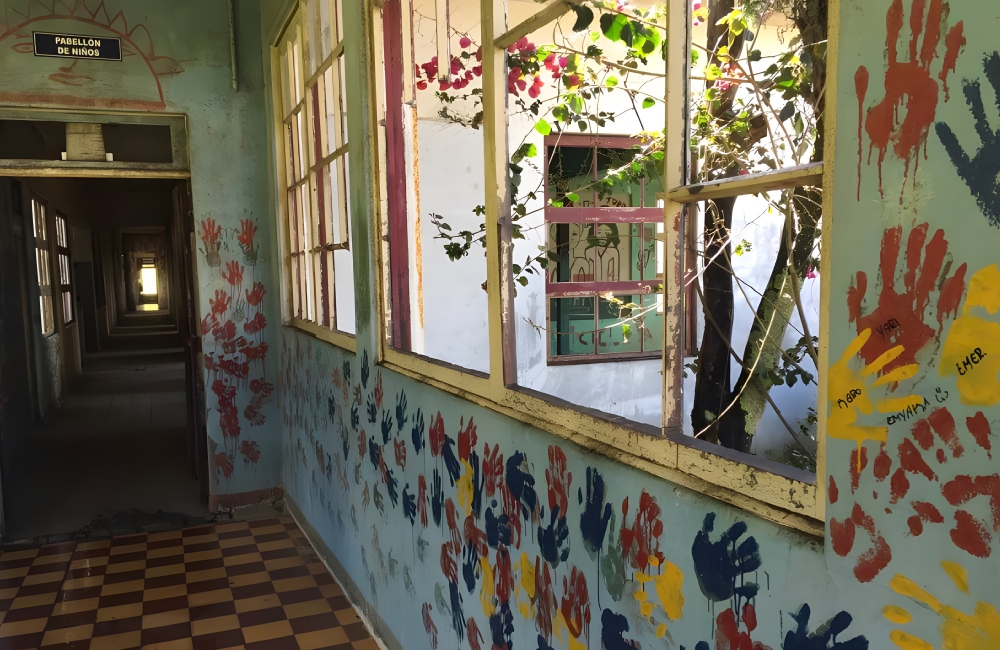
Seminário de Santa Teresinha, Raposeira, Portugal @atlasobscura/Pinterest
It remained in use until 2020, after a devastating fire scorched the Seminario, leaving only ruins in its wake. You can see some of the beauty and meticulous detail with which this historic seminary was constructed, but you’ll have to climb through glass, rubble, and ash to do so.
62. Chacaltaya Ski Resort
Location: Chacaltaya Mountains, Bolivia
Year: 1930s
Cost: $22 for a tour*
Located in Bolivia, Chacaltaya remains the world’s highest ski resort. Tour companies now offer a look around the place for $22, but the resort is not open to the public, as it has been abandoned. For a while, Chacaltaya was the only ski resort in Bolivia. It was constructed in the 1930s.
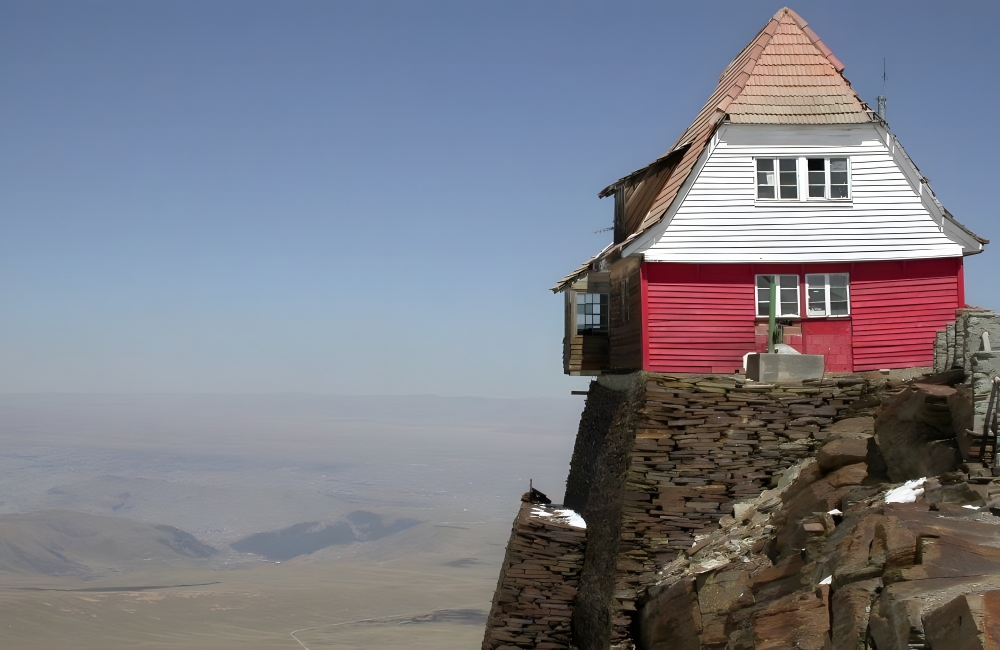
Chacaltaya Ski Resort, Bolivia ©Joan Simon/Wikimedia Commons
You can still ski down the mountain’s 600-foot stretch, assuming that there is enough snowfall for a run. Amateur mountaineers also like Chacaltaya, as the road stops just 660 feet from the summit (a reasonable distance for a new climber).
63. Beautiful Betsy
Location: Valentine Plains, Australia
Year: 1945
Cost: $5.42 million to build*
On February 26, 1945, during World War II, the Beautiful Betsy, a B-24 Liberator (which cost $5.42 million to produce during the War, adjusting for inflation) went missing on a flight from Darwin, Australia to Brisbane. The bomber had been damaged in prior combat missions, so it was only used for short flights.
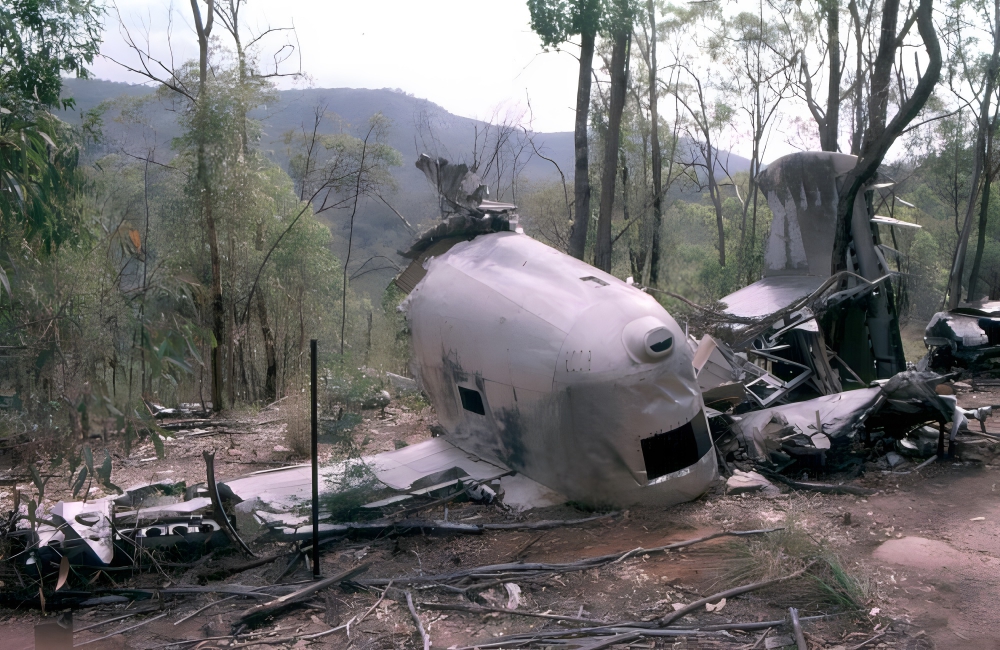
Beautiful Betsy, Valentine Plains, Australia ©Emmybeer1902/Wikimedia Commons
As soon as it could be replaced, the Australian government would scrap it. Alas, they waited too long, and the Betsy crashed, killing eight soldiers. For years, the crash remained a mystery until 1994, when a park ranger discovered the remains. Initially, the Betsy’s discovery was kept a secret, but, now, the crash site is open to the public, with trails and signs leading to the remains of the bomber.
64. The Western Village
Location: Nikko, Japan
Year: 1973
Cost: $25 million* (Cost Of Mt. Rushmore Reproduction)
Just a few miles from lovely Nikko, Japan and its Toshogu shrine is The Western Village, a theme park inspired by Spaghetti Westerns and classic American Wild, Wild West tales. The Western Village opened in 1973, and it has a very distinct Westworld vibe (minus the killer robots, thankfully).
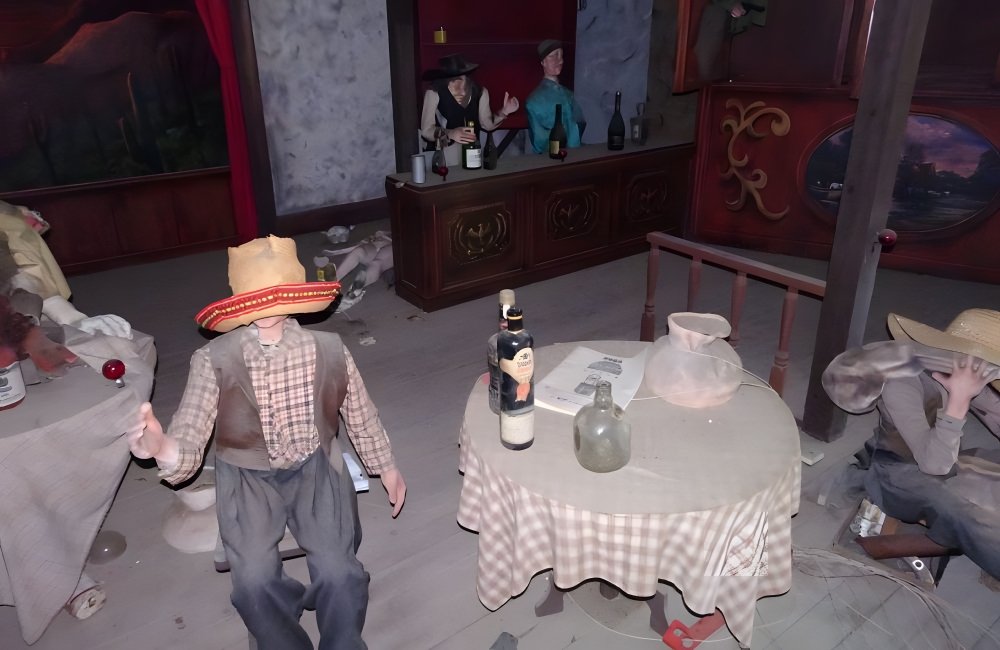
The Western Village, Nikko, Japan @atlasobscura/Pinterest
The Western Village was pricey, with its Mount Rushmore reproduction costing $25 million to put in a few decades ago. The Village closed in 2007, likely for financial reasons. Now, it is a popular place for haikyo (urbex adventurers) from Japan, who love exploring the uncanny, surreal surroundings of this former Western-themed amusement park.
65. Barlow Sanatorium
Location: Los Angeles, California
Year: 1902
Cost: $250,000*
Tuberculosis is a bacterial disease that ravages through the lungs. Treatment now is a regiment of antibiotics, as well as strict isolation. This deadly disease is better-managed now, thanks to the wonders of modern medicine, but in the early twentieth century, it tore through entire countries, killing thousands.
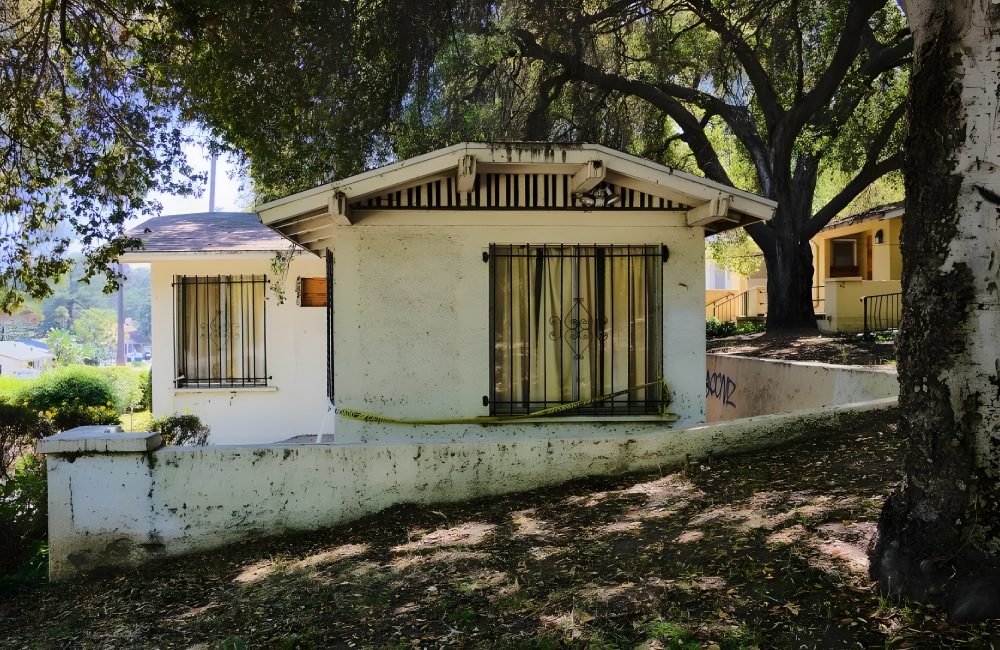
Barlow Sanitorium, Los Angeles @atlasobscura/Pinterest
Sanatoriums, which were places dedicated to treating TB patients, were opened to combat the spread. The Barlow Sanatorium was founded in 1902 for TB patients to get sunshine and fresh air—some patients remained there for years on end. Now, Barlow is a Respiratory Hospital, though remains of its old sanatorium past remain undisturbed on its grounds.
66. Dunmore Park House
Location: Airth, Scotland
Year: 1822
Cost: $779,000 to build*
Located in Airth, Scotland, Dunmore House was constructed as an ancestral home in 1822 for the Fifth Early of Dunmore and his family. At the time, the home was worth around $16,000 (that’s $779,000 in today’s money).
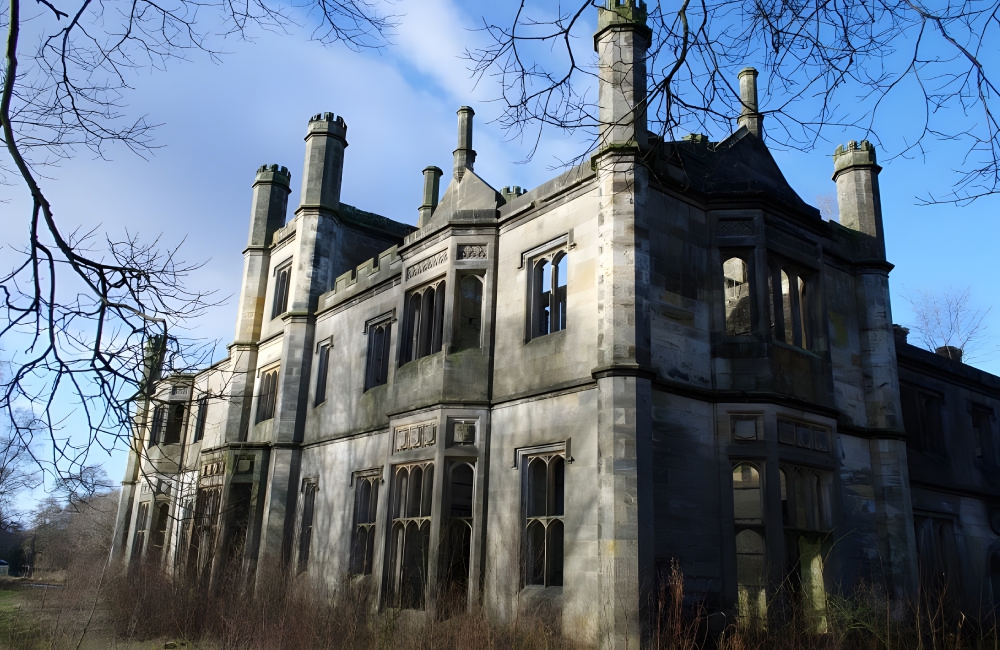
Dunmore Park House @cathymanco/Pinterest
Dunmore Park House, as it was known, remained occupied for nearly a century until 1911, when it was sold to a private owner and transformed into a girls’ school from 1961 until 1964. After the sixties, Dunmore Park House fell into dereliction. Some lots remain privately owned, while others remain in the National Trust for Scotland. You can visit the abandoned grounds for a tour of Dunmore, though it was partially demolished in 1972.
67. Chatanika Gold Dredge #3
Location: Fairbanks North Star, Alaska
Year: 1923
Cost: $70 million total value (1923-1957)*
To visit this old gold mining landmark in Alaska, you can take the old Steese Highway twenty-five miles out of Fairbanks. The Chatanika Gold Dredge #3 was established in the early 1920s as a mining operation. Over a period of thirty years, around $70 million worth of solid gold was extracted from the dredge.
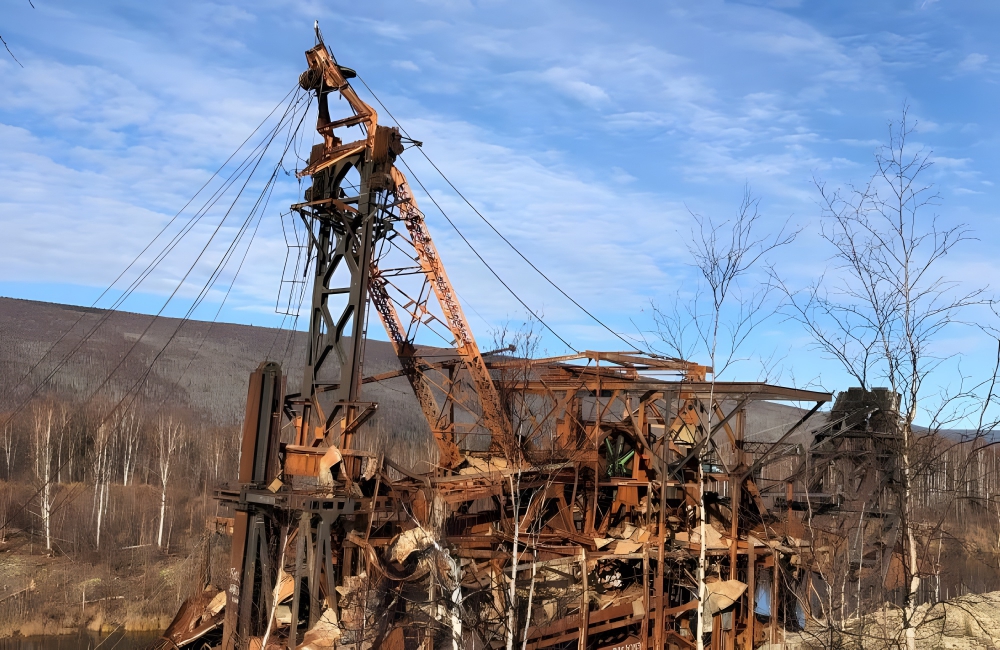
Chatanika Gold Dredge #3, Alaska @atlasobscura/Pinterest
At one point, the population of the mining camp was ten thousand, which, ironically, is even larger than the entire population of Fairbanks. The Dredge changed hands from the sixties until 1997 when its new historian owners left the equipment as it was to make sure Alaskan history was preserved. Though the steel equipment and framework were damaged by fire in 2013 and 2016, the Dredge #3 still remains, mostly, intact.
68. Victoria Theatre
Location: Newcastle, New South Wales, Australia
Year: 1876
Cost: $121,000* (2022 Renovation Costs)
In 1876, Victoria Theatre was founded as a state-of-the-art, professional, nationally-significant theater that was a feather in New South Wales’ cap. The Newcastle-located Victoria was designed by famous architect J. Henderson, and, though it was torn down a few times, it was always rebuilt. It stopped being a theater in 1966, and it now is a historical, visitable landmark.
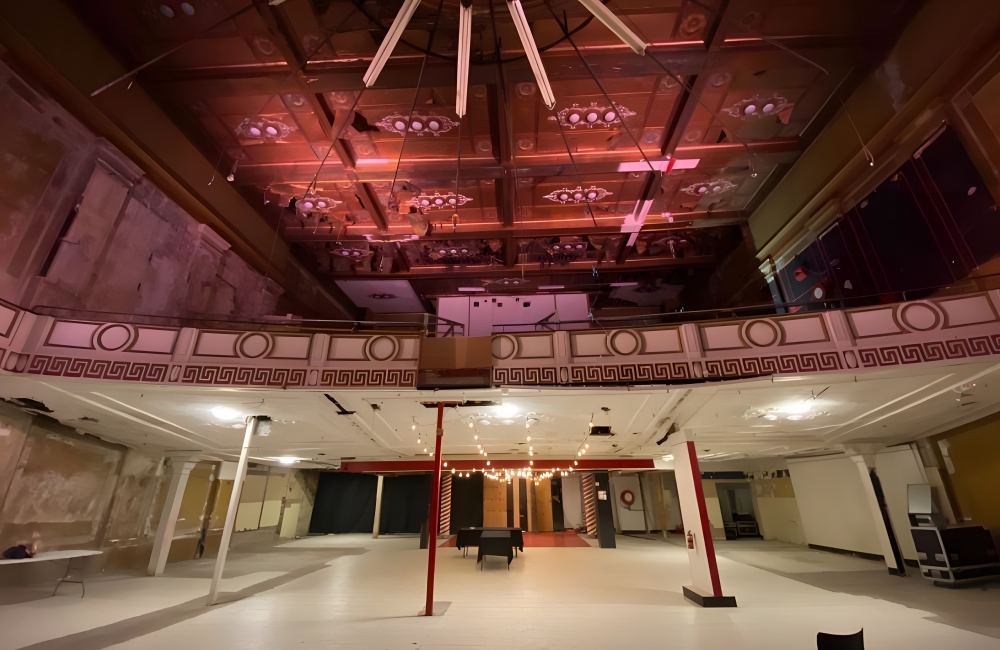
Victoria Theatre, Newcastle, Australia @atlasobscura/Pinterest
The abandoned theater was stage-and-screen, and its final movie was Bette Davis’ Who’s Buried In My Grave (fitting, don’t you think?). The theater’s huge velvet curtain was kept at half mast, as though it would one day be reopened for live theater—something that has not happened yet.
69. Old Town Mall
Location: Gay Street, Baltimore, Maryland
Year: 1818
Cost: $1.7 million revival cost in 1968*
Baltimore, Maryland is a city that was once a great landmark of East Coast America, but it has, largely, fallen into disrepair, boasting high unemployment rates, poverty, and crime. When the Old Town Mall was founded in the 1800s, it helped turn Baltimore into a bustling, diverse city. But, after WWII, a lot of families moved to the suburbs, and Gay Street, the street on which the Old Town Mall is located, fell into disrepair.
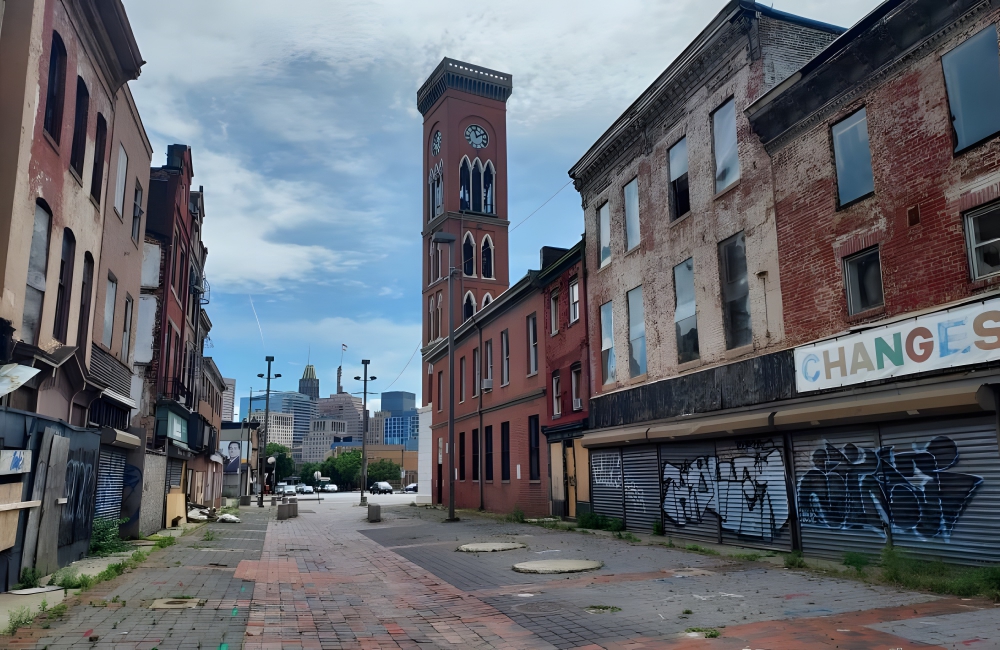
Old Town Mall, Baltimore, Maryland @atlasobscura/Pinterest
Despite a $1.7 million revamp after the devastation of the 1968 Baltimore Riots, Old Town Mall didn’t last. The area is mostly abandoned now, though, fittingly, a Haunted House opens there every year before Halloween.
70. Rodalquilar Gold Mine
Location: Rodalquilar, Spain
Year: 1930s
Cost: N/A
The Denver Mining Plant’s surviving structures seem to precariously hang off the hillside over the little Spanish town of Rodalquilar in Cabo de Gata Natural Park. The mine was founded during the first half of the twentieth century, and its fame hit a fervor pitch in the 1950s. People truly believed that there were huge deposits of gold hidden beneath Rodalquilar’s surface.
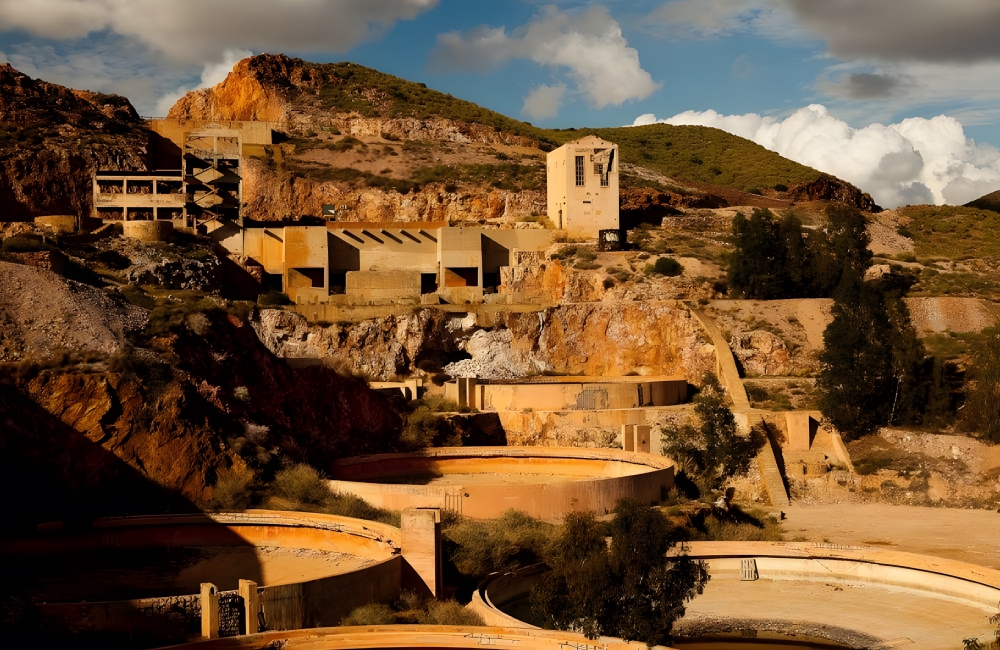
Rodalquilar Gold Mine, Rodalquilar, Spain @atlasobscura/Pinterest
Alas, this state-sponsored enterprise didn’t live up to its expectations, and after a decade of disappointment, it was abandoned. Though it got a breath of fresh air in the eighties after it was used as a film set for Solarbabies and The Reckoning, this former mine is mostly the haven for explorers who want to tour its eerie, rocky ruins.
71. The Witch’s Hat Pavilion
Location: Neversink Mountain, Reading, Pennsylvania
Year: 1892
Cost: $4.142 million to build the Neversink Mountain Hotel*
Neversink Mountain, a site of hiking trails in Reading, Pennsylvania, was once the site of a group of exclusive, fancy hotels constructed at a cost of $4.142 million (adjusting for inflation). In the warm months, vacationers from Philly and NYC would take a train to the hillside to stay in Reading and get a taste of the rural, sweet country air.
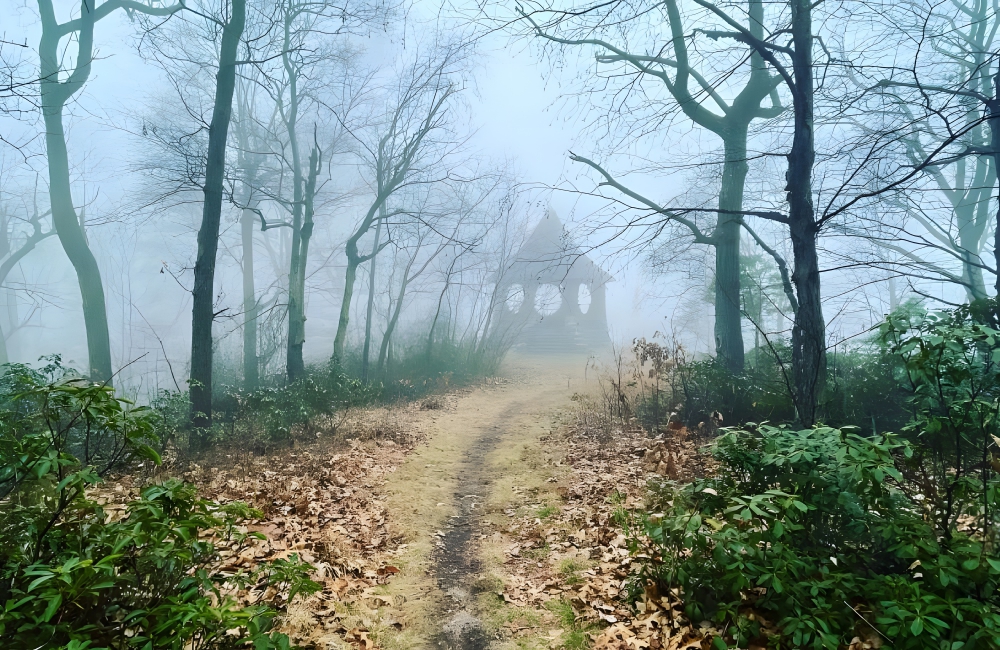
The Witch’s Hat Pavilion, Reading, Pennsylvania @atlasobscura/Pinterest
Now, all that remains of nineteenth-century glory is an abandoned stone pavilion nicknamed “The Witch’s Hat.” It has a spooky vibe, as it does look like the hat of a Halloweenish figure. Despite Neversink’s abandonment (and further destruction due to arsonists), it still offers beautiful views of the mountains on a clear day.
72. Sadpol Strawberry
Location: Wierzbica, Poland
Year: 1992
Cost: Unknown
This gigantic metal strawberry was once the linchpin announcing the presence of Sadpol, a farm located between Modlin and Warsaw, Poland. This giant, red strawberry heralded a strawberry-growing farm where tens of thousands of pounds of strawberries were grown and exported throughout Europe.
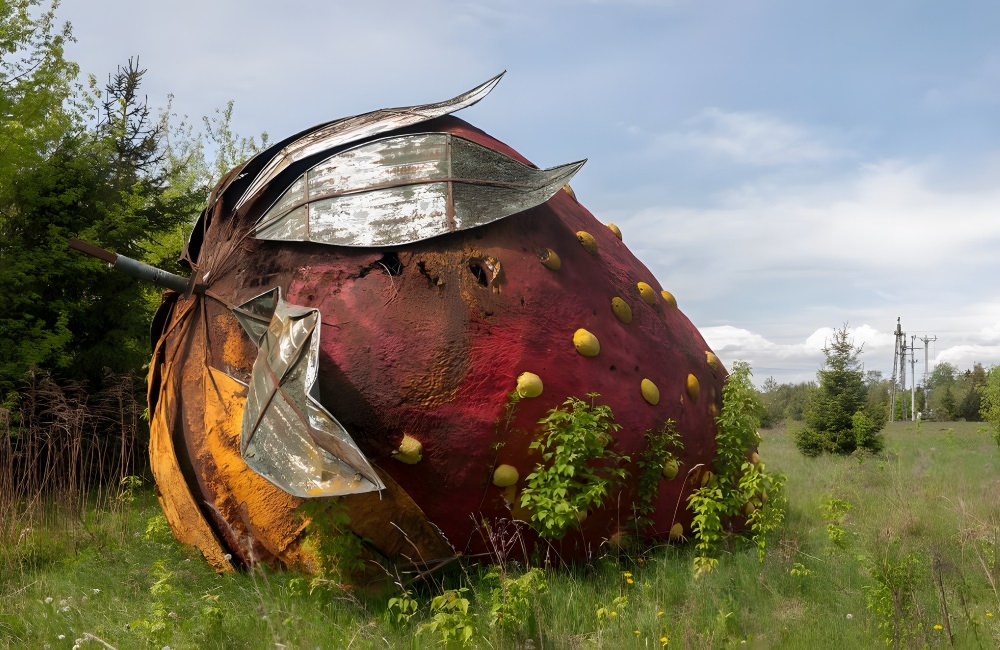
Sadpol Strawberry, Wierzbica, Poland @atlasobscura/Pinterest
The Sadpol Strawberry is slightly damaged, but it still makes for a great photo op. The hole at the base of the large metal berry actually adds a bit of character. You can see inside, and the berry is no doubt home now to a bunch of critters who see it as a mansion.
73. El Miro Ruins
Location: Puntarenas Province, Jaco, Costa Rica
Year: Unknown
Cost: N/A
Overlooking Playa Jaco in Costa Rica are the ruins of a mansion that once belonged to a rich man. The man passed on before El Miro, his estate, was completed, and all that remains of El Miro’s dream is its three-story ruins, which consist of unfinished balconies, white pillars, grand staircases, and what would have been a luxurious interior.
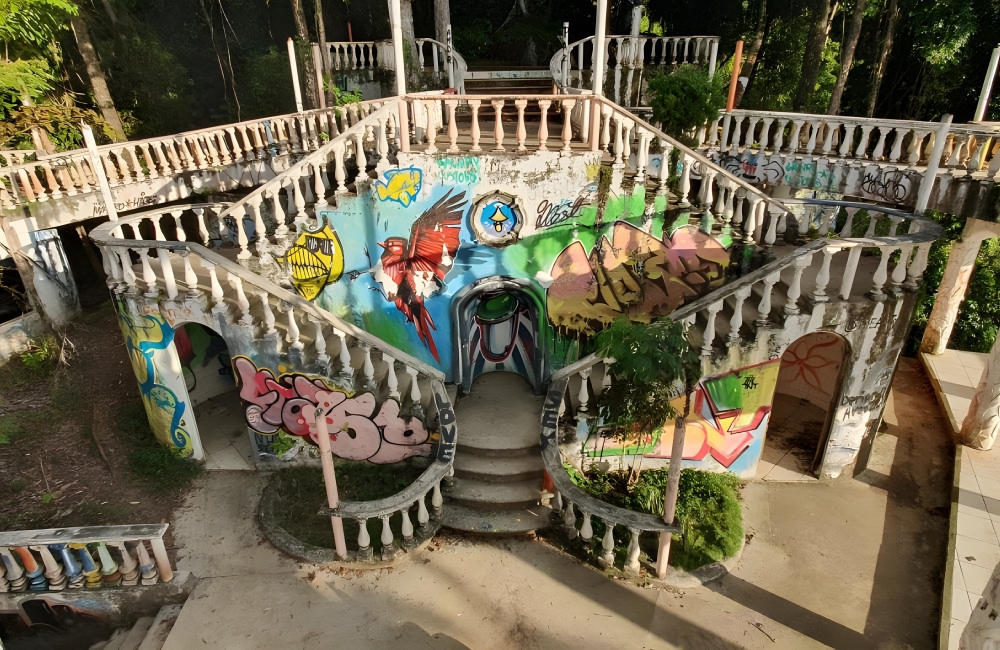
El Miro Ruins, Jaco, Costa Rica @atlasobscura/Pinterest
El Miro offers panoramic views to curious hikers and urbex adventures. There is a lot of graffiti on El Miro, which is either beautiful or disrespectful, depending on how you view the toil of graffiti artists. To get to El Miro, you’ll have to do some hiking on a trail that starts past the Petrol Station on the side of Jaco’s highway to Quepos.
74. Michelangelo da Vinci
Location: Villamarzana, Rovigo, Italy
Year: 2000
Cost: $16.23 million for the Douglas and Tupolev planes*
An hour southwest of Venice, Italy in Villamarzana stand the ruins of two planes, a helicopter, and a control tower. The planes, a Douglas DC-6 ($230,000) and a Tupolev Tu-134A ($16 million), were part of a project founded by Gigi Stecca in 2000. Stecca wanted to give elderly Italians a chance to fly on an airplane if they had never done so before.
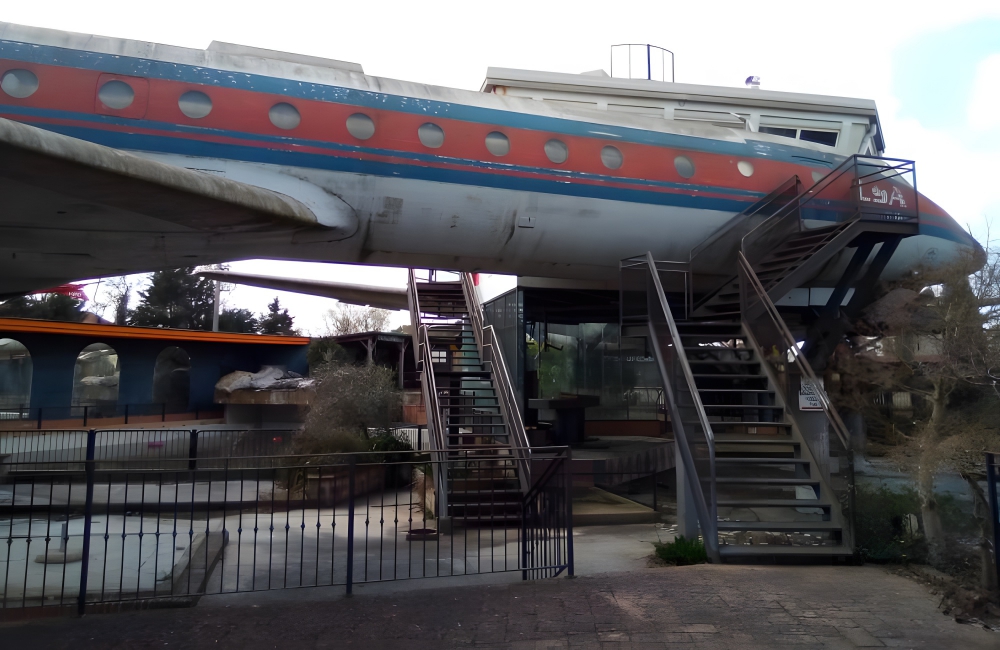
Michelangelo da Vinci, Villamarzana, Italy @atlasobscura/Pinterest
Stecca named the complex, which also included a restaurant, Michelangelo da Vinci. Alas, the semi-amusement park was embroiled in over a decade’s worth of legal battles over governmental zoning rules, and that forced its shutter in 2014.
75. Sanatorio Durán
Location: Potrero Cerrado, Costa Rica
Year: 1918
Cost: $100,000-$300,000 to build*
Carlos Cartin, a Costa Rican politician and doctor, opened Sanatorio Duran, a tuberculosis recovery ward, to help treat his daughter who was ill with the disease in 1918. Sanatorio Duran’s locale was remote, so as to provide the most natural light, fresh air, and warm weather possible. Sadly, Cartin’s daughter did not make it.
Sanatorio Durán, Potrero Cerrado, Costa Rica @atlasobscura/Pinterest
Duran still functioned after her passing, and it was staffed by nuns from the Charity Santa Anna. It is said that the ghosts of these sisters, as well as the children who passed away from TB, haunt the grounds of the sanatorium (which was also, later, used as an insane asylum). Sanatorio Duran has a reputation for being the most haunted hospital in Costa Rica.