
16. Star Jet Roller Coaster
Location: Seaside Heights, New Jersey
Year: 2002
Cost: $2 million*
Star Jet delighted tourists and locals alike when it was built in Seaside Heights, New Jersey in 2002. Situated on Casino Pier, the 52-feet tall structure was a popular attraction until Hurricane Sandy came to town.
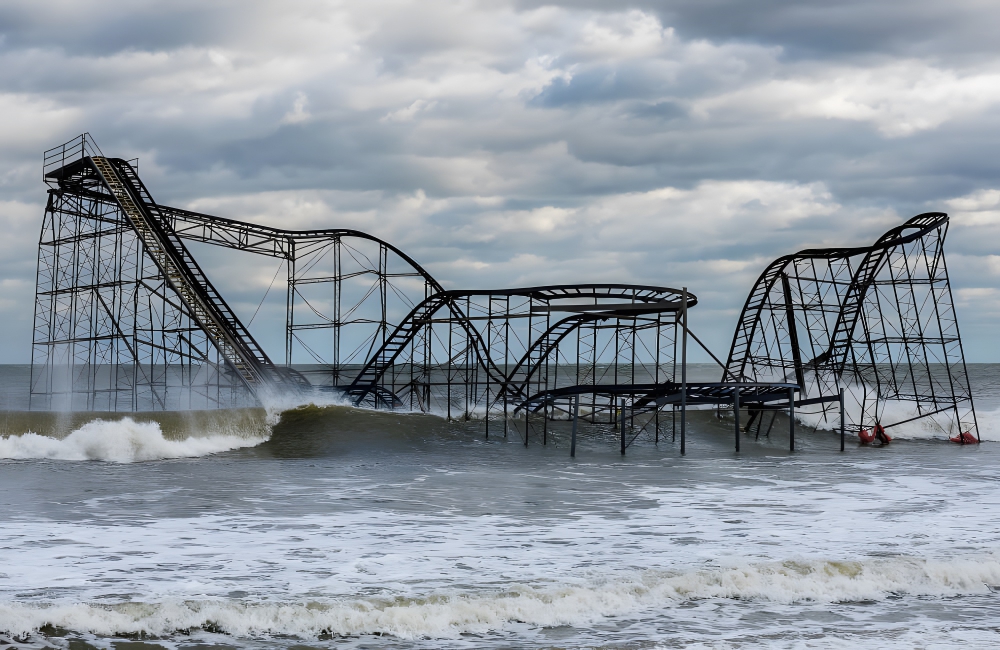
Roller Coaster, Seaside Heights, New Jersey @Sky Cinema / Shutterstock
When the hurricane hit in 2012 it caused some of the pier to drop into the ocean. As a result, Star Jet tumbled into the Atlantic. Amazingly, it retained much of its original shape. Sadly for fans it was beyond repair and was torn down in 2013 before being replaced by a different coaster, Hydrus, in 2017.
Makers did take note of what happened to Star Jet before they built Hydrus. Instead of erecting a new one where Star Jet once was, they moved it from the pier to the beach in order to give it a better chance at weathering any possible storms.
17. Mayan Ancient City of Tikal
Location: Guatemala
Year: 600 B.C.
Cost: Unknown
The ancient Mayans have fascinated modern day scholars for years, with many archaeologists becoming entirely enamored with new and old finds. Disney’s National Geographic has aired multiple documentaries on the subject over the years. Perhaps one of the most interesting sites of all is the Mayan Ancient City of Tikal in Guatemala.
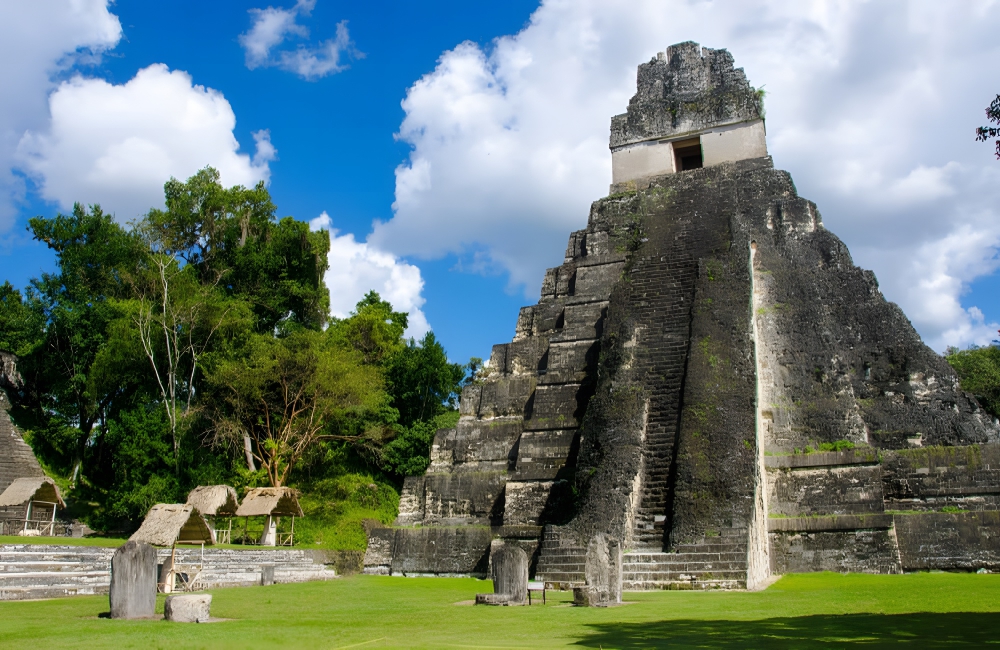
Mayan Ancient City of Tikal @Simon Dannhauer / Shutterstock
As one of the biggest sites of its kind, it’s believed that the capital was a powerful kingdom that thrived. However, by the Late Classic Period it had ceased to grow and the population had started to dwindle, leading to its desolation by the time the 10th century rolled around.
Thankfully, plenty of evidence has been left behind so historians can try and get an idea of what life was like for the civilization back then. Although there is still plenty we don’t know, these ancient cities are a window into a different time.
18. Chernobyl
Location: Ukraine
Year: 1193
Cost $1.5 billion*
Nuclear power plants are not cheap structures to build by their very nature – and if something goes wrong it’s costly on multiple levels. But Chernobyl is a prime example of all these worst-case scenarios combined. The Vladimir Ilyich Lenin Nuclear Power Plant was built just outside of Pripyat in 1972, providing lots of city dwellers with jobs.
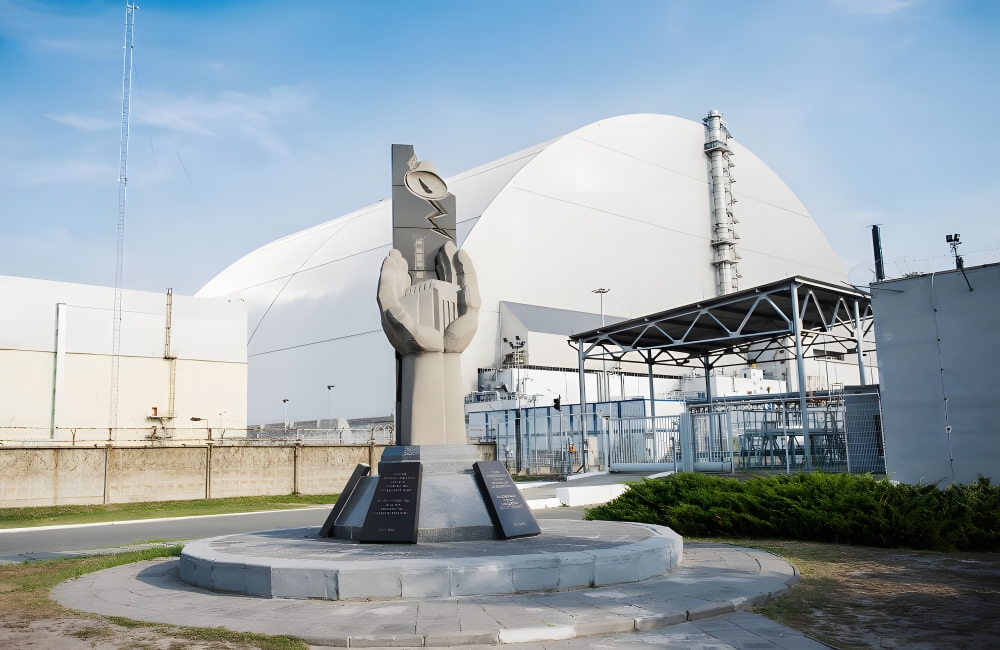
Chernobyl @Valeriia Manzovitova / Shutterstock
After the Chernobyl disaster occured in 1986, the surrounding area was so heavily contaminated with nuclear radiation that it had to be abandoned. 14,000 people lived in the vicinity at the time, but now only 1,000 people remain. The town is littered with abandoned homes besides ones marked with signs saying “Owner lives here.” AT&T’s HBO turned the disaster into an award-winning series in 2019.
The disaster and the aftermath holds an important place in history. Not only does Chernobyl lie in waste as a permanent reminder of the danger of nuclear power, but it just goes to show how fragile entire cities are, even if they don’t appear to be.
19. Underwater Sculpture Park
Location: Molinere
Year: 2006
Cost: Unknown
Hidden in the Caribbean Sea just off of the west coast of Grenada is the Molinere Underwater Sculpture Park. Divers wanting to see something entirely unusual and spine chilling can visit the spot for juist $2 a pop. Designed by Jason deCaires Taylor, the concrete human figures feature a ring of kids holding hands and even a man riding a bike.
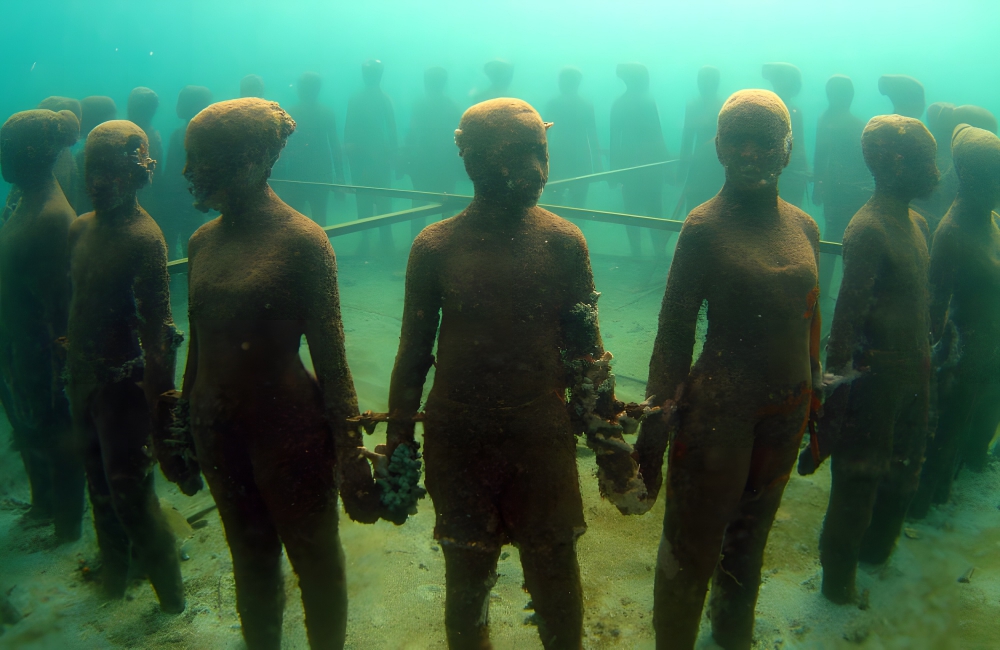
The Underwater Sculpture Park, Molinere @R Gombarik / Shutterstock
It’s not clear how much the artist would’ve shelled out to turn his underwater dream into a reality, but the sculptures have been lurking in the deep since 2006. Now heavily tarnished and marred by the tides, the tourist attraction is still visited, but strangely haunting.
Even on a fairly busy dive day, visitors can expect to be met with an eerie sight. After all, it’s not everyday you see human-like figures at the bottom of the ocean, seemingly playing. While not entirely abandoned, the sculpture park certainly isn’t as shiny and new as it once was.
20. Constanta Casino
Location: Romania
Year: 1910
Cost: $8 million (adjusted for inflation)
Although the original structure of Constanta Casino in Romania dates back to the 19th century, the modern shape didn’t come to fruition until the early 1900’s. The city wanted to emulate something that would draw in big crowds, like the fashionable casinos popping up along the French Riviera.
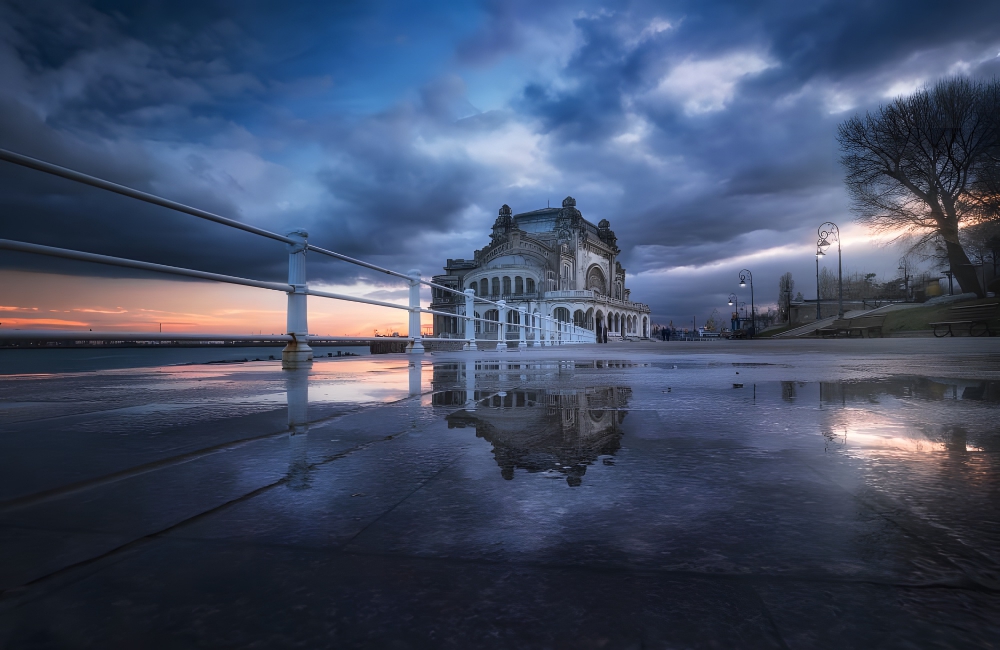
Constanta Casino, Romania @malanca_adrian / Shutterstock
By 1910 they had spent $8 million on a truly impressive building complete with luxury fixtures and fittings, from sparkling chandeliers to plush carpets. Although it flourished for a time, by 1990 it had become far too expensive to run. As a result, it has been closed for over 30 years. Despite funds being allocated to try and repurpose the building, nothing has been done as of 2020.
The building has one of the most beautiful locations in the entire city, overlooking the ocean and the promenade. Situated close to the Aquarium, it’s a perfect spot that could earn developers a lot of money if only they could come up with the cash.
21. Disney’s River Country
Location: Florida
Year: 1976
Cost: $10 million+*
It’s easy to concentrate on the big, iconic parts of the Disney World that we can see, but it’s even easier to forget about the attractions that were once popular. Back in 1976, the park’s latest draw was River Country in Bay Lake, Florida.
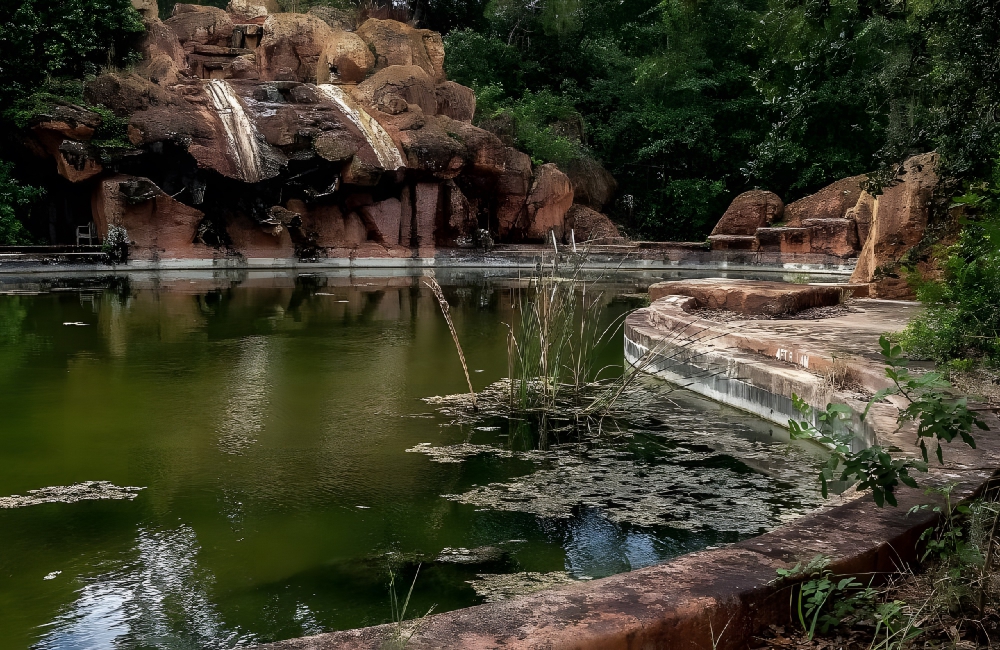
Disney’s River Country ©r/OldPhotosInRealLife/Reddit
Disney marketed the park as an old-fashioned, wholesome swimming hole for all the family to enjoy. However, it wasn’t all sunshine and rainbows. When Disney opened Typhoon Lagoon, interest in River Country waned. By 2005 it had closed for good and left to rot in its own moss for 17 years, until Disney announced the site would be turned into a hotel set to open in 2022.
The development is welcome news, but it just goes to show that not everything we see at Disney is always quite as magical as it looks. Attractions get pushed aside for other, newer models, and perish quicker than Walt would’ve yelled “Cut!”
22. Hashima Island
Location: Japan
Year: 1887
Cost: $50 million*
Hashima Island stands at a length of 16 acres as one of the abandoned islands of Japan’s Nagasaki. Although more than 5,000 people lived there back in 1959, the island is now a floating ghost town with a population of zero.
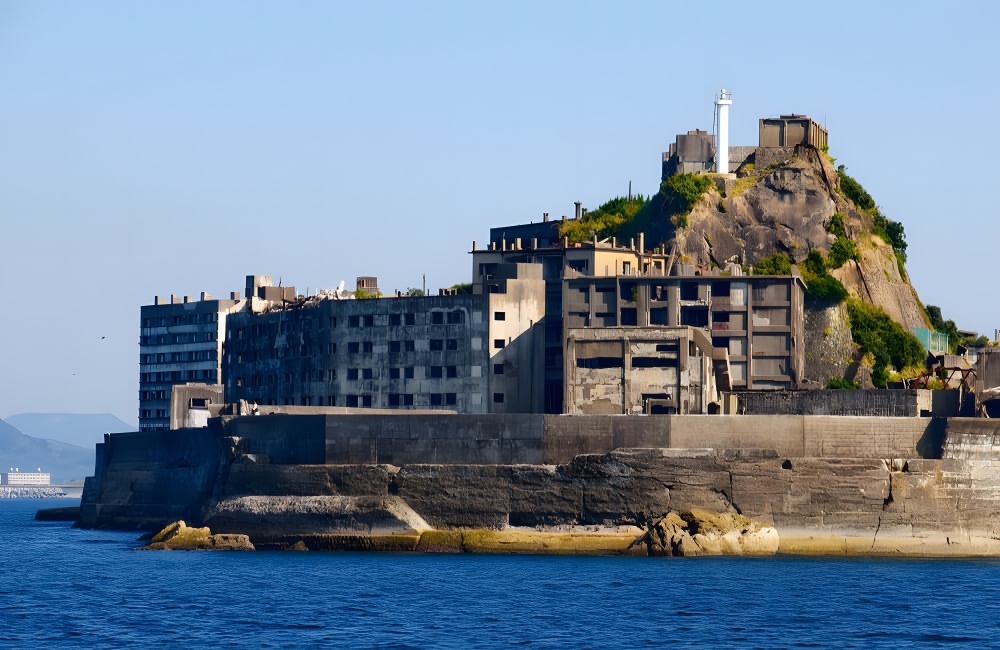
Hashima Island, Japan@Grassflowerhead / Shutterstock
Many inhabitants worked on the coal mines situated under the sea in the area, but by 1974 all of the resources had been tapped. As a result, people started to leave in droves as the mine was closed. Concrete buildings and remnants of life gone by remain, drawing in tourists as a UNESCO World Heritage Site.
The weather in the area can be so harsh that visiting tourists can only make their way onto the island at certain times of the year. However, those that do make it say that it’s an incredible time capsule with almost untouched housing complexes.
23. Bannerman Castle
Location: New York
Year: Early 1900s
Cost: Unknown
Francis Bannerman paid the handsome sum of $1,600 in 1901 to buy Pollepel Island (around $50,000) in order to house his new arsenal warehouse. Rather than build a boring concrete shell he erected a castle-like structure, dubbed Bannerman Castle.
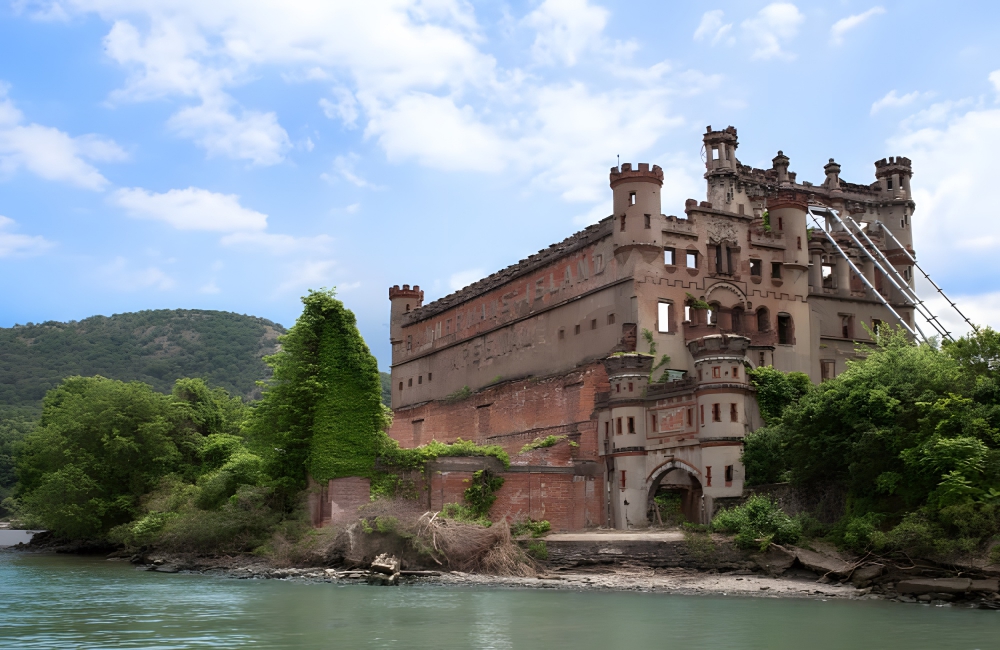
Bannerman Castle, Hudson, New York@littlenySTOCK / Shutterstock
Designed entirely by himself, it’s impossible to say how much the investor spent on it, but it certainly was an impressive feat. Just 20 years later some of the structure was damaged in an explosion and was never repaired. To this day some of it still stands, but there are no plans to bring it back to life.
During the original explosion, Francis Bannerman’s wife was said to be lounging in a nearby hammock when she became thirsty and got up to fetch a drink. Had she not moved, she would’ve been squashed by a large piece of concrete.
24. Submarine Base
Location: Balaklava, Ukraine
Year: 1953
Cost: $1.3 billion*
After World War II, Joseph Stalin asked a designer with an eye for top secret projects to create somewhere to store submarines. It needed to be secret and completely undetectable. They soon found Balaklava in Ukraine and started to carve out a complex underground bunker. It took eight years and $1.3 billion to build.
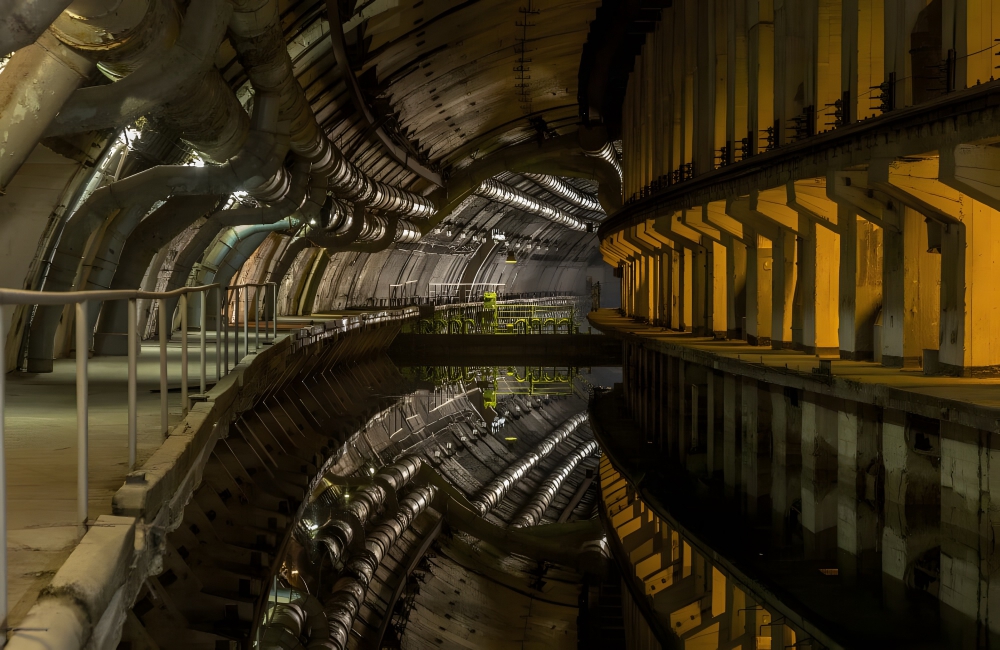
Submarine Base, Balaklava, Ukraine @A_Lesik / Shutterstock
In 1993 it closed completely and was left entirely open and unsecured, meaning anyone could come and go as they pleased. Seven years later it became the property of Ukraine’s army, before eventually being turned into a military museum with a truly fascinating (and morbidly expensive) history.
Today, visitors can wander the strange tunnels and take in a scene that’s reminiscent of Thunderbirds. With such a rich past, it’s a must-visit location for history buffs, or simply anyone that finds themselves at a loss for something to do in the area.
25. Athens Olympic Venues
Location: Greece
Year: 2004
Cost: $160 million*
Every city that hosts the Olympics is under enormous pressure to pull out all the stops. Athens was no different in 2004. In total, the city spent an astonishing $11 billion on staging the games. $160 million of this went into preparing the Olympic Village accommodation for competitors.
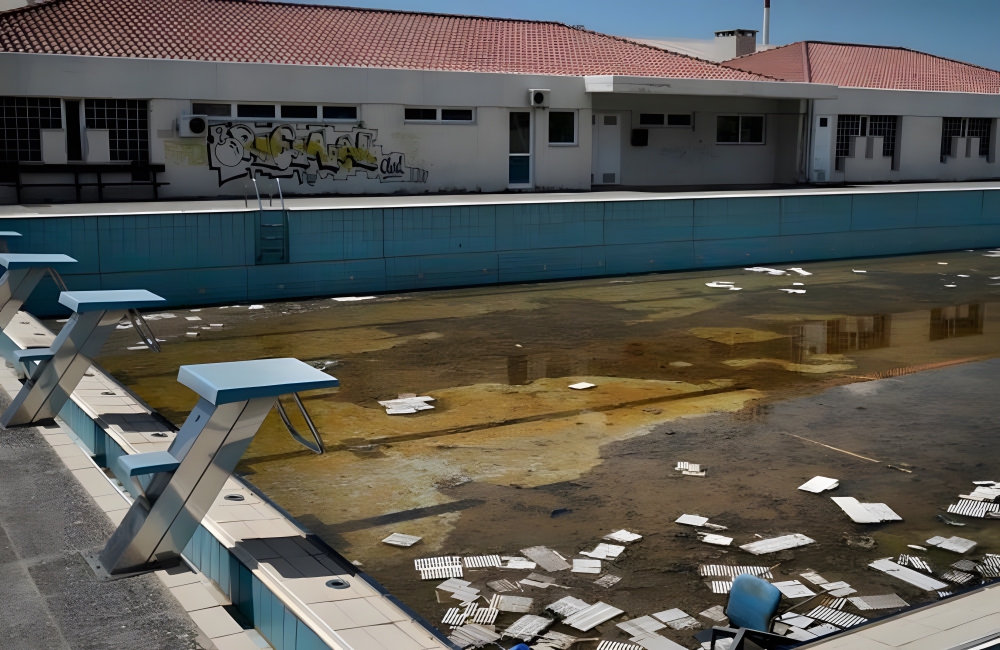
Athens Olympic Venues @forbesmagazine/Pinterest
With training fields, pools, tracks, and bungalows to house guests, the site had everything athletes needed. Despite how much money was poured into creating top-level facilities, they were simply left behind when the games closed.
The government had expressed hopes that some of the locations would be turned into housing. In reality, while some of it was repurposed, an overwhelming amount has been left unused. Considering the economic trails Greece has faced since, it’s hardly that surprising.
26. Lynnewood Hall
Location: Elkins Park, Pennsylvania
Year: 1897
Cost: $17.5 million*
Lynnewood Hall was the classiest of establishments when it was first built in the late 1800s. It took three years to build, and the mansion was chock full of gilded moldings, silk and velvet curtains and carpets, and art from all over the world. The owner of the 110-room Gilded Age mansion, Peter A. B. Widener, threw lavish parties at his estate.
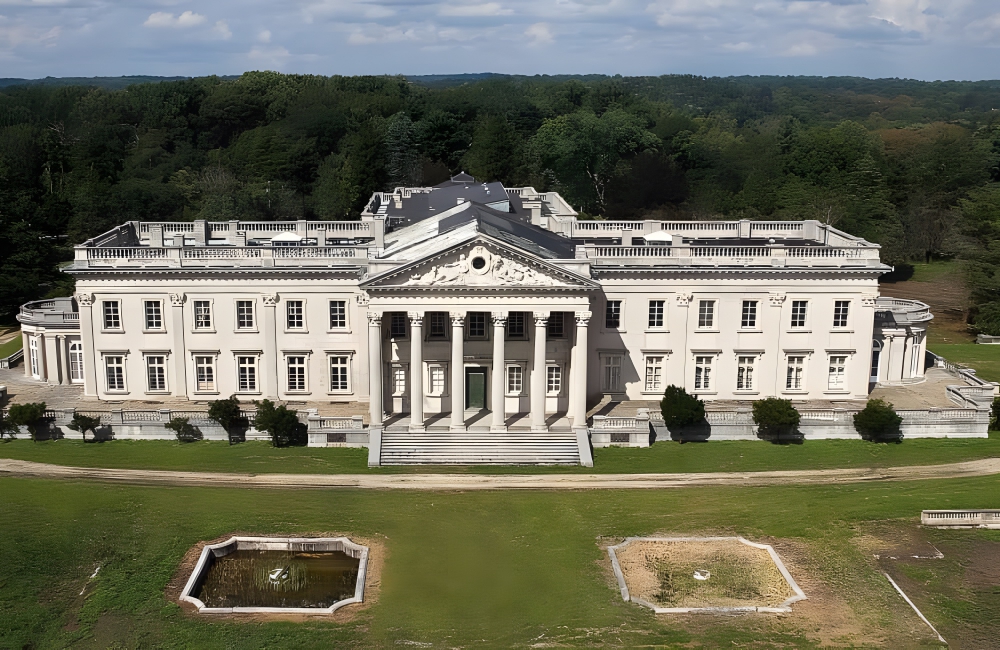
Lynnewood Hall, Elkins Park, Pennsylvania ©©FMS57/Shutterstock
The mansion was built using Indiana limestone. The ballroom was large enough for one-thousand guests. After Peter Widener died, the mansion fell into disrepair. The Faith Theological Seminary bought the mansion for $192,000 in 1952, and it let all of the interiors go to waste.
27. Mys Aniva Lighthouse
Location: Sakhalin Island, Russia
Year: 1939
Cost: $10 million*
Built by the Japanese military in 1939 on the Russian island, Sakhalin, the Mys Aniva Lighthouse has since been abandoned. The island itself was uninhabited through the 1800s until Russia became interested in annexation. The thin island is over 590 miles long, seated between the Sea of Okhotsk and the Sea of Japan.
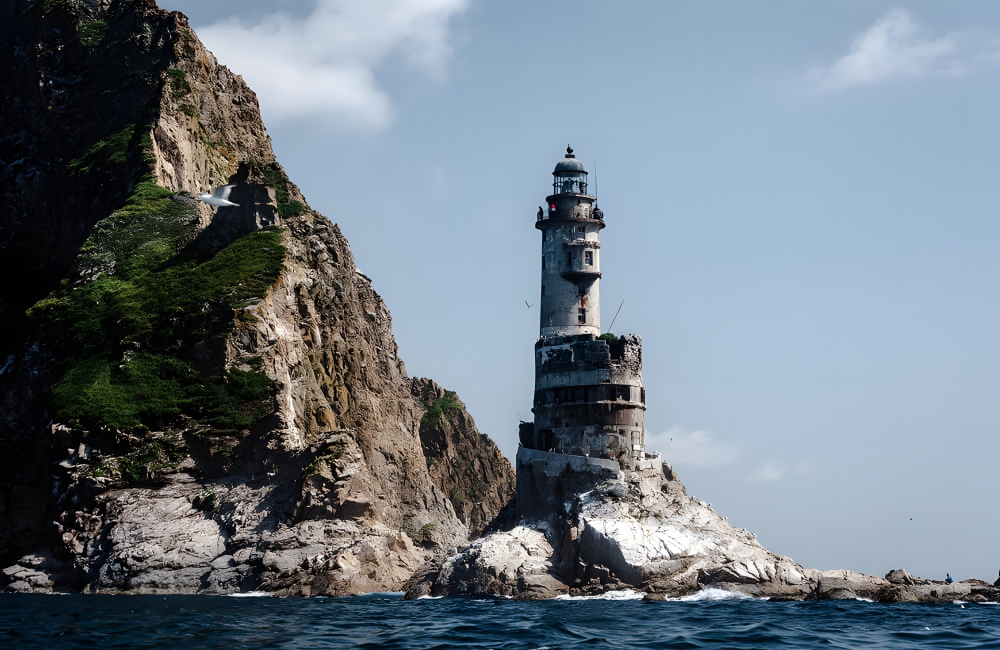
Mys Aniva Lighthouse, Sakhalin Island, Russia ©toureast65 / Shutterstock
The Mys Aniva Lighthouse is seven stories high. It has diesel engines, keeper’s living spaces, storerooms, clockwork pendulums, and accumulator rooms. Aniva Lighthouse also has a 662-pound pool of mercury still sitting there. The mercury was used as a low-friction rotation surface. Now, it is still, and the only sound is the waves.
28. Halcyon Hall
Location: Bennett College in Millbrook, New York
Year: 1893
Cost: $9 million*
Bennett College itself, a women’s college founded in the late 1800s, is abandoned, but Halcyon Hall is the main attraction for those looking to explore creepy, abandoned, and possibly-haunted buildings. Halcyon Hall was built in 1893. H.J. Davison, a New York publisher, built the 200-room structure in the Queen Anne style.
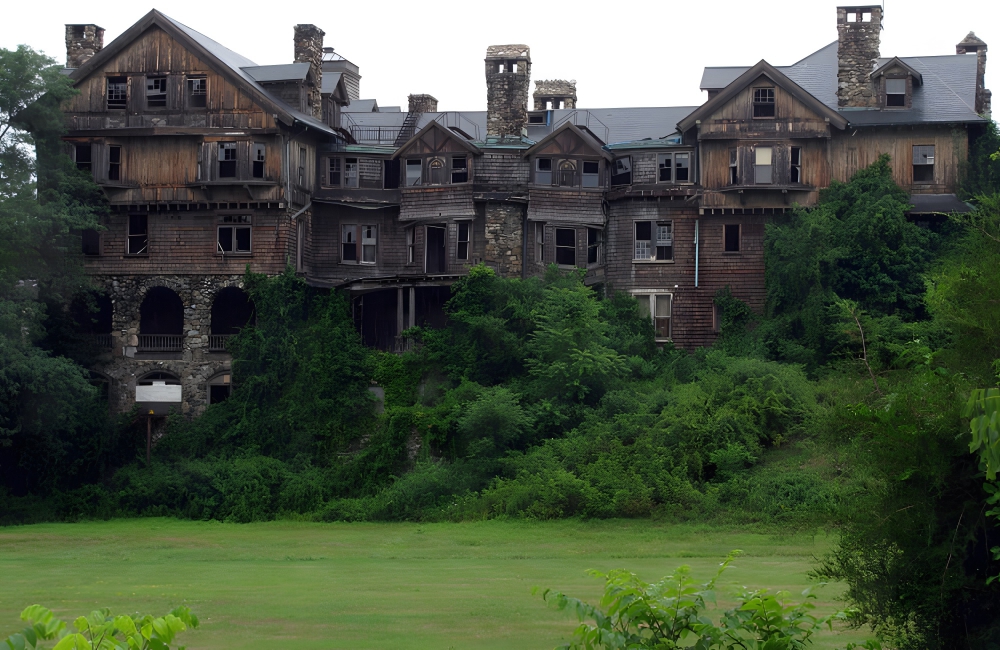
Halcyon Hall, Bennett College in Millbrook, New York @Sharon Ladonski / Pinterest
The building was originally intended as a hotel, but Bennett College annexed the building after the hotel idea didn’t catch on. After Bennett College went bankrupt, Halcyon Hall fell into ruin. Even the bank that tried to foreclose on the property, Mechanics and Farmers Savings Bank, went bankrupt in 1991.
29. Eastern State Penitentiary
Location: Philadelphia
Year: 1829
Cost: $780,000*
Eastern State Penitentiary was opened in 1829, and it housed around 400 prisoners until 1877. ESP officially closed down in 1971 after years of decline, but it is still a popular Pennsylvania tourist attraction, as the place is rumored to be haunted. ESP was a pioneer for separate incarceration, and the prison emphasized reform—not punishment.
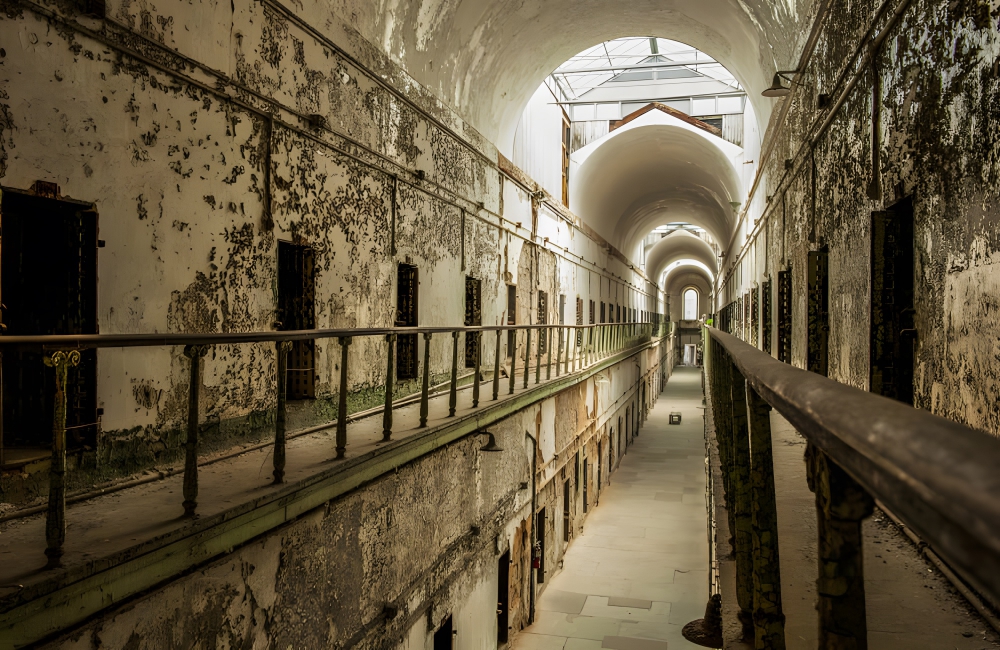
Eastern State Penitentiary, Philadelphia ©true nature / Shutterstock
Famous criminals called ESP home, including mobster Al Capone and Willie Sutton, a bank robber. The building was the most expensive, largest public structure ever built in the U.S. at the time. After the prison shut down, the prison was simply abandoned.
30. Wyckoff Villa
Location: Thousand Islands, New York
Year: 1890s
Cost: $495,000*
The island on which Wyckoff Villa is constructed, Carleton Island, isn’t abandoned—there are thirty-four homes there, and most residents get around using ATVs. The Wyckoff Villa was built in the 1890s by William Wyckoff, who was a salesman for E. Remington & Sons, a gun company. The eleven-bedroom mansion was completed in the Richardsonian Romanesque-Tudor Revival style.
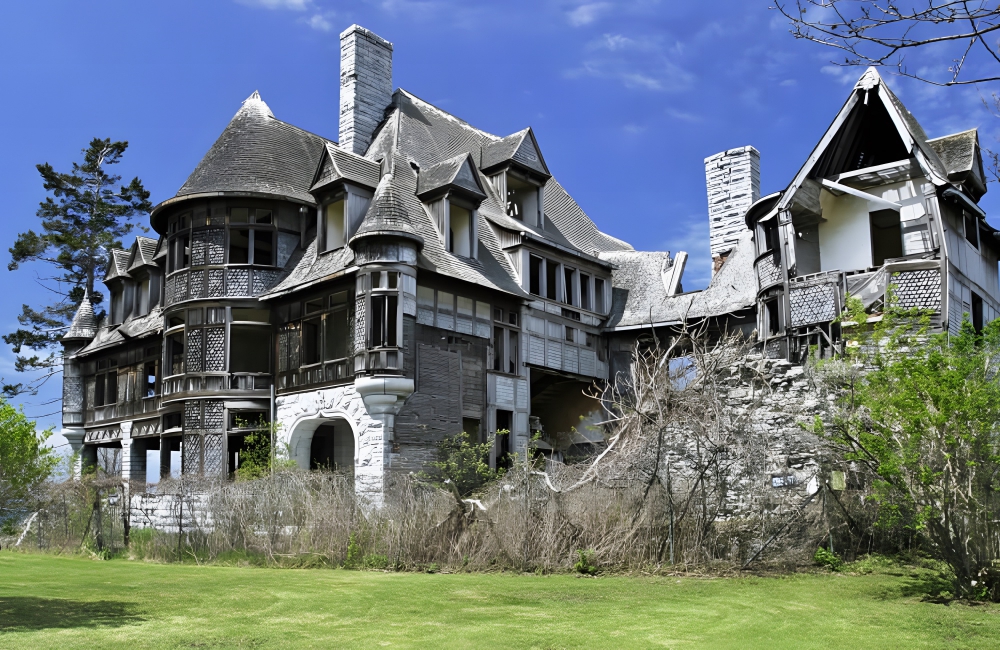
Wyckoff Villa, Thousand Islands, New York @Paranormal Global / Facebook.com
Unfortunately, Wyckoff died just one day after moving in. General Electric purchased the property with the intent of turning it into a corporate retreat. But, WWII came along and ended those plans. The windows and doors were removed during the 1940s, and the mansion is in serious disrepair.