
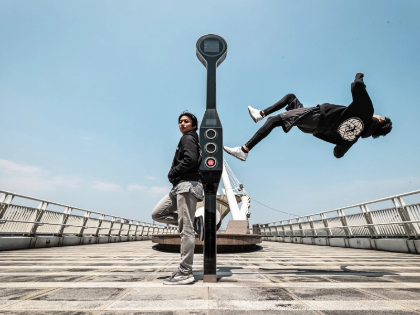
9. The Impact of Extreme Parkour on Urban Culture and Society
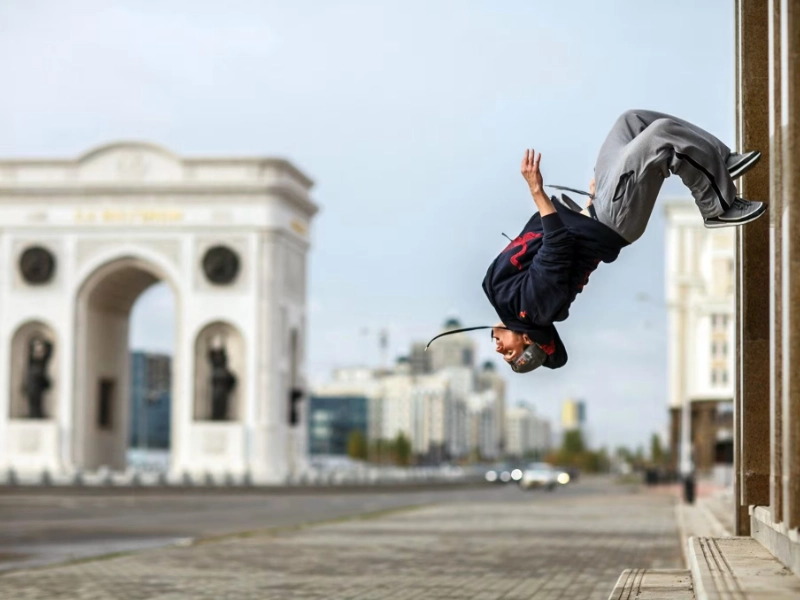
Extreme parkour has challenged accepted ideas of how we interact with our built environment and inspired fresh ideas about movement, exercise, and personal development, therefore permanently changing urban culture and society. Parkour has an impact on many facets of art, media, urban design, even philosophy, going well beyond the actual physical act.
Parkour is now a mainstay in action films, computer games, and TV shows in popular culture. Parkour movements’ dynamic, strikingly graphic quality has made them a preferred tool for choreographers and stunt coordinators trying to produce unforgettable action sequences. This exposure has not only raised public awareness of parkour but also changed how people view urban settings, therefore motivating them to realise the possibility for movement and creativity in daily surroundings.
Parkour’s look has motivated other kinds of urban art and expression. Photographers and videographers have created whole genres specifically to capture the grace and force of parkour moves against city backgrounds. Reflecting the discipline’s emphasis of freedom and creative interaction with the city, street artists have included parkour ideas and images into their work. By questioning conventional ideas of how public areas might be utilised and experienced, this artistic element has helped parkour to be legitimised as a kind of urban performance art.
Parkour has also greatly affected architecture and urban planning. Some forward-looking cities and designers have started to take parkour practitioners’ wants and wishes into account as the discipline grows in popularity in their urban development schemes. In certain places, this has resulted in the development of parkour-friendly locations and even specific parkour parks. These improvements not only give traceurs secure training grounds but also inspire a more dynamic, interactive connection between people and their metropolitan surroundings.
Many people outside the immediate practitioner community have found resonance in the ideology behind parkour. From industry to education, the concept of effectively and creatively overcoming challenges has been embraced as a metaphor for personal development and problem-solving in many spheres. Inspired speakers, life coaches, and teachers have included Parkour’s emphasis on flexibility, resilience, and viewing the environment in fresh ways into their lessons.
In terms of physical education and fitness, parkour has questioned conventional wisdom on movement training and exercise. Its functional, full-body approach to exercise has shaped the evolution of fresh training approaches and exercise regimens. Recognising its ability to include children in physical activity while learning problem-solving techniques and spatial awareness, some schools and physical education programs have started including parkour-inspired elements into their courses.
Parkour communities have lately become really helpful social actors in cities. Parkour activities and jams can unite people from many backgrounds, therefore strengthening a feeling of community and shared goal. Particularly in underprivileged regions, parkour projects have been employed as instruments for young involvement since they offer good outlets for energy and creativity.
Parkour’s expansion has, meanwhile, also brought difficulties and controversy. As parkour has expanded, problems with trespassing, property destruction, and public safety have surfaced. This has spurred continuing debates on parkour practitioners’ rights and obligations in public and private environments. While some towns have sought to collaborate with the parkour community to develop mutually beneficial answers, others have responded with more restriction or outright prohibitions on parkour in specific locations.
Another issue of dispute both inside and outside the community is parkour’s commercialisation. Parkour’s increasing popularity has drawn corporate interest, which has produced sponsored events, professional athletes, and parkour-branded goods. Although this has given the discipline fresh resources and chances, it also raises questions regarding the possible diluting of parkour’s fundamental ideals and its change from a grassroots movement to a commercialised sport.
Notwithstanding these difficulties, extreme parkour’s influence on urban culture and society keeps increasing. It has pushed us to rethink how we interact with the built world, encouraged fresh kinds of artistic expression, and advanced a philosophy of conquering challenges much beyond physical activity. Parkour’s impact on urban life and culture is probably going to become more profound as it develops, so influencing our perspective of our cities and our own capacity for movement and inspiration inside them.
 zi ang