
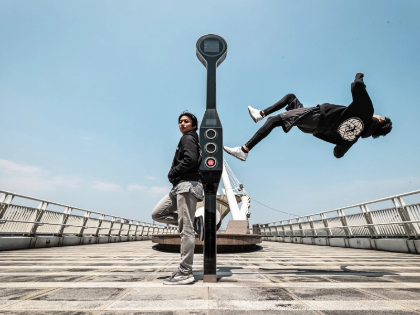
3. The Physical and Mental Demands of Extreme Parkour

Extreme parkour demands a special mix of physical ability and mental toughness since it pushes the human body and mind to their limits. To properly and safely negotiate the urban terrain, practitioners must become very strong, flexible, and endurance-bearing. Parkour’s physical challenges challenge the body’s proprioceptive systems and cover all muscle groups.
In parkour, core strength is absolutely critical since it offers the stability and control required for performing difficult motions and preserving balance in dangerous environments. To build a strong core, traceurs can include planks, hollow body holds, and L-sits among a range of bodyweight exercises in their routines. Particularly for vaulting, climbing, and swinging motions, upper body strength is also absolutely vital. A parkour athlete’s exercise program consists mostly in pull-ups, muscle-ups, and handstand push-ups.
Generation of power in jumps and leaps depends on lower body strength and explosiveness. The required leg strength and response ability is developed in part by squats, lunges, and plyometric activities including box jumps. Another important quality is flexibility, which lets traceurs flow naturally and negotiate many challenges. To increase their range of motion and lower their risk of injury, many practitioners include yoga or dynamic stretching into their instruction.
Particularly in longer runs or more intensive training sessions, parkour heavily relies on cardiovascular endurance. To increase their stamina and recuperation time between strong bursts of activity, traceurs sometimes do interval training and endurance-building activities. Maintaining focus and accuracy during a parkour session depends on this cardiovascular fitness, particularly as tiredness starts to set in.
Extreme parkour’s mental challenges are just as difficult and sometimes disregarded. Practitioners have to develop an uncompromising concentration and the fast and precise risk assessment capacity. A key ability is fear control since many parkour actions incorporate heights or apparently unsafe environments. Rather than let their dread paralyse them, traceurs learn to direct it into increased awareness and concentration.
Another vital mental component of parkour is under pressure decision-making. During a run, traceurs have to make split-second decisions regarding the path to follow or how to approach a barrier. This calls for a mix of fast problem-solving ability, experience, and instinct. Safety and success in extreme parkour depend on one’s ability to remain cool under great stress.
Mental resilience is also very important since parkour’s learning curve usually consists of failures and the necessity to bounce back. Traceurs have to have a growth attitude, seeing problems as chances for development rather than insurmount hurdles. This resiliency goes beyond mere physical ability to include the capacity to recover from training-related injuries or setbacks.
 zi ang