
3. Essential Techniques in Extreme Motorcycle Stunts
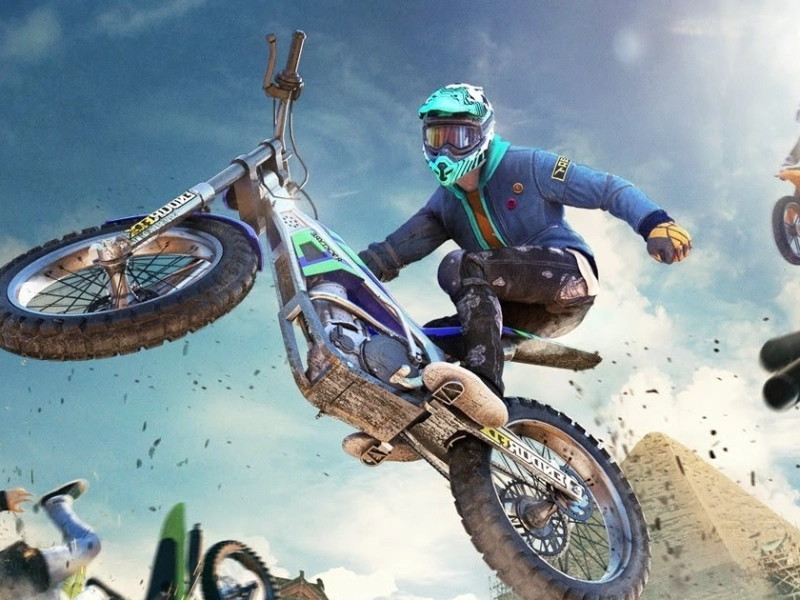
Learning extreme motorbike feats calls for a variety of methods grounded in aerial acrobatics. More intricate and amazing stunts are produced from the building blocks these approaches offer. Before trying more difficult moves, riders spend many hours honing these basic abilities.
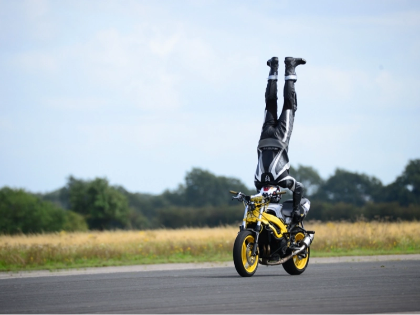
The wheelie, in which the rider balances the motorcycle on its back wheel, is among the most simple yet vital methods. Many airborne stunts depend on this ability since it guides riders on weight distribution and balance point manipulation of the bike. Key for some landing techniques and transitional movements, riders advance from the wheelie to the endo, balancing on the front wheel.
Another basic method where the rider lifts both wheels off the ground concurrently using the suspension of the bike and their body movement is the bunny hop. Clearing hurdles and starting increasingly difficult jumps require this ability. Riders can raise the height and distance of their hops as they grow more skilled, therefore producing bigger jumps and more complex feats.
Another class of fundamental moves are no-handed and no-footed ones. These entail hands from the handlebars or feet from the pegs taken from motion or in the air. Often paired with other moves, these techniques call for extraordinary balance and control and produce more difficult stunts. Advanced aerial work benefits much from the confidence and bike control acquired from learning these skills.
Techniques to control the bike’s position in the air are whips and scrubs. Whereas a scrub lowers the bike’s trajectory over a jump, therefore keeping it closer to the ground, a whip entails twisting the bike sideways mid-air and straightening it before landing. These methods not only look great but also have uses in racing events.
Many aerial stunts originate with rotational tricks. Possibly the most famous is the backflip, in which the rider and bike rotate totally backwards. Variations cover the frontflip and the double backflip. To start and manage these revolutions, riders have to become experts in body posture and throttle input timing.
Body varials are methods whereby the rider separates from the bike mid-air, executes a rotation or position shift, then remounts. One such is the Kiss of Death, in which the rider leans over the handlebars, dramatically arching their back, and extends their body behind the bike.
Combining many approaches produces more difficult stunts. A Tsunami Flip, for example, combines a backflip with a Superman body stance to produce an aesthetically arresting and technically difficult move. Riders often create their own signature combinations as they go, stretching the possibilities and always changing the sport.
Learning these approaches calls for mental strength as much as physical ability. Riders have to get over anxiety and grow to have a strong awareness of how their bike behaves in different circumstances. From basic to advanced skills, the path from here is one of continual learning, risk assessment, and personal development.
 zi ang