
91. Los Angeles-class Submarine
Entered Service: 1976
Manufacturer: Newport News Shipbuilding, Drydock Company, and General Dynamics Electric Boat
Cost: $2 billion*
A testament to Cold War engineering and strategic dominance, the Los Angeles-class submarines stand as one of the U.S. Navy’s most successful and enduring undersea platforms. Introduced in 1976 and constructed by Newport News Shipbuilding and General Dynamics Electric Boat, these nuclear-powered attack submarines were designed to counter Soviet maritime threats.
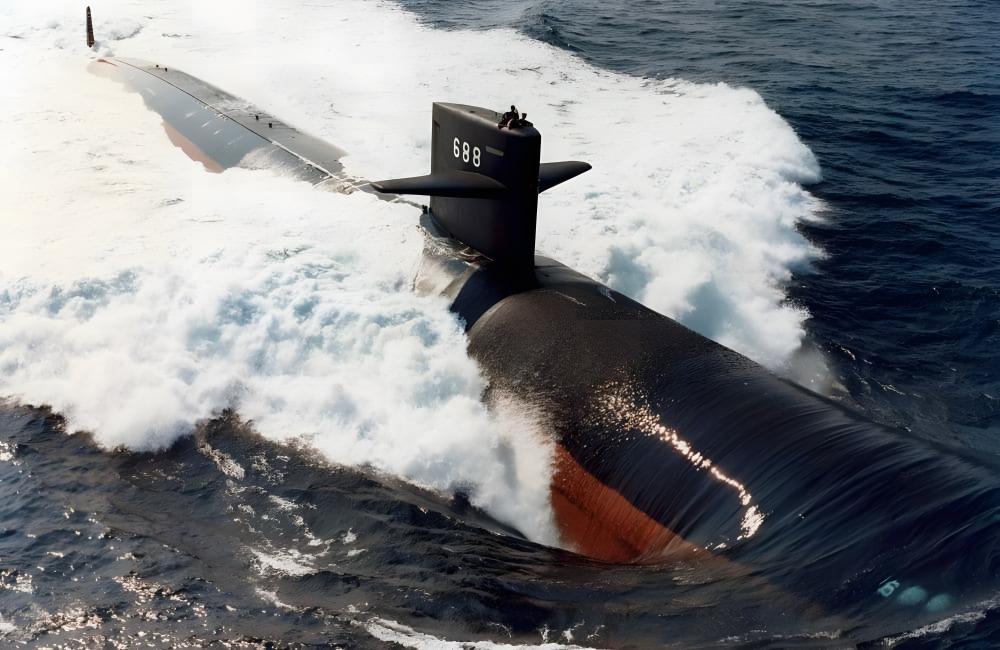
Los Angeles-class Submarine @alpha_defense/X
Their versatility is notable: beyond submarine warfare, they’re equipped for reconnaissance, mine-laying, and launching Tomahawk cruise missiles. Famed for their stealth and speed, they’ve seen continuous upgrades, ensuring their relevance even as newer submarine classes are introduced. Today, while many have been decommissioned, a few still serve, a testament to their enduring design and capabilities.
92. Nimitz-class Aircraft Carrier
Entered Service: 1975
Manufacturer: Newport News Shipbuilding
Cost: $8.5 billion*
Floating fortresses of unmatched power, the Nimitz-class aircraft carriers symbolize the might of the U.S. Navy. Since its inception in 1975, the Nimitz class has served as the centerpiece of naval fleets, capable of projecting airpower worldwide without depending on local bases. Built by Newport News Shipbuilding, these nuclear-powered behemoths can operate for over 20 years without refueling.
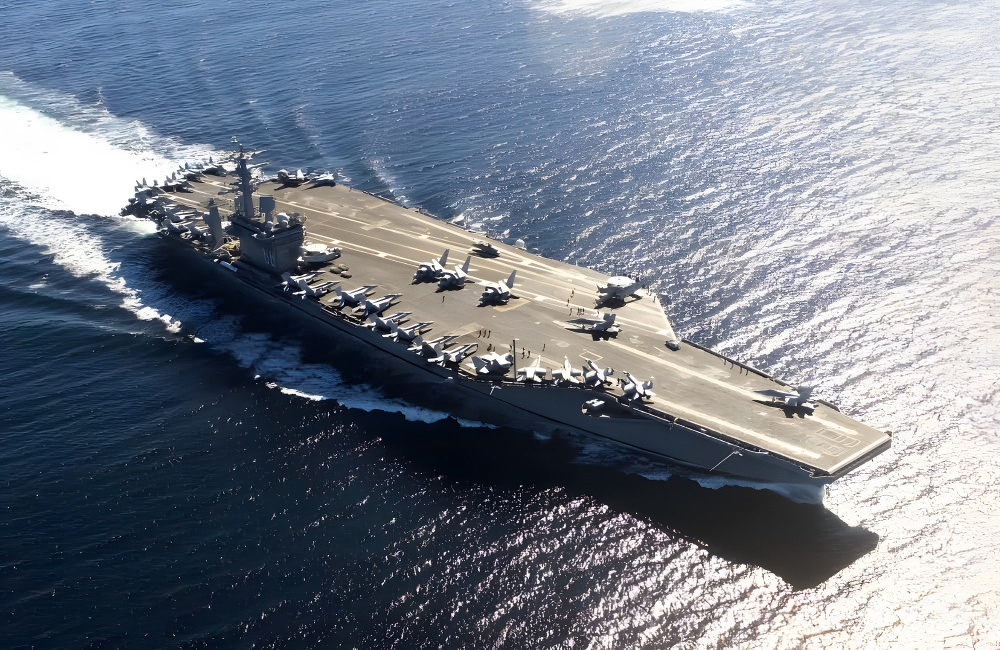
Nimitz-class Aircraft Carrier ©Nimitz’s offical site/Wikimedia Commons
With a flight deck spanning over 1,000 feet, they can carry around 90 aircraft, from fighter jets to helicopters. Featuring advanced radar systems and a plethora of defensive armaments, these carriers serve both as a deterrent and an overwhelming force, reaffirming the U.S.’ maritime supremacy for decades.
93. F-117 Nighthawk Stealth Fighter
Entered Service: 1983
Manufacturer: Lockheed
Cost: $111 million*
Introduced in the 1980s as the world’s first operational stealth aircraft, the F-117 Nighthawk was a game-changer in aerial warfare. Developed by Lockheed Martin’s secretive Skunk Works division, its angular, faceted design was revolutionary, deflecting radar waves and rendering it nearly invisible to enemy defenses.
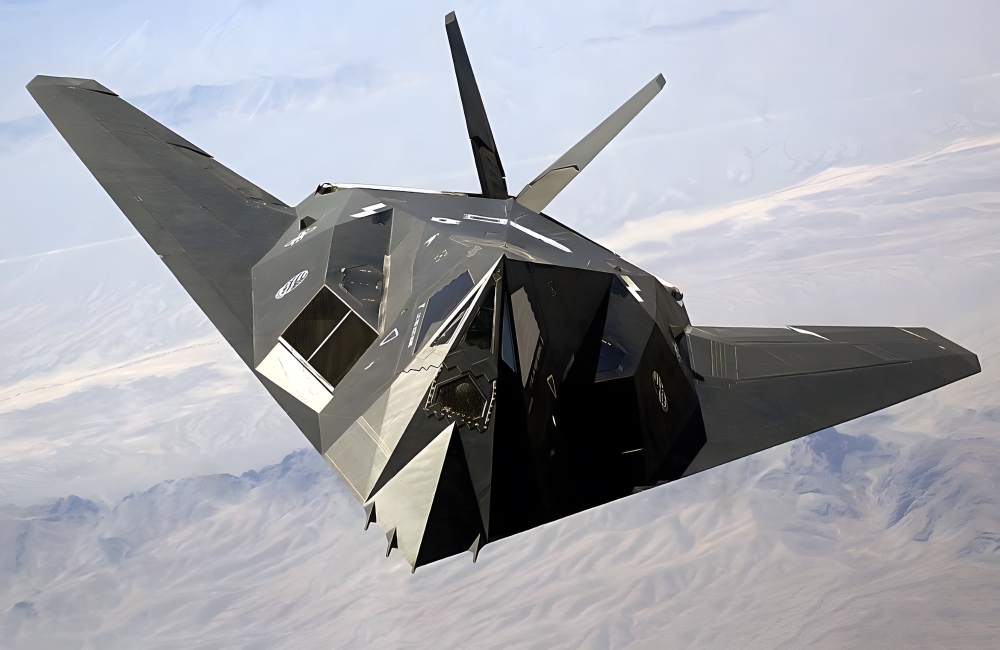
F-117 Nighthawk Stealth Fighter ©Staff Sgt. Aaron Allmon II /Wikimedia Commons
While not a traditional fighter—lacking air-to-air capabilities—the Nighthawk excelled in precision strikes against high-value targets, often penetrating sophisticated air defense systems undetected. Its iconic silhouette, resembling a flying arrowhead, became emblematic of the technological leaps of the U.S. military. Though retired in 2008, the F-117’s legacy as a trailblazer in stealth technology endures.
94. Littoral Combat Ship (LCS)
Entered Service: 2008
Manufacturer: Lockheed Martin and Austal USA
Cost: $360 million*
The Littoral Combat Ship (LCS) represents the U.S. Navy’s modern approach to naval warfare in coastal waters, or the “littorals.” Designed to be fast, agile, and modular, the LCS can rapidly switch roles through mission packages, from anti-submarine warfare to mine countermeasures to surface combat.
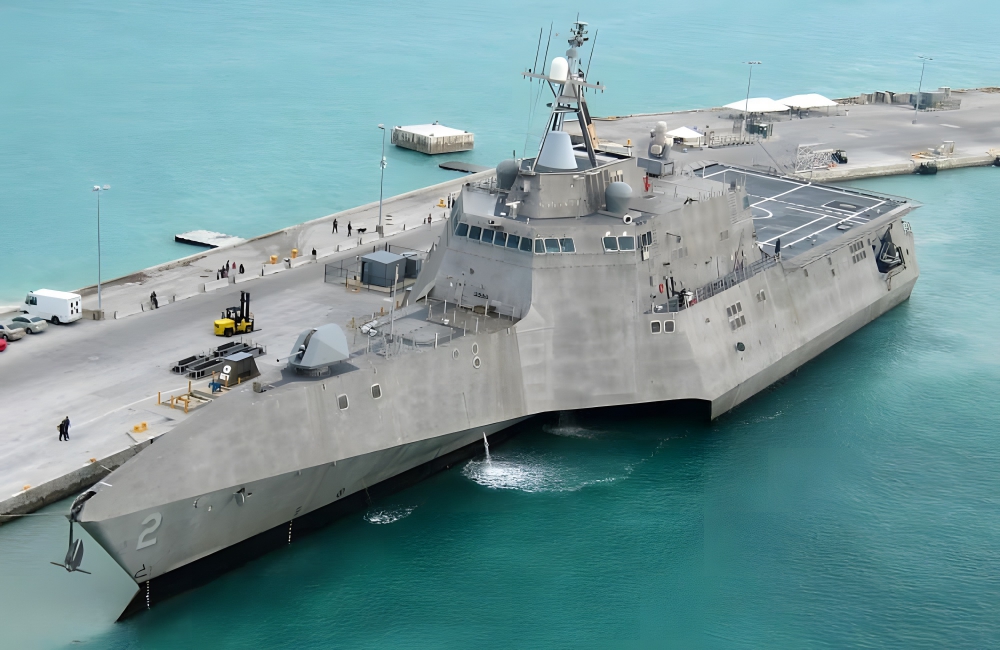
Littoral Combat Ship (LCS) ©Naval Air Crewman 2nd Class Nicholas Kontodiakos/Wikimedia Commons
Two distinct designs exist: the trimaran-hulled Independence variant and the monohull Freedom variant, both emphasizing speed, flexibility, and a shallow draft. The ship’s adaptability allows it to address evolving asymmetric threats. While the LCS has faced criticisms over costs and armament, its versatility ensures it remains central to the Navy’s vision for future operations in complex, near-shore environments.
95. Ticonderoga-class Cruiser
Entered Service: 1983
Manufacturer: Ingalls Shipbuilding and Bath Iron Works
Cost: $1 billion*
The Ticonderoga-class cruiser, commissioned in the 1980s, stands as a testament to the U.S. Navy’s dedication to formidable naval presence and versatility. Equipped with the powerful Aegis Combat System, these cruisers serve as vital air defense assets, capable of defending against aircraft, cruise missiles, and even ballistic missiles.
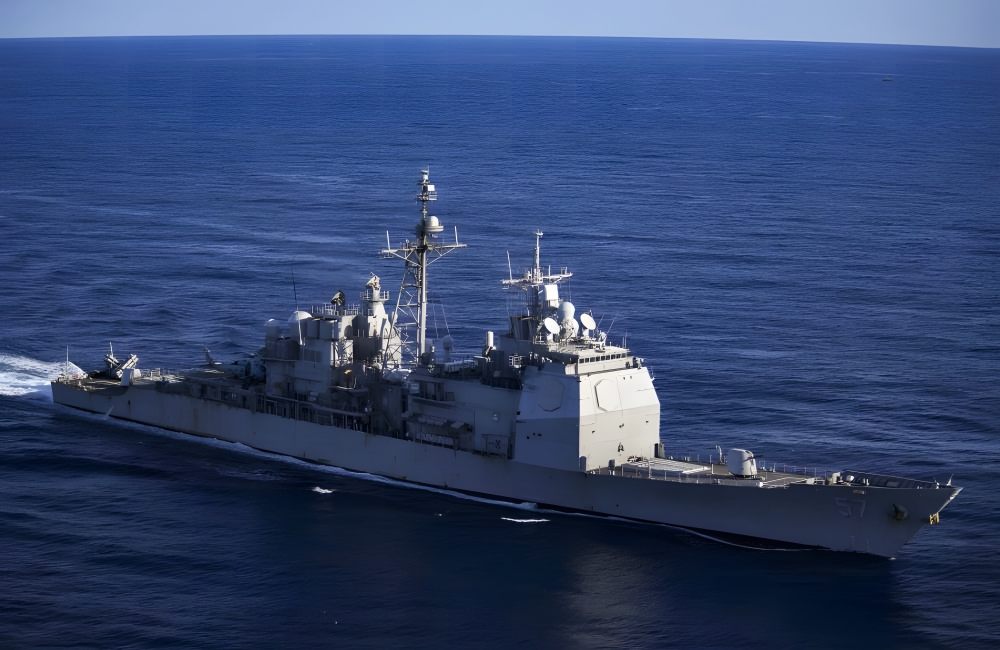
Ticonderoga-class Cruiser ©Mass Communication Specialist 1st Class Tyler R. Fraser/Wikimedia Commons
With 122 vertical launch system cells, they can unleash a mix of surface-to-air missiles, Tomahawk land attack missiles, and anti-submarine weapons. Besides their superior firepower, these cruisers boast advanced radar systems, allowing them to detect and track numerous threats simultaneously. Although aging, the Ticonderoga-class remains crucial in multi-threat environments, securing the seas and supporting joint operations worldwide.
96. Chinook CH-47F
Entered Service: 2007 (for the F model)
Manufacturer: Boeing
Cost: $38.55 million*
The CH-47F Chinook, a modern variant of the legendary Chinook series, is the U.S. Army’s workhorse for heavy-lift transport and logistical support. With its iconic tandem rotor design, the CH-47F offers unparalleled stability and lifting power, capable of transporting troops, artillery, equipment, and even other vehicles across vast distances.
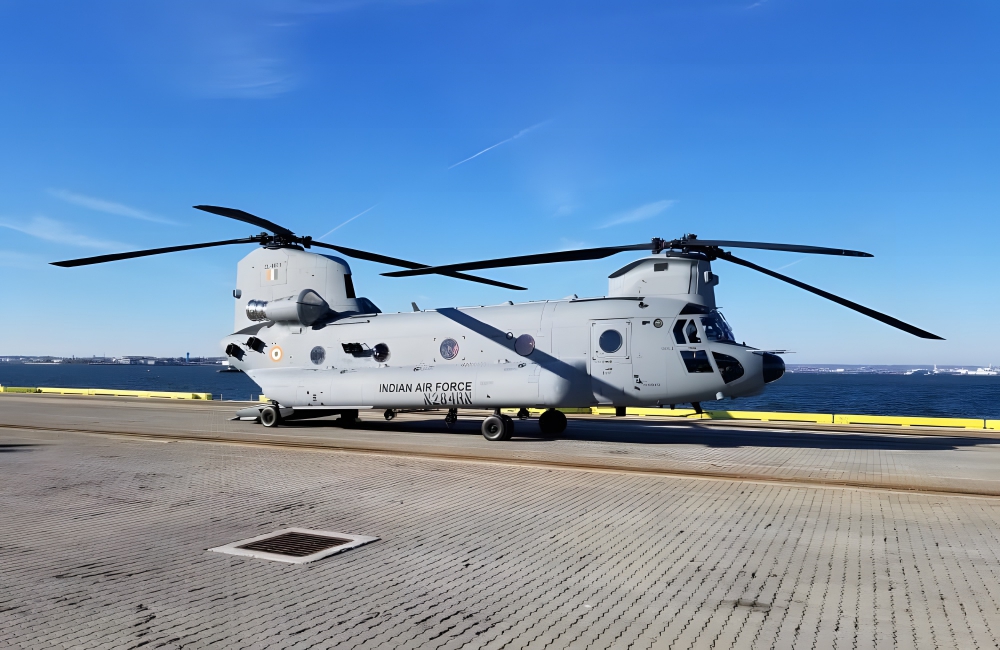
Chinook CH-47F @IAF_MCC/X
Since its inception in the 1960s, the Chinook platform has seen numerous upgrades, with the CH-47F iteration boasting advanced avionics, improved engines, and reduced maintenance requirements. Its capabilities are further accentuated by a fast cruise speed and impressive altitude performance, making it a crucial asset for missions in challenging terrains, from desert sands to mountainous highlands.
97. Apache AH-64E
Entered Service: 2011 (for the E model)
Manufacturer: Boeing
Cost: $35.5 million*
The Apache AH-64E, often dubbed the “Guardian”, is the latest evolution of the formidable AH-64 Apache attack helicopter series. Manufactured by Boeing, this twin-turboshaft aircraft is equipped with state-of-the-art avionics, sensors, and weapons, making it one of the world’s premier attack helicopters. Its ability to operate day or night in adverse weather conditions provides ground forces with critical close air support.
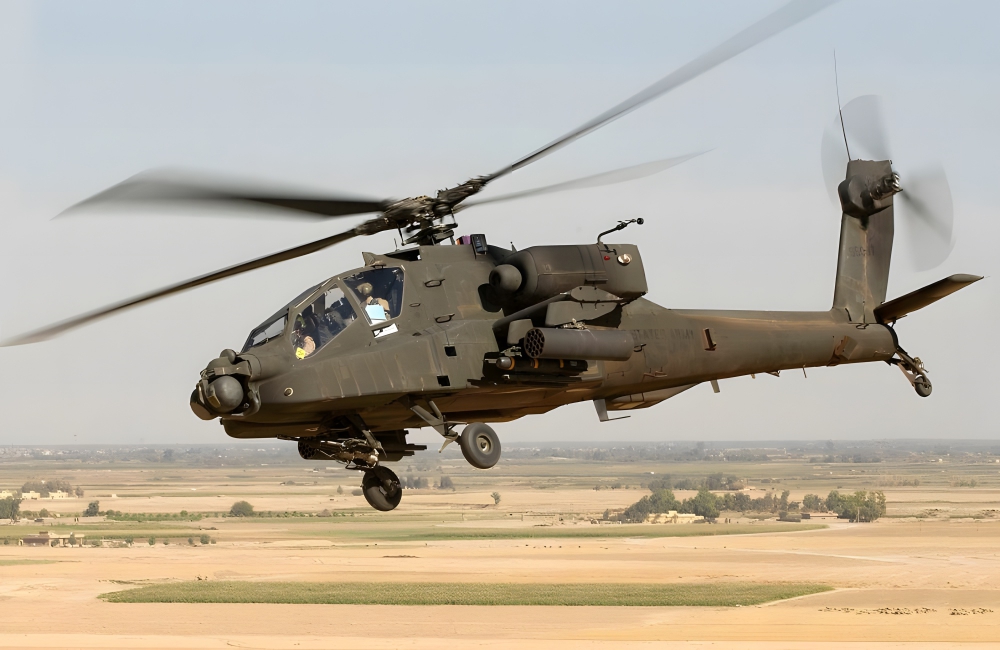
Apache AH-64E ©Tech. Sgt. Andy Dunaway /Wikimedia Commons
Key enhancements in the AH-64E include improved digital connectivity, more powerful T700-GE-701D engines, and advanced aerodynamics. With its lethal combination of agility, firepower, and endurance, the Apache AH-64E plays a pivotal role in modern combat scenarios, ensuring dominance over any battlefield.
98. USS Ohio (SSGN-726)
Entered Service: 1981
Manufacturer: General Dynamics Electric Boat
Cost: $2 billion*
The USS Ohio (SSGN-726) stands as a testament to the U.S. Navy’s innovation and adaptability. Originally commissioned as an SSBN, or ballistic missile submarine, in 1981, the Ohio was converted into a guided-missile submarine (SSGN) between 2002 and 2006. This transformation equipped the vessel with 154 Tomahawk cruise missiles and facilities to support up to 66 special operations personnel.
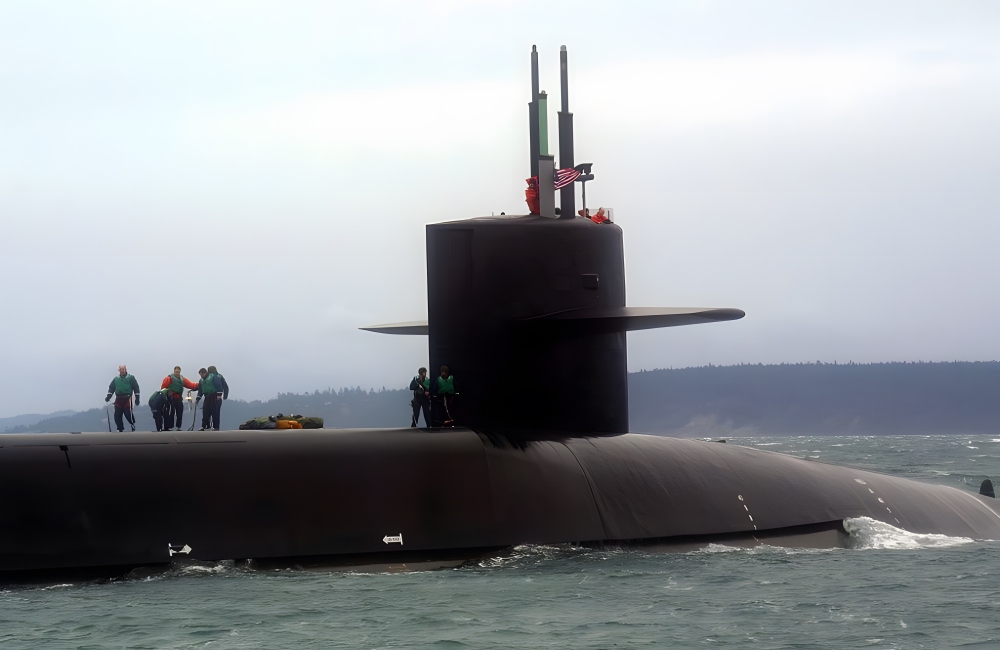
USS Ohio (SSGN-726) – Guided Missile Submarine ©U.S. Navy/Getty Images
Built by General Dynamics Electric Boat, the Ohio’s design and capabilities make it a multi-mission platform, capable of both strike missions and covert insertion of special forces. As the lead ship of her class, USS Ohio underscores the strategic flexibility of the submarine force, playing a critical role in a myriad of global operations.
99. Wasp-class Amphibious Assault Ship
Entered Service: 1989
Manufacturer: Ingalls Shipbuilding
Cost: $750 million*
Dominating the seas with an impressive combination of firepower, versatility, and capacity, the Wasp-class Amphibious Assault Ships are integral assets to the U.S. Navy. Commissioned in the late 1980s, these vessels are designed to embark, deploy, and land elements of a Marine landing force in amphibious assault operations.
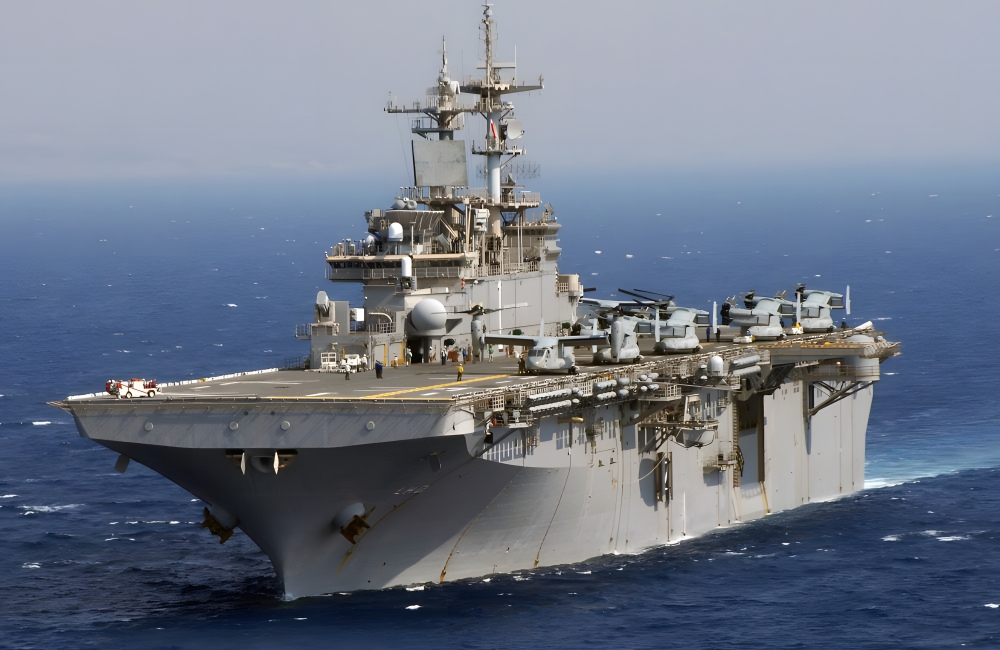
Wasp-class Amphibious Assault Ship ©U.S. Navy/Wikimedia Commons
With a flight deck tailored for vertical take-off and landing (VTOL) aircraft, they can support operations of the MV-22 Osprey tiltrotor aircraft, F-35B Joint Strike Fighters, and various helicopters. Each ship is also capable of carrying over 1,800 Marines and their equipment. Built by Ingalls Shipbuilding, the Wasp-class ships are not only powerful projection platforms but also crucial nodes in humanitarian assistance and disaster relief efforts.
100. Mil Mi-28 Attack Helicopter
Entered Service: 2006
Manufacturer: Rostvertol
Cost: $16 million*
A formidable presence in the skies, the Mil Mi-28, aptly nicknamed “Night Hunter”, stands as a testament to Russia’s prowess in helicopter design. Entering service in the 1990s, this attack helicopter was developed by the Mil Moscow Helicopter Plant to meet the rigorous demands of modern warfare.
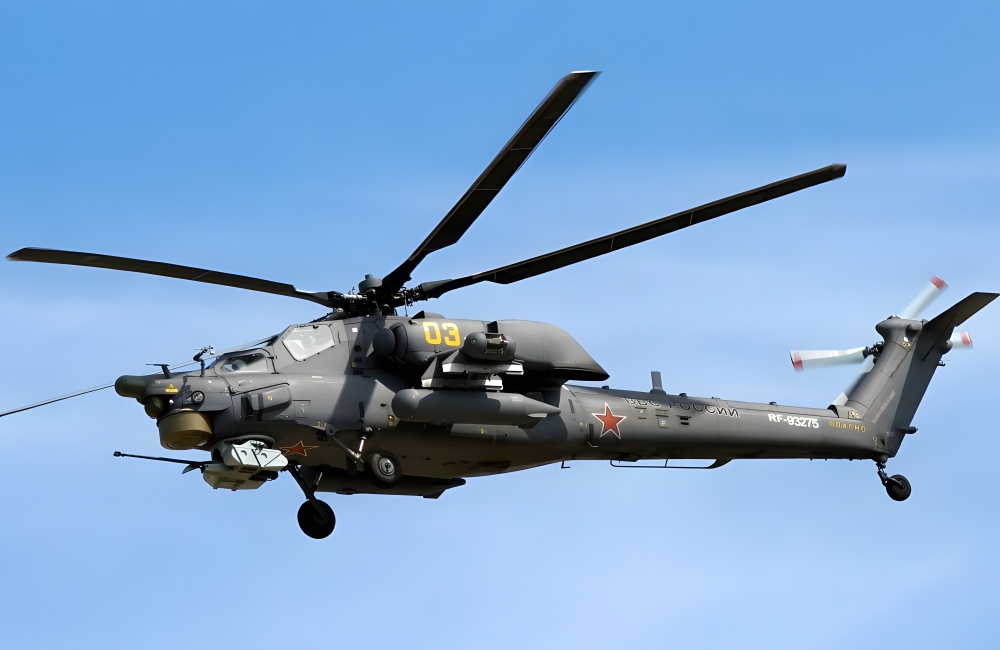
Mil Mi-28 Attack Helicopter ©Artem Katranzhi/Wikimedia Commons
Equipped with advanced avionics and a suite of powerful weapons, the Mi-28 is adept at hunting tanks, armored vehicles, and enemy personnel in a variety of conditions, including at night and in challenging weather. Its armored cockpit and other survivability enhancements make it resilient against ground fire.
101. B-21 Raider Bomber
Entered Service: Expected to be in service in 2027
Manufacturer: Northrop Grumman
Cost: $564 million*
A testament to modern aviation, the B-21 Raider Bomber, developed by Northrop Grumman, is poised to redefine the U.S. Air Force’s strike capabilities. Slated to be operational by 2027, this stealthy aircraft is designed to bypass advanced air defenses, ensuring U.S. air superiority.
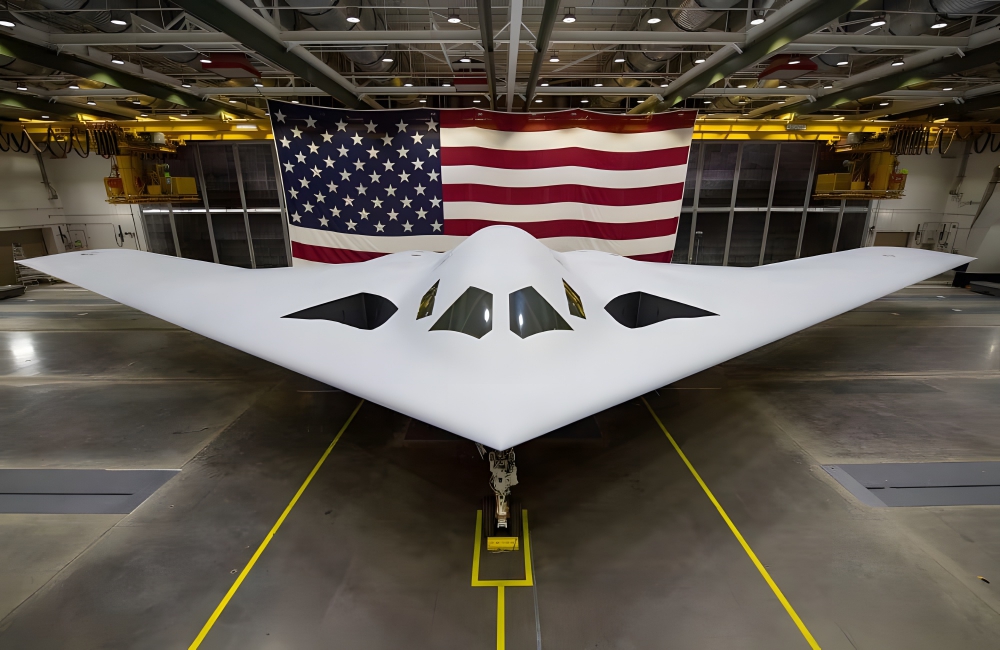
B-21 Raider Bomber ©Tech. Sgt. William OBrien/Wikimedia Commons
Versatile and adaptive, the B-21 can undertake both nuclear and conventional missions, making it a critical asset in diverse conflict scenarios. While specifics remain under wraps, the bomber’s forthcoming deployment signals the U.S.’ dedication to maintaining a strategic edge, preserving peace, and countering threats in an evolving global landscape.
102. Arleigh Burke-class Destroyer
Entered Service: 1991
Manufacturer: Bath Iron Works and Ingalls Shipbuilding
Cost: $1.843 billion*
A cornerstone of the U.S. Navy’s fleet, the Arleigh Burke-class Destroyer, named after the legendary Admiral Arleigh Burke, epitomizes maritime power and versatility. Introduced in the early 1990s and manufactured by Bath Iron Works and Ingalls Shipbuilding, these guided missile destroyers are engineered for multi-mission operations, from anti-aircraft warfare to ballistic missile defense.
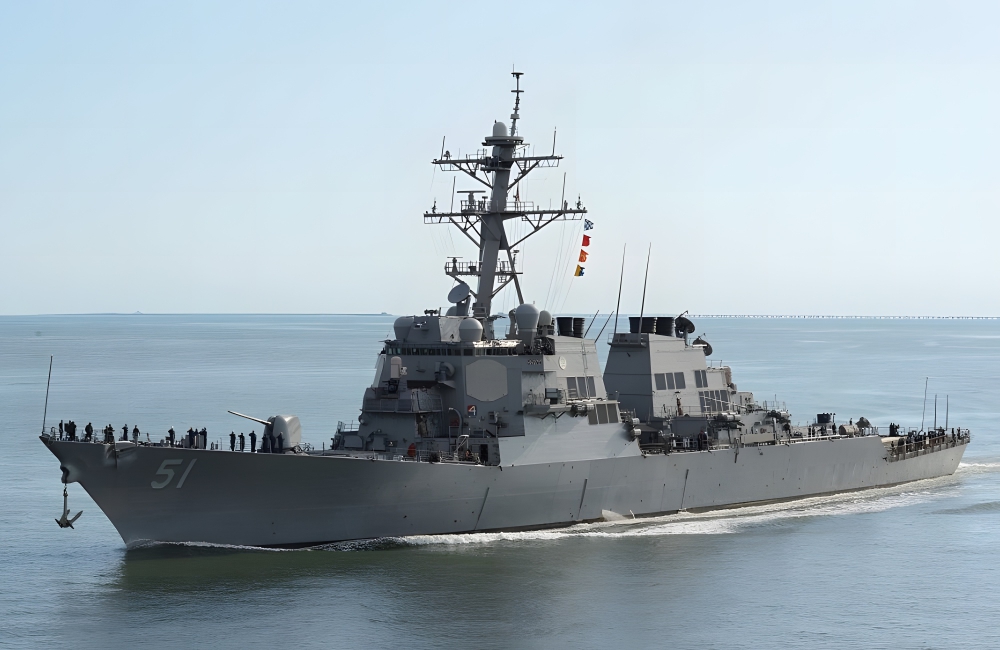
Arleigh Burke-class Destroyer ©Petty Officer 1st Class RJ Stratchko/Wikimedia Commons
Boasting the advanced Aegis Combat System, they offer unmatched radar capabilities, allowing for simultaneous operations against multiple threats. Their longevity is a testament to their design; continuous upgrades ensure they remain relevant, even as newer naval threats emerge, solidifying their role as indispensable naval assets.
103. MQ-25 Stingray
Entered Service: Expected to be in service in 2026
Manufacturer: Boeing
Cost: $805 million*
The future of naval aviation takes an intriguing turn with the MQ-25 Stingray. Slated to join the U.S. Navy’s arsenal in 2026, this cutting-edge drone is manufactured by Boeing. Primarily designed as an aerial refueling aircraft, the Stingray aims to extend the range of carrier-based combat aircraft, thereby significantly enhancing the Navy’s mission capabilities.
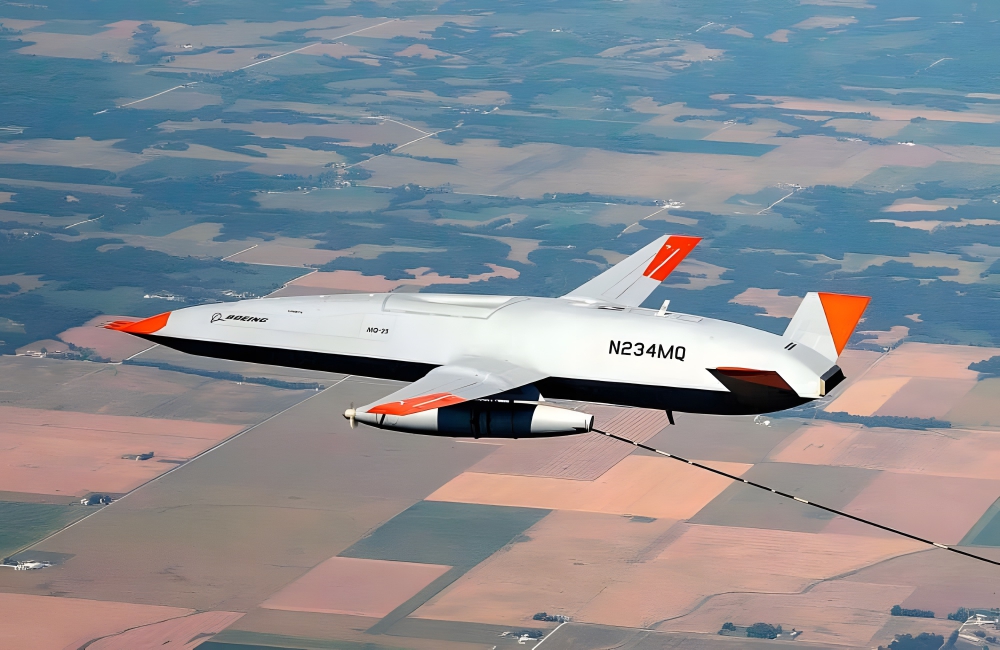
MQ-25 Stingray ©United States Navy/Wikimedia Commons
Its introduction will mark a pivotal shift in unmanned naval operations, as it becomes the first drone integrated into the carrier air wing. Beyond refueling, the flexibility of the MQ-25 platform suggests potential for intelligence, surveillance, and reconnaissance roles, signaling the Navy’s forward-thinking embrace of autonomous technology.
104. USS San Antonio (LPD-17) Amphibious Transport Dock
Entered Service: 2006
Manufacturer: Ingalls Shipbuilding
Cost: $1.6 billion*
The USS San Antonio stands as a testament to the U.S. Navy’s commitment to versatility and multi-mission capability. Launched as the lead ship of its class, this amphibious transport dock, built by Northrop Grumman Ship Systems, entered service in 2006. With a design focusing on deploying Marines in amphibious assaults, the LPD-17 can carry roughly 800 troops, along with their necessary vehicles and equipment.
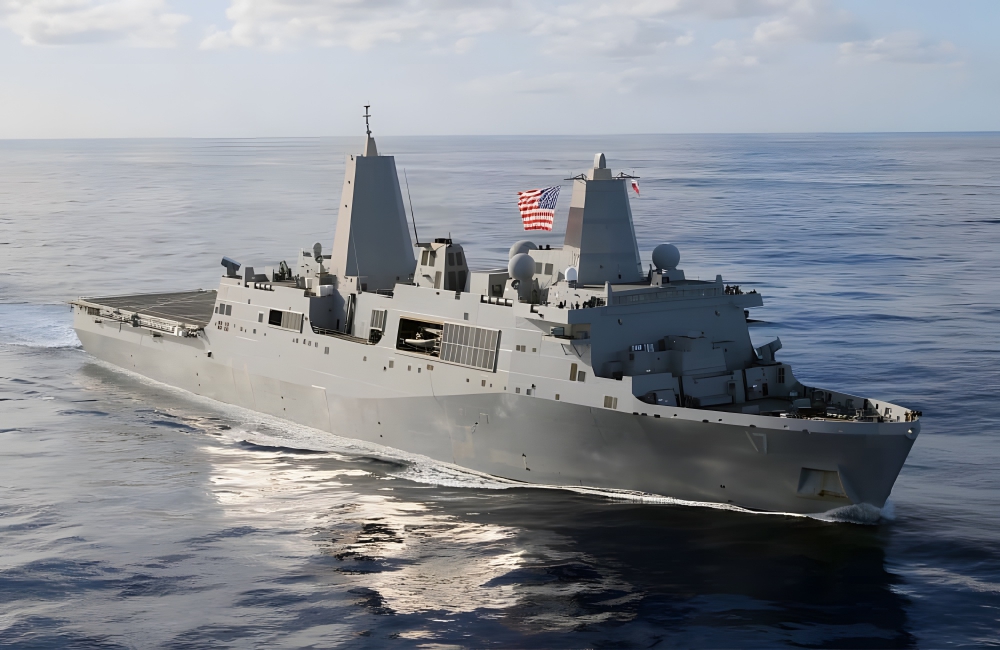
USS San Antonio (LPD-17) Amphibious Transport Dock ©The United States Navy/Wikimedia Commons
Notably, its advanced technology reduces the crew size, while its stealthy design minimizes its radar profile. The San Antonio blends traditional amphibious transport functions with modern tech, ensuring Marines can be deployed rapidly and efficiently, wherever duty calls.
105. THAAD (Terminal High Altitude Area Defense) System
Entered Service: 2008
Manufacturer: Lockheed Martin
Cost: $800 million*
Distinguished as one of the world’s most advanced missile defense systems, the THAAD is engineered to intercept and nullify short, medium, and intermediate-range ballistic missiles during their terminal phase of flight. Utilizing hit-to-kill technology, it ensures the destruction of incoming missile threats both inside and outside the Earth’s atmosphere.
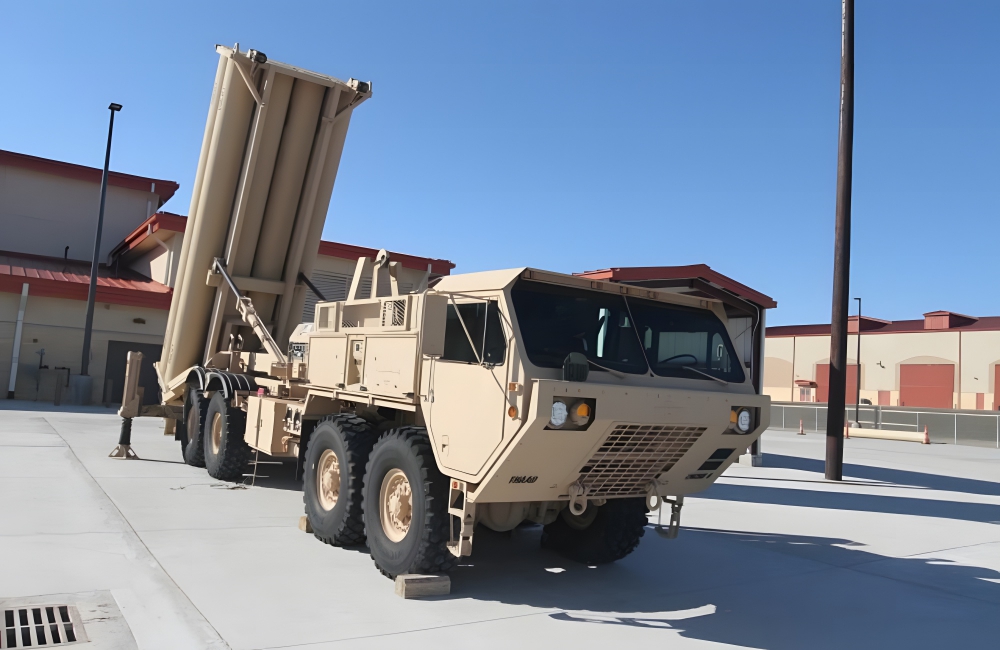
THAAD (Terminal High Altitude Area Defense) System @usarmy/Pinterest
Developed by Lockheed Martin for the U.S. Army, the system comprises a combination of radar, launchers, and interceptors. Its strategic deployment in various global hotspots signifies its pivotal role in contemporary defense networks and international security efforts.