
38. Rogue Planet That Drifts On Its Own
Year Found: 2012
Who Found It: Canada-France Brown Dwarfs Survey
Location: CFBDSIR 2149-0403
When learning about the solar system in grade school, we were taught that all planets have a “Sun” that they orbit. That all changed in 2012 when the Canada-France Brown Dwarfs Survey picked up on a rogue planet that didn’t appear to orbit a dwarf star of its own.
Rogue Planet That Drifts On Its Own @nasa/Pinterest
Although there are probably millions, if not billions, of rogue planets out there somewhere, CFBDSIR 2149-0403 was the first of its kind to be found. It appears to be at least seven times the size of Jupiter, and it spends its time drifting aimlessly through space. In other words, CFBDSIR 2149-0403 is the planet version of a backpacker.
39. Shooting Stars
Year Found: 2005
Who Found It: Sloan Digital Survey
Location: Unknown
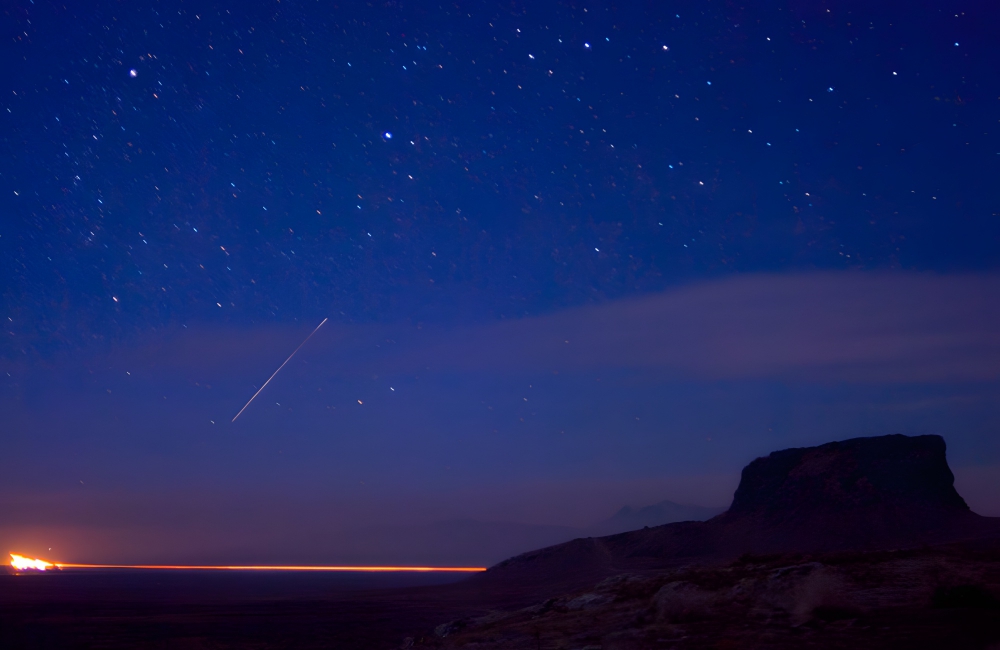
Whether wishing upon them or watching their beauty shower the night’s sky, “shooting stars” have been impacting people’s lives for thousands of years. However, it wasn’t until 2005 that the first evidence of a REAL shooting star came to light.
Shooting Stars ©Mike Renlund/flickr
When implementing the Sloan Digital Survey at the Fred Lawrence Whipple Observatory, astronomers discovered hypervelocity stars that travel through space at hundreds of thousands of miles per second. How do they reach those speeds? Well, when one of the two stars in a binary star system is engulfed by a supermassive black hole, the other is shot like a bat out of hell in the opposite direction.
40. Dwarf Planets
Year Found: 2005
Who Found It: Mike Brown, Chad Trujillo, and David Rabinowitz
Location: The Kuiper Belt
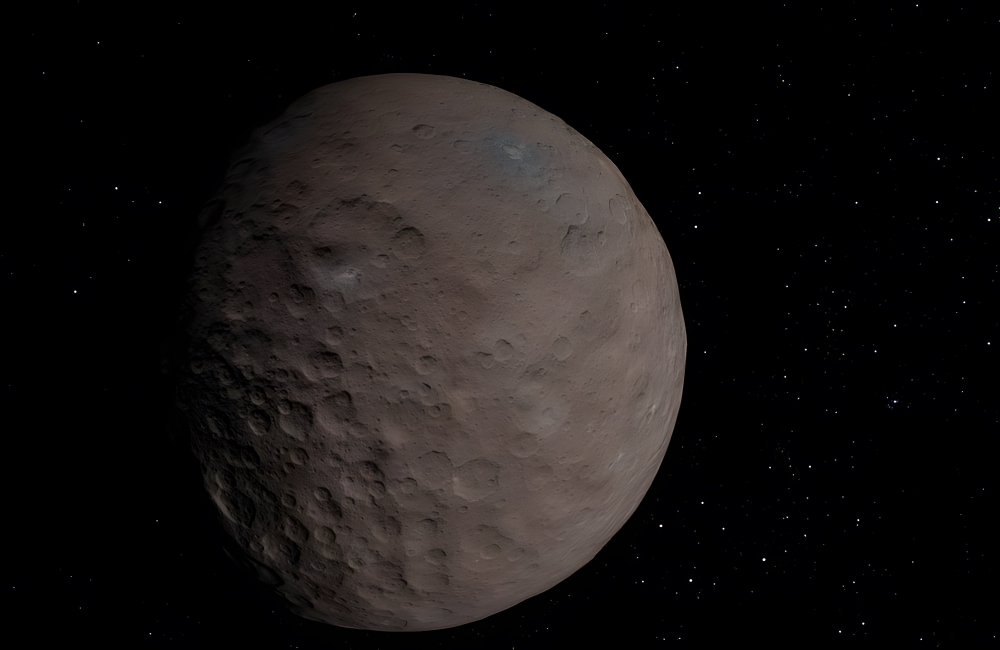
In 2005, while using images captured two years earlier, the team of Brown, Trujillo, and Rabinowitz concluded that the celestial object known as Eris would be categorized as a dwarf planet. A dwarf planet is heavy enough to hold a spherical (or mostly spherical) shape but isn’t a moon and hasn’t cleared the debris in its orbit.
Dwarf Planets ©reedom_Marussia/Shutterstock
Thanks to the trio’s findings, Pluto lost its planetary title a year later and was relabelled as a dwarf planet. While most dwarf planets are found in the Kuiper belt past Neptune, another dwarf, Ceres, can be found in the inner solar system, hanging out in the asteroid belt between Mars and Jupiter.
41. Haumea’s Rings
Year Found: 2017
Who Found It: José Ortiz
Location: The Kuiper Belt
The Kuiper Belt is the circumstellar disc located past Neptune on the outskirts of our solar system. The Belt is full of mysterious celestial objects, including dwarf planets, comets, and the like. As time goes on and surveying technology develops, more and more of the Kuiper Belt’s secrets and hidden gems are being revealed.
Haumea’s Rings ©Diego Barucco/Shutterstock
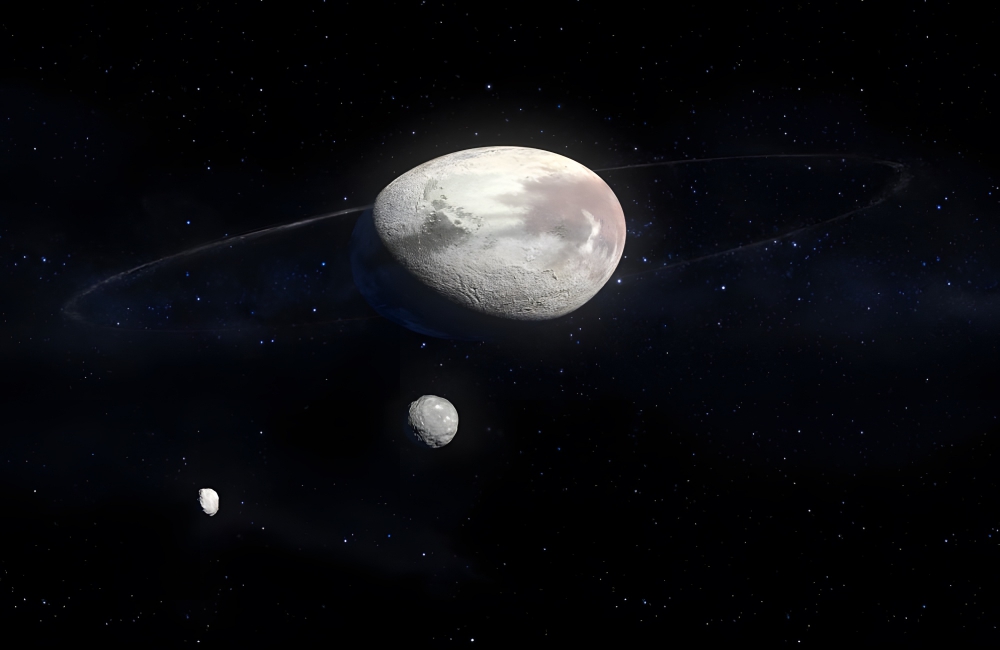
It took twelve telescopes from ten laboratories and an entire team of researchers and astronomers, but, in 2017, one such mystery was uncovered. A dwarf planet known as Haumea, which happens to be the “fastest rotating body known in the solar system,” was discovered to have a ring similar to Saturn’s — making it the first object located past Neptune to be garnished with that particular attribute.
42. Flattest Star – Achernar
Year Found: 2003
Who Found It: The European Southern Observatory’s Very Large Telescope
Location: Eridanus Constellation
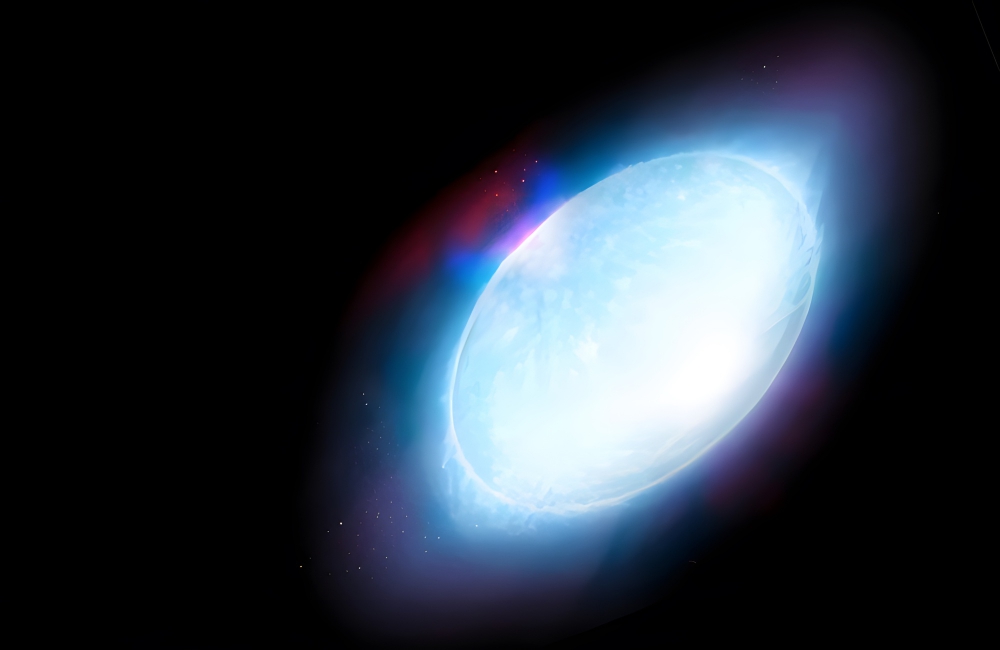
When stargazers look up into the night’s sky through the powerfully magnified lens of a telescope, they can see outer worldly things in rather magnificent ways. The stars they’re staring at might appear round to the naked eye. However, few (if any) are actually perfectly spherical.
Flattest Star – Achernar ©Pablo Carlos Budassi/Wikimedia Commons
A star called Achernar has gained notoriety not just as one of the non-spherical stars in space but as the flattest star in the Milky Way Galaxy. Due to how fast the gaseous object spins, the gas on its surface has somewhat flattened itself out to the point that its equatorial radius is approximately 56% greater than its polar radius — giving it the appearance of an eclipse than a sphere.
43. Elst-Pizarro
Year Found: 1979
Who Found It: Eric W. Elst and Guido Pizarro
Location: The Asteroid Belt Between Mars and Jupiter
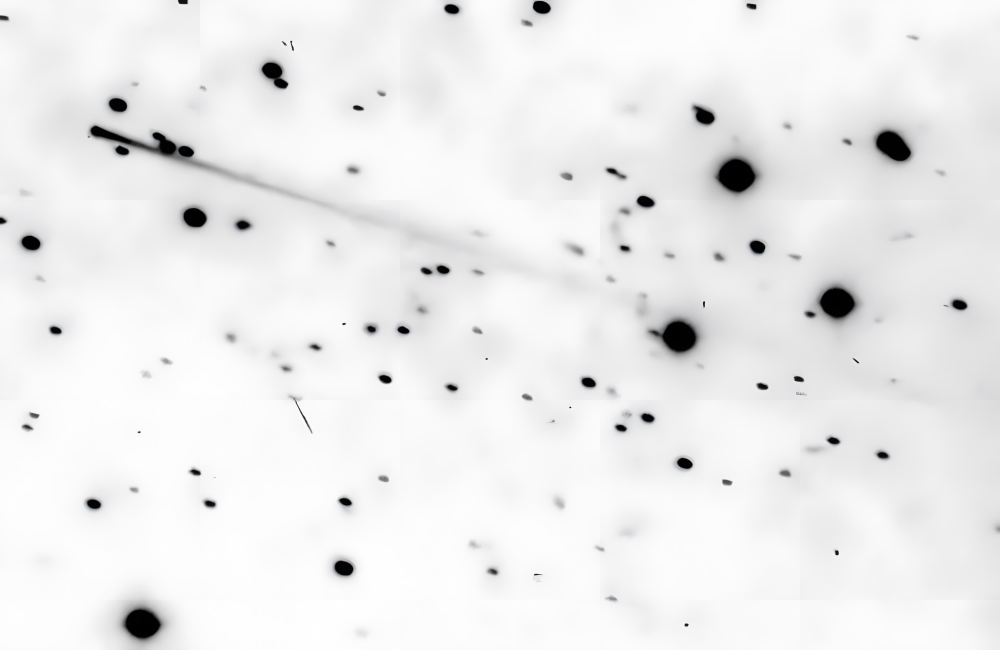
Having been found in the Asteroid Belt, the science world was convinced that Elst-Pizarro was an asteroid. Almost 20 years after its discovery, however, all of that changed when a tail similar to that of a comet was seen following the supposed “asteroid.”
Elst-Pizarro ©ESO/Wikimedia Commons
While some astronomers are convinced that Elst-Pizarro is, in fact, a comet, another theory suggests that it’s an asteroid in disguise. And that another rock must have bumped into Elst-Pizarro, revealing an icy layer that has been leaving the colorful trail. The only thing that we know for certain is that more research is needed in order to find the truth.
44. The Largest and Most Distant Water Reservior
Year Found: 2011
Who Found It: Caltech Submillimeter Observatory
Location: APM 08279+5255 Quasar
Quite a bit of the space exploration planned for the future has to do with finding a source of water capable of supporting human life because, let’s face it, without water, humankind won’t survive. Using the Z-Spec spectrograph, a 33-foot long telescope that works in millimeter wavelengths, in 2011, astronomers at the Caltech Submillimeter Observatory made the discovery of a lifetime.
The Largest and Most Distant Water Reservior ©IgorZh/Shutterstock
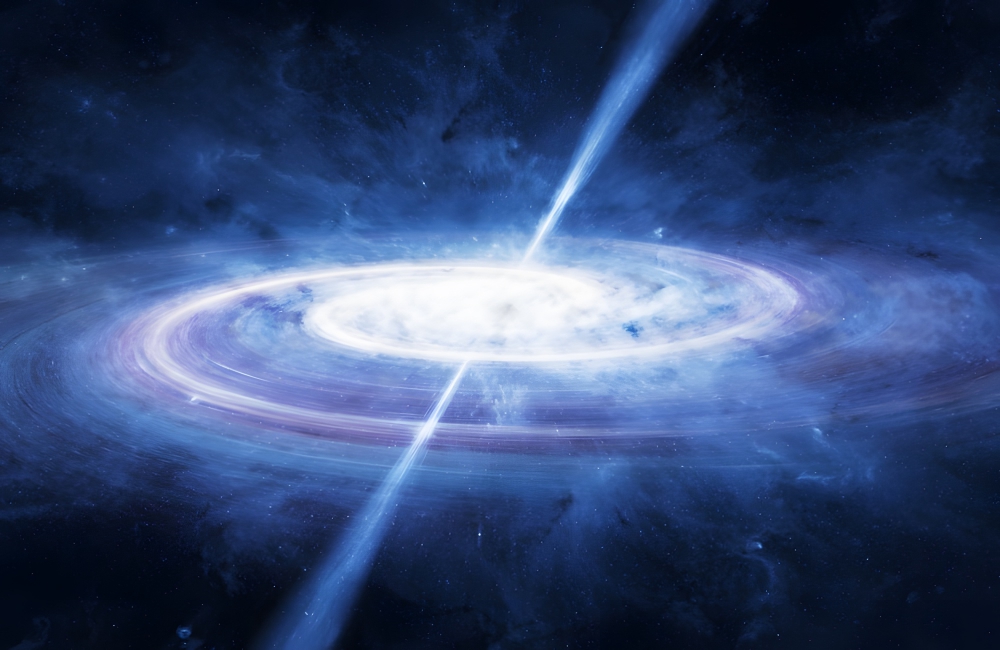
Just not this lifetime. The APM 08279+5255 quasar was found to have a cloud that contained a reservoir with more water than 140 trillion of Earth’s oceans combined flowing nearby the quasar’s black hole.
45. Quasars
Year Found: 1962
Who Found It: Maarten Schmidt
Location: Various Locations
In the early 1960s, John Bolton and his staff at the University of Sydney were the first to notice the radio wave-emitting blue star-like celestial objects. However, it wasn’t until 1962 when Maarten Schmidt performed a more in-depth analysis (using the Hale optical telescope), that information about 3C 273, the first quasar, was published.
Quasars ©Jurik Peter/Shutterstock
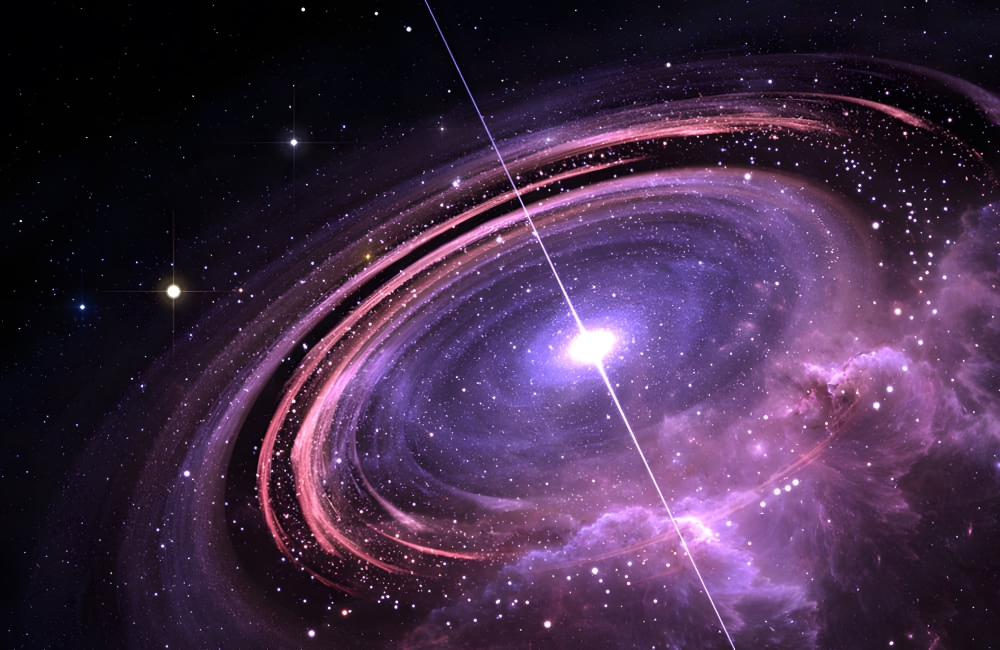
Quasars have the potential to emit more energy than 1,000 trillion of Earth’s Sun and are believed to contain supermassive black holes that power them. One hypothesis suggests that a deeper understanding of quasars might unlock some of the secrets pertaining to the evolution of young galaxies.
46. Space Cannibalism
Year Found: 1999
Who Found It: NASA
Location: Lenticular Galaxy
In 1999, a group of astronomers who were being aided by the amplified eye of NASA’s Hubble Space Telescope stumbled across evidence of a galactic event that is horrifying in nature. The evidence showed that a few billion years ago, small star clusters from a now long since deceased former galaxy were eaten by the NGC 1316 lenticular galaxy.
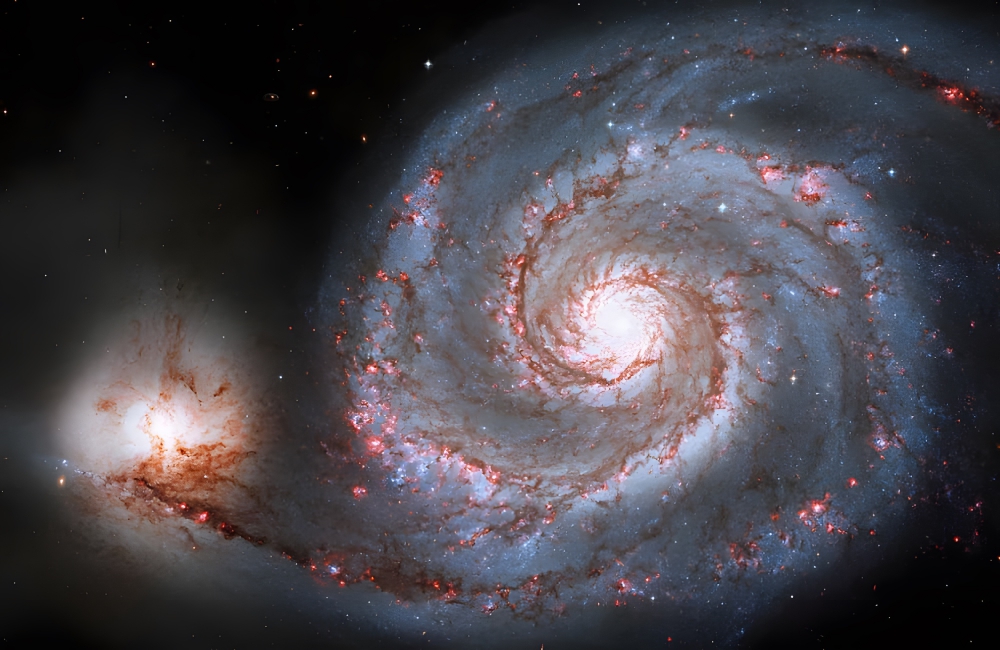
Space Cannibalism ©Allexxandar/Shutterstock
Around one-third to one-fifth of all of the stars in the universe similar to our Sun are believed to be cannibalistic in nature. Meaning the planets that orbit around them would be in constant danger of being consumed by the star. Earth’s Sun is, luckily, one of the stars that make up the other 65% to 75% that more or less leave their planetary systems alone.
47. Magnetars
Year Found: 1979
Who Found It: Unknown
Location: Various Locations
At the end of a star’s lifecycle, it dies and goes supernova, causing a massive explosion and leaving a neutron star behind as the final remnant of what once was. If the magnetic field of one of those neutron stars is strong beyond all belief and has a terribly dense core, it would be called a magnetar.
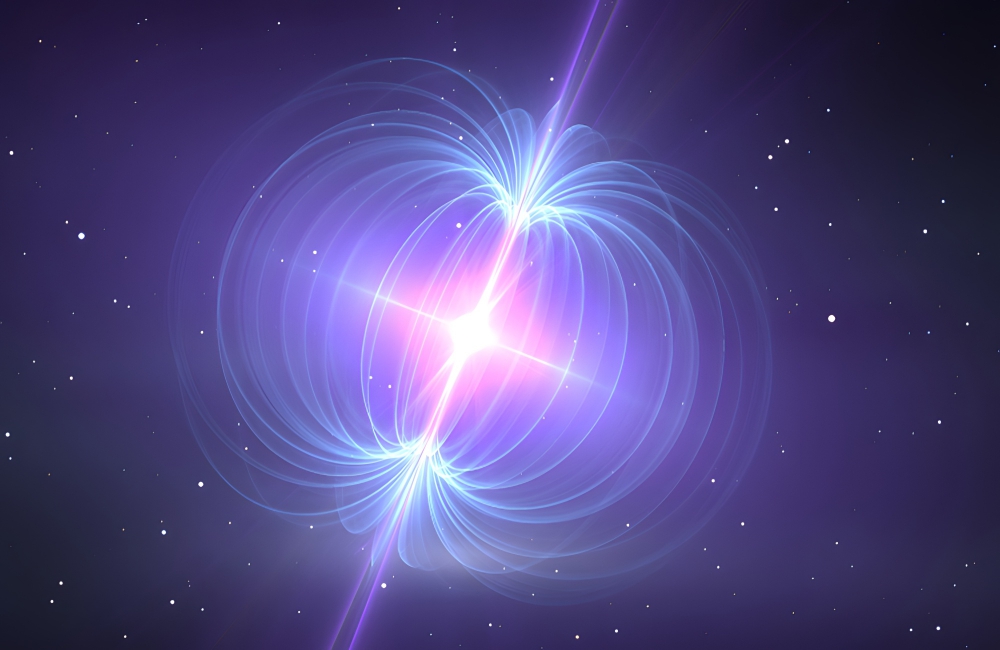
Magnetars Jurik Peter/Shutterstock
Magnetars are not just magnetic stars – they are the most magnetic type of stars in the entire universe and have magnetic fields somewhere in the ballpark of one trillion times more powerful than Earth’s. Magnetars are also relatively small. Despite measuring no more than 20 miles across, their masses are still almost double that of the Sun’s.
48. O-Type Stars
Year Found: Unknown
Who Found It: Unknown
Location: Various Locations
Although they are one of the rarer classifications of stars in the universe, thanks to how incredibly bright they are, O-Type stars tend to stand apart from their relatives (both near and distant), by illuminating the sky around themselves with a blueish-white glow that outshines almost everything else around.
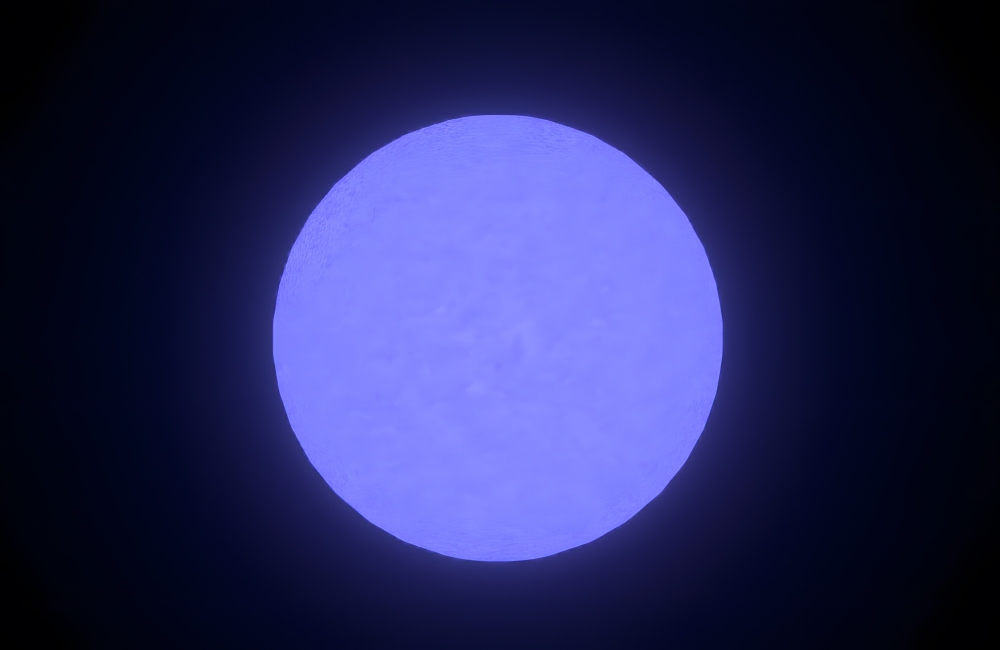
O-Type Stars ©Merikanto/Wikimedia Commons
To give an example of the O-type star’s visual dominance of the sky, consider this — only 1 out of every 100,000 stars in the sky is an O-Type, yet 4 of the 90 brightest stars that can be seen from Earth come from that classification.
49. Interacting Galaxies
Year Found: 1785
Who Found It: William Herschel
Location: Various Locations
Unlike humans, who have advanced and thrive as a species due to our ability to communicate with one another, in order for a galaxy to survive in its current state, it will need to experience as little interaction as possible with other galaxies. Every so often, however, the interactions are unavoidable, and the galaxies disrupt one another’s gravitational fields.
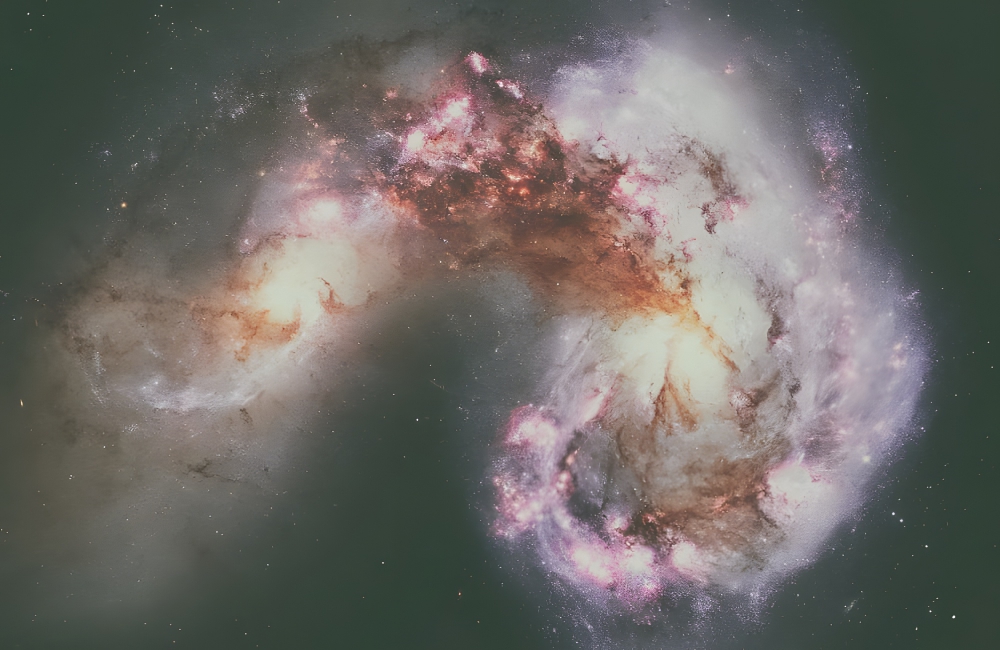
Interacting Galaxies ©NASA images/Shutterstock
Seventy-five million light-years away from Earth, galaxies NGC 4038 and NGC 4039 are currently in the process of merging through interaction. If anyone is still around 4.5 billion years from now, they’d be able to witness our very own Milky Way doing the same with the much larger Andromeda galaxy. The two will either merge like Kraft Heinz or be the other’s demise.
50. KBC Void
Year Found: 2013
Who Found It: Keenan, Barger, and Cowie
Location: Laniakea Supercluster
There are an infinite number of celestial objects floating around in the vastness of outer space. However, even with such a large number of objects around, it’s still possible to find (comparably) empty gaps. These relatively open areas are called cosmic voids, and they are without as many massive galaxies as the superclusters that lack these voids.
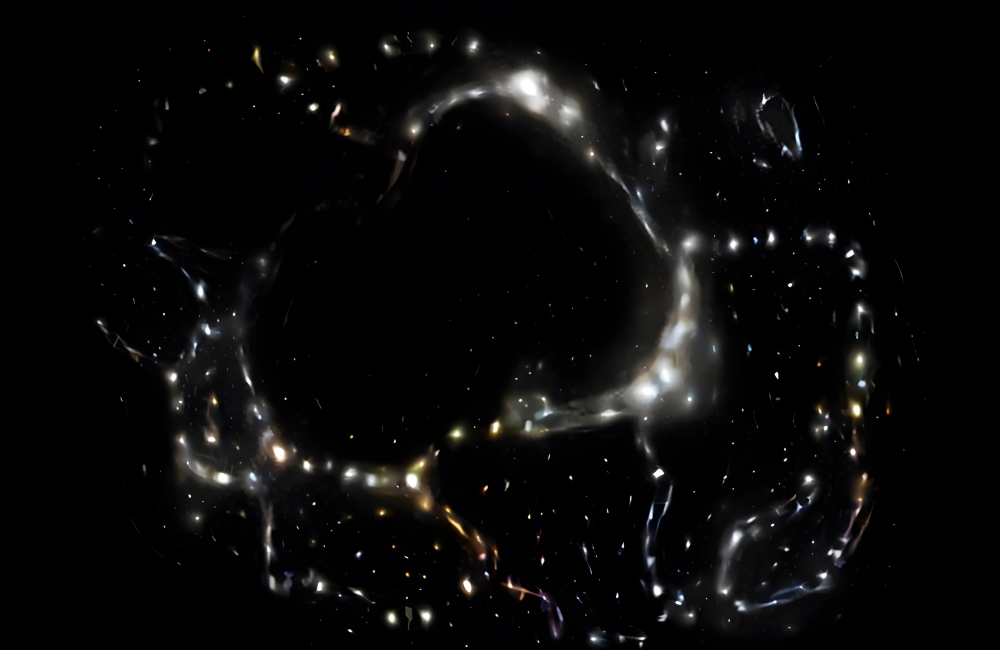
KBC Void ©Pablo Carlos Budassi/Wikipedia
The Milky Way and its neighbor, Andromeda, are two of the galaxies that are part of the Laniakea Supercluster of galaxies that contains the most considerable known cosmic void in space — the KBC void. Other voids tend to cover diameters of between 30 to 300 light-years, but not the KBC void. KBC’s has been measured at over 2 billion light-years across.