
91. Lake Reschen Bell Tower, Italy
Location: Lake Reschen, Italy
Year: 1950 (Reservoir Formed)
Cost: $150-$300 million to build*
If you’re a fan of the Italian-language mystery series Curon, then these photos of the ruins of an Italian village will be familiar to you, as they were the film location for the Netflix show. In 1950, Reschen, an old Italian village, was flooded to create a dam for a hydroelectric power plant. 160 houses were blown up and flooded, and any villagers remaining had to move.
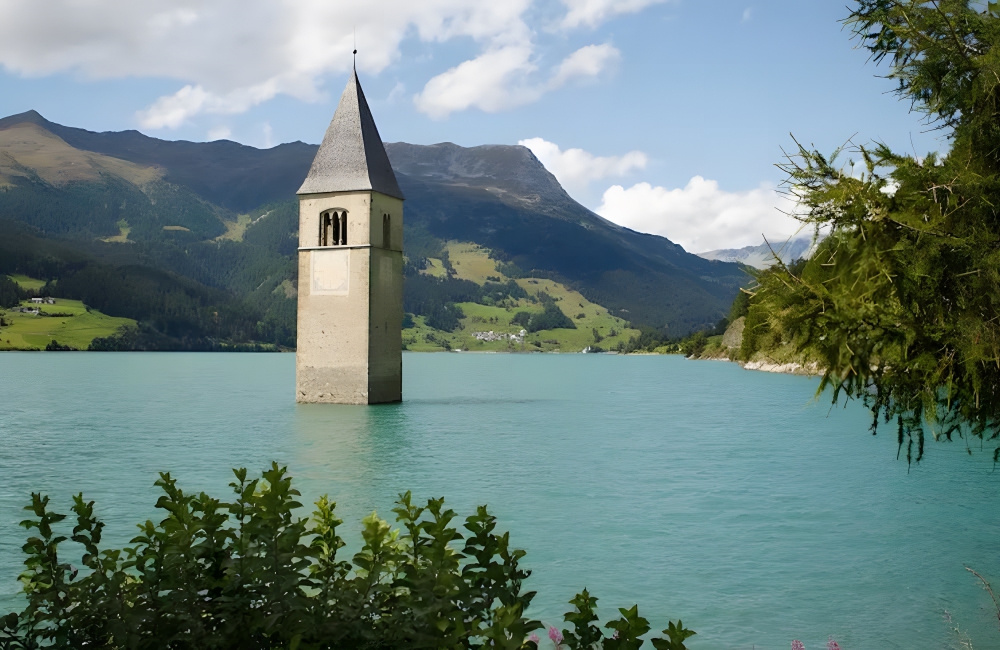
Lake Rechen Bell Tower, Italy @ecobnb/Pinterest
When Lake Reschen was drained in 2021, one of the first ruins to emerge in decent condition was the St. Catherine Bell Tower. As more and more of Lake Reschen has drained, locals have ventured out, taking photos of the Bell Tower and the eerie ruins of the little Italian village that was.
92. Nicosia International Airport, Cyprus
Location: West of Nicosia, Cyprus
Year: 1930s
Cost: $37 million* (Proposed Reconstruction Plan)
The Cyprus government has proposed a plan to reconstruct Nicosia International Airport. At $37 million, the price tag is not cheap, but it’s easy to see how Nicosia Airport could be restored back to its former glory. Built in the 1930s, Nicosia was the main airport on the island. In 1974, Nicosia was abruptly shut down after the Turks invaded Cyprus.
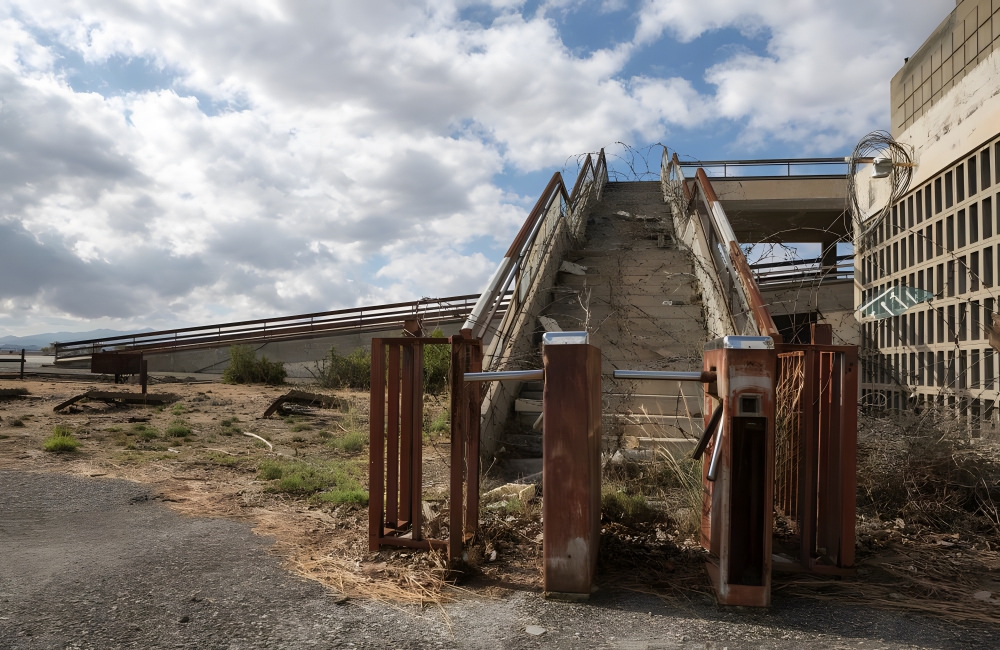
Nicosia International Airport, Cyprus ©Sahan Nuhoglu/Shutterstock
Nicosia was also, in addition to being a popular commercial airport, home to Royal Air Force and United Nations camps. You legally cannot visit the abandoned airport today, as the United Nations has declared it a “Protected Area,” sealing off the former airport and its camps to the public.
93. City Hall Subway, New York City
Location: Manhattan, New York City, New York
Year: 1904
Cost: $1-$2 billion to build*
The City Hall Station was constructed in the early twentieth century underneath City Hall Park in Manhattan, New York City. The station saw its ridership grow quickly, though city officials decided against lengthening its 257-foot platform to accommodate larger, ten-foot trains. In 1945, City Hall Station was shut down, as it was deemed infeasible to keep it open when it was so close to the Brooklyn Bridge Station.
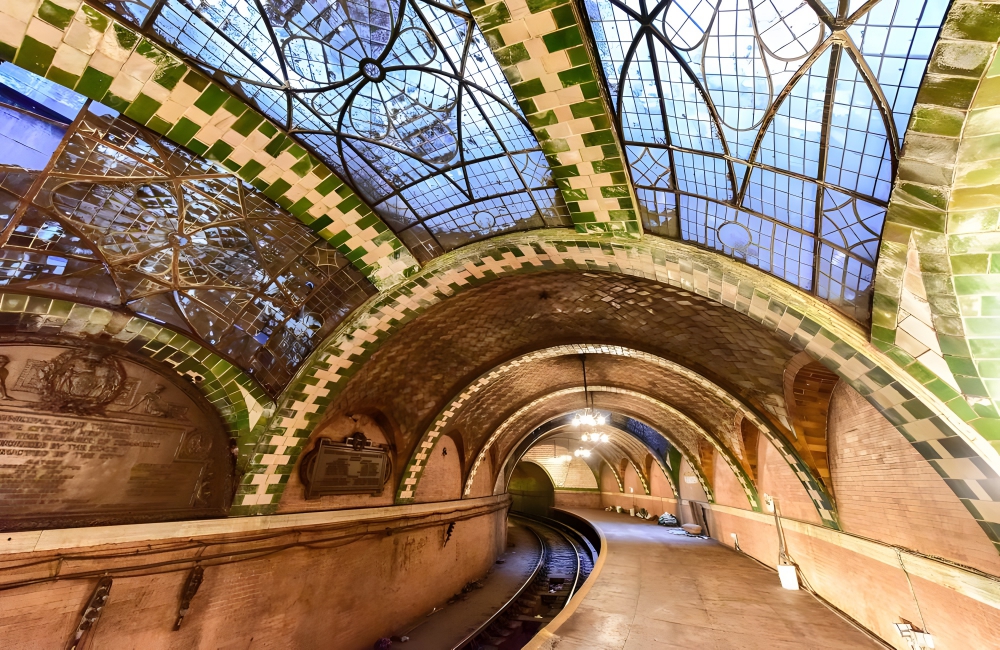
City Hall Subway, New York City ©Felix Lipov/Shutterstock
That doesn’t mean that this once-great feat of twentieth-century architecture has been abandoned, however. People still come to walk through this Designed Landmark, touring its Romanesque Revival architecture, skylights, colored glass tilework, brass chandeliers, and Guastavino tile.
94. Anping Tree House, Taiwan
Location: Tainan City, Taiwan
Year: 1800s
Cost: $1.45 per ticket to visit*
This testament to Western colonialism has slowly been reclaimed by the Earth. The Anping Tree House was built in the 1800s by England’s British Tait & Co., a trading company. You can see that in the colonial-style architecture that is barely visible beneath the plant life, trees, and roots that have overgrown the site.
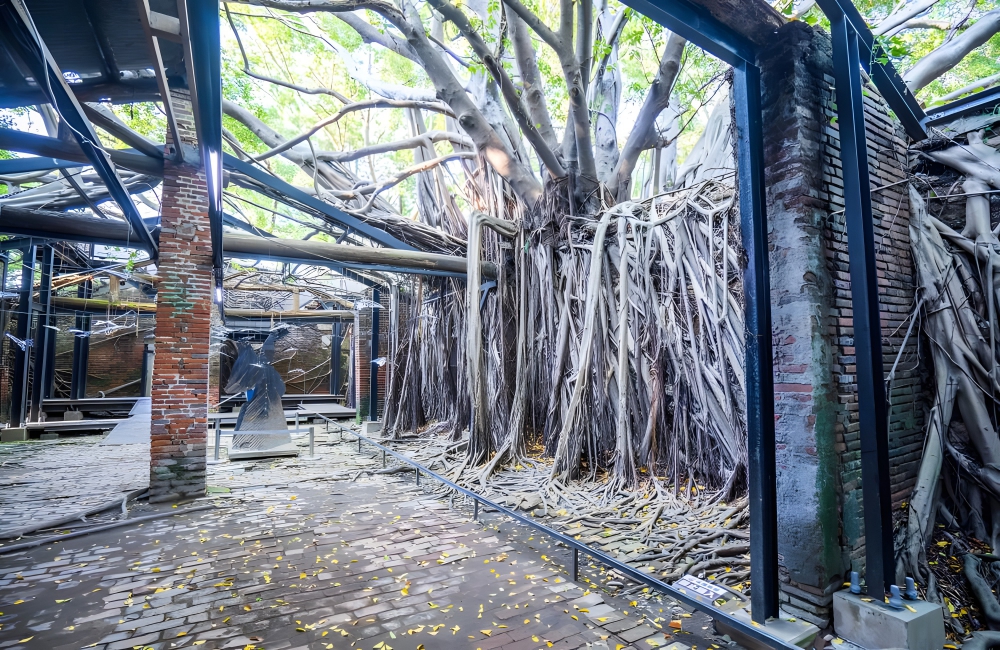
Anping Tree House, Taiwan ©Romix Image/Shutterstock
Anping was eventually abandoned, and a massive, living banyan tree forced its way across concrete and brickwork to take over the former merchant’s warehouse. Interestingly enough, the tree’s branches and roots have preserved the shapes of Anping’s doorways, roofs, and walls, turning the entire structure into an actual tree house.
95. Griffith Park Zoo, California
Location: Los Angeles, California
Year: 1912
Cost: $650 million* (Proposed Reconstruction Cost)
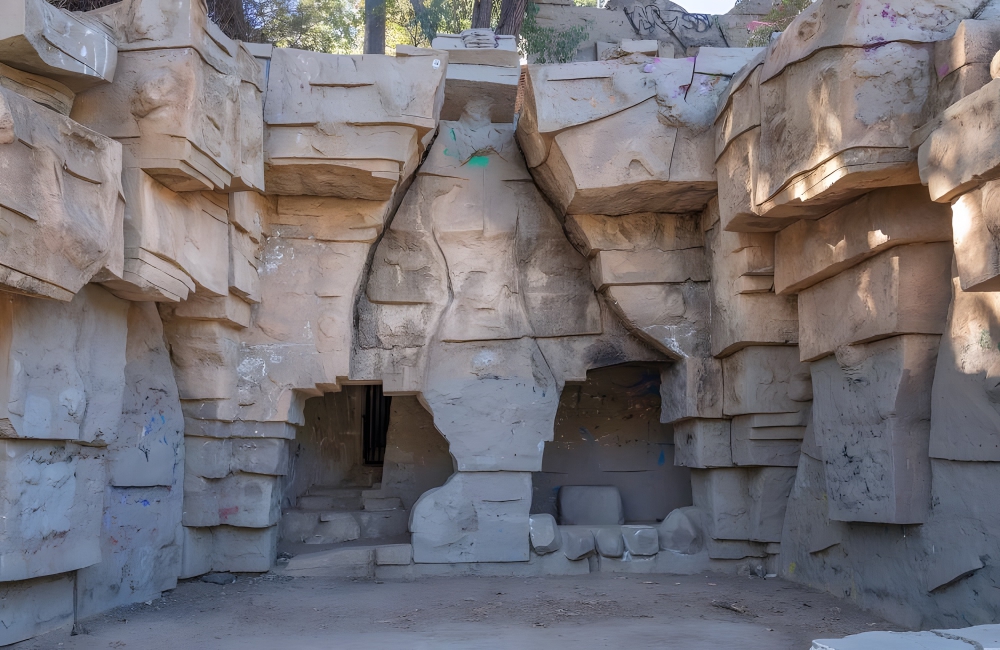
Griffith Park Zoo, which local Angelos call the “Old Los Angeles Zoo,” was a government-owned zoo in California’s most populous city. It opened in 1912, but it closed in 1966 after the Los Angeles Zoo (“the new one”) opened that year. The animals were all transferred, and Griffith Park was left behind.
Griffith Park Zoo, California ©Gerry Matthews/Shutterstock
The old enclosures, cages and all, have been left as ruins, though some picnic benches and tables have been installed, along with hiking trails, for urbex adventurers. There is a proposed $650 million revival plan on the table for Griffith Park, but environmentalists claim that it is a bad idea, as it will disturb the natural habitat that has taken over in the past fifty-plus years.
96. Al Madam, United Arab Emirates
Location: Emirate of Sharjah, UAE
Year: 1975
Cost: Unknown
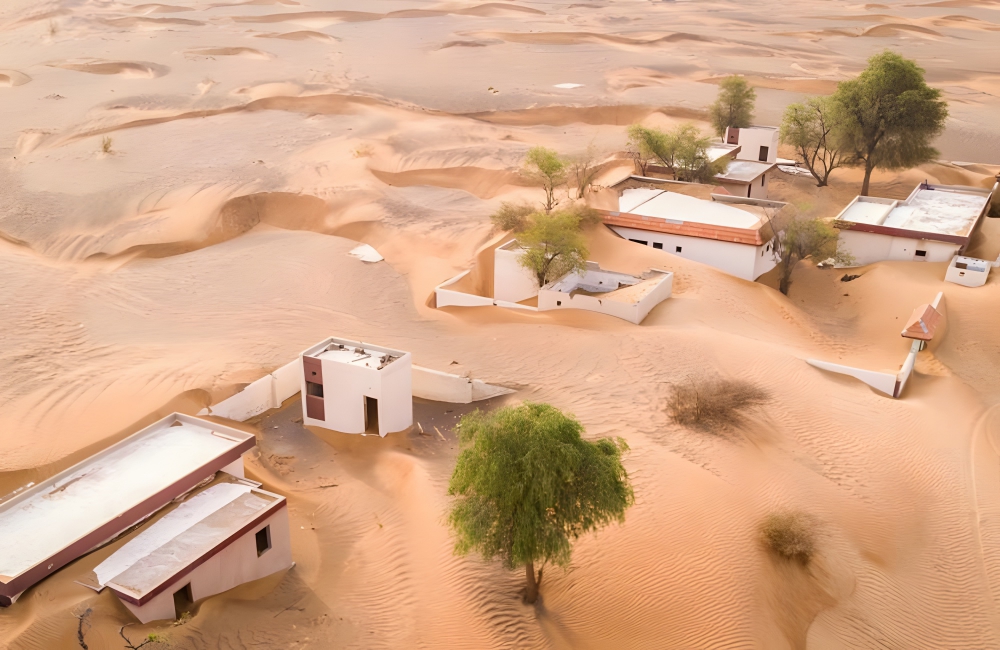
Al Madam is located in the Emirate of Sharjah in the UAE, and you can find it where the Mleiha-Schwaib and Dubai-Hatta roads intersect. Now, the road from Al Madam to Hatta is only open to permit holders or Omani/UAE nationals. The town was developed in 1975, and builders had big plans for it.
Al Madam, United Arab Emirates ©Katiekk/Shutterstock
Though part of Al Madam is still in use, there is an abandoned development with twelve ghost-town houses and a vacant mosque. This is known as the Al Madam Ghost Town. Theories about why this part of Al Madam was unsettled range from a lack of resources to local djinn haunting the area.
97. Villa Epecuén, Argentina
Location: Villa Epecuen, Buenos Aires Province, Argentina
Year: 1920
Cost: Unknown
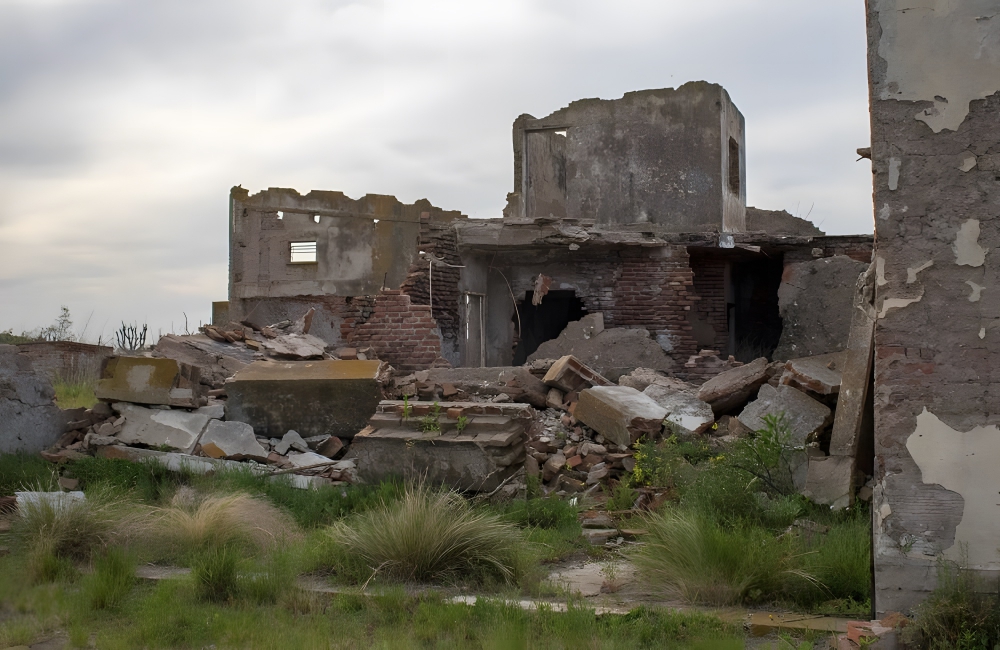
This tourist village was located in the Buenos Aires Province near the city of Carhue. It was built in 1920, and you could get there from Buenos Aires by train. At one point, the city was home to 1,500 people, and it brought in many more tourists a year.
Villa Epecuen, Argentina ©Edi Libedinsky/Shutterstock
But, tragedy struck on November 6, 1985, when a seiche (a bunch of massive lake waves caused by an extreme weather event) broke Epecuen’s dam. Villa Epecuen’s dike broke too, and the water rose quickly, reaching a peak of thirty-three feet. The village was uninhabitable, and its citizens had to flee. It was never able to remain rebuilt, even though, later, it resurfaced after twenty-five years.
98. Crystal Palace Subway, London
Location: London, England
Year: 1865
Cost: $3.2 million* (2022 Renovation Grant)
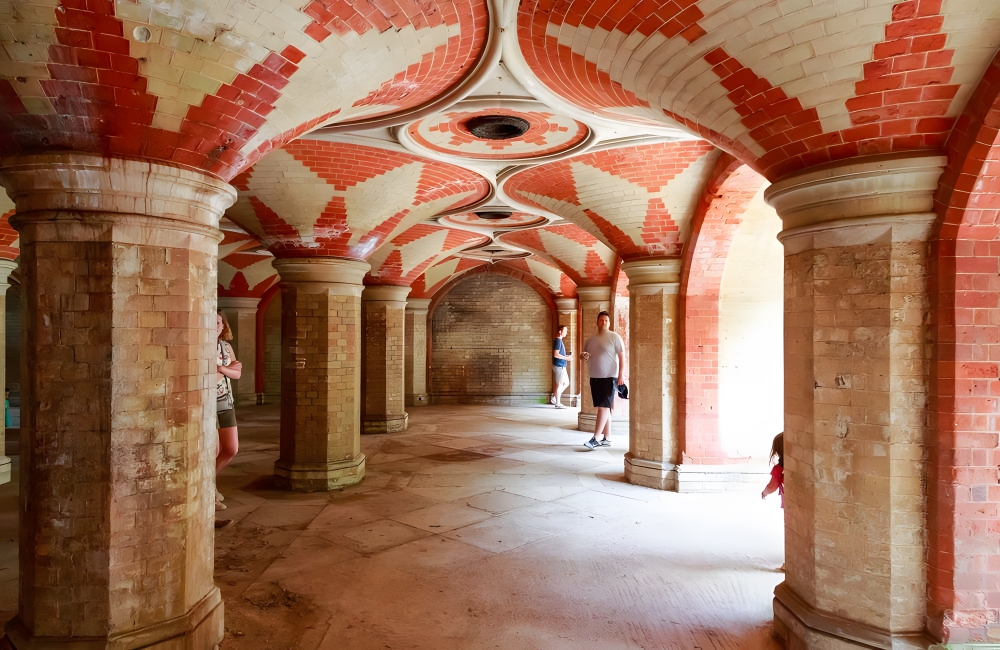
Beneath Crystal Palace Park in London, England is a cavernous, vaulted crypt-like structure that is a testament to the Victorian Era’s opulence. This structure is called the Crystal Palace Subway, and fans of history will be pleased to note that Crystal Palace is getting a $3.2 million restoration that promises to boost it back to its former glory.
Crystal Palace Subway, London ©I Wei Huang/Shutterstock
The Crystal Palace was designed by Italian cathedral craftsmen (which is why it looks like a crypt), and it features stone ribs, reds and creams, and octagonal pillars. During WWII, this opulent Subway station was turned into an air raid shelter. Forty years later, it became a hotspot for ravers. After these partiers came and went, the Crystal Palace was shuttered because of “safety concerns.” Now, these concerns will be alleviated, thanks to the present-day facelift that the London government has planned.
99. Hartley Mauditt, England
Location: East Hampshire, England
Year: 1400s
Cost: Unknown
There is not much to be seen on a map when it comes to the East Hampshire village of Hartley Mauditt, but the story behind this ghost town is interesting. The settlement was first documented in the 1400s, as it had been given to William de Maldoit by William the Conqueror. Hartley Mauditt changed hands until the late 1700s.
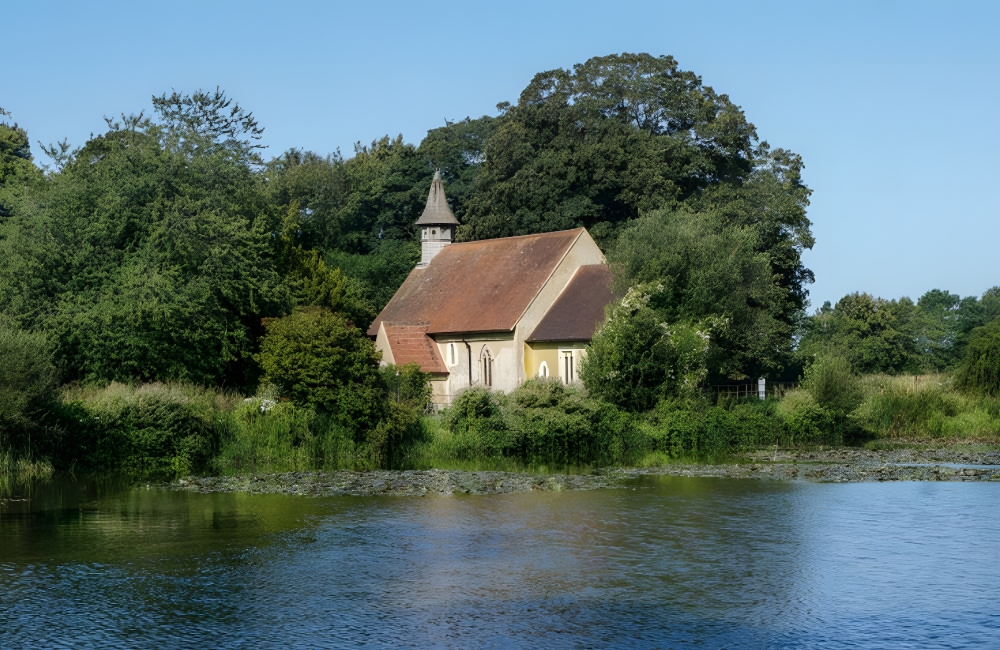
Hartley Mauditt, England ©Piers Mathias/Shutterstock
The agricultural settlement had consisted of large farms along 1,400 acres, though it declined in the late-1700s. Now, all that is left are a couple of cottage ruins and St. Leonard, a decrepit parish church. Now, this former Saxon village is home to woodland animals and, if legends are to be believed, ghosts.
100. Holy Land USA, Waterbury, Connecticut
Location: 60 Slocum Street, Waterbury, Connecticut
Year: 1955
Cost: $350,000* (2013 Land Price)
John Baptist Greco, a Roman Catholic lawyer, came up with the idea for Holy Land USA, a religious-themed amusement park, in the 1950s. Holy Land USA was unique at the time, not only for its religious attractions (stations of the cross, catacombs, Israelite villages, and a giant cross, among other features), but also for its anti-segregation policy.
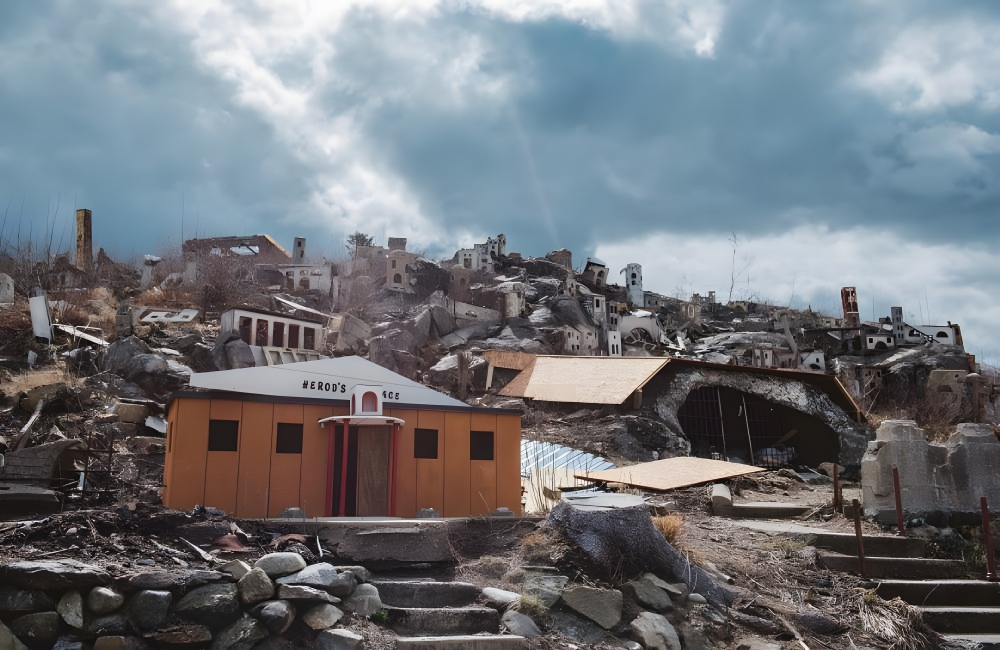
Holy Land, Waterbury, Connecticut @atlasobscura/Pinterest
Construction finished in the late 1950s in Waterbury, Connecticut, and it attracted 40,000 visitors a year during the 1960s and 1970s. In 1984, Greco shuttered Holy Land USA to expand it, but, when he died in 1986, the work was left unfinished and the park abandoned.
101. Guignard Brick Works, Cayce, South Carolina
Location: Cayce, South Carolina
Year: 1932
Cost: Unknown
The Guignard Brick Works holds the distinction of not only being a protected historical landmark but also for being the oldest brickworks industrial plant in America. It was founded in Cayce, South Carolina in 1801, and, for centuries, Guignard produced the bricks for many of the buildings in not only SC, but the entire South.
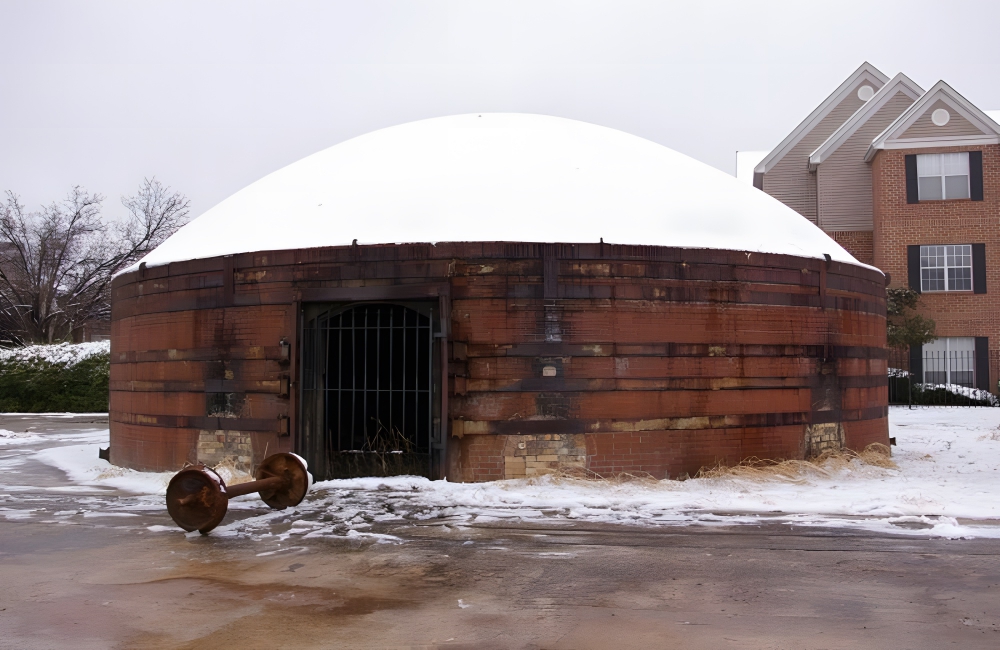
Guignard Brick Works, Cayce, South Carolina ©Duane Burdick/Flickr
Guignard consisted of four brick beehive kilns, a brick office, and more industrial features. The Guignard Brick Works got its clay from the nearby Congaree River Banks. Eventually, this historic business shut its doors as the times changed, but the site remains part of the National Register of Historic Places as of 1995.
102. Quinlan Castle, Birmingham, Alabama
Location: Birmingham, Alabama
Year: 1927
Cost: $1.71 million to build*
Built in 1927 for an inflation-adjusted price of over $1 million, the Quinlan Castle is something you don’t see every day in America, a place with almost no castles. Bishop Quinlan of the Catholic Church purchased the land with the intention to build Birmingham, Alabama’s first Catholic Church.
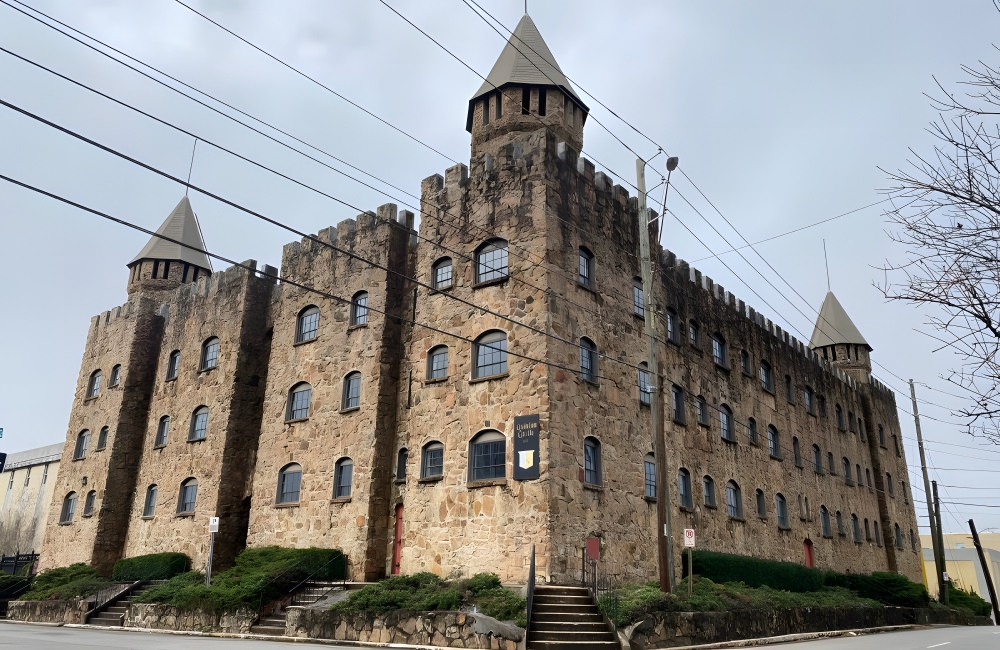
Quinlan Castle, Birmingham, Alabama @atlasobscura/Pinterest
William Welton designed the Castle, and he was inspired by the castles he had seen in Europe while in WWI. Immediately, Quinlan Castle ran into controversy. It was rumored to be a Nazi stronghold in the 1940s, but, when Birmingham Police raided the place, they found no evidence of that. Quinlan Castle never bounced back from its shaky past and, though privately owned now, the building has remained abandoned since the 1990s.
103. Fort Bayard Historic Site, Santa Clara, New Mexico
Location: Santa Clara, New Mexico
Year: 1866
Cost: $35 million* (2013 Proposed Renovation Cost)
Forty Bayard was established in the 1800s, and it was at first the site of security for settlers in the nineteenth century. African-American “Buffalo Soldiers” manned Fort Bayard against Native American attacks on colonizers during the Wild, Wild West era. After that, Fort Bayard became a tuberculosis sanitarium and, later, a VA hospital.
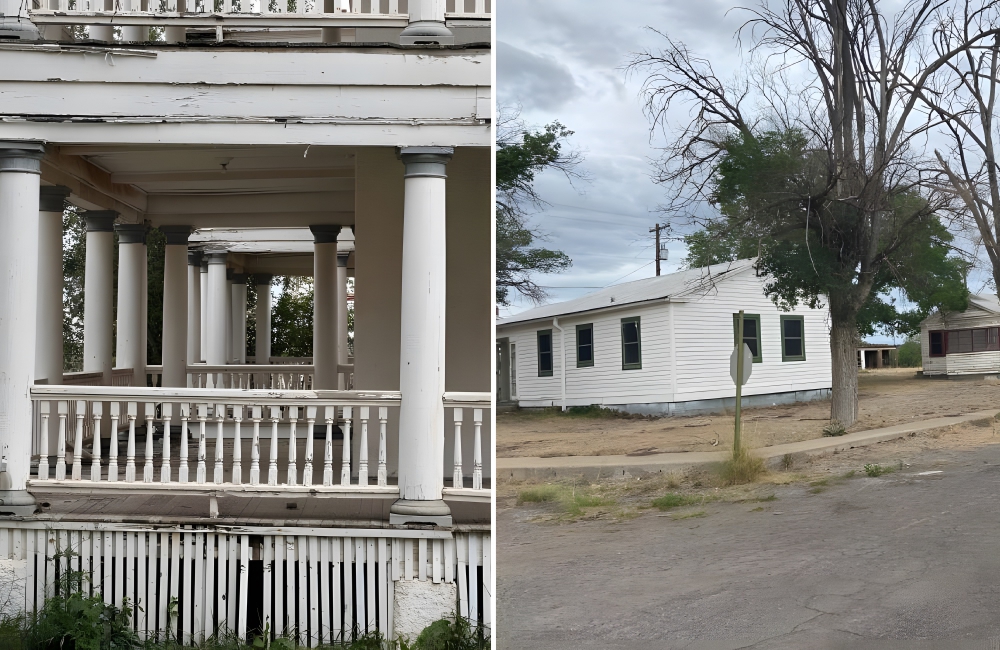
Fort Bayard Historical Site, Santa Clara, New Mexico @atlasobscura/Pinterest
In the 1940s, it held German prisoners of war. Fort Bayard has had a lot of duties over the years, and, now, it is partially abandoned, though some of the facility functions as a long-term care residence, as well as a drug treatment center. The landscaping and Fort Bayard National Cemetery are all that remain of this colorful institution.
104. Harbor Island Abandoned Houses, St. Helena Island, South Carolina
Location: St. Helena Island, Beaufort, South Carolina
Year: 2000s
Cost: $112,000-$398,000* (2022 Home Value)
Harbor Island is one of several islands off the coast of Beaufort, South Carolina. Harbor Island was once a popular vacation spot for locals and tourists, and that led to condos, duplexes, and homes being constructed on Harbor’s three-mile-long beach.
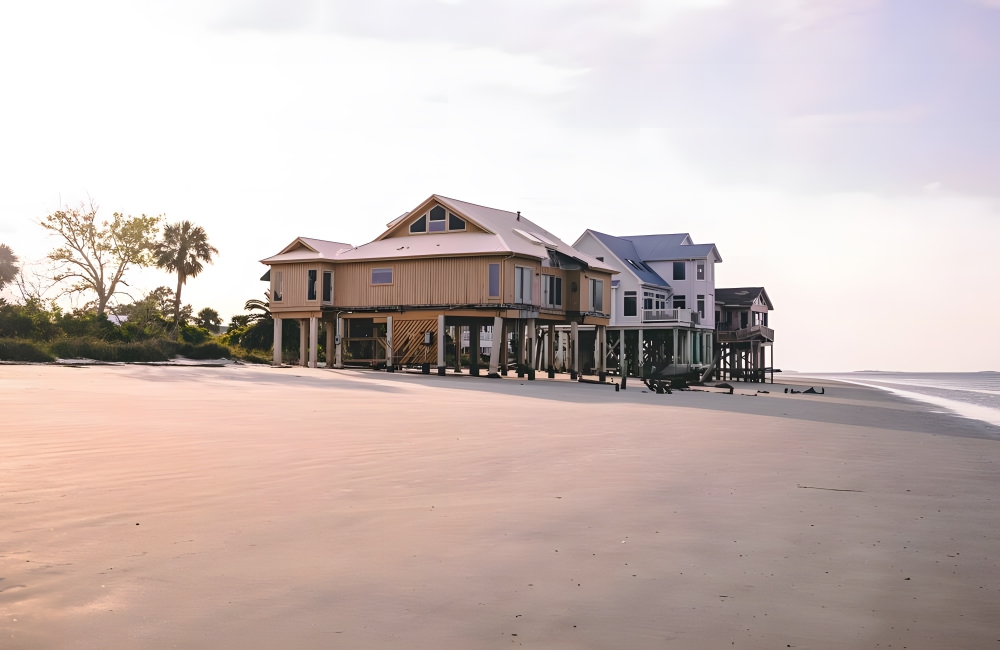
Harbor Island Abandoned Houses, St. Helena Island, South Carolina @atlasobscura/Pinterest
There were not a lot of rules on where you could build homes when Harbor Island was inhabited, which led to homeowners making the foolhardy decision to construct their pricey beach abodes directly on the sand. Sure enough, when hurricanes hit, these homeowners realized their mistake, and they abandoned the homes, leaving the ruins in their place. The ruined beach houses remain a unique testament to the destructive power of nature.
105. Aladdin Coal Tipple, Aladdin, Wyoming
Location: Aladdin, Wyoming
Year: 1898
Cost: $1.5 million* (2014 Sale Price For Aladdin)
Aladdin, Wyoming’s Wooden Coal Tipple is one of the American West’s last remaining mining structures. It is an excellent example of the mining technology that was, at the time, considered cutting-edge in the late 1800s. The Coal Tipple was used to store coal that was coming out of the mines, sorting the resource as it coursed through the chutes.
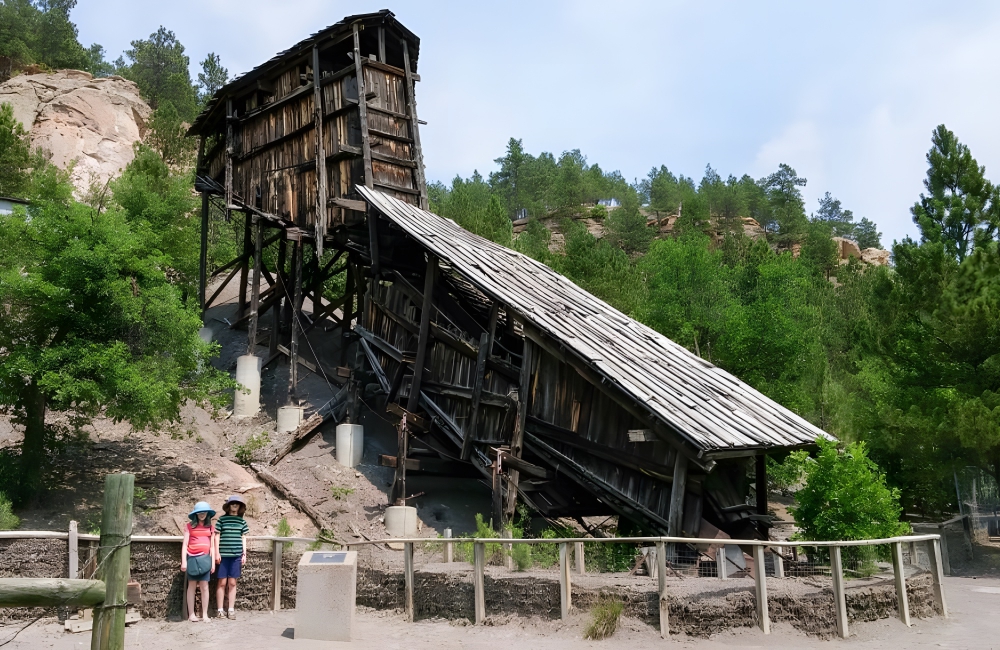
Aladdin Coal Tipple, Aladdin, Wyoming ©Flickr
At the height of Aladdin’s mining boom, the surrounding town had 500 people living there. But, when coal production faltered in 1911, people began to abandon Aladdin. Now, the hamlet and its Coal Tipple are a tourist attraction, where visitors can get a glimpse of times gone by.