
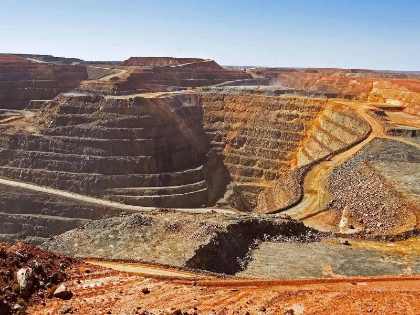
4. Yanacocha (Peru)
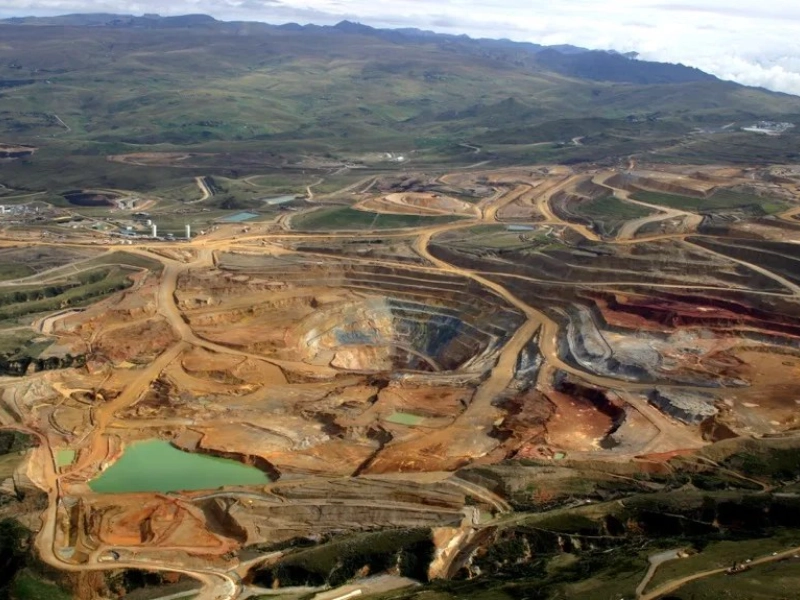
Usually found in the upper 1,500 meters of the crust, epithermal gold deposits such as Yanacocha occur somewhat near to the surface of the Earth. Hydrothermal activity linked with volcanic systems produces these deposits; hot, mineral-rich fluids flow through the rock and deposit gold and other minerals as they cool and interact with the surroundings. The very acidic character of the mineralising fluids—which produces a unique suite of alteration minerals and ore textures—is known as “high-sulfidation”.
Yanacocha’s geological backdrop is closely related to the Andes Mountains’ tectonic and volcanic past. The deposit is located in a volcanic caldera complex developed during the Miocene era, some 11 to 14 million years ago. The larger Andean orogeny, a mountain-building process that has moulded South America’s western edge for millions of years, included this volcanic activity.
Intense hydrothermal change of the volcanic host rocks is linked to the gold mineralisation at Yanacocha. Driven by the circulation of acidic, sulfur-rich fluids, this altering process produced unique mineral assemblages including enargite, pyrite, and alunite. Often found in a very fine-grained form linked with silica and sulphide minerals, the gold itself is difficult to extract using normal mining techniques.
Yanacocha’s unique mineralogy and ore types, in addition to its size, define it from many other gold sources. From oxide ores close to the surface to sulphide ores at depth, the deposit has a range of ore zones. This variety in ore types calls for a multifarious mining and processing strategy with separate extraction and treatment techniques needed for various portions of the deposit.
Early in the 1990s, Yanacocha started mining activities, and over time they have changed dramatically. Comprising several open-pit mines, heap leach pads, and processing facilities, the complex is The high altitude poses additional difficulties for mining activities, including severe weather and the necessity for specialised tools able to run in thin air.
Ore from Yanacocha is extracted and processed in a sequence of difficult tasks. The main technique of gold recovery for oxide ores is heap leaching. To dissolve the gold, crushed ore is piled on impermeable pads and irrigated with a cyanide solution. The gold-bearing solution is next gathered and refined to extract the precious metal. More complicated processing techniques—including flotation and pressure oxidation—are needed for sulphide ores to release the gold from the sulphide minerals.
Yanacocha’s development and running have much depended on environmental factors. The sensitive high-altitude ecology the mine works in calls for cautious land use, water resource management, and biodiversity control. The mining corporation has put in place community development projects, reforestation programs, and water treatment facilities among other substantial environmental preservation actions. The mine has not been without controversy, nevertheless, with issues expressed about its effects on the surroundings and ties to nearby towns.
Our knowledge of high-sulfidation epithermal systems has been considerably expanded by the investigation of the Yanacocha source. To improve models for similar deposits worldwide, geologists examine the features of the deposit including its alteration patterns, fluid inclusions, and isotopic fingerprints. The knowledge acquired from Yanacocha affects not only next gold finds but also our understanding of volcanic-related hydrothermal systems and the development of mineral deposits in convergent tectonics.
Yanacocha is a significant focus for geological study and mining creativity as we look ahead. The continuous growth of this remarkable deposit surely helps us to better grasp epithermal gold systems and the intricate interaction among mineral formation, hydrothermal processes, and volcanic activity. Yanacocha also provides a case study on the difficulties and possibilities of big-scale mining activities in sensitive, high-altitude areas, so balancing social responsibility with economic progress.
 zi ang